Industrial cleaning cloths have always had one basic job: remove oil, grease, dust, water, and other contaminants from a surface.
But what buyers expect from a good industrial cleaning cloth roll in 2026 is changing.
For many years, industrial wiping materials were judged mainly by how much oil they could absorb, how aggressively they could scrub, and whether they were strong enough for demanding workshop environments. High absorbency and a rough, high-friction surface were often considered the most important advantages.
Those qualities still matter. But they are no longer the whole story.
Today, more industrial buyers are asking different questions:
Does the cloth leave lint behind? Is it clean enough for the surface being wiped? What is it made from? Can it reduce waste? And does its environmental impact make sense over its actual service life?
This shift is changing how industrial cleaning cloth rolls are designed, manufactured, and evaluated.

From Aggressive Cleaning to Controlled Cleaning
The traditional industrial wiping cloth was often designed to be tough.
When the main task was removing grease from machinery, wiping oil from metal parts, or cleaning heavily contaminated workshop surfaces, a cloth with a rough texture and strong friction had a clear advantage.
A rough surface can help loosen:
- Oil and grease
- Dirt and sludge
- Carbon deposits
- Dust
- Metal particles
- Workshop residues
In these applications, a stronger and more abrasive cloth can make cleaning faster.
But industrial cleaning has expanded beyond heavy-duty workshops.
Today, wiping materials are also used for painted surfaces, stainless steel, glass, precision components, printing equipment, electronics, food-processing environments, and other applications where leaving particles behind can create a second problem.
That is why the question is gradually changing from:
"How aggressively can this cloth clean?"
to:
"How effectively can it clean without creating another contamination problem?"
This is one of the most important changes in industrial wiping materials.
1. Low Lint Is Becoming a Major Performance Requirement
A cloth that removes dirt but leaves fibers behind is not necessarily doing a good job.
This sounds obvious, but it has become increasingly important as manufacturers place more emphasis on surface cleanliness and process consistency.
Loose fibers can remain on:
- Metal components
- Painted surfaces
- Glass
- Machinery
- Optical surfaces
- Electronic components
- Precision parts
In a general workshop, a small amount of lint may not matter.
In a more controlled production environment, it can.
That is why low-lint performance is no longer limited to traditional cleanroom applications. More industrial buyers now consider fiber shedding when selecting everyday wiping materials.
This does not mean every industrial cleaning cloth needs to meet cleanroom standards. It means the buyer needs to match the wiping material to the cleanliness requirements of the job.
A useful rule is:
The cleaner the final surface needs to be, the more important lint control becomes.
2. The Best Cleaning Cloth Is Not Always the Roughest One
There is still a place for high-friction wiping materials.
A rough surface can be highly effective when the main challenge is removing stubborn contamination.
For example, a high-friction material can work well for:
- Workshop machinery
- Automotive maintenance
- Heavy grease
- Industrial oils
- Dirty metal parts
- Tough surface residues
But higher friction is not automatically better.
If the same material is used on a delicate painted, polished, coated, or sensitive surface, excessive surface friction may become unnecessary or even undesirable.
This is why modern industrial wiping materials are becoming more application-specific.
Instead of asking:
"Which cloth is strongest?"
buyers are increasingly asking:
"Which cloth has the right combination of friction, absorbency, strength, and cleanliness for this job?"
That is a much more useful way to compare materials.
3. Absorbency Still Matters-But Buyers Look Beyond the Headline Number
Oil absorption remains one of the most important properties of an industrial cleaning cloth.
A highly absorbent material can help remove:
- Lubricating oils
- Hydraulic fluids
- Grease
- Coolants
- Water
- Other liquid contaminants
However, absorbency should not be evaluated on its own.
Two cloths can both be described as "highly absorbent" while behaving quite differently in actual use.
The useful questions are:
How quickly does the cloth take up liquid?
How much liquid can it retain?
Does it remain strong when wet?
Does the liquid stay in the structure instead of being transferred back to the surface?
How much cloth is needed to finish the task?
This is why test data is becoming more useful than simple marketing descriptions.
4. Fiber Selection Is Becoming More Important
Industrial cleaning cloths are no longer built around one or two traditional material choices.
Depending on the application, manufacturers can use different fibers or blends to balance performance.
|
Material |
Typical Advantage |
|
Wood pulp |
High absorbency |
|
Polyester |
Strength and dimensional stability |
|
Viscose |
Softness and absorbency |
|
Lyocell |
Plant-derived fiber with good absorbency and softness |
|
Bamboo fiber |
Renewable plant-based option |
|
Microfiber |
Fine structure and high cleaning efficiency |
|
Fiber blends |
Balance of several performance properties |
The important point is that there is no single best fiber for every industrial cleaning task.
A workshop wiping oil from machinery may prioritize absorbency and strength.
A manufacturer wiping precision parts may care more about low lint and surface cleanliness.
A buyer looking to reduce environmental impact may place greater emphasis on renewable or biodegradable fiber options.
The material needs to match the application.
5. Sustainability Is Moving From a Marketing Word to a Buying Consideration
Another major change in 2026 is the way industrial buyers think about environmental performance.
In the past, industrial cleaning materials were often judged primarily on cleaning performance and price.
Today, sustainability is becoming part of the purchasing discussion.
But sustainability is more complicated than simply choosing a material described as "green."
Buyers are increasingly considering:
- What is the fiber made from?
- Is the raw material renewable?
- Is the material biodegradable where appropriate?
- Is the cloth disposable or reusable?
- How much material is consumed per cleaning task?
- How much packaging is required?
- How is the used cloth handled?
- How much washing is required for reusable products?
This leads to an important point:
A more sustainable cleaning cloth is not necessarily the cloth made from the most fashionable "eco-friendly" fiber.
Actual performance and consumption matter too.
A cloth that removes contamination efficiently with fewer pieces may generate less material waste than a lower-performing product that requires repeated wiping.
6. Disposable vs. Reusable Is No Longer a Simple Choice
The debate between disposable and reusable wiping materials is also becoming more practical.
Reusable cloths can reduce the amount of material discarded, but they require washing, drying, transportation, and quality control.
Disposable cloths eliminate laundering, provide consistent condition from batch to batch, and can be useful where contamination control is particularly important.
The right choice depends on the application.
|
Consideration |
Disposable Cloth |
Reusable Cloth |
|
Laundering |
Not required |
Required |
|
Material waste |
Usually higher |
Usually lower |
|
Process consistency |
High |
Depends on washing |
|
Handling after use |
Disposal required |
Collection and laundering |
|
Best fit |
Controlled or single-use tasks |
Repetitive wiping tasks |
Rather than asking which system is always "greener," industrial buyers should look at the whole lifecycle.
The real comparison is often:
material consumption + cleaning process + transportation + waste management + cleaning performance
7. Roll Format Is Becoming Part of the Cleaning Process
The roll itself may look like a simple packaging choice, but format can directly affect how a wiping material is used.
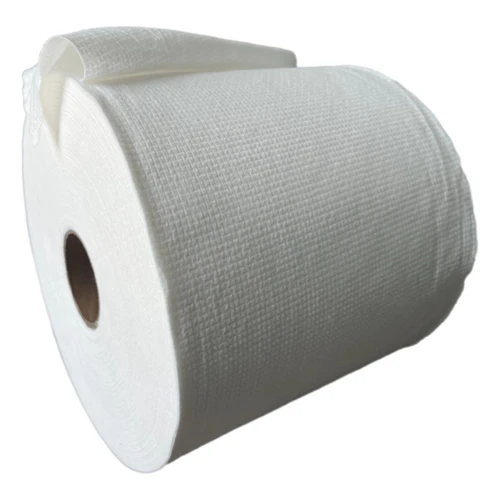
Modern industrial cloth rolls can be supplied as:
- Jumbo rolls
- Perforated rolls
- Point-break rolls
- Center-pull rolls
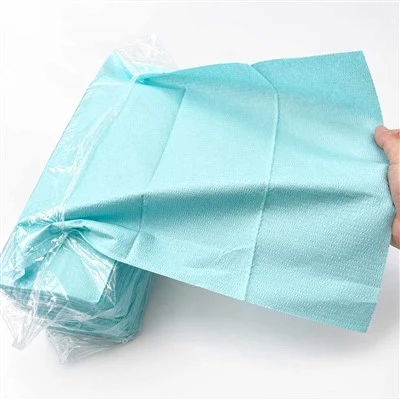
- Pre-cut sheets
- Custom-width rolls
The right format can make dispensing easier and help control how much material is used for each task.
For example, perforated sheets allow operators to tear off a consistent portion instead of pulling an unpredictable length from a continuous roll.
That can help reduce overuse and simplify inventory management.
So in 2026, roll design is increasingly being considered part of workflow efficiency, rather than simply a packaging detail.

8. Customization Is Becoming More Practical
Industrial buyers are also looking beyond standard cloth specifications.
A material may need to fit a particular dispenser, production line, cleaning procedure, or packaging system.
Common customization options include:
- GSM
- Width
- Sheet length
- Perforation spacing
- Roll diameter
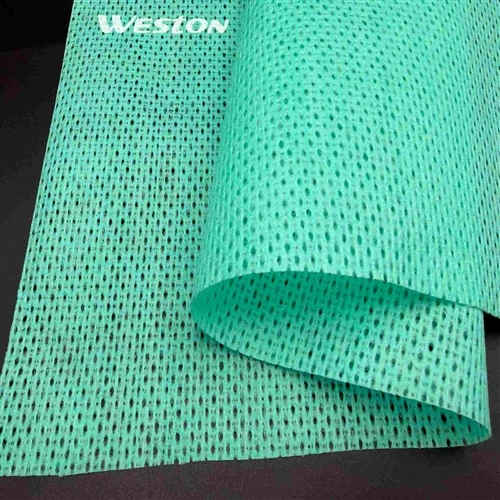
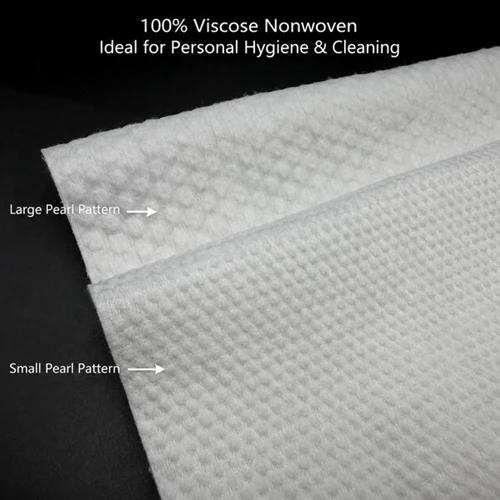
- Embossing
- Color
- Packaging
- Private labeling
The reason for customization is not simply to make a product look different.
In many cases, it is about making the wiping material work better within an existing process.
For example, a specific sheet size may reduce waste, while a particular surface structure may improve oil pickup or dirt removal.
9. Test Data Matters More Than General Claims
One of the clearest purchasing trends is the move toward measurable performance.
Statements such as:
"Highly absorbent."
"Strong when wet."
"Low lint."
can be useful starting points, but they do not tell the whole story.
Buyers should look for measurable information such as:
|
Performance Factor |
Why It Matters |
|
GSM |
Indicates basis weight |
|
Thickness |
Affects handling and liquid capacity |
|
Tensile strength |
Indicates resistance to tearing |
|
Elongation |
Shows how the material behaves under stress |
|
Absorption |
Helps evaluate liquid uptake |
|
Wet strength |
Important for wet cleaning |
|
Lint / particle performance |
Helps evaluate surface cleanliness |
|
pH |
Relevant for sensitive applications |
Test methods and conditions should also be considered when comparing different materials.
A number without a test method may not be directly comparable with another manufacturer's number.
10. What Has Really Changed in 2026?
The industrial cleaning cloth market has not suddenly abandoned the old priorities.
Absorbency still matters.
Strength still matters.
High friction still has its place.
What is changing is the balance between these properties.
A heavy-duty workshop may still need an aggressive, high-friction cloth for oil and grease.
A precision manufacturer may prefer a smoother, low-lint material.
A company with sustainability targets may want a plant-based or biodegradable option.
Another buyer may prioritize a reusable cloth because it fits an established washing system.
In other words, the industry is moving away from the idea of one universally "best" industrial wiping cloth.
The better question is:
What performance does this particular cleaning task actually require?
How to Choose an Industrial Cleaning Cloth Roll in 2026
A practical selection process can start with five questions.
1. What are you cleaning?
Oil, grease, water, dust, ink, chemicals, or another contaminant?
2. What surface are you cleaning?
Metal, glass, plastic, painted surfaces, machinery, or precision components?
3. How clean does the surface need to be afterward?
General workshop cleanliness and controlled surface cleanliness are not the same requirement.
4. What balance of properties do you need?
Think about:
Absorbency + friction + strength + lint control + softness
rather than focusing on one headline feature.
5. What happens after the cloth is used?
Consider disposal, washing, contamination handling, and total material consumption-not just the purchase price.
This is especially important because the cheapest roll is not necessarily the lowest-cost solution.
A better comparison is often:
cost per usable wipe
or
cost per completed cleaning task
rather than simply:
price per roll
Frequently Asked Questions
What is new in industrial cleaning cloth rolls for 2026?
The biggest change is the move toward application-specific wiping materials. Buyers are paying more attention to lint control, environmental impact, fiber selection, measurable performance, and efficient roll formats alongside traditional properties such as absorbency and strength.
Are high-friction cleaning cloths still useful?
Yes. High-friction materials remain useful for demanding applications involving grease, oil, dirt, and heavy surface contamination. They are simply not the best choice for every surface or cleaning task.
Why is low lint becoming more important?
Loose fibers can remain on cleaned surfaces and may create contamination problems in applications that require greater surface cleanliness. This makes lint control increasingly relevant outside traditional cleanroom environments.
Are plant-based cleaning cloths automatically more sustainable?
Not necessarily. Sustainability depends on the material, manufacturing process, product lifetime, consumption rate, disposal or washing requirements, packaging, and overall lifecycle.
Is a reusable industrial cleaning cloth better than a disposable one?
Neither option is always better. The appropriate choice depends on cleaning frequency, contamination level, laundering capability, waste handling, and total lifecycle cost.
What should I compare when choosing an industrial cleaning cloth roll?
Start with the cleaning task, contaminant, surface, required cleanliness level, absorbency, strength, friction, lint performance, fiber composition, roll format, and total cost of use.
The Bottom Line
Industrial cleaning cloths in 2026 are becoming less about simply making a cloth stronger, rougher, or more absorbent.
Those properties still matter, especially in heavy-duty cleaning.
But the industry is increasingly looking at the complete picture:
- Does it clean effectively?
- Does it leave less lint?
- Is the material appropriate for the surface?
- How much is consumed during the job?
- What happens after use?
- And can the material offer a better environmental profile without sacrificing performance?
For nonwoven manufacturers, this means developing a good industrial cleaning cloth is no longer just a matter of producing a strong sheet of material. Fiber selection, web structure, absorbency, surface texture, lint control, roll format, and application requirements all need to work together.
That is where the next generation of industrial cleaning cloth rolls is likely to be defined: not by one "best" material, but by a better match between the material and the job.
Weston Nonwoven approaches this development from the material side, producing spunlace nonwoven solutions with different fiber compositions, weights, structures, and roll formats for industrial wiping and other applications.