Clean rooms serve as core environments in high-precision fields such as semiconductor manufacturing, pharmaceutical production, and life sciences. The control of contaminants (including micro-particles, fibers, microorganisms, and statically adsorbed debris) directly determines product quality, experimental safety, and production efficiency. Among the various sources of contaminants in clean rooms, human activities are the primary contributor-shed skin cells, hair fragments, and fibers from clothing, as well as static electricity generated by clothing friction, can all disrupt the ultra-clean environment. Therefore, the material selection for clean room clothing (covering coveralls, masks, shoe covers, gloves, and other protective gear) is not a simple "protective" requirement, but a systematic project that integrates clean room classification standards, industry-specific demands (e.g., sterility, corrosion resistance), and user comfort. Below, we will analyze the core characteristics, classification, and selection logic of clean room clothing materials from a scientific perspective, and explore material innovation trends under the background of sustainability.
1. Core Functional Requirements for Clean Room Clothing Materials
The material properties of clean room clothing are not arbitrarily defined; they are reverse-derived from the strict contaminant control requirements of clean rooms. Each property corresponds to a specific environmental risk, and only by meeting these core requirements can the clothing effectively block human-derived contaminants.
1.1 Low Particle Emission and Low Fiber Shedding Rate
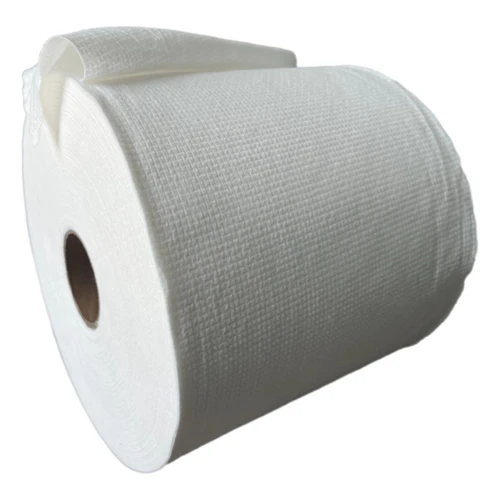
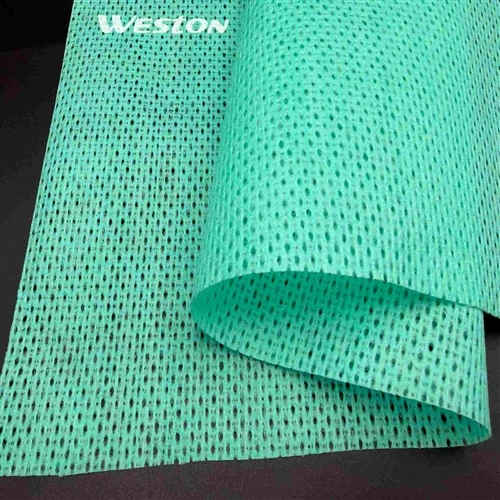
Fibers shed from clothing are one of the most difficult contaminants to control in clean rooms-even a single micron-sized fiber can cause defects in semiconductor chips or contaminate pharmaceutical products. To minimize this risk, clean room clothing materials must have ultra-low fiber shedding rates, which is closely related to the material's fiber structure and bonding method. Continuous filament fibers (such as polyester continuous filaments) are superior to short fibers in this aspect because short fibers are prone to detachment at the yarn joints; for nonwoven materials, processes like spunbonding or hydroentangling (spunlace) can enhance fiber cohesion, reducing accidental shedding. For example, the Premium Hemp Spunlace Wipes Material developed by Weston Nonwoven uses a hydroentangling process to bond hemp fibers and synthetic fibers tightly. This not only ensures low fiber shedding during use but also leverages the natural stability of hemp fibers to avoid chemical residue risks-an advantage that can be extended to the development of clean room wiping materials (auxiliary products for clean room maintenance), providing reliable support for the overall contaminant control of clean rooms.
1.2 Antistatic Performance
Static electricity in clean rooms is a "hidden hazard": it can cause fine particles to adhere to clothing surfaces or equipment, and in environments with flammable solvents (e.g., some pharmaceutical synthesis workshops), static sparks may even trigger fires or explosions. Clean room clothing materials typically achieve antistatic effects through two technical paths: one is blending conductive fibers (such as carbon fiber or metal-coated fibers) into the base material to form a static discharge channel; the other is adding permanent antistatic agents to the material matrix to reduce the accumulation of static charges. Unlike temporary antistatic treatments (which fail after washing), these two methods can maintain antistatic performance for a long time, adapting to the repeated use or long-term wearing needs of clean room clothing.

1.3 Barrier Performance
The barrier performance of clean room clothing materials varies by industry. In pharmaceutical sterile rooms (e.g., injectable drug production), the material must block microorganisms (such as bacteria and fungi) to prevent cross-contamination between operators and drugs; in semiconductor clean rooms, it needs to resist the penetration of volatile organic compounds (VOCs) or acid-base cleaning agents to avoid damaging chip components. This performance is mainly determined by the material's density and structure: dense woven fabrics (e.g., high-count polyester fabrics) can block large particles, while composite nonwoven materials (e.g., spunbond-meltblown-spunbond SMS structures) have a porous structure that traps microorganisms and small particles without affecting air permeability.
1.4 Chemical Stability
Clean rooms in industries such as semiconductors and pharmaceuticals often use special chemicals (e.g., photoresists, disinfectants). If the clothing material has poor chemical stability, it may decompose or release harmful substances (such as plasticizers or VOCs) when in contact with these chemicals, which not only damages the material itself but also pollutes the clean room environment. Therefore, clean room clothing materials (especially those used in high-risk areas) must undergo strict chemical resistance testing, including immersion tests in common solvents and disinfectants, to ensure no deformation, discoloration, or harmful release under working conditions.
2. Scientific Classification and Performance Adaptation of Common Clean Room Clothing Materials
Based on processing technology and usage scenarios, clean room clothing materials can be divided into two major categories: woven fabrics and nonwoven fabrics. Each category has unique structural characteristics and performance advantages, and their application scenarios are strictly matched to clean room grades and industry requirements.
2.1 Woven Fabrics: Durable Materials for Medium-Low Clean Room Grades
Woven fabrics (mainly made of polyester, nylon, or their blends) are formed by interlacing warp and weft yarns. Their advantages lie in high mechanical strength and durability-after strict cleaning, sterilization, and maintenance, they can be reused dozens or even hundreds of times, making them suitable for medium-low clean room grades (e.g., ISO 8 to ISO 7, common in food processing or general electronic assembly workshops).
Polyester is the most widely used base material for woven clean room clothing: it has low moisture absorption (avoiding microbial growth caused by moisture retention), good chemical stability, and can be modified with antistatic treatments to meet basic static control needs. However, woven fabrics also have limitations: their surface may have tiny gaps between yarns, which may allow small particles to pass through; in addition, repeated washing may cause fiber wear and increase shedding rates, so they require professional cleaning procedures (such as high-temperature sterilization and ultra-pure water rinsing) to maintain performance.
2.2 Nonwoven Fabrics: High-Cleanliness Materials for Disposable Scenarios
Nonwoven fabrics are made by bonding or interlocking fibers through physical (e.g., hydroentangling, thermal bonding) or chemical (e.g., adhesive bonding) methods, without the need for weaving. They are characterized by uniform fiber distribution, low fiber shedding, and high cleanliness, making them ideal for high-grade clean rooms (e.g., ISO 6 to ISO 5, used in semiconductor wafer manufacturing or sterile pharmaceutical production) where disposable use is required to avoid cross-contamination.
Common nonwoven types for clean room clothing include:
Spunbond nonwovens: Made by extruding and drawing polymer melts into continuous filaments, then bonding them into a web. They have high strength and good air permeability, suitable for clean room coveralls or shoe covers.
Meltblown nonwovens: Formed by blowing high-velocity hot air onto polymer melts to form ultra-fine fibers. Their porous structure has excellent particle and microbial barrier properties, often used as the core layer of clean room masks or protective clothing.
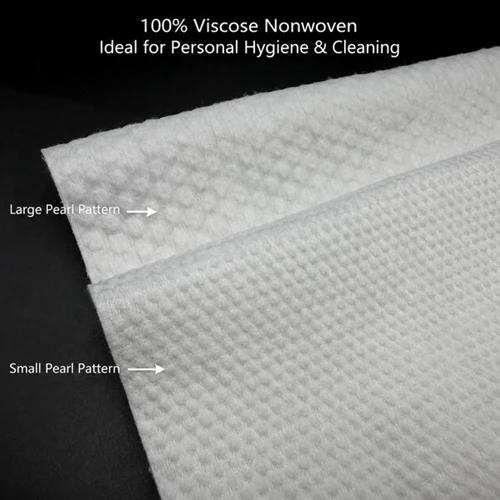
Hydroentangled (spunlace) nonwovens: Uses high-pressure water jets to entangle fibers, forming a soft and dense material. As mentioned earlier, Weston Nonwoven's Premium Hemp Spunlace Wipes Material is a typical representative of this category-its soft texture avoids scratching equipment surfaces, while its low shedding rate meets the cleaning needs of high-grade clean rooms.
3. Multi-Dimensional Scientific Verification of Clean Room Material Selection: Beyond Surface Parameters
When selecting clean room clothing materials, many users only focus on surface parameters (e.g., fiber shedding rate, antistatic value), but in practice, the material's adaptability to the clean room environment requires verification from multiple deep dimensions. These dimensions directly affect the long-term stability of the clean room and the safety of operators.
3.1 Dynamic Performance Verification
Static laboratory tests (e.g., measuring fiber shedding rate under static conditions) cannot fully reflect the material's performance in actual use. Clean room operators need to move (e.g., bending, walking, operating equipment), and friction between clothing and the body or equipment may increase fiber shedding or static generation. Therefore, dynamic performance tests-such as simulating human movement to measure real-time particle emission, or testing the antistatic performance after repeated friction-are more critical for evaluating material suitability.
3.2 Biocompatibility
In medical or pharmaceutical clean rooms (e.g., cell culture laboratories, sterile drug filling workshops), clothing materials are in close contact with operators' skin for a long time, and may even come into indirect contact with drugs or biological samples. Poor biocompatibility may cause skin allergies (e.g., itching, redness) in operators, affecting work efficiency; in severe cases, it may lead to material components leaching into samples, disrupting experimental results. Therefore, such materials must pass biocompatibility tests, including skin irritation tests and cytotoxicity tests, to ensure no harm to humans or biological samples.
3.3 Breathability and Comfort
Comfort is an easily overlooked but crucial factor in clean room clothing selection. Operators often wear full sets of clean room clothing (including coveralls, masks, and shoe covers) for 8–12 hours at a time. If the material has poor breathability, it will cause heat and moisture accumulation inside the clothing, increasing sweating-which in turn leads to more skin cell shedding, counteracting the protective effect of the clothing. High-quality clean room materials (whether woven or nonwoven) will balance barrier performance and breathability: for example, woven fabrics use high-count yarns with special weaving structures to ensure air circulation; nonwovens optimize fiber porosity to allow moisture vapor to pass through while blocking particles.
3.4 Durability and Reuse Efficiency
For reusable clean room clothing (mainly woven fabrics), durability is not just about "wear resistance"-it refers to the ability to maintain core properties (e.g., low shedding, antistatic) after repeated cleaning and sterilization. Some low-quality materials may experience fiber breakage or antistatic agent failure after 10–20 washes, increasing replacement costs and contamination risks. Therefore, when selecting reusable materials, it is necessary to refer to the "performance decay curve" provided by manufacturers-i.e., how key indicators change with the number of washes-to ensure the material can meet the service life requirements of the clean room.
4. Material Innovation in Clean Rooms Under the Trend of Sustainability: Balancing Environmental Protection and Performance
With the global emphasis on environmental protection, the clean room industry is also exploring sustainable material solutions. However, clean room materials have strict performance requirements, and "environmental protection" cannot be at the expense of cleanliness or safety. The core of sustainable innovation lies in finding a balance between environmental friendliness and functional performance-and Weston Nonwoven's technical practices in nonwoven materials provide valuable references for this direction.
4.1 Biodegradable Materials: From Daily Scenarios to Clean Room Potential

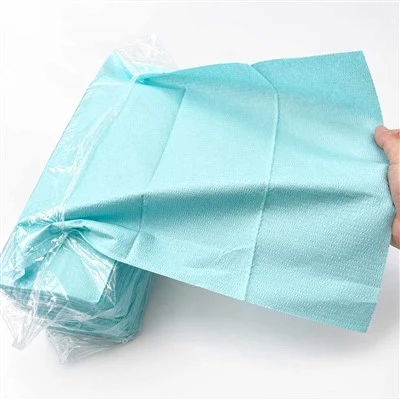
Disposable nonwoven clean room clothing (e.g., masks, shoe covers) is widely used in high-grade clean rooms, but traditional petroleum-based nonwovens (e.g., polypropylene) are difficult to degrade, leading to environmental pressure after disposal. Biodegradable nonwoven materials-made from renewable resources (e.g., starch, polylactic acid PLA, or natural fibers like hemp)-have become a key innovation direction. Weston Nonwoven's Biodegradable Kitchen Paper Towel is a typical application of this technology: it uses biodegradable polymers and natural fibers, which can decompose into harmless substances in the natural environment after use. Although this product is currently targeted at daily kitchen scenarios, its biodegradable material formula and nonwoven processing technology can be migrated to the development of clean room disposable products (e.g., low-grade clean room wiping materials), realizing the environmental protection transformation of clean room auxiliary materials without compromising cleanliness.
4.2 Composite Technology Optimization: Reducing Waste While Enhancing Performance
Another sustainable direction is optimizing material composite processes to reduce waste and improve performance. For example, Weston Nonwoven's Laminated Nonwoven Bath Glove adopts a multi-layer lamination process: the inner layer uses soft fiber for comfort, while the outer layer uses dense fiber for wear resistance. This "functional division" design not only enhances the product's durability (reducing replacement frequency) but also avoids overusing high-performance materials (reducing raw material waste). Similar composite logic can be applied to clean room clothing: for example, the cuffs and elbows (high-wear areas) can use a reinforced composite layer, while the torso (high-breathability area) uses a lightweight layer-this design not only improves the clothing's service life but also reduces overall material consumption. In addition, Weston's Kitchen Floor Scrubbing Mop Pads use a high-density nonwoven structure to enhance dirt-removing ability, and this density control technology can be referenced in the design of clean room shoe covers (to improve particle blocking while reducing material thickness).
Clean room clothing material selection is a scientific decision-making process that integrates environmental requirements, performance verification, and sustainable development. It requires moving beyond surface indicators to focus on the deep adaptation between materials and clean room scenarios. Weston Nonwoven, with its technical accumulation in nonwoven materials (including hydroentangled, laminated, and biodegradable technologies), provides potential solutions for clean room material innovation. If you want to learn more about the application of its materials in clean room scenarios or obtain a free sample, please contact us via email: info@westonmanufacturing.com.