If you've ever carried a sturdy plastic bucket, touched a shatter-resistant shampoo bottle, or seen durable grow bags in farm fields, you've already come into contact with HDPE. This seemingly "ordinary" material hides a rigorous scientific logic behind it-from its molecular structure to real-world applications, every feature stands up to scientific scrutiny. Today, let's move beyond the vague label of "plastic" and break down the essence of HDPE to understand why it has become a versatile "all-rounder" spanning industry, agriculture, and daily life.
1. HDPE's "Molecular ID": Understanding Its Essence Through Chemical Structure
To grasp what HDPE is, we first need to look at its "molecular ID"-its chemical name, High-Density Polyethylene. It belongs to the polyethylene (PE) family, but unlike the more familiar Low-Density Polyethylene (LDPE), the term "high-density" is its core differentiator, and this all boils down to the arrangement of its molecular chains.
The basic unit of polyethylene is the ethylene monomer (C₂H₄). When countless ethylene monomers "link hands" through chemical reactions to form long chains, polyethylene molecules are created. However, the way these chains are arranged directly determines the material's density and performance: LDPE molecular chains are covered with "branches," like tangled tree branches, leaving large gaps between molecules-hence its low density and soft texture. In contrast, HDPE molecular chains have almost no branches; they resemble a bundle of neatly arranged pencils, with molecules stacked tightly together. This gives HDPE a higher density (typically between 0.941-0.965 g/cm³) and a more robust structure.
This "branch-free" molecular design is what sets HDPE apart from other plastics. It is produced through low-pressure polymerization of ethylene using specific catalysts (such as Ziegler-Natta catalysts). The linear structure of its molecular chains grants it stronger intermolecular forces-and this is the "source" of all its excellent subsequent properties. Simply put, HDPE is not a randomly polymerized plastic; it is an engineering material "precision-designed" at the molecular level.
2. The Scientific Logic Behind HDPE's Properties: Why It's "Useful and Durable"
When people think of HDPE, their first impression is often "sturdy and tough," but these properties are no accident. They are "innate advantages" endowed by its molecular structure, which we can break down into three core dimensions:
Chemical Resistance: Stable Molecules That Don't "Clash" with Acids or Bases
HDPE molecular chains are composed of carbon-carbon single bonds and carbon-hydrogen bonds-both of which have high bond energy and are not easily damaged by acids, bases, or organic solvents. For example, household HDPE pipes can transport tap water, sewage, and even dilute acid-base solutions for long periods without rusting like metal pipes or corroding and deforming like ordinary plastics. This is also why the food industry uses HDPE to make soy sauce bottles and cooking oil containers: its molecular stability prevents harmful substances from leaching into food, meeting food contact safety standards.
Temperature Resistance and Mechanical Strength: No Melting at High Temperatures, No Easy Breaking Under Force
Due to strong intermolecular forces, HDPE has a melting point of 130-135℃, far higher than the temperatures encountered in daily use (e.g., boiling water is only 100℃). This means tableware and water cups made from HDPE won't deform even when filled with hot water. At the same time, the tightly packed molecules give HDPE excellent tensile strength and impact resistance: a standard HDPE plastic bucket is hard to crack even if dropped from a height of 1 meter. Even in industrial settings, HDPE is used to make pallets and anti-collision plates, relying on this "tough" mechanical performance.
Weather Resistance and Insulation: A "Reliable Helper" for Outdoor and Electrical Applications
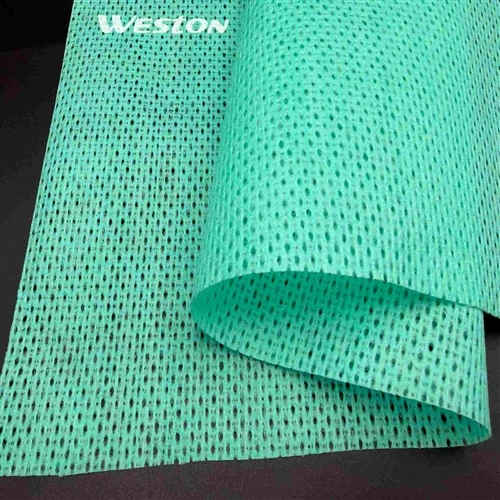
After modification with antioxidants and UV stabilizers, HDPE can resist UV erosion from sunlight and won't easily age or become brittle even when exposed outdoors for long periods-a feature that is particularly important in agriculture. For instance, the Duprotex Flash-spun HDPE Nonwoven produced by Weston Factory leverages HDPE's weather resistance. The resulting Duprotex Nonwoven Fabric For Plant Cultivation and Soilless Cultivation Grow Bags maintain stable breathability and durability even when used in open-air environments, without rapid damage from sun, rain, or wind. Additionally, HDPE is an excellent insulator, often used to make the outer sheaths of wires and cables, insulating electricity while resisting environmental corrosion.
3. From Lab to Life: HDPE's Diverse Application Scenarios
HDPE's properties have taken it from the lab to every corner of our lives, and it can be found in almost every field. For different scenarios, HDPE is "custom-processed" to meet specific needs:
In packaging, food-grade HDPE acts as a "safety guard": yogurt cups, milk bottles, and condiment containers all rely on its stability and sealing to prevent food spoilage.
In construction, HDPE pipes are "durability champions": compared to traditional metal pipes, they are lightweight, easy to install, and resistant to corrosion from underground soil, with a service life of over 50 years.
In healthcare, sterile HDPE is used to make disposable syringe casings and IV bags to ensure safety during use.
In agriculture, HDPE applications are "precision-matched" to plant needs. For example, the Soilless Cultivation Grow Bags launched by Weston Factory use Duprotex Flash-spun HDPE Nonwoven as their core material. This Duprotex Nonwoven Fabric For Plant Cultivation, made through flash spinning, retains HDPE's anti-aging and acid-base resistance properties while achieving excellent breathability and water permeability through its special fiber structure. It prevents root rot from waterlogging and keeps pests out, making it ideal for soilless cultivation. This combination of HDPE's properties and agricultural needs is a perfect example of "people-oriented" materials science.

4. A Balanced View of HDPE: Advantages, Challenges, and Solutions
However, HDPE is not a "perfect material." To make the most of its value, we need to objectively examine its strengths and weaknesses:
Advantages:
High Safety: Food-grade HDPE is odorless, releases no harmful substances, and meets food safety standards in most countries worldwide.
Strong Durability: Its resistance to chemicals, temperature, and impact ensures a long product service life, reducing costs from frequent replacements.
Good Recyclability: HDPE is one of the few plastics that can be recycled multiple times. Recycled HDPE can be used to make plastic pallets, trash cans, and more, minimizing resource waste.
Challenges and Solutions:
Low-Temperature Brittleness: Below -40℃, HDPE molecular chain movement slows down, making it prone to cracking. The solution is "blend modification"-adding elastomeric materials to HDPE to improve low-temperature toughness, allowing it to be used for pipes and outdoor products in cold regions.
Processing Difficulty: HDPE's high density results in poor melt flowability, requiring higher temperatures and pressures during processing. Currently, the industry has solved this by optimizing screw structures and adjusting processing techniques to efficiently produce complex HDPE products.
Environmental Impact: While recyclable, HDPE can persist in the natural environment for a long time if discarded casually. Beyond strengthening recycling systems, research institutions are now developing "bio-based HDPE," using biomass raw materials like corn and sugarcane instead of fossil fuels to make HDPE more eco-friendly.
5. HDPE from a Sustainable Perspective: From "Durable" to "Circular"
As environmental awareness grows, HDPE development is no longer focused solely on "durability" but is shifting toward "circular sustainability." On one hand, HDPE's recyclability is being further tapped: many countries worldwide have established dedicated HDPE recycling channels. For example, discarded HDPE milk bottles and buckets are collected centrally, cleaned, and pelletized to make new HDPE products-creating a "product-to-product" closed loop. On the other hand, companies like Weston Factory prioritize environmental protection in production: their Duprotex Flash-spun HDPE Nonwoven series not only reduces pesticide and fertilizer waste during use (e.g., Soilless Cultivation Grow Bags enable precise control of water and nutrients) but can also be recycled through formal channels after disposal, aligning with "circular economy" principles.
In the future, HDPE will continue to develop in a greener direction: the mass production of bio-based HDPE, the research and development of degradable HDPE, and more efficient recycling technologies will all make this material "useful" while being more compatible with the Earth's ecological needs.
HDPE may seem simple, but it is a model of perfect synergy between "precision design" and "practical needs" in materials science-its molecular structure determines its properties, its properties support diverse applications, and challenges in application drive its continuous upgrading. If you want a more hands-on understanding of HDPE's agricultural applications, such as the specific performance of Duprotex Flash-spun HDPE Nonwoven or Soilless Cultivation Grow Bags, you can request a free sample via info@westonmanufacturing.com and experience the unique charm of this material for yourself.