In modern kitchens-commercial, industrial, or home-cleaning tools directly influence food hygiene and overall safety. Yet one of the most frequently misunderstood categories is food-safe wipes. Many users assume that if a wipe appears soft, white, or "gentle," it is automatically suitable for food-contact environments. Scientifically, this assumption is deeply flawed. True food-safe wipes must satisfy rigorous material, chemical, and structural requirements that go far beyond visual cues.
Understanding the Scientific Foundations of "Food-Safe"
The term "food-safe" is not merely a label; it is a statement about compatibility, chemical neutrality, and migration safety.
1. Chemical Interaction & Migration Potential
Food-safe wipes must not release:
plasticizers
dyes
surfactants
preservative residues
volatile organic compounds (VOCs)
In material science, this is measured by the wipe's migration behavior: the likelihood of chemical components transferring from the wipe surface to food or food-contact surfaces. Low-migration materials exhibit:
stable polymer chains
minimal surface treatments
absence of reactive additives
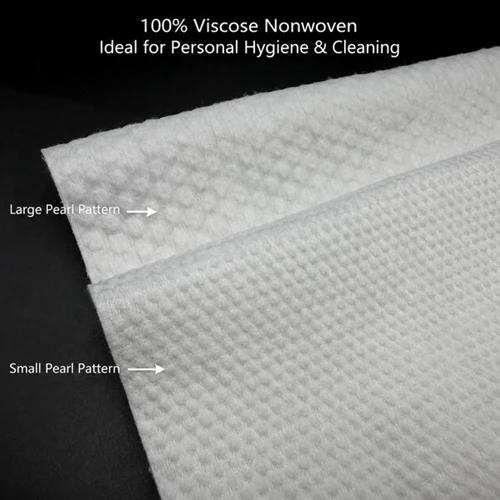
Cellulose fibers (viscose, wood pulp, lyocell) often perform well because they hold fewer synthetic residues when properly processed.
2. Mechanical Integrity
If a wipe sheds fibers, pills under friction, or weakens when exposed to heat or oil, it is not food-safe. Loose fibers can contaminate food directly, and degraded polymers can leave microscopic residues.
3. Microbial Safety
Wet wipes must avoid microbial growth during production and storage. This requires:
controlled humidity environments
purified water in hydroentangling
sterile or near-sterile packaging zones
Even dry wipes must be manufactured with low bioburden in mind.
Material Types That Qualify as Food-Safe
Food-safe wipes can be grouped into several scientifically justified categories.
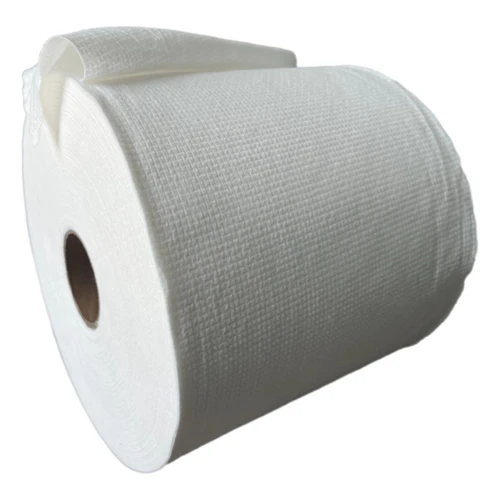
1. Dry Nonwoven Cellulose Wipes
These wipes contain no moisture, preservatives, or complex chemical additives. Their advantages include:
extremely low migration risk
natural absorbency
neutral odor profile
strong performance under heat
They are ideal for direct food-contact surfaces such as cutting boards, prep counters, and stainless-steel equipment.
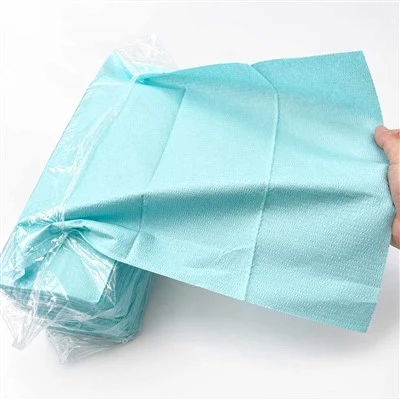
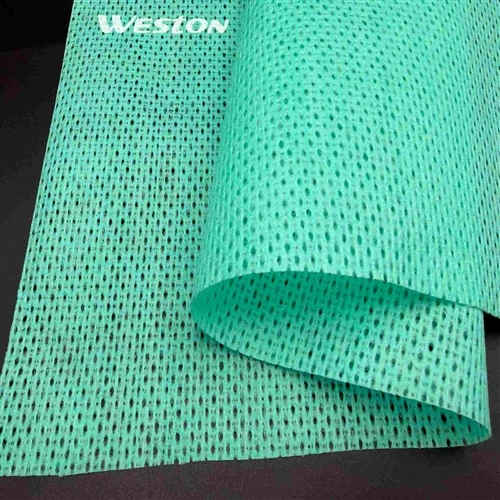
2. Hydroentangled Nonwoven Wipes (Binder-Free)
Water-jet entangling-used by manufacturers like Weston Nonwoven-creates a mechanically strong web without glue or chemical binders. This is crucial because binders often carry unknown chemical components.
Binder-free structures ensure:
stable fiber locking
reduced shedding
minimized chemical load
This category is widely used for food-service prep wipes and food-contact cleaning cloths, including high-absorbency Grease Wipes For Kitchen (appearing naturally here as bold: Grease Wipes For Kitchen).
3. Single-Ingredient Water Wipes
When a wipe contains only purified water on a neutral nonwoven substrate, it eliminates the interaction risk associated with preservatives or surfactants. Still, these wipes rely heavily on strict microbial control during production.
How to Evaluate Whether a Wipe Is Truly Food-Safe
A wipe's suitability for food environments cannot be inferred by appearance or marketing language. The following principles offer a practical, science-backed evaluation framework.
1. Examine the Fiber Composition
Favor wipes made from:
viscose
lyocell
wood-pulp blends
pure polypropylene in uncoated form
Avoid products with vague descriptions like "enhanced fibers" or "performance blend," which often mask chemical treatments.
2. Look for Additive Simplicity
The simplest formula is usually the safest. Additives such as fragrances, lotions, antibacterial chemicals, or optical brighteners pose unnecessary contamination risks.
A wipe should be:
odor-neutral
dye-free
low-linting
free of softeners or surface coatings
3. Test for Mechanical Stability
A food-safe wipe should not deform or disintegrate when exposed to:
hot water
oils
moderate friction
cutting-surface textures
4. Assess Microbial Risk in Wet Wipes
Even with minimal ingredients, wet wipes must come from a manufacturing environment with controlled microbial load. Contaminated water or packaging can create a food safety hazard that is invisible to the user.
Debunking Common Misconceptions About Food-Safe Wipes
Misconception 1: "If it's soft, it's safe."
Softness has no correlation with chemical composition. A soft wipe may still contain dyes, synthetic scents, or binders that should never touch food.
Misconception 2: "Antibacterial wipes are ideal for kitchens."
Most antibacterial formulas rely on active chemicals unsuitable for food-contact surfaces. They may be safe for doorknobs or general cleaning but not for items that touch food.
Misconception 3: "Natural fiber wipes are always safer."
Natural fibers can be treated with preservatives or finishing agents unless produced under strict purity controls.
Misconception 4: "Wet wipes are more hygienic."
Wet wipes come with the challenge of microbial stability. Without controlled manufacturing, a wet wipe can become a microbial risk rather than a solution.
Balanced Pros and Cons of Common Wipe Types
Dry Cellulose Wipes
Pros
low migration
excellent absorbency
neutral chemistry
Cons
mechanical strength decreases when saturated
require clean storage
Synthetic-Fiber Nonwovens
Pros
excellent wet strength
low linting
strong oil absorption
Cons
require high manufacturing purity
may pose migration risks if coated or finished
Wet Water-Based Wipes
Pros
ready to use
require no additional cleaning chemicals
Cons
dependent on strict packaging integrity
potential early microbial growth if not produced correctly
Where Weston Nonwoven Fits in the Food-Safe Landscape
Weston Nonwoven manufactures hydroentangled, binder-free, high-purity nonwoven substrates engineered to minimize chemical residues and fiber shedding. Their production emphasizes:
controlled water purity
additive-minimal design
strong web uniformity
low linting
stable performance with oils and moisture
These material characteristics are essential in applications requiring Food Safe Cleaning Wipes and high-absorbency Grease Wipes For Kitchen used in professional food-service environments and industrial kitchens.
For users seeking advanced materials or customized nonwoven structures, Weston provides manufacturing options suitable for food-contact cleaning systems-and offers free sample support via info@westonmanufacturing.com.
Final Guidance: What to Choose for True Food Safety
When choosing wipes for food-processing zones, prioritize:
transparent fiber composition
minimal additives
binder-free construction
controlled microbial production
zero fragrance or dyes
mechanical durability with oils, heat, and abrasion
Food safety is not simply the absence of dirt but the absence of chemical and microbial risks introduced by the cleaning tools themselves. By applying scientific scrutiny-and choosing materials with proven purity and manufacturing integrity-you ensure a safer food-handling environment with every cleaning step.