1. Introduction
Spunlaid nonwovens represent a vital category of nonwoven fabrics, defined by their unique ability to convert polymer chips directly into continuous filaments and form a web-eliminating the need for traditional weaving or knitting steps. Within the nonwoven industry, spunlaid stands alongside dry-laid and wet-laid technologies as a core manufacturing method, and its market importance continues to grow due to its high efficiency and broad adaptability. This article aims to systematically break down the spunlaid production process, highlight the key characteristics that make it indispensable, and connect these insights to practical applications-ultimately introducing a trusted provider of customized spunlaid products.
2. Core Process of Spunlaid: Step-by-Step Breakdown
The spunlaid process is a continuous, linear workflow that transforms raw polymers into functional nonwoven fabrics. Each step is carefully designed to control the fabric's final performance, from strength to softness.
2.1 Raw Material Preparation
The foundation of spunlaid production lies in selecting the right thermoplastic polymers. Common choices include Polypropylene (PP), Polyethylene (PE), and Polyester (PET), with selections guided by end-product needs-for example, PP is widely used in hygiene products for its low cost and soft texture. Before processing, polymer chips undergo pre-treatment: they are dried to remove moisture (which prevents bubble defects in filaments) and mixed with additives like antistatic agents or colorants if specific properties are required. This prepared material is then fed into an extruder to start the next phase.
2.2 Melt Spinning
The extruder plays a central role in melt spinning: it heats the polymer chips to a molten state (temperatures range from 230–260°C for PP, depending on the polymer type) and applies pressure to push the molten polymer through a spinneret. A spinneret is a metal plate with hundreds or thousands of tiny holes, and as the molten polymer exits these holes, it is exposed to air (or a dedicated cooling chamber) for rapid solidification. This cooling process turns the molten streams into thin, continuous filaments.
2.3 Fiber Drawing (Stretching)
Newly formed filaments have relatively low strength, so fiber drawing is essential to enhance their mechanical properties. This step uses either high-speed airflow (air drawing) or mechanical rollers (mechanical drawing) to pull the filaments, aligning their internal molecular chains. The "draw ratio"-the degree of stretching-is precisely controlled: a higher ratio produces stronger filaments, which are ideal for industrial fabrics, while a lower ratio may be used for softer, more flexible products like hygiene topsheets.
2.4 Web Formation
After drawing, the filaments are deposited onto a moving conveyor belt (or forming drum) to create a loose, continuous fiber web. The goal here is uniformity, and two common techniques are used to achieve this: air-laid (where airflow distributes filaments evenly across the belt) and mechanical-laid (where rollers arrange filaments in a controlled pattern). The thickness and weight of the web are pre-set based on the end product's requirements-for instance, a lightweight web for facial masks versus a heavier one for geotextiles.
2.5 Web Bonding (Consolidation)
Web bonding turns the loose fiber web into a stable, integral fabric by fusing or entangling filaments. Three main methods are employed, each suited to different applications:
Thermal bonding: Heat (from calender rollers or hot air) melts the surface of filaments, causing them to stick together. This method is common for PP or PE fabrics like diaper topsheets.
Chemical bonding: Adhesives are sprayed onto the web and cured, creating flexible bonds-ideal for products that need high flexibility, such as medical wipes.
Mechanical bonding: Physical entanglement of filaments, with spunlacing (water jet entanglement) being a key method. Spunlacing produces soft, absorbent fabrics, making it perfect for hygiene and medical products.
2.6 Post-Processing
Post-processing tailors the bonded fabric to meet final product specifications. Common steps include:
Calendering: Pressing the fabric with rollers to improve smoothness or increase density.
Slitting: Cutting wide fabric rolls into narrower widths, such as for sanitary napkin cores.
Surface treatment: Adding coatings (e.g., hydrophilic coatings for medical gauze or waterproof coatings for protective apparel) to enhance functionality.
3. Key Characteristics of Spunlaid Nonwovens
The spunlaid process inherently delivers advantages that make it a top choice across industries:
High production efficiency: It operates as a one-step, continuous workflow (from polymer chips to finished fabric) with line speeds reaching up to 1000 meters per minute-far faster than traditional textile methods.
Cost-effectiveness: By reducing labor needs and minimizing material waste (no cutting or sewing of woven fabrics), spunlaid lowers overall production costs.
Versatile performance: Adjusting raw materials, draw ratio, or bonding method allows customization of strength, breathability, absorbency, and softness-suiting everything from industrial filters to delicate baby products.
Consistent quality: The automated process ensures a uniform web structure, reducing defects-a critical factor for medical and hygiene applications where reliability is non-negotiable.
4. Main Application Fields of Spunlaid Nonwovens
Spunlaid nonwovens' versatility translates to widespread use across key industries:
Hygiene products: PP spunlaid fabrics are used for diaper topsheets (soft and breathable), while spunlaced spunlaid fabrics are ideal for wet wipes (high absorbency). Sanitary napkins and adult incontinence products also rely on spunlaid cores for comfort and leakage protection.
Medical industry: Disposable surgical gowns use waterproof, bacteria-barrier spunlaid fabrics to protect healthcare workers. Face mask inner and outer layers (often PP-based) and medical gauze (spunlaced for softness) are also spunlaid products.
Industrial sector: High-strength PET spunlaid fabrics serve as filter materials for air and water purification. Geotextiles (for soil stabilization) and packaging liners (for moisture resistance) also leverage spunlaid's durability.
Daily necessities: Disposable tablecloths, laundry bags, and facial mask substrates all use spunlaid fabrics for their convenience and cost-effectiveness.
Recommendation: Weston Nonwoven's Custom Spunlaced Nonwoven Products

For businesses seeking high-quality, customized spunlaid products-especially spunlaced varieties-Weston Nonwoven stands out as a reliable partner. Its expertise aligns perfectly with the spunlaid process's strengths, focusing on tailored solutions for critical applications.
5.1 Why Choose Weston Nonwoven?
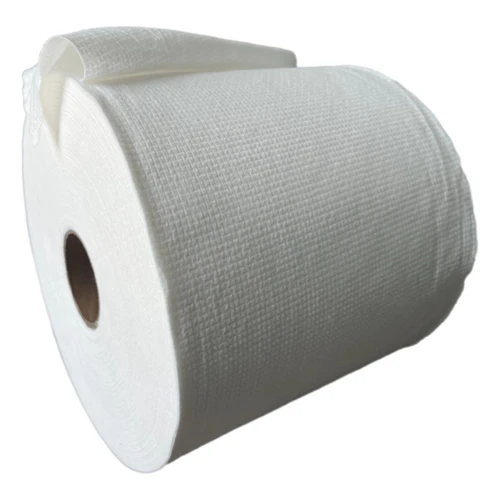
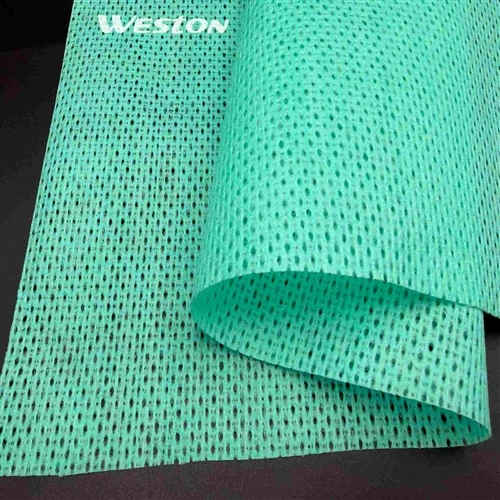
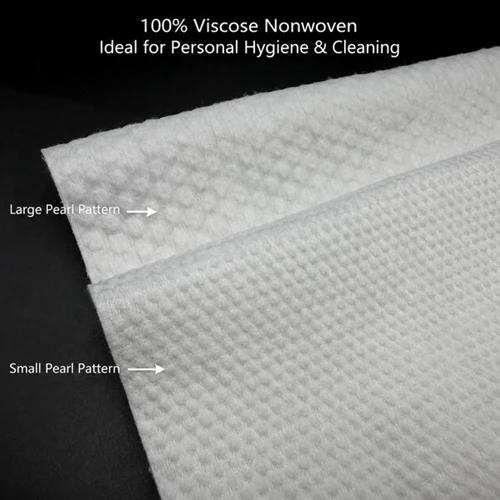
Strong customization capabilities: Weston Nonwoven tailors products to client needs, including adjusting raw materials (e.g., PP-viscose blends), basis weight (15–200 g/m²), width (up to 3.2 meters), and surface treatments (hydrophilic, antibacterial). This flexibility ensures fabrics match exact end-use requirements, from baby wipes to medical towels.
Advanced production technology: The factory uses state-of-the-art spunlacing equipment and maintains strict quality control, backed by ISO certification. This ensures consistent fabric uniformity, softness, and durability-critical for applications like medical care or daily hygiene.
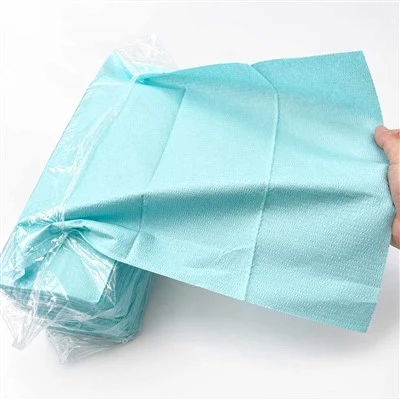
Wide application coverage: Weston Nonwoven specializes in products for hygiene (baby wipes, adult incontinence items), medical (disposable towels), and beauty (facial mask sheets) industries-directly addressing the core markets where spunlaid nonwovens excel.
5.2 Value for Clients
Beyond product quality, Weston Nonwoven offers practical support to streamline client operations:
Technical consulting: Its team provides pre-production guidance, helping clients select the right specifications (e.g., material blends, weight) to optimize their end products.
Flexible delivery: The factory adjusts production schedules to meet urgent orders, ensuring clients avoid supply chain delays.
6. Conclusion
The spunlaid process is a cornerstone of modern nonwoven manufacturing, combining efficiency, versatility, and consistent quality to meet diverse industry needs-from hygiene to healthcare. Its step-by-step workflow, from raw material preparation to post-processing, allows for precise customization of fabric properties. For businesses seeking customized spunlaced nonwovens (a key spunlaid variant), Weston Nonwoven's technical expertise, ISO-backed quality, and client-centric approach make it an ideal partner to bring reliable, high-performance fabrics to market.