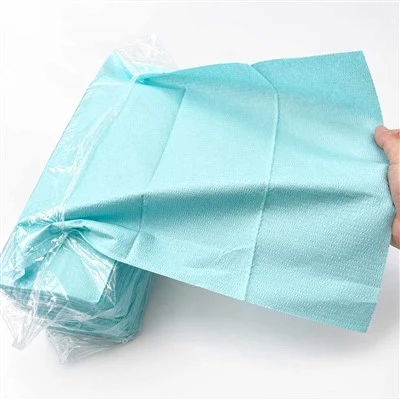
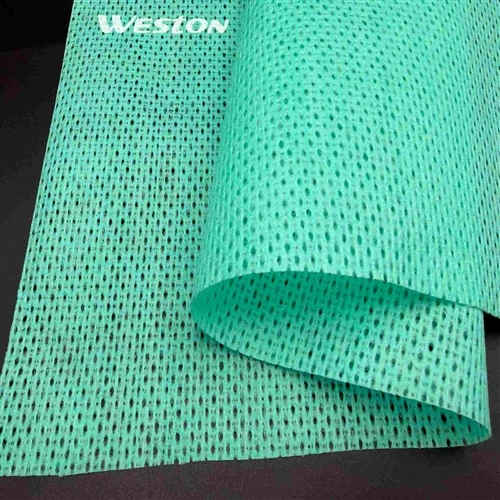
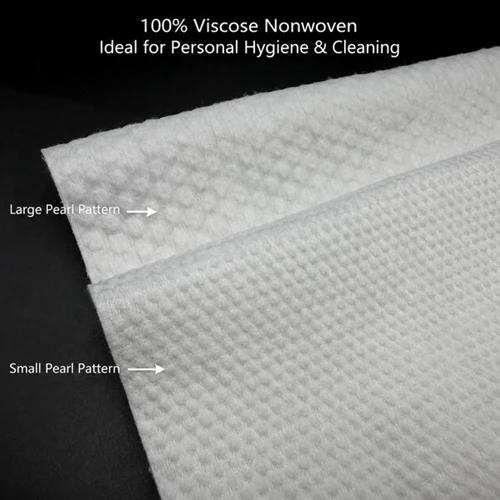
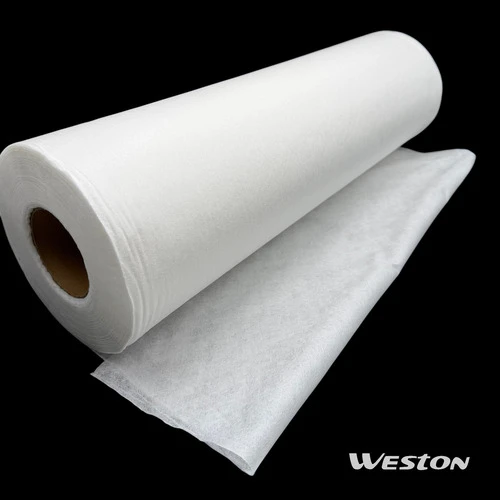
Spunlacing is a manufacturing process used to produce nonwoven fabrics, commonly known as spunlace fabrics or hydroentangled fabrics. It is a mechanical process that involves entangling fibers together using high-pressure water jets, without the need for weaving or knitting.
Here's an overview of the spunlacing process:
Fiber Preparation: The process begins with the preparation of fibers, which can be natural fibers (such as cotton, cellulose) or synthetic fibers (such as polyester, viscose). The fibers may be opened, cleaned, and blended to create a homogeneous fiber blend suitable for spinning.
Carding: The prepared fibers are then fed into a carding machine, which aligns and combs the fibers to create a thin, uniform fiber web. This web serves as the basis for the subsequent entanglement process.
Spinning: The carded fiber web is fed into a hydroentanglement machine, where it passes through a series of high-pressure water jets. These jets cause the fibers to entangle and interlock with each other, forming a cohesive fabric structure.
Entanglement Process: Inside the hydroentanglement machine, the fiber web is subjected to intense water pressure, which forces the fibers to intertwine and bond together. The entanglement process creates a fabric with desired properties such as softness, strength, and absorbency.

Drying: After the entanglement process, the spunlace fabric may pass through a drying section to remove excess moisture and ensure proper drying of the fabric. Various drying methods, such as hot air drying or thermal bonding, may be employed depending on the specific requirements of the fabric.
Finishing: Once dried, the spunlace fabric may undergo additional finishing processes to enhance its properties or add specific functionalities. This may include treatments such as calendering, coating, or surface finishing to improve the fabric's appearance, performance, or compatibility with certain applications.
The spunlacing process can vary in terms of equipment, configuration, and parameters depending on the desired characteristics of the final fabric and the specific requirements of the application. It is a versatile and efficient method for producing nonwoven fabrics with a wide range of properties and applications.