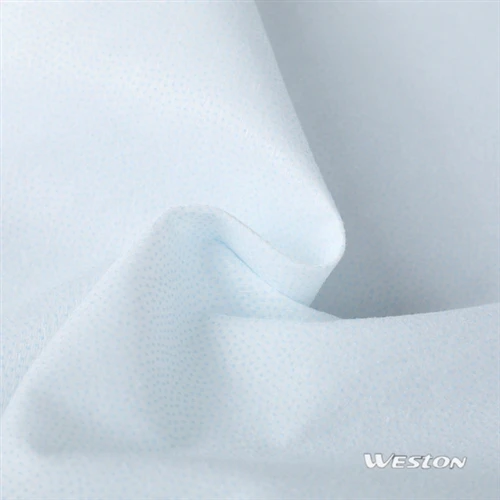
Spunbond nonwoven material is a type of nonwoven fabric that is produced through the spunbond process. Nonwoven fabrics are created by bonding or interlocking fibers together through various processes, and spunbond is one of these methods. Here are the key characteristics and the manufacturing process of spunbond nonwoven material:
Manufacturing Process:
Extrusion: The process begins with the extrusion of synthetic polymer granules, such as polypropylene or polyester. These polymers are melted to form a continuous filament.
Spinning: The molten polymer is then spun through spinnerets, creating long, continuous filaments. These filaments are stretched and aligned to enhance their strength.
Laying Down the Web: The continuous filaments are laid down onto a moving conveyor belt or another substrate in a random arrangement. This creates a web-like structure.
Bonding: Heat and pressure are applied to bond the filaments together, forming a coherent fabric. The bonding process can be thermal (using heat), mechanical (through pressure), or a combination of both.
Calendering (Optional): The fabric may undergo calendering, a process that involves passing it through hot rollers to further improve its properties, such as smoothness and density.
Key Characteristics of Spunbond Nonwoven Material:
Strength and Durability: Spunbond nonwoven materials are known for their strength and durability. The continuous filaments contribute to the fabric's tensile strength.
Breathability: The open structure of spunbond fabrics allows for breathability, making them suitable for certain applications.
Hydrophobic Nature: Spunbond materials can be inherently hydrophobic (repellent to water), but they can also be treated to enhance or modify their hydrophobic properties.
Versatility: Spunbond nonwoven materials are versatile and find applications in various industries due to their strength and flexibility.
Applications of Spunbond Nonwoven Material:
Hygiene Products:
Used in the production of diapers, sanitary napkins, and other hygiene products.
Medical and Surgical Products:
Commonly used in disposable gowns, masks, and surgical drapes.
Agricultural Covers:
Used in agriculture for creating covers to protect crops from adverse weather conditions.
Geotextiles:
Employed in civil engineering and construction for erosion control, soil stabilization, and separation of different soil layers.
Filtration Media:
Used in air and liquid filtration applications.
Packaging:
Utilized as protective layers in packaging materials.
Automotive Interiors:
Used in the production of automotive components, such as headliners and upholstery.
Spunbond nonwoven materials offer a balance of strength, durability, and cost-effectiveness, making them suitable for a wide range of applications across different industries.