Have you ever wondered that behind the smartphone chips we rely on daily, the prescription drugs we take, and even the precision components of aerospace satellites, there lies a "counter-intuitive" laundry technology? It doesn't pursue the softness and fragrance of fabrics, nor does it focus on whether stains are completely removed. Instead, it requires fabrics to meet the strict standard of "only dozens of micro-particles allowed per cubic meter" - this is cleanroom laundry, a precise scientific battle against "invisible pollution." It is not an ordinary cleaning process, but an indispensable core link in the industrial clean chain, with every step permeated by the hard-core logic of materials science, microbiology, and environmental engineering.
The Scientific Core: It's Not "Laundry", But "Particle-Level Pollution Control"
To understand cleanroom laundry, we first need to break a misunderstanding: what it cleans is not "dirty clothes," but "fabrics that may carry invisible pollutants." In fields such as electronics, pharmaceuticals, and aerospace, even micro-particles as small as 0.1 microns (about 1/500 the diameter of a human hair) or a single bacterium can lead to catastrophic consequences - such as short circuits in smartphone chips, contamination of injectables, or failure of aerospace components. Therefore, the essence of cleanroom laundry is to completely remove micro-particles, fiber debris, and microorganisms from fabrics through scientific processes, and prevent secondary pollution during cleaning, turning fabrics into "carriers of cleanliness" rather than "sources of pollution."
The scientific nature of this process is reflected in every detail: the water used for cleaning must be "ultrapure water" (resistivity ≥ 18.2 MΩ・cm), because mineral ions in ordinary water will adhere to fabrics and become "invisible particle sources" in subsequent use; detergents must not contain phosphorus, fluorescent agents, or residual components, otherwise a film will form on the fabric surface, adsorbing more micro-particles; the drying process requires air filtered by HEPA (high-efficiency particulate air) filters (filtration efficiency ≥ 99.97%) to prevent micro-particles in the air from re-adhering; even the rotation speed during dehydration is strictly limited - excessive speed will cause fabric fibers to break, producing new "fiber debris" that instead damages cleanliness.
Take an example: a wipe used in an electronics workshop may carry tens of thousands of micro-particles before cleanroom laundry, but after cleaning, it must meet the standard of "no more than 10 micro-particles per square centimeter of fabric surface." This precision cannot be achieved by ordinary washing machines or hand washing; it must rely on professional clean cleaning systems - this is the essential difference between cleanroom laundry and daily laundry: the former is a "pollution control project," while the latter is a "stain cleaning service."

Core Standards and Technical Barriers: Why It's Hard to Replicate?
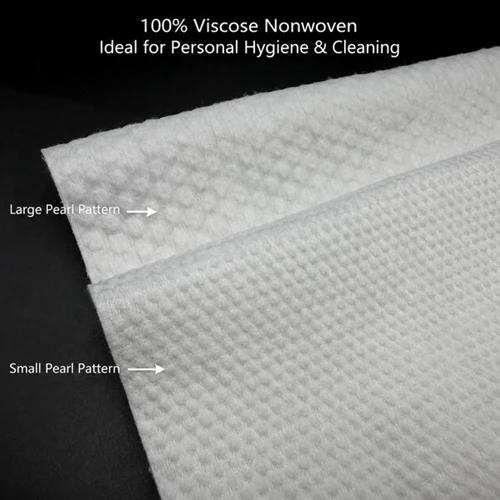
The "threshold" for cleanroom laundry is extremely high, mainly due to two core systems: cleanliness level standards and full-process pollution prevention and control. The globally accepted standard currently is the ISO 14644 cleanroom standard, and the part closely related to laundry is the "fabric cleanliness level" - for example, ISO Class 4 Cleanroom Wipes, commonly used in high-end electronics manufacturing, have the following requirements: per cubic meter of air, the number of particles with a diameter > 0.1 microns must be ≤ 35, and the number of particles with a diameter > 0.5 microns must be ≤ 1. To make cleaned fabrics meet this standard, three major technical barriers must be overcome:
Full-Process Pollution Prevention Without Dead Ends: The cleaning equipment itself must be installed in a cleanroom of ISO Class 5 or higher, and the parts inside the equipment that come into contact with fabrics must be made of "low-shedding materials" such as stainless steel or polytetrafluoroethylene (PTFE) to prevent the equipment from generating micro-particles itself. Even operators must wear cleanroom suits and sterile gloves, because dander shed from human skin (about 5,000 pieces per minute) is also an important source of pollution.
Precision Cleanliness Testing Technology: Cleaned fabrics cannot be judged by "whether they look clean to the naked eye"; instead, laser particle counters must be used to detect the number of surface micro-particles, microbial culture dishes to detect the number of viable bacteria, and even ion chromatography to detect residual detergent components. If any indicator fails to meet the standard, the entire batch of fabrics must be re-cleaned - this "zero-tolerance" testing logic is completely absent in ordinary laundry.
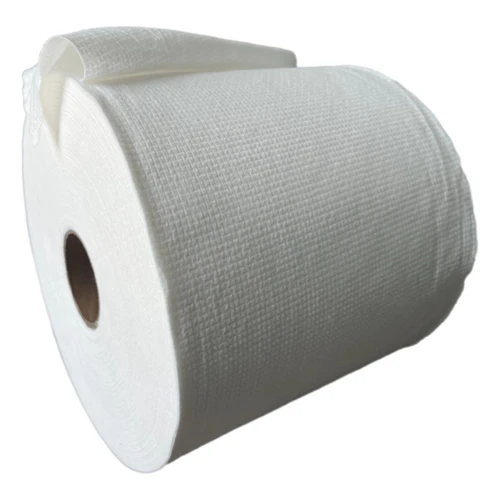
Adaptable Treatment of Fabric Materials: The cleaning methods for clean fabrics of different uses vary greatly: for example, Low Lint Printer Cleaning SMT Cleanroom Wipe Mother Rolls used in surface mount technology (SMT) workshops need to have "low lint" properties, so strong alkaline detergents cannot be used during cleaning, and the drying temperature must be controlled below 60℃ to prevent fiber shrinkage and breakage; while wipes used in pharmaceutical sterile workshops require additional high-pressure steam sterilization at 121℃ to ensure the number of microorganisms is "zero." This "one fabric, one strategy" customized cleaning requires in-depth understanding of the characteristics of fabric materials (such as microfibers and spunbond fabrics).
Pros and Cons: The Dual Side of "High-Precision Cleaning"
Like any technology, cleanroom laundry has two sides. Its advantages make it a "safety barrier" for industrial production, but its disadvantages also stem from its "extreme cleanliness requirements."
Advantages: The Irreplaceable Value of the Clean Chain
Guarantee the Safety of the Industrial Chain: In the pharmaceutical industry, cleanroom laundry ensures that wipes used in sterile workshops are free of microorganisms, avoiding the risk of drug contamination caused by "invisible bacteria"; in the aerospace field, cleaned fabrics can prevent tiny fibers from adhering to rocket engine components and causing failures. For example, a well-known semiconductor factory once reduced the product scrap rate from 5% to 0.3% simply by optimizing the cleanroom laundry process for wipes - this is the direct value of cleanroom laundry.
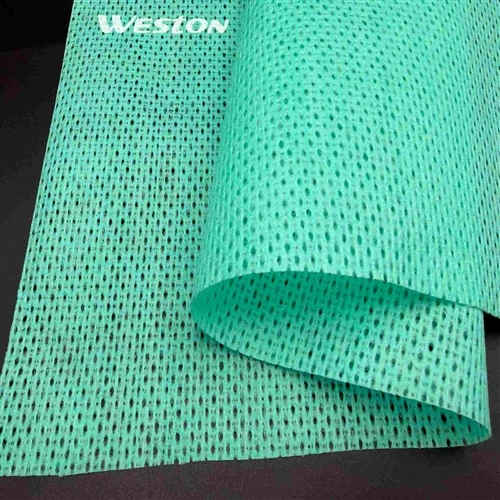
Extend the Service Life of Clean Fabrics: Cleanroom laundry uses mild detergents and low-speed dehydration, which can reduce wear on fabric fibers. Taking 12x12 Microfiber Spunlace Pads as an example, the service life of pads cleaned by cleanroom laundry is 3-5 times that of pads cleaned by ordinary methods. This not only reduces the cost of fabric replacement but also reduces environmental waste.
Stabilize the Quality of Downstream Products: For the electronics industry, the cleanliness of wipes directly affects chip yield. After cleanroom laundry, wipes can stably maintain the ISO Class 4 standard, ensuring that each chip is not damaged by "invisible particles" during the manufacturing process.
Disadvantages: The Cost and Threshold of "Extreme Cleanliness"
High Initial Investment: A set of professional cleanroom laundry equipment (including ultrapure water systems, HEPA drying units, and particle detection instruments) costs millions of yuan. In addition, the construction of a matching ISO Class 5 cleanroom also requires a large amount of capital input - this makes it "unaffordable" for many small and medium-sized enterprises.
High Operating Costs: Ultrapure water systems consume a lot of electricity (producing 1 ton of ultrapure water requires approximately 8-10 kWh of electricity); professional detergents are 5-10 times more expensive than ordinary laundry detergents; each batch of fabrics needs to be tested, with a testing cost of about several hundred yuan per batch. Over long-term operation, the cumulative cost is considerable.
High Requirements for Operators: Operators need to master not only the operation of cleaning equipment but also knowledge of cleanroom management (such as how to avoid secondary pollution) and basic detection methods (such as judging the validity of particle detection reports). A qualified cleanroom laundry operator requires at least 3 months of professional training - this increases the difficulty of personnel recruitment and management.
Application Scenarios: Where Does Cleanroom Laundry Play a Role?
The application scenarios of cleanroom laundry cover the "invisible high-end manufacturing fields" in our lives, and its value lies in every link that has "extreme requirements for cleanliness":
In SMT workshops in the electronics industry, when workers use Low Lint Printer Cleaning SMT Cleanroom Wipe Mother Rolls to wipe printed circuit boards, the wipes are required to not shed a single fiber - because a single fiber may cause a short circuit in the components on the circuit board. After each use, these wipes need to be sent to a cleanroom laundry system for cleaning: first, they are soaked in ultrapure water to remove residual solder paste on the surface, then cleaned with low-foam detergent to remove micro-particles, and finally dried with filtered air. After cleaning, the wipes will be tested with lasers to confirm "no fiber shedding" before they can be put back into use.

In sterile injectable workshops in the pharmaceutical industry, wipes need to meet "sterile-level cleanliness." The cleanroom laundry process here is even stricter: in addition to the usual micro-particle removal, the wipes also undergo high-pressure steam sterilization at 121℃ for 20 minutes, then are cooled and packaged in a sterile environment. If this step is skipped and wipes cleaned by ordinary methods are used, staphylococcus from human skin may be introduced into the medicinal solution, leading to infections in patients after injection - this is why pharmaceutical companies have "zero compromise" on cleanroom laundry.
In the aerospace field, fabrics used to wipe aerospace engine components need to undergo "molecular-level cleanliness" testing after cleanroom laundry: gas chromatography is used to detect whether there are residual organic substances (such as detergent components) on the fabric surface, because these organic substances may volatilize in space and affect the normal operation of the engine. Such strict requirements make cleanroom laundry an "indispensable step" in aerospace manufacturing.
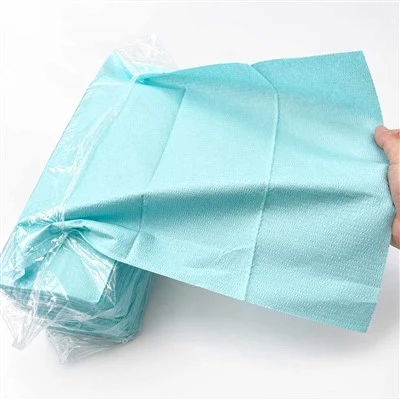
Weston Nonwoven factory's clean fabrics are the "reliable assistants" in these scenarios - whether it is the low-lint Low Lint Printer Cleaning SMT Cleanroom Wipe Mother Rolls, the high-absorbency 12x12 Microfiber Spunlace Pads, or the ISO Class 4 Cleanroom Wipes that meet the needs of high-end manufacturing, the full play of their performance is inseparable from scientific and standardized cleanroom laundry processes. These fabrics already have basic cleanliness when they leave the factory, but only through subsequent professional clean cleaning can they maintain the "industrial-level cleanliness standard" for a long time and truly safeguard the cleanliness and safety of the production process.
Why It Matters to Our Daily Life
You may think that cleanroom laundry is far from us - but in fact, it is hidden in the things we come into contact with every day: the chip in your smartphone is produced in a workshop that uses wipes after cleanroom laundry; the antibiotics you take when you have a cold are made in a sterile environment maintained by fabrics processed through cleanroom laundry; even the engine components of the airplane you take rely on fabrics treated with cleanroom processes for cleaning.
It is not a "niche technology," but an "invisible cornerstone" of modern industrial civilization. It uses scientific rigor to combat "invisible pollution" and precise processes to safeguard product safety - this is the true significance of cleanroom laundry: it brings "extreme cleanliness" from laboratories to industrial production, and ultimately builds an invisible "safety line" for our lives.
If you want to know more about cleanroom wipes and their cleaning and maintenance details, you can get free samples and professional consultation via info@westonmanufacturing.com. Whether you are engaged in electronics manufacturing, pharmaceutical production, or aerospace research, you can find solutions that match your cleanroom needs here.