The Science Behind One of Modern Filtration's Most Powerful Technologies
Introduction: The Invisible Guardian in Your Pocket
Every single day, invisible particles surround us-viruses, bacteria, dust, allergens, and industrial contaminants floating through the air and water we encounter. Yet most people never think about the technology protecting them. Remarkably, a technology developed in the 1980s and perfected over decades has become humanity's silent defense against airborne and waterborne threats: the melt blown filter.
During the global pandemic, melt blown filters became a household term almost overnight. Suddenly, everyone wanted to understand N95 respirators, and the phrase "melt blown filtration layer" dominated conversations about mask effectiveness. Yet even as billions of masks were distributed worldwide, most people still didn't understand the extraordinary science behind their remarkable effectiveness. What makes a melt blown filter capable of capturing particles as small as 0.1 micrometers-nearly invisible to the naked eye-while maintaining breathability? How can ultrafine polymer fibers achieve what thicker, seemingly more robust materials cannot?
This exploration reveals an elegant truth: melt blown filtration represents one of science's most successful examples of achieving maximum performance through finesse rather than brute force. The technology combines principles of polymer physics, aerodynamics, electrostatics, and materials engineering into a system so efficient that it has become the gold standard across healthcare, industrial manufacturing, water treatment, and consumer applications worldwide. Understanding this technology demonstrates how scientific principles quietly solve the real-world problems we face daily.
What Exactly is a Melt Blown Filter? Defining the Technology with Precision
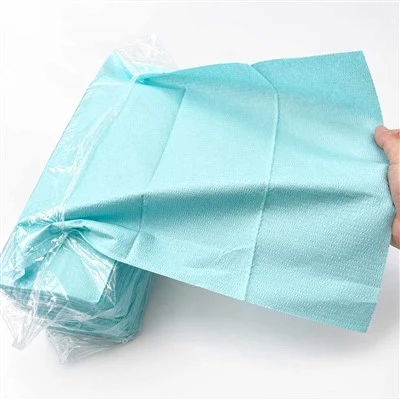
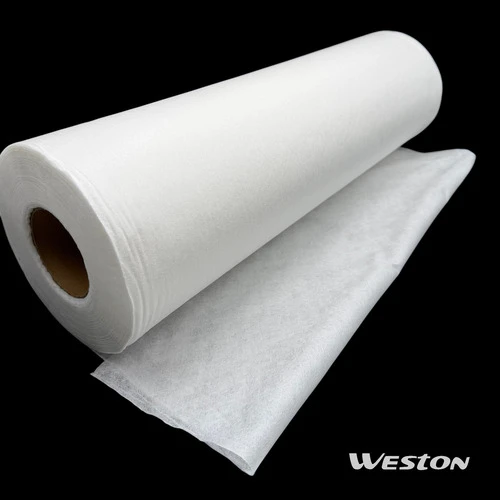
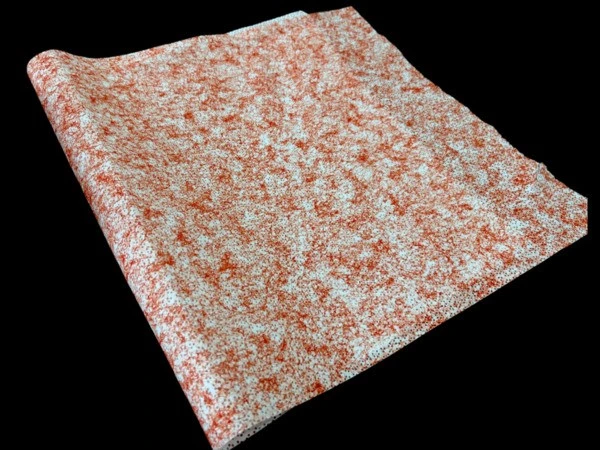
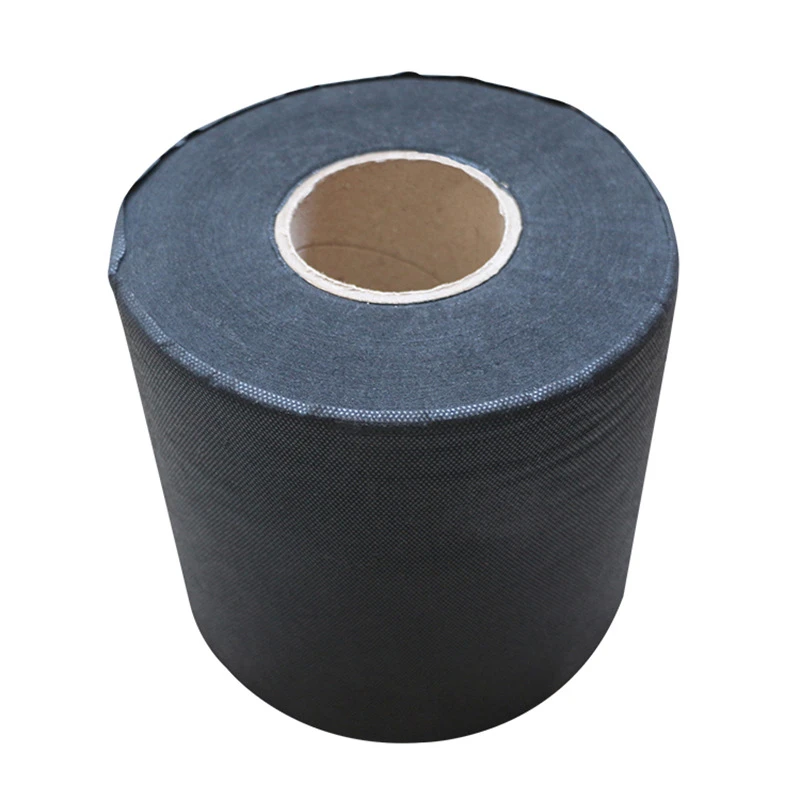
A melt blown filter is a nonwoven fabric composed of ultrafine polymer fibers-typically measuring between 1 and 5 micrometers in diameter-created through a specialized manufacturing process where molten polymer is simultaneously extruded through fine nozzles and blown into even finer fibers using high-velocity hot air streams. The term "melt blown" refers specifically to this manufacturing technique, not to the material itself, though polypropylene is the most commonly used polymer due to its optimal balance of cost, thermal properties, and chemical compatibility.
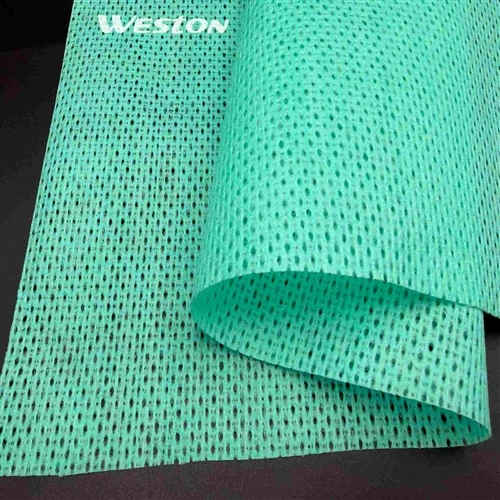
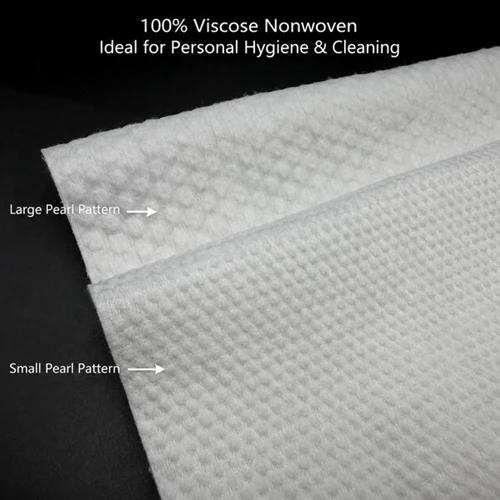
Unlike traditional woven fabrics, which use interlocking threads, or conventional filters, which rely on thick layers of material, melt blown fabrics feature randomly arranged, overlapping fibers that create a unique three-dimensional structure. This architecture enables something counterintuitive: despite being remarkably dense and efficient at particle capture, melt blown fabrics remain surprisingly breathable. This paradox-density combined with permeability-forms the fundamental basis of the technology's success.
The distinction between "melt blown" as a process and the material itself matters profoundly. While polypropylene dominates current applications, the same melt blowing process can transform other polymers (nylon, polyester, polyethylene) into specialized filtration media suited for different chemical and thermal environments. This flexibility explains why melt blown technology has found applications as diverse as surgical masks and industrial oil purification.
The performance metrics reveal why this technology has become essential infrastructure in modern society. Melt blown filters achieve filtration efficiency levels of 95-99% across an exceptionally broad range of particle sizes. This means that if 100 particles attempt to pass through the filter, between 95 and 99 of them are captured and retained. For comparison, conventional mechanical filters typically achieve only 50-70% efficiency at similar particle sizes. Furthermore, this superior efficiency is accomplished with relatively low pressure drop (airflow resistance), meaning systems don't require excessive energy to draw air through the filter medium.
The Manufacturing Process: From Plastic Pellets to Microscopic Fibers
The transformation of raw polypropylene pellets into ultraefficient filtration media involves a precisely controlled manufacturing sequence that seems simple on the surface but reveals sophisticated engineering when examined closely.
Stage 1: Polymer Preparation and Extrusion-Setting the Foundation
The journey begins with plastic pellets, typically consisting of virgin or recycled polypropylene, loaded into an extruder. Inside this heated chamber, the polymer undergoes transformation. Temperature is carefully controlled-typically maintained between 250-300°C-bringing the solid pellets to a viscous molten state. This precise temperature control is critical. Too cold, and the polymer won't flow properly; too hot, and molecular degradation occurs, compromising the fiber properties.
The molten polymer is then forced under pressure through a die (extrusion head) containing multiple small orifices-sometimes 50 to over 500 individual holes per die, depending on the intended web width and production rate. Each orifice produces a thin polymer filament, roughly the diameter of a human hair or slightly thinner. These individual streams exit the die in a bundle, presenting an opportunity for the true magic of melt blowing to occur.
Stage 2: The Melt Blowing Event-Where Physics Transforms Plastic
This is where melt blown technology fundamentally differs from conventional fiber-spinning processes. Rather than allowing these molten filaments to solidify under controlled conditions (as in traditional fiber spinning), the melt blown process exposes them to something dramatic: high-velocity hot air streams moving at supersonic speeds.
These air jets, traveling at velocities exceeding the speed of sound, are directed perpendicular to the exiting polymer streams at a distance of just a few millimeters from the die. When these high-pressure air streams impact the molten polymer filaments, two simultaneous phenomena occur:
Stretching and Attenuation: The supersonic air velocity literally pulls the polymer filaments, elongating them to 100-1000 times their original diameter. A filament that might have been 50 micrometers in diameter at the die opening emerges as an ultrafine fiber measuring just 1-5 micrometers. This radical reduction in diameter is the critical factor enabling the extraordinary filtration performance. As fiber diameter decreases exponentially, the surface area available for particle capture increases dramatically, and the probability of particles colliding with fibers multiplies.
Instantaneous Cooling: Simultaneously with this stretching, the high-velocity air streams-which are also heated but rapidly lose thermal energy-cool the extended fibers almost instantaneously. The polymer solidifies while still in a stretched, oriented state, "locking in" the fine fiber structure. This rapid quenching prevents the fibers from retracting to larger diameters, a process that would severely compromise filtration performance.
The interplay between stretching and cooling represents a precise balance. Air pressure, temperature, extrusion speed, and distance between die and collection surface must all be optimized in concert. Even minor variations produce measurable changes in fiber diameter and filtration characteristics.
Stage 3: Web Formation and Collection-Building the Filter Architecture
As cooled fibers exit the high-velocity air region, they're slowed by the surrounding air and begin to drift downward. Rather than falling randomly, they're deliberately collected on a moving conveyor belt or rotating drum positioned directly below the blowing zone. This collection surface might be moving at speeds of 30-100 meters per minute, depending on production parameters.
As fibers accumulate on the collection surface, they bond to each other through a combination of mechanisms. Most remarkably, adhesives are typically unnecessary-the ultrafine fibers bond through electrostatic attraction and mechanical entanglement alone. The fine fibers, having been charged during the blowing process, naturally adhere to each other and to previously deposited fibers. This self-bonding phenomenon, combined with the random overlapping orientation of fibers, creates a coherent, mechanically stable nonwoven fabric without requiring chemical adhesives or heat treatments.
The resulting web exhibits a characteristic three-layered structure visible under magnification. The outer layer, with slightly lower fiber density, facilitates initial particle capture and provides mechanical integrity. The middle layers feature progressively increasing fiber density, providing depth filtration-particles cannot simply bounce off the surface but must navigate through multiple layers of increasingly fine fibers. The inner layer, the densest region, serves as a final barrier and supports the overall structure.
This graded-density architecture is crucial to performance. The surface layer captures larger particles, preventing immediate blinding (clogging) of the finer layers beneath. Smaller particles, having made it past the outer layer, encounter progressively more obstacle-dense environments in deeper layers, dramatically increasing capture probability. This design philosophy extends filter life-a melt blown filter doesn't become suddenly clogged but rather gradually accumulates particles in a controlled, distributed manner across its entire depth.
Process Control: The Precision Behind Apparent Simplicity
Modern melt blowing equipment incorporates sophisticated process control systems that continuously monitor and adjust parameters. Air pressure, measured in megapascals, directly influences fiber fineness-higher pressure produces finer fibers with superior filtration performance but at increased air consumption cost. Temperature profiles are precisely regulated across different zones to ensure optimal polymer flow and cooling characteristics.
The extrusion rate (how much polymer flows through the die per unit time) directly affects fiber density and web weight. Faster extrusion creates thicker webs with more fibers per unit area, improving dirt-holding capacity but potentially increasing pressure drop. Experienced melt blowing technicians understand these relationships intuitively, adjusting parameters based on desired filtration ratings and intended applications.
Production capacity reflects the efficiency advantages of melt blowing technology. Modern equipment can produce nanofiber mats at rates exceeding 2 kilograms per hour per meter of die width, making commercial mass production economically viable. This productivity explains why melt blown filters have become affordable enough for single-use applications like surgical masks, enabling billions of masks to be produced annually without bankrupting manufacturers.
The Micro-Architecture: Why Structure Determines Function
The raw specification that melt blown fibers measure 1-5 micrometers in diameter might seem like a minor engineering detail, but this single parameter drives the entire performance envelope of the technology. Understanding the relationship between structure and function requires examining how physical dimensions translate into filtration capability.
Fiber Diameter: The Defining Measurement
The relationship between fiber diameter and available surface area follows an inverse geometric relationship. When you reduce fiber diameter from 20 micrometers to 2 micrometers (a tenfold reduction), you don't reduce surface area tenfold-you increase it roughly 100 times. This geometric relationship is fundamental. Consider that a single sheet of melt blown nonwoven fabric, weighing perhaps 50 grams per square meter, presents hundreds of thousands of meters of fiber length per square meter of surface area. Traditional textile fibers, typically measuring 10-50 micrometers in diameter, simply cannot achieve this ratio.
This expanded surface area is the foundation enabling efficient particle capture. Particles must travel further to find a path through the fiber network without colliding with an obstacle. The probability that a random particle will encounter a fiber increases exponentially as surface area increases.
Porosity and Pore Size: The Paradox of Density and Breathability
A seemingly contradictory characteristic of melt blown fabrics is central to their success: they maintain substantial porosity (70-90% void space) despite their density and filtration efficiency. Individual pores-the spaces between fibers-typically measure 1-3 micrometers in diameter, creating a tortuous pathway through the filter web.
This architectural paradox enables melt blown filters to achieve their fundamental balance: blocking particles while allowing air to flow. Pores are small enough to interfere with particles in the 0.5-5 micrometer range (where many dangerous contaminants reside) yet large enough for air molecules and small clusters of clean air to move through with relatively low resistance. Air molecules, measuring nanometers, pass through easily, while bacteria (typically 0.5-10 micrometers) and viruses (0.02-0.3 micrometers) face dramatically reduced passage probability.
The relationship between porosity and pressure drop (airflow resistance) is direct: higher porosity generally means lower pressure drop. Melt blown engineers continuously optimize this relationship, seeking to maximize porosity while maintaining the fiber density necessary for adequate filtration. This balance-refined through millions of experimental variations and mathematical simulations-represents the core intellectual property advantage of established melt blown manufacturers.
Graded Density Structure: Optimizing Depth Filtration
As previously mentioned, melt blown fabrics naturally develop a graded density structure during collection, but modern manufacturing deliberately enhances this characteristic. By controlling collection speed, air flow patterns, and extrusion conditions, manufacturers can create precisely defined density gradients.
Consider a three-layered structure: the outer surface layer (approximately 10-20% of total thickness) is least dense, allowing large particles (5-10 micrometers) to be captured through simple mechanical interception. As particles penetrate deeper, fiber density increases, creating increasingly effective filtering conditions. The middle zone captures medium-sized particles (1-5 micrometers) through a combination of mechanical and electrostatic mechanisms. The inner zone, densest of all, functions as a final barrier, trapping the smallest particles (0.1-1 micrometer) including viruses and ultrafine aerosols.
This depth filtration approach dramatically extends filter lifespan compared to surface-only filters. A sheet-style filter that captures all particles on the surface becomes rapidly clogged and requires frequent replacement. Melt blown filters, by distributing the filtration load across their entire depth, accumulate dirt gradually and maintain relatively consistent performance until saturation occurs. In practical applications, melt blown filter cartridges often operate for months or even years in HVAC systems before requiring replacement, compared to days or weeks for conventional surface filters.
The Capture Mechanisms: How Particles Get Trapped-The Multi-Mechanism Advantage
The remarkable efficiency of melt blown filters arises not from a single capture mechanism but from the simultaneous operation of three distinct physical processes, each contributing according to particle size and characteristics. Understanding these mechanisms provides insight into why melt blown filters outperform alternative technologies so dramatically.
Mechanical Interception: The Simple Yet Effective Barrier
The most straightforward capture mechanism involves particles that cannot navigate around fiber obstacles. Consider a particle measuring 2 micrometers, encountering an ultrafine melt blown fiber spanning its path. If the particle follows a direct trajectory and comes within half its diameter of the fiber surface, physical contact occurs and the particle attaches.
Mechanical interception dominates for larger particles in the 5-10 micrometer range and contributes meaningfully for particles down to about 1 micrometer. This mechanism operates independently of particle charge, material composition, or electrostatic properties-it's purely geometric physics. A virus particle, a dust grain, and a pollen speck, regardless of their chemical nature, face mechanical interception if they travel directly toward an obstacle.
The effectiveness of this mechanism is enhanced by the random, three-dimensional orientation of melt blown fibers. Unlike aligned fibers in some advanced materials, melt blown fibers cross and overlap from multiple angles, creating a labyrinthine pathway. Particles attempting to traverse this maze face obstacles from multiple directions, making straight-line passage nearly impossible.
Diffusion (Brownian Motion): The Random Walker Principle
Very small particles, particularly those below 1 micrometer, exhibit a remarkable property: they engage in constant, random motion caused by bombardment from surrounding air molecules. This phenomenon, called Brownian motion, named after botanist Robert Brown who first observed it through a microscope in 1827, applies particularly to particles in the size range of viruses and ultrafine aerosols.
A virus particle suspended in air doesn't travel in straight lines; instead, it bounces chaotically in random directions, roughly analogous to a drunk person's walk through a city (termed a "random walk" in physics). As this particle tumbles randomly through the melt blown filter web, each random direction increases the probability of encountering a fiber. Over sufficient distance, the probability of collision approaches certainty.
This mechanism becomes increasingly important for particles below 0.5 micrometers-precisely the size range of airborne viruses and many bacterial aerosols. A particle measuring 0.1 micrometers moving through a tortuous path with fibers separated by 1-3 micrometer spaces faces overwhelming odds of collision. The random nature of its motion means that even if one random walk avoids a fiber, subsequent random movements make avoidance of all fibers statistically improbable.
The implications for pandemic preparedness are profound: melt blown filters capture viruses not despite their tiny size, but partly because of it. The same Brownian motion that allows viruses to float through air for hours also ensures that those viruses encounter filter fibers with high probability.
Electrostatic Attraction-The Secret Advantage That Changes Everything
Beyond mechanical interception and diffusion lies a mechanism that fundamentally distinguishes melt blown filters from purely mechanical alternatives: electrostatic charge attraction. During the melt blowing process, polymer fibers develop electrical charge through multiple mechanisms. As fibers are stretched and accelerated by high-velocity air, triboelectric charging occurs-the same phenomenon that creates static electricity when you slide across a carpet. Additionally, electrostatic treatment (corona charging) can deliberately enhance fiber charge after collection.
This electrostatic effect is not incidental; it's the factor that elevates melt blown filters to their exceptional performance level. The charged fibers create invisible electric fields extending outward into the pores. Particles carrying opposite charge-which includes most biological particles and many atmospheric contaminants-experience electrostatic attraction toward these fibers, regardless of their trajectory.
This mechanism works at a distance. Unlike mechanical interception, which requires particle-fiber contact, electrostatic attraction operates across the pore space. A particle passing within several fiber diameters of a charged fiber experiences an attractive force drawing it toward the fiber surface. The implications are dramatic: filtration efficiency increases without increasing fiber density, which would otherwise increase pressure drop and reduce breathability.
Research has demonstrated that electrostatic enhancement can increase filtration efficiency by 10-30% depending on particle size and charge. This performance boost is achieved without additional material-merely through optimization of fiber charge. For melt blown filters used in respiratory protection, this electrostatic mechanism is crucial for capturing virus-laden respiratory droplets and aerosols, which carry natural electrical charge.
The electrostatic component of melt blown filtration explains a practical observation that puzzles some users: melt blown masks become noticeably less effective if washed. Washing strips away the electrostatic charge that the fibers naturally accumulated, reducing filtration efficiency from 95-99% down to 50-70%. This is why N95 respirators are rated for single-use in medical settings; the electrostatic advantage is temporary and irreplaceable.
The Synergistic Interaction: Three Mechanisms Working in Concert
The true power of melt blown filtration emerges from recognizing that these three mechanisms operate simultaneously and synergistically. Consider a particle traveling through the filter:
At larger pore junctions (particle size 5-10 micrometers), mechanical interception dominates-the particle simply cannot fit through openings designed around 1-3 micrometer pores. As particle size decreases (1-5 micrometers), both mechanical interception and electrostatic attraction contribute meaningfully. The particle might be captured by direct contact with a fiber, or it might be deflected by the electrostatic field surrounding a nearby fiber.
For ultrafine particles (0.1-1 micrometer), particularly viruses, all three mechanisms contribute. Brownian motion drives the particle into random trajectories, increasing fiber encounter probability. Mechanical interception captures particles that collide directly. Electrostatic attraction ensures that particles passing near fibers are captured even without direct contact.
This multi-mechanism approach explains why melt blown filters maintain high efficiency across the entire particle size spectrum, unlike specialized filters designed for specific particle sizes. The filter works equally well against dust (captured primarily by mechanical interception), against bacteria (captured by combinations of all three mechanisms), and against viruses (captured primarily by diffusion and electrostatic attraction).
Melt blown filtration represents one of modern engineering's most elegant achievements. Through straightforward application of polymer physics, aerodynamics, electrostatics, and materials science, the technology creates something profoundly effective: ultrafine polymer fibers that capture 95-99% of particles attempting to pass through while remaining breathable enough for comfortable use.