What Are the Raw Materials for Spunlace?
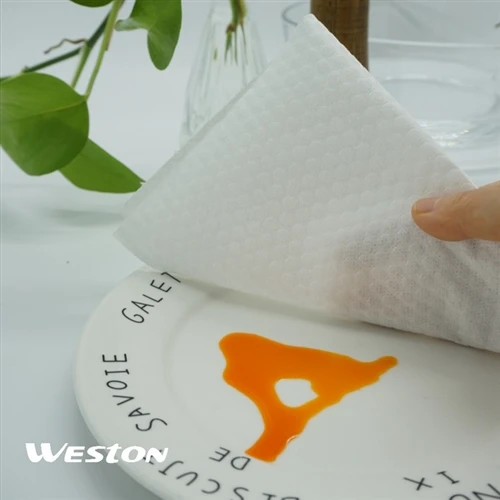
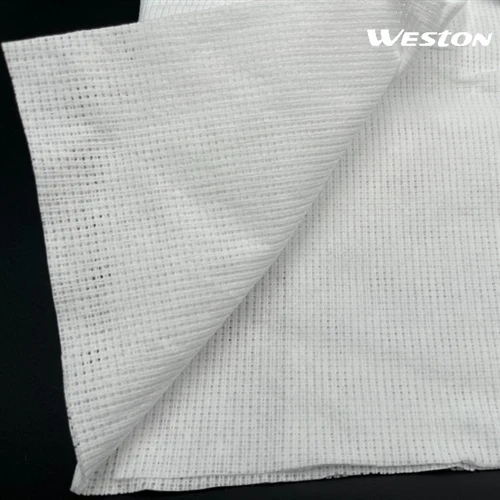
Spunlace nonwoven fabric often looks simple at first glance-soft, clean, uniform.
But behind that surface lies a carefully chosen mix of raw materials, each playing a very specific role.
Unlike woven or knitted textiles, spunlace is not defined by yarns or loops. It is defined by fiber selection and hydroentanglement-a process that uses high-pressure water jets to physically entangle fibers together. That makes the choice of raw materials especially important. The fibers are not just ingredients; they are the structure.
This article breaks down the main raw materials used in spunlace, explains why they are chosen, and shows how different fibers shape real-world performance-without exaggeration, and without technical fog.
Understanding Spunlace at the Fiber Level
Spunlace is best understood as a platform, not a product.
The same production line can produce a baby wipe, a medical drape, or an industrial cleaning cloth-simply by changing the fiber blend.
Each raw material brings strengths and trade-offs. No fiber is perfect on its own. This is why experienced producers-and any responsible nonwoven fabric manufacturer-focus less on trends and more on fiber behavior.

Wood Pulp (Viscose / Rayon): The Backbone of Absorbency
Wood pulp–based fibers, commonly known as viscose or rayon, are among the most widely used raw materials in spunlace.
They are made from natural cellulose derived from wood, processed into continuous fibers with consistent quality.
Key characteristics include:
High absorbency
Soft hand feel
Good liquid retention
Skin-friendly surface
Because of these properties, wood pulp fibers are widely used in:
Baby wipes
Facial and cosmetic wipes
Household wet wipes
Medical hygiene products
From a functional standpoint, wood pulp fibers excel wherever liquid management matters. They absorb quickly and evenly, making them ideal for wipes that need to clean without smearing.
Their main limitation is mechanical strength. On their own, they are not designed to withstand heavy pulling or abrasion-which is why they are often blended rather than used alone.
Cotton Fiber: Natural Comfort with Familiar Performance
Cotton is one of the most recognizable fibers in the world, and its presence in spunlace is easy to understand.
As a natural cellulose fiber, cotton offers:
Excellent softness
Breathability
Strong skin compatibility
A familiar, "textile-like" feel
Cotton-based spunlace is often chosen for:
Premium personal care wipes
Medical and healthcare applications
Products marketed toward sensitive skin users
However, cotton also comes with variability. Fiber length, cleanliness, and consistency depend heavily on sourcing and processing. For this reason, many manufacturers use cotton in blends rather than as a single fiber solution.
A balanced blend allows a nonwoven fabric manufacturer to maintain stable production while still delivering the tactile benefits consumers expect from cotton.
Polyester (PET): Strength, Stability, and Control
Polyester is a synthetic fiber, and its role in spunlace is clear: structure and durability.
Compared to natural fibers, polyester offers:
High tensile strength
Dimensional stability
Low linting
Consistent fiber quality
These traits make polyester essential for applications where fabric integrity matters more than softness, such as:
Industrial cleaning wipes
Surface preparation cloths
Medical disposables requiring strength
Polyester does not absorb water well by itself, but when blended with cellulose fibers, it creates a fabric that is both strong and functional.
This balance is one reason blended spunlace has become the industry standard rather than the exception.
Polypropylene (PP): Lightweight and Functional by Design
Polypropylene is another synthetic fiber used in spunlace, particularly in cost-sensitive or function-driven products.
Its core properties include:
Low density
Chemical resistance
Hydrophobic behavior
Competitive cost structure
PP fibers are often selected when:
Liquid repellency is needed
Fabric weight must be minimized
Controlled absorbency is preferred over high uptake
In spunlace, PP is rarely used alone. It is more commonly blended with wood pulp or viscose to achieve a specific balance between absorbency and resistance.
From a materials science perspective, PP allows manufacturers to fine-tune how a wipe behaves when wet-an often overlooked but critical detail.

Fiber Blending: Where Real Engineering Happens
Most commercial spunlace fabrics are not single-fiber products. They are engineered blends.
Common combinations include:
Wood pulp + polyester
Cotton + polyester
Wood pulp + polypropylene
Blending allows control over:
Absorbency speed and capacity
Tensile strength (dry and wet)
Surface texture
Cost efficiency
Lint performance
This is where experience matters. Fiber ratios, web formation, and water jet pressure all interact. Two fabrics with the same fiber names can behave very differently in use.
For this reason, professional buyers increasingly evaluate not just fiber labels, but the technical capability of the nonwoven fabric manufacturer behind the product.
Bio-Based and Sustainable Fiber Options
Sustainability has become an important consideration in spunlace development, but it is not a simple checkbox.
Emerging materials include:
PLA (polylactic acid)
Modified cellulose fibers
Biodegradable synthetic alternatives
These fibers aim to reduce environmental impact, but they also introduce challenges:
Higher cost
Narrower processing windows
Application-specific limitations
In practice, sustainable fibers perform best when matched carefully to the intended use. A responsible nonwoven fabric manufacturer evaluates these materials based on lifecycle performance, not marketing appeal alone.
Matching Raw Materials to Application Needs
The most important takeaway is straightforward: there is no universal best fiber.
Different applications demand different priorities:
Baby wipes need softness and absorbency
Industrial wipes need strength and low lint
Medical products require consistency and cleanliness
Raw material selection is not about trends. It is about fit for purpose.
Spunlace performs best when fiber choice, fabric structure, and end use are aligned-something only achievable through material understanding and process control.
A Practical Perspective from Manufacturing
In real production environments, raw materials are chosen with restraint. Performance claims must survive actual use, not just lab tests.
Experienced producers like Weston Nonwoven approach fiber selection from a practical angle-balancing performance, stability, and scalability. As a long-established nonwoven fabric manufacturer, Weston focuses on how materials behave in real applications, not just how they read on a specification sheet.
That perspective is what turns spunlace from a fabric into a reliable solution.