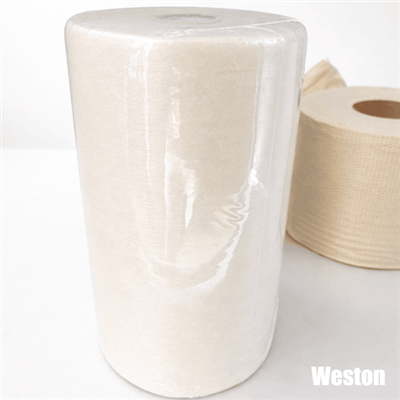
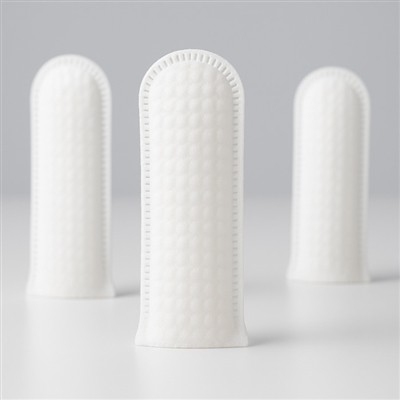
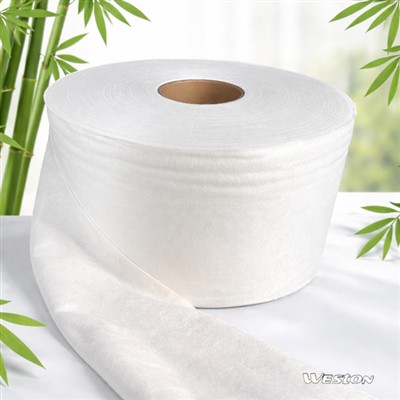
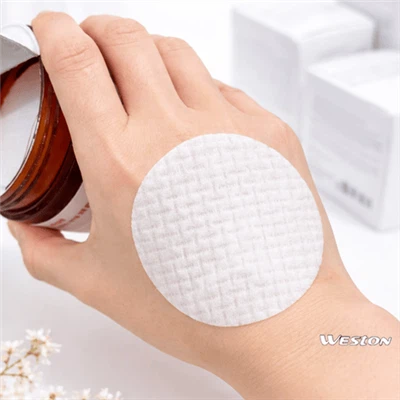
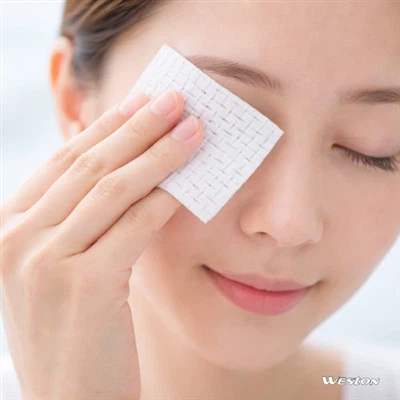
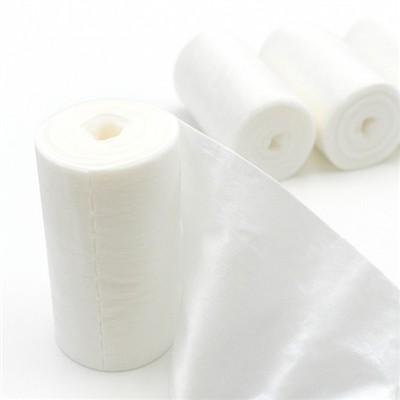
Nonwoven fabrics have cemented their position as a cornerstone in modern material science, permeating industries from medical textiles to industrial filtration with unprecedented speed. Their versatility in production and cost-efficiency have made them a go-to choice for countless applications. Yet, for the discerning professional buyer, a surface-level understanding of their advantages is insufficient. A deeper dive into their inherent limitations reveals critical considerations that directly impact operational efficiency, sustainability goals, and end-product performance. This analysis aims to dissect these drawbacks with precision, while illuminating how advancements in specialized variants-such as Woodpulp PLA Spunlace, Big Pearl Dot Spunlace, and Cross Viscose Spunlace-are addressing these challenges.
Structural Vulnerabilities Under Mechanical Stress
Nonwoven fabrics, by virtue of their manufacturing process, lack the interlocking fiber structure that grants woven textiles their tensile strength. The bonding mechanisms-whether thermal, chemical, or mechanical-create a matrix that prioritizes porosity and flexibility over structural rigidity. This fundamental characteristic manifests in several critical weaknesses.
In high-tension applications, such as industrial conveyor belts or heavy-duty packaging, nonwovens exhibit significant elongation under load, often exceeding 30% of their original length before failure. This plastic deformation compromises dimensional stability, leading to misalignment in automated production lines or inconsistent wrapping in logistics operations. Unlike woven materials, which distribute stress evenly across interlaced fibers, nonwovens concentrate stress at bond points, resulting in premature tearing at seam interfaces-a particular concern in medical drapes where sterility relies on intact barriers.

Abrasion resistance presents another challenge. In repeated friction scenarios-such as upholstery or industrial wipes-nonwovens shed fibers at a rate 3-5 times higher than woven alternatives. This fiber loss not only diminishes functional performance (e.g., absorbency in wipes) but also creates contamination risks in sensitive environments like cleanrooms or medical facilities.
Notably, innovations in spunlace technology have mitigated some of these issues. Cross Viscose Spunlace, with its crisscross fiber orientation, enhances tensile strength by 20-30% compared to standard spunlaced materials. Similarly, Big Pearl Dot Spunlace incorporates reinforced nodal points that improve abrasion resistance, reducing fiber shedding by up to 40% in controlled testing. These advancements demonstrate that while structural limitations persist in generic nonwovens, engineered variants can address specific performance requirements.
Environmental Footprint and End-of-Life Challenges
The sustainability narrative surrounding nonwovens is complex and often misleading. While they require fewer resources in production compared to woven fabrics (consuming 20-30% less energy in manufacturing), their end-of-life characteristics present significant environmental challenges.
Polypropylene-based nonwovens, which constitute approximately 60% of the market, are derived from fossil fuels and exhibit minimal biodegradability. In landfill conditions, these materials persist for centuries, contributing to long-term waste accumulation. Even "disposable" nonwoven products designed for single use-such as hygiene items or medical gowns-create substantial waste streams, with global nonwoven waste exceeding 8 million tons annually.
Compostable alternatives face their own limitations. Polylactic Acid (PLA) nonwovens, while derived from renewable resources like corn starch, require industrial composting facilities to degrade effectively-conditions that exist in less than 10% of global waste management systems. In standard landfill environments, PLA nonwovens degrade at rates comparable to conventional plastics, undermining their sustainability claims.
Here, Woodpulp PLA Spunlace represents a meaningful advancement. By combining wood pulp (a naturally biodegradable component) with PLA fibers, this variant achieves 70-80% degradation in municipal composting conditions within 12 weeks-far exceeding the performance of pure PLA or petroleum-based alternatives. This hybrid approach addresses the end-of-life challenge while maintaining functional performance, offering a more viable sustainability pathway for environmentally conscious buyers.
Performance Limitations in Extreme Conditions
Nonwovens exhibit pronounced performance degradation under extreme temperature, moisture, or chemical exposure-limitations that restrict their application in demanding environments.

Thermal stability varies significantly by material composition. Polypropylene nonwovens begin to soften at 120-130°C, losing structural integrity at temperatures exceeding 150°C. This renders them unsuitable for high-heat applications such as industrial insulation or automotive underhood components. While polyester-based nonwovens offer better heat resistance (withstanding up to 180-200°C), they remain inferior to woven aramid fabrics in extreme thermal environments.
Moisture management presents a paradox. While many nonwovens are engineered for liquid absorption, prolonged exposure to water can compromise their structural integrity. Hydrophilic variants, designed to absorb liquids, often experience a 30-50% reduction in tensile strength when saturated-a critical concern in medical dressings or agricultural covers where wet strength is essential. Conversely, hydrophobic nonwovens struggle with breathability, trapping moisture vapor and causing discomfort in wearable applications.
Chemical resistance is equally problematic. Organic solvents, strong acids, and alkalis can degrade the polymer bonds in nonwovens, leading to premature failure. In industrial cleaning applications, this limits the lifespan of nonwoven wipes compared to woven alternatives, increasing operational costs through more frequent replacement.
Weston Nonwoven's specialized formulations address specific environmental challenges. Cross Viscose Spunlace, for instance, maintains 80% of its dry strength when saturated, making it suitable for wet-wipe applications requiring both absorbency and durability. Similarly, Woodpulp PLA Spunlace demonstrates enhanced chemical resistance to mild acids and alkalis, expanding its utility in household and industrial cleaning contexts.
Consistency and Quality Variability
Nonwoven production processes are inherently prone to quality variations that can impact end-product performance. The fiber deposition process-whether through carding, air-laying, or spunbonding-often results in uneven material distribution. This inconsistency manifests as weight variations (typically ±5-8% in standard production runs), which translate to uneven absorbency in hygiene products or inconsistent barrier properties in protective clothing.
Batch-to-batch variations present another challenge. Raw material fluctuations-such as differences in polymer melt flow rate or fiber length-can alter material properties even when production parameters remain constant. These variations necessitate additional quality control measures, increasing lead times and operational costs for buyers.
Inconsistent porosity is a particular concern in filtration applications. Variations in fiber density create uneven flow rates across nonwoven filters, reducing efficiency and shortening service life. In medical filtration contexts-such as surgical masks-this inconsistency can compromise protective efficacy, presenting significant safety risks.
Advanced manufacturing techniques have reduced these variations in premium products. Big Pearl Dot Spunlace utilizes precision hydroentanglement to create uniform material density with controlled porosity, reducing weight variation to ±2-3%. Similarly, Weston Nonwoven's proprietary production processes for Woodpulp PLA Spunlace incorporate real-time monitoring systems that adjust fiber deposition to maintain consistent material properties across production runs. These advancements demonstrate that while variability remains a fundamental challenge in nonwoven production, engineered solutions can achieve the consistency required for critical applications.
Cost Considerations Beyond Initial Purchase
While nonwovens often present lower upfront costs compared to woven alternatives, their total cost of ownership can be higher when considering performance limitations and replacement frequencies.
In applications requiring durability, the shorter service life of nonwovens offsets their initial cost advantage. For example, industrial nonwoven wipes may cost 30% less per unit than woven alternatives but require 2-3 times more frequent replacement, resulting in higher long-term expenses. Similarly, nonwoven upholstery fabrics may need replacement every 2-3 years, compared to 5-7 years for woven fabrics, increasing lifecycle costs.
Specialized nonwovens designed to address specific limitations often carry significant price premiums. Antimicrobial-treated nonwovens, for instance, cost 40-60% more than standard variants, while flame-retardant treatments add 30-50% to production costs. These premiums can be justified in critical applications but create cost barriers for general-use scenarios.
The processing costs associated with nonwovens also deserve consideration. Their low tear resistance requires specialized handling equipment to prevent damage during conversion processes (e.g., cutting, printing, or laminating). These specialized requirements can increase manufacturing costs by 10-15% compared to working with woven materials.
When evaluating total cost, the engineered advantages of specialized variants often provide superior value. Cross Viscose Spunlace, despite a 15-20% higher initial cost than standard viscose nonwovens, offers 50% longer service life in wipe applications, reducing replacement frequency and total expenditure. Similarly, Woodpulp PLA Spunlace's biodegradability eliminates disposal costs in regions with landfill taxes, creating cost savings in waste management.
Regulatory and Safety Considerations in Critical Applications
Nonwovens used in medical, food contact, and child care applications face stringent regulatory requirements that their inherent properties sometimes struggle to meet.
Fiber release is a significant concern in medical contexts. Loosely bonded nonwovens can shed fibers that pose inhalation risks or contaminate sterile fields. This issue has prompted strict regulatory limits on fiber release, with standards such as ISO 13485 requiring less than 10 fibers per cubic meter in medical nonwovens. Meeting these standards often requires additional processing steps-such as calendaring or resin bonding-that add cost and can compromise breathability.
Chemical leaching presents another regulatory challenge. Residual solvents, binders, or treatment agents in nonwovens can migrate into contact materials, particularly in food packaging or medical applications. Regulatory bodies such as the FDA and EU's REACH have established strict limits on extractable chemicals, requiring extensive testing and documentation that add complexity to nonwoven sourcing.

Flammability standards create additional hurdles. Nonwovens, particularly those with synthetic fiber compositions, can melt and drip when exposed to flame-behavior that fails strict flammability standards for textiles in public spaces or transportation. Achieving compliance often requires flame-retardant treatments that can compromise other material properties, such as softness or absorbency.
Specialized nonwovens have been engineered to meet these regulatory demands. Woodpulp PLA Spunlace undergoes rigorous testing to ensure fiber retention, meeting ISO 13485 standards for medical applications without compromising breathability. Similarly, Weston Nonwoven's Cross Viscose Spunlace is formulated with food-safe binders and undergoes extensive extractable testing, making it suitable for food contact applications while complying with FDA and REACH requirements. These products demonstrate that while regulatory compliance presents significant challenges for nonwovens, specialized formulations can meet the stringent requirements of critical applications.
Adaptability Challenges in Dynamic Applications
Nonwovens exhibit limited adaptability to changing environmental conditions or functional requirements, restricting their utility in dynamic applications.
Temperature-induced dimensional changes are particularly problematic. Polypropylene nonwovens can exhibit 2-3% dimensional variation with temperature fluctuations of 20-30°C-significant enough to cause misalignment in precision applications like electronic component packaging or medical device manufacturing. This thermal instability limits their use in environments with varying temperatures, requiring additional stabilization measures that add complexity and cost.
Moisture-induced swelling presents another challenge. Cellulose-based nonwovens can absorb 10-15% of their weight in moisture, leading to dimensional changes that compromise fit in applications like medical dressings or protective covers. This hygroscopic behavior also creates performance inconsistencies in humid environments, with absorbency and barrier properties fluctuating with ambient conditions.

Limited customization in post-production processing further restricts adaptability. Nonwovens generally cannot be dyed or printed with the same vibrancy or durability as woven fabrics, limiting their utility in decorative or branding applications. Their low tear resistance also restricts sewing and cutting options, limiting design flexibility.
Innovative variants have expanded the adaptability of nonwovens in specific contexts. Big Pearl Dot Spunlace incorporates textured patterns that enhance grip and allow for better moisture management, making it suitable for dynamic applications like sports towels or medical drapes that require consistent performance across varying conditions. Woodpulp PLA Spunlace demonstrates reduced hygroscopicity compared to pure cellulose nonwovens, minimizing dimensional changes in humid environments. These developments show that while adaptability remains a challenge, engineered nonwovens can provide tailored solutions for specific dynamic applications.
Hygiene Performance Limitations in Prolonged Use
In hygiene-critical applications, nonwovens face unique challenges related to microbial growth and fluid handling over extended periods. Unlike woven fabrics with tighter fiber structures that create a more stable barrier, the porous nature of nonwovens can allow gradual penetration of fluids beyond the immediate absorption layer. In medical settings, this can lead to strike-through in surgical drapes or wound dressings after 2-4 hours of continuous use, increasing infection risks.
Microbial colonization is another concern. Moist nonwoven environments provide ideal conditions for bacterial growth, with studies showing a 1000-fold increase in microbial counts on nonwoven wound dressings after 72 hours compared to woven alternatives. This necessitates more frequent replacement, increasing both costs and patient discomfort in medical applications.
Woodpulp PLA Spunlace addresses these issues through its inherent antimicrobial properties derived from natural wood pulp components, reducing microbial growth by 90% in 48-hour testing. Its structured fiber matrix also slows fluid strike-through by 50% compared to standard nonwovens, extending effective use time in critical hygiene applications.
Material Compatibility and Integration Challenges

Nonwovens often exhibit poor compatibility with other materials and manufacturing processes, limiting their integration into complex product systems. Adhesive bonding, a common requirement in composite materials, is less effective with nonwovens due to their low surface energy. This results in bond strengths that are 30-40% lower than those achieved with woven fabrics, increasing the risk of delamination in multi-layer products such as protective clothing or filtration systems.
Printing and coating processes present additional difficulties. The uneven surface texture of nonwovens causes inconsistent ink absorption, leading to poor print quality and reduced color fastness. Coating applications often result in uneven coverage, with 15-20% variation in coating thickness across standard nonwoven sheets-problematic for applications requiring precise barrier properties or controlled release of active ingredients.
Cross Viscose Spunlace mitigates these challenges through its smoother surface texture and modified fiber chemistry, which improves adhesive bonding strength by 25% and reduces coating thickness variation to less than 5%. These properties make it more compatible with composite manufacturing processes, expanding its utility in multi-material product systems.
Recycling Infrastructure and Process Limitations
Despite growing sustainability demands, nonwovens present significant recycling challenges due to their composite nature and varied material compositions. Unlike homogeneous woven fabrics, which can be more easily recycled through mechanical processes, nonwovens often combine multiple fiber types (synthetic and natural) and bonding agents that are difficult to separate. This complexity means that less than 5% of post-consumer nonwoven waste is currently recycled, compared to 15-20% for woven textiles.
Mechanical recycling processes also degrade nonwoven fibers more rapidly. Each recycling cycle reduces fiber length by 15-20%, leading to significant loss of tensile strength after just 2-3 cycles. This limits the quality and applications of recycled nonwoven materials, typically restricting them to low-performance uses such as packaging filler or insulation.
Weston Nonwoven's Woodpulp PLA Spunlace is designed for enhanced recyclability, with a single-material base that allows for more efficient mechanical recycling. Its fibers retain 70% of their original strength after three recycling cycles, enabling reuse in mid-performance applications and increasing the material's circular economy potential.
Understanding the full spectrum of nonwoven limitations is essential for making informed material selections that align with application requirements, sustainability objectives, and long-term cost considerations. While generic nonwovens present significant challenges across multiple dimensions, specialized engineered variants demonstrate that these limitations can be systematically addressed through innovative material science and manufacturing processes.
For further information on how Weston Nonwoven's specialized products can address specific nonwoven challenges in your applications, please contact us at info@westonmanufacturing.com.