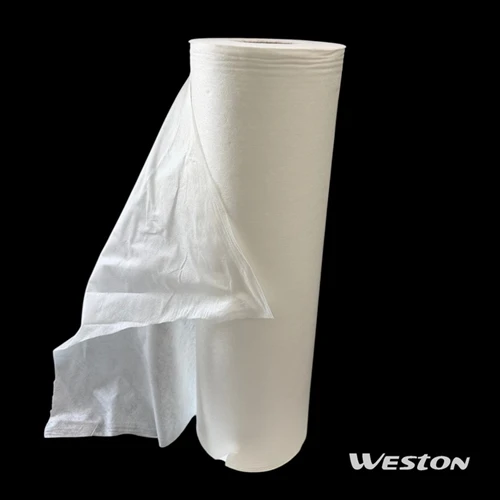
Understanding the Materials Behind Durable Towels
Two towels can both be labeled 60 gsm. One falls apart after a few wet wipes and leaves lint on every surface. The other keeps its shape, absorbs well and survives repeated use. The difference is rarely the weight on the label. It comes from three things working together: the fibers, the way those fibers are bonded into fabric, and the quality control behind the process.
This guide answers the questions buyers ask most often when they look for durable towels: what "durable" really means, which structure and fiber to choose, which specifications matter, and how to check a supplier's claims before you order. It draws on how Weston Nonwoven, a spunlace nonwoven manufacturer producing since 2003, makes and tests its fabrics.

1. What Does "Durable" Really Mean for a Towel?
Before comparing materials, it helps to agree on what you are measuring. "Durable" means different things in a kitchen, a hospital and a factory floor.
Durability Is More Than Thickness
A durable towel has to hold up in four ways at once:
Wet strength: it does not tear or fall apart when saturated with water, cleaning solution or oil.
Abrasion resistance: the surface does not pill, fray or break down when rubbed against a rough surface.
Lint control: fibers stay in the towel instead of ending up on glass, screens, skin or food-contact surfaces.
Shape stability: the towel keeps its size and structure through wringing, folding and repeated wiping.
A thick towel that fails any of these will still disappoint in daily use.
Disposable, Limited-Reuse, or Long-Life
Durability is relative to the job. A single-use hospital wipe only needs to stay intact for one task, but it must do that task reliably. A cleaning towel used many times in a workshop needs to survive repeated wiping and wringing. Decide which category you are in first, because it sets the strength you actually need and the price you should expect to pay.
Why High GSM Does Not Automatically Mean More Durable
GSM (grams per square meter) tells you how much fiber is in the fabric, not how well that fiber is held together. A heavy but loosely bonded fabric can shed fibers and tear when wet, while a lighter, well-entangled fabric made from the right fiber can outlast it. Treat GSM as one specification among several, not as a proxy for quality.
2. Woven, Knitted, or Nonwoven: Which Structure Lasts Longer?
Structure decides how a towel carries load. The three main families get their strength in very different ways.
How Woven and Knitted Towels Get Their Strength
Woven and knitted towels are made from spun yarns that are interlaced or looped. Their strength comes from the yarn itself and the pattern of interlacing. They are excellent for long-life, washable use, but they are heavier, slower to dry and costly to launder in high-hygiene settings.
How Nonwoven Towels Get Their Strength
Nonwoven fabric skips the yarn stage. Fibers are laid into a web and bonded directly, by water jets, heat, needles or adhesives. This makes the fabric light, consistent and economical, and it allows precise control over thickness, softness and absorbency.
Spunlace vs. Other Nonwovens
Not all nonwovens suit towels. Thermal-bonded and spunbond fabrics are strong and cost-effective but can feel stiff and absorb less. Chemically bonded fabrics rely on binders that may affect softness and skin contact. Spunlace fabric, bonded by water alone, is the closest to a woven feel: soft, drapable, absorbent and low in lint. That is why it is the usual choice for towels and wipes that touch skin or food.
Pros and Cons at a Glance
|
Structure |
Strength source |
Best for |
Main limitation |
|
Woven / knitted |
Interlaced yarn |
Long-life, washable use |
Heavy, slow to dry, laundry cost |
|
Spunbond / thermal bonded |
Heat-fused fibers |
Packaging, covers, filtration |
Stiffer, lower absorbency |
|
Spunlace |
Water-entangled fibers |
Wiping, skin contact, hygiene, industrial cleaning |
Needs fiber choice matched to the job |
3. How Spunlace Technology Builds Strength Without Binders
If you want to judge a spunlace towel, it helps to understand how it is made.
Hydroentanglement in Plain Language
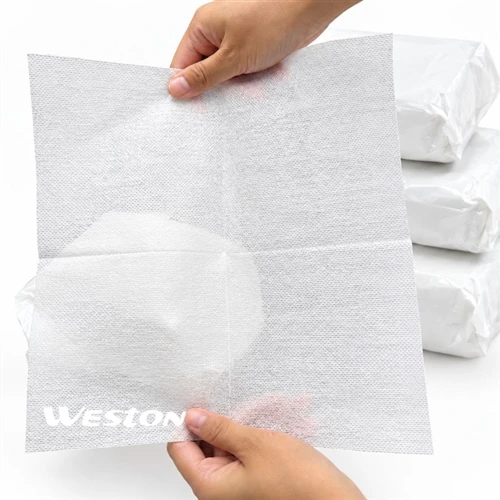
Spunlace nonwoven is an unknitted fabric made from short fibers, typically around 1.38 dtex in fineness and 35 mm in length, using hydroentanglement. High-pressure water jets strike the fiber web and tangle the fibers around each other, locking them in place with no chemical glue. The technique was first developed by DuPont in the 1960s and has been refined ever since.
Because no binder is needed, the fabric stays soft and clean, which is why it suits skin-contact and food-contact products.
Why Fiber Length and Fineness Matter
Longer, finer fibers have more contact points with their neighbors, so they entangle more securely. That improves tensile strength and softness and reduces the fibers that can break free as lint. When a supplier quotes fiber specifications, it is a sign they control the part of the process that matters most.
Single-Layer Composite vs. Multi-Layer Lamination
Some towels get extra strength by laminating several layers. The risk is that layers can separate when the towel is wet, rubbed or twisted, and the bonding step can reduce breathability. Weston's single-layer composite spunlace fabric blends the fibers into one structure instead. In Weston's laboratory tests, this fabric kept about 90% of its tensile strength after 50 wiping cycles, while multi-layer alternatives often lost 20 to 30% through layer separation. These figures come from Weston's own testing of its composite spunlace fabric, so request the test conditions for your specific application.
Surface Patterns and Their Effect on Wiping
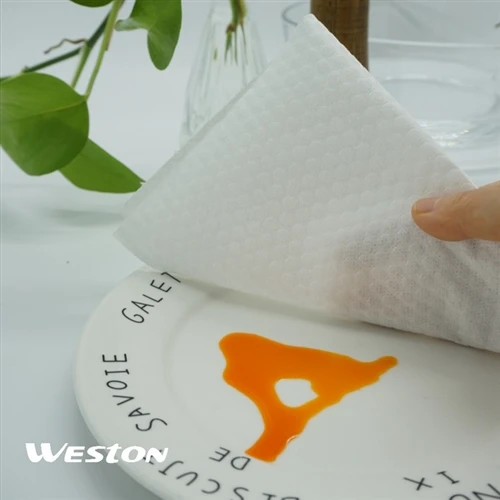
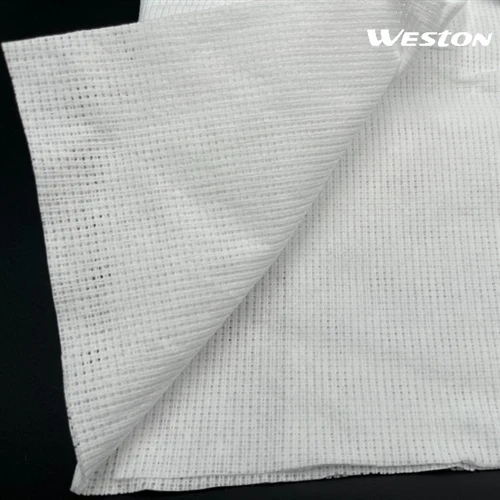
The pattern pressed into the fabric during entanglement changes how the towel behaves. Smooth, plain surfaces feel soft and suit skin contact. Mesh and textured patterns add scrubbing power and hold more liquid, which suits kitchen and industrial cleaning. Ask for a pattern that matches the surface you are cleaning.

4. Choosing the Right Fiber: What Each Material Brings to a Durable Towel
Structure sets the framework, but the fiber decides how the towel feels, absorbs and ages.
Cotton: Softness, Absorbency and Skin Contact
Cotton is naturally absorbent, soft and familiar to skin. It is the first choice for baby wipes, facial towels and hygiene products. Weston offers 100% cotton spunlace, including vacuum-sealed cotton baby wipes. Cotton is generally weaker when wet than synthetics, so it is best where comfort matters more than heavy-duty scrubbing.
Viscose, Bamboo and Lyocell: Absorption, Odor Control and Friction
These regenerated cellulose fibers absorb liquid quickly and feel smooth. Bamboo-based fabric offers a soft, biodegradable option with odor-neutralizing properties, which Weston supplies for wipes and hygiene applications. Lyocell is valued for its strength when wet and, in Weston's high-friction lyocell spunlace, for a surface that grips dirt well.
Polyester and Polypropylene: Tear Resistance and Chemical Resistance
Synthetic fibers do not weaken much when wet and resist many chemicals. That makes them the backbone of industrial towels. Weston's industrial-grade grey polyester spunlace is resistant to chemicals and easy to process, and is used in areas such as automotive interiors and construction. A reinforced composite using about 60% high-strength polypropylene fiber raises tear resistance further for demanding uses such as hospital gowns.
Blends: Balancing Cost, Absorbency and Durability
Most real-world towels use blends. A common approach is to combine an absorbent cellulose fiber with a strong synthetic fiber, so the towel soaks up liquid without falling apart. For users who also want fast drying after use, such as gyms and salons, fiber blends that release moisture quickly are the key, and this is the principle behind our Quick-Dry Spunlace Towel. Blend ratios can be adjusted to your priorities.
Quick Comparison
|
Fiber |
Absorbency |
Wet strength |
Lint |
Typical cost level |
|
Cotton |
High |
Moderate |
Low to moderate |
Medium to high |
|
Viscose / bamboo |
High |
Moderate |
Low |
Medium |
|
Lyocell |
High |
Good |
Low |
Medium to high |
|
Polyester |
Low to moderate |
High |
Low |
Low to medium |
|
Polypropylene |
Low |
High |
Low |
Low |
Treat this table as general guidance. Actual performance depends on the blend, GSM and pattern.
5. Specs That Actually Predict Durability
When you receive a spec sheet, these are the numbers worth reading closely.
GSM: How to Choose by Use Case
As a rough guide, lighter fabrics suit single-use wipes and skin-contact products, mid-weight fabrics suit general cleaning and salon use, and heavier fabrics suit industrial and repeated-use towels. Choose the lowest weight that meets your strength and absorbency needs, because extra weight adds cost without always adding performance.
Tensile Strength and Tear Resistance
Ask for both dry and wet tensile strength, in machine direction and cross direction. Wet strength is the number that tells you whether the towel survives real wiping. Tear resistance matters wherever a towel can snag on edges.
Lint, Absorbency Rate and Capacity
Low lint is essential for glass, electronics, food and medical use. Absorbency has two parts: how fast the towel takes up liquid and how much it holds. A towel can be good at one and poor at the other, so check both.
Color Fastness, Printing and Food-Contact Safety
Colored towels should not bleed when wet. For food-related products, ink and materials matter. Weston can print up to five colors on nonwoven fabric at once using food-grade ink, which suits kitchen and food-service wipes. If food contact applies to you, ask for material and ink documentation.
6. Which Material for Which Job?
Use this section to match your own use case to a starting specification.
Kitchen and Food-Contact Wiping
Choose clean, absorbent, low-lint fabric made from cellulose-rich blends, with food-approved materials and inks. One Weston customer switched to a stronger, more absorbent spunlace approved for food contact after trying other options.
Janitorial, Industrial and Automotive Cleaning
Choose polyester-rich or reinforced blends for wet strength and chemical resistance, with textured patterns for scrubbing. This is where heavier GSM and synthetic content pay off.
Healthcare, Beauty Salon and Skin-Contact Use
Choose soft, low-lint, binder-free fabric. In Weston's hospital cleaning tests, its composite spunlace removed about 95% of dried stains in a single wipe, compared with about 70% for standard nonwoven wipes. For salons, where hygiene and skin-friendliness both count, antibacterial options are available.
Hospitality, Spa and Travel
For hotels, spas and travel, Disposable Bath Towels need a larger sheet size, a soft feel against skin and enough wet strength to dry a whole body without tearing. Cellulose-rich blends with a reinforcing fiber usually give the best balance.
Baby and Personal Care
Choose soft, gentle fibers such as cotton or bamboo, with reliable hygiene packaging.
Scenario Summary
|
Scenario |
Recommended base |
Key property to prioritize |
|
Kitchen / food contact |
Cellulose blend |
Low lint, food-safe materials |
|
Industrial / automotive |
Polyester-rich or reinforced blend |
Wet strength, chemical resistance |
|
Healthcare / salon |
Soft composite spunlace |
Skin-friendliness, stain removal |
|
Hospitality / spa |
Cellulose blend with reinforcement |
Softness, size, wet strength |
|
Baby / personal care |
Cotton or bamboo |
Gentleness, hygiene |
7. How to Verify Durability Before You Buy
Supplier claims are only useful if you can check them.
Simple Checks on a Sample
Wet rub test: soak the towel, then rub it firmly against a rough surface and look for pilling or fraying.
Pull test: pull a wet strip by hand in both directions and see where it fails.
Lint test: wipe a dark glass or smooth surface and check what remains.
Lab Tests to Request
Ask for dry and wet tensile strength, abrasion resistance, absorbency rate and capacity, and retention of strength after repeated wipes. Ask what test method and conditions were used, so you can compare suppliers fairly.
What to Ask a Factory
Ask about raw material sources, process flow, batch records, and how consistency is controlled from one roll to the next. A manufacturer in control of its process can answer these directly.
Why a Factory Visit Matters
A visit shows what a spec sheet cannot. Inspection teams visiting Weston have reviewed raw materials, chemical compositions, production flow charts, workshop layouts and machine cleaning procedures. One customer said that seeing the people and the process behind the material gave them full confidence in it.
8. Sustainability Without Losing Strength
Buyers increasingly ask whether eco-friendly towels can still be durable.
Plant-Based and Biodegradable Fibers
Cotton, bamboo and wood-pulp fibers are renewable and can biodegrade. The trade-off is usually lower wet strength than synthetics, so the answer is often a smart blend rather than a single fiber.
Compostable and Unbleached Options
Unbleached and compostable spunlace reduces processing steps and environmental impact. Weston has developed compostable and unbleached spunlace fabrics, and has discussed them with overseas visitors seeking responsible products.
Flushable vs. Durable: Opposite Design Goals
Flushable nonwovens are designed to break down quickly in water, which is the opposite of what a durable towel needs. Choose the one that matches how the product will be used and disposed of, and do not expect one fabric to do both.
9. Working with a Factory-Direct Spunlace Manufacturer
What Can Be Customized
Fiber blend, GSM, width, color, printing and packaging can all be tailored. Weston supports OEM and ODM orders for brands, distributors and manufacturers.
Why Direct Control of Raw Materials Matters
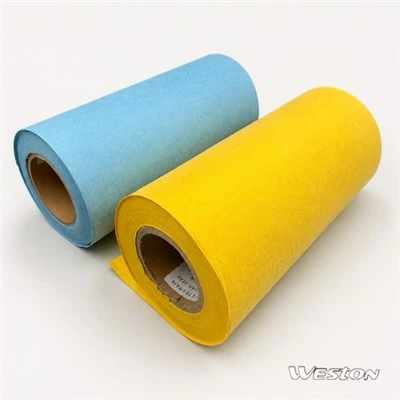
When a factory controls its own raw materials and processing, quality stays consistent and lead times stay predictable. Weston operates four production lines and works directly with its clients.
From Sample to Bulk Order
To get a useful quote quickly, prepare these details:
- Your use case and the surface or skin the towel will touch
- Target GSM, size and packaging
- Required properties such as wet strength, lint level or food-contact approval
- Expected annual volume
Request samples, test them against your own conditions, then confirm specifications before bulk production.
Weston at a Glance
Weston moved from decades of papermaking into nonwovens in 2003. Its facility includes a 9,600 square meter production workshop and a 1,000 square meter warehouse for raw materials and finished goods, with production running around the clock under full QC tracking.
10. Frequently Asked Questions
Are nonwoven towels strong enough when wet?
Yes, if the fiber and structure are chosen well. Synthetic and lyocell content raises wet strength, and well-entangled spunlace holds together far better than loosely bonded fabric.
Which fiber is best for heavy-duty cleaning?
Polyester-rich or reinforced blends. They resist tearing and chemicals and keep their strength when saturated.
Why do some towels shed lint?
Short, coarse or loosely entangled fibers break free easily. Longer, finer fibers and thorough hydroentanglement keep lint low.
Is 100% cotton always more durable than a blend?
No. Cotton is soft and absorbent but weaker when wet. A blend with a stronger fiber often lasts longer in demanding use.
How many times can a spunlace towel be reused?
It depends on fiber, GSM and the task. Weston's composite spunlace kept about 90% of its tensile strength after 50 wiping cycles in laboratory testing, but your own use conditions will decide the real number.
How do I choose the right GSM?
Start with your use case, then choose the lowest weight that meets your wet strength and absorbency needs. Test samples before committing to volume.
Conclusion
A durable towel is the result of four decisions made together: the right fiber, a structure that bonds it securely, a specification matched to the job, and a manufacturer that controls quality from raw material to finished roll. If you share your use case and target specifications, our team can recommend a fabric and send samples for you to test.