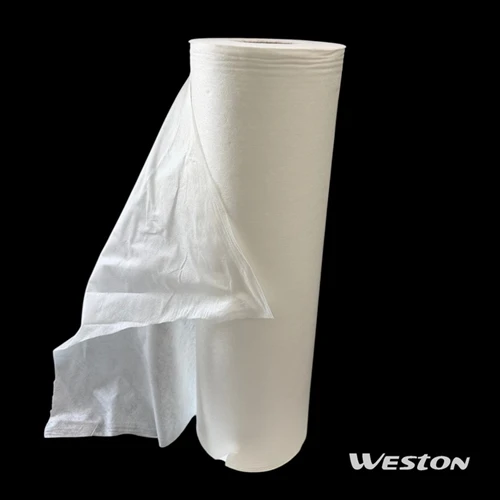
Essential Techniques in Spunlace Production
In the spunlace nonwoven fabric industry, the drying process is a critical stage that significantly influences the final product's quality, performance, and efficiency. This article explores the essential drying techniques used in spunlace production, emphasizing their importance in ensuring optimal fabric characteristics.
Importance of the Drying Process
The drying phase in spunlace production serves several key functions:
Moisture Removal: After the spunlace fabric is formed and bonded using high-pressure water jets, it retains a significant amount of moisture. Effective drying is essential to remove this moisture, preventing issues such as mold growth and fabric degradation.
Fabric Structure Stabilization: Proper drying techniques help to stabilize the fabric structure, ensuring dimensional integrity and preventing shrinkage or distortion.
Enhancement of Physical Properties: The drying process can enhance specific physical properties of the spunlace fabric, including strength, absorbency, and softness, which are crucial for end-use applications.
Essential Drying Techniques
1. Convection Drying
Convection drying utilizes heated air to evaporate moisture from the spunlace fabric. This method involves circulating warm air around the fabric, which increases the rate of moisture removal. Key considerations include:
Temperature Control: Maintaining an optimal temperature is vital to prevent damage to the fibers while ensuring efficient drying.
Airflow Management: Proper airflow is necessary to achieve uniform drying and avoid localized overheating.
2. Infrared Drying
Infrared (IR) drying employs infrared radiation to heat the fabric directly. This technique is particularly effective for thin fabrics, allowing for rapid moisture removal without excessive heat exposure. Benefits include:
Quick Drying Times: Infrared drying can significantly reduce drying times, enhancing overall production efficiency.
Energy Efficiency: This method often consumes less energy compared to traditional convection drying, contributing to lower operational costs.
3. Vacuum Drying
Vacuum drying involves reducing the pressure around the fabric to lower the boiling point of water, facilitating moisture removal at lower temperatures. This technique is advantageous for:
Preserving Fiber Integrity: By drying at lower temperatures, vacuum drying minimizes the risk of thermal damage to sensitive fibers.
Controlled Environment: The vacuum environment allows for precise control over drying conditions, resulting in consistent product quality.
4. Microwave Drying
Microwave drying utilizes microwave radiation to agitate water molecules within the fabric, generating heat that evaporates moisture. This method offers several advantages:
Rapid Drying: Microwave drying can achieve moisture removal in a fraction of the time compared to conventional methods.
Uniform Heating: This technique ensures even moisture distribution throughout the fabric, reducing the likelihood of uneven drying.
5. Combination Drying Techniques
Many manufacturers are adopting combination drying techniques to leverage the advantages of different methods. For example, initial moisture removal may be achieved through convection drying, followed by infrared or vacuum drying for final moisture reduction. This approach can optimize drying efficiency and fabric quality.

Considerations for Optimal Drying
Monitoring Moisture Content: Continuous monitoring of the fabric's moisture content during drying is essential to achieve desired end product specifications.
Energy Consumption: Evaluating the energy efficiency of drying methods is critical for maintaining cost-effectiveness in production.
Impact on Fabric Properties: Understanding how different drying techniques influence the physical properties of spunlace fabrics can guide manufacturers in selecting the most appropriate method for their specific applications.
Environmental Considerations: Implementing energy-efficient drying methods can contribute to sustainability goals, reducing the overall carbon footprint of spunlace production.
By focusing on these essential drying techniques and considerations, spunlace manufacturers can enhance product quality, improve production efficiency, and meet evolving market demands.