Should Adults Use Wet Wipes?
Short answer: Sometimes. Wet wipes can be a practical option for travel, after exercise, or when skin is sore, but they are a poor everyday replacement for toilet paper. If you use them, choose products that are fragrance-free, alcohol-free and plastic-free, and put them in the bin rather than the toilet.
When Wet Wipes Make Sense for Adults
Adults use wipes for many reasons, and most of them are legitimate:
- Travel and commuting, when water and a washbasin are not available
- After exercise or in hot weather, to freshen skin before a shower
- Hemorrhoids, postpartum recovery or digestive conditions, where dry paper can feel harsh
- Caregiving, for older adults or people with limited mobility
In these situations a soft, damp cloth is often more comfortable than dry paper. The problems start when wipes become the default for every bathroom visit.

Wet Wipes, Toilet Paper, Bidets and Wet Toilet Paper
|
Option |
Clean feel |
Skin risk |
Environmental impact |
Portability |
|
Wet wipes |
High |
Moderate (depends on formula) |
High if flushed or littered |
High |
|
Dry toilet paper |
Moderate |
Low to moderate (friction) |
Moderate |
High |
|
Toilet paper dampened with water |
Good |
Low |
Moderate |
Low |
|
Bidet or water rinse |
Very high |
Low |
Low |
Low |
Many people find that simply dampening toilet paper with water gives most of the benefit of a wipe without the extra waste.
Adult Wet Wipes in 2026: What Has Changed
Three things have shifted in the last couple of years: more attention to skin health, new rules on plastic, and a clearer message about what should never be flushed.
Health Risks Doctors Keep Warning About
Doctors and dermatologists rarely say wipes are dangerous in occasional use. Their concern is frequent use on the sensitive skin around the anus. The most common issues are:
Irritant contact dermatitis from fragrance, alcohol or harsh surfactants
Allergic reactions to preservatives. A published dermatology case described a patient whose long-running perianal rash cleared within about ten days of stopping moistened wipes
Trapped moisture. Pulling up clothing right after wiping can leave the skin damp, which may encourage irritation or fungal growth
Over-wiping. Scrubbing, with any product, can strip the skin's natural barrier
Practical takeaway: choose fragrance-free and alcohol-free formulas, pat dry, use wipes occasionally rather than every time, and stop if itching or redness appears. Persistent symptoms deserve a doctor's visit.
Plastic-Free Rules and the End of "Flushable" Labels
Wipes made with plastic fibres, such as polyester or polypropylene, are now a regulatory target in the UK. The dates announced so far:
|
Nation |
Ban on supplying wipes containing plastic |
|
Wales |
18 December 2026 |
|
Northern Ireland |
18 May 2027 |
|
England |
19 May 2027 |
|
Scotland |
11 August 2027 |
Plastic-free wipes are not affected. In Wales, official guidance says business-to-business supply is not covered, but rules differ by nation, so brands should check the current text for each market before relying on this.
The "flushable" label has also lost ground. The UK water industry stopped issuing its flushable certification in March 2024 and later archived the standard, and now urges everyone to bin all wipes. A wipe that stays strong when wet is useful on skin, but that same wet strength is why it does not behave like toilet paper in pipes. Used wipes belong in a lidded bin, ideally lined and emptied often.
How to Choose the Right Spunlace Substrate
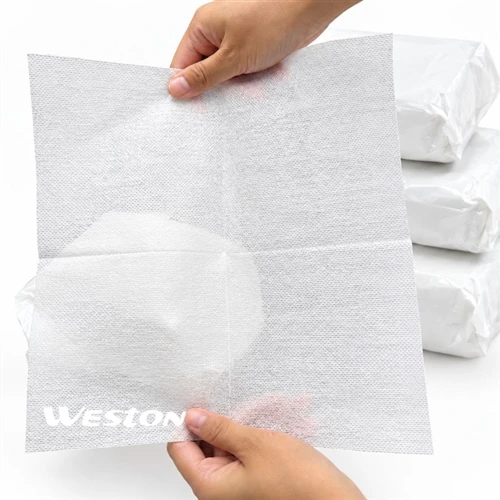
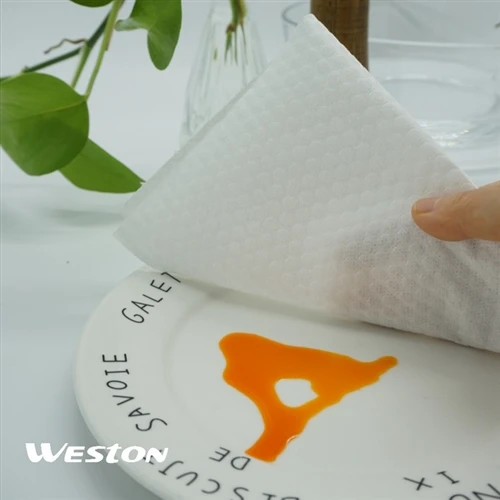
For brands, most of what customers feel in a wipe comes from the fabric, not the lotion. Spunlace is a nonwoven made by bonding fibres with high-pressure water jets rather than chemical binders. It stays strong when wet and feels textile-like on the skin, which is why it is widely used for wipes.
Fibre choice drives the key properties:
|
Substrate |
Strengths |
Points to watch |
|
Viscose (rayon) |
Soft, highly absorbent, plant-based cellulose |
Lower wet strength than blends at the same weight |
|
Wood pulp and viscose |
Good absorbency and cost balance |
Check strength for your converting line |
|
Viscose and polyester |
Soft and strong |
Contains plastic fibre, so check rules for your target market |
|
Pulp and polypropylene |
Economical, strong |
Contains plastic fibre |
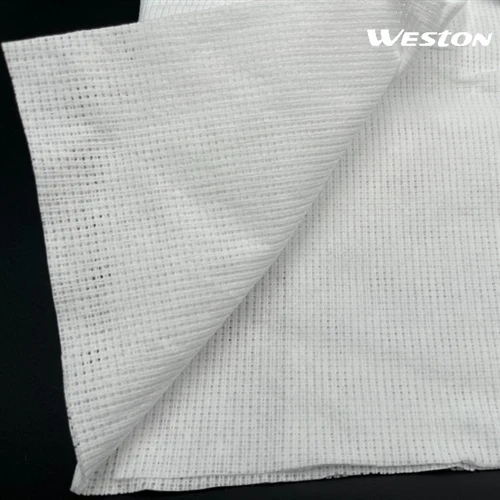
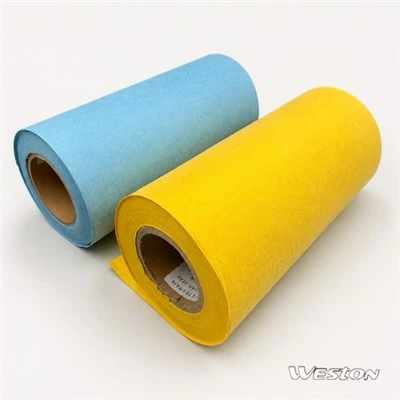
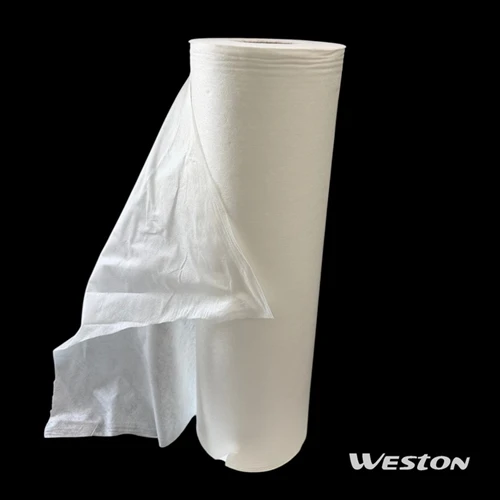
If you are developing an adult hygiene or personal-care wipe for a market moving away from plastic, a 100% Viscose Spunlace Wipes Substrate is a natural place to start. Weston Nonwoven offers it with customisable basis weight, absorbency, texture and sheet size, with low lint and a smooth hand feel for sensitive skin. For wider options, including parallel and cross-lapped constructions from about 30 gsm up to 150 gsm and a range of mesh and pattern choices, see Weston's range of Spunlace For Wet Wipes, available for private label with free samples on request.
A Practical Checklist for Brands
Before you commit to a substrate, confirm:
- Fibre content: is any plastic fibre present?
- Basis weight: thick enough not to tear, soft enough for skin
- Lint level and surface: smooth and low-lint for sensitive areas
- Wet strength and converting performance: will it run at your line speed?
- Claims you can support: avoid terms such as "flushable", "hypoallergenic" or "biodegradable" unless you hold test reports for them
- Formulation: fragrance-free, alcohol-free, and a preservative system suited to sensitive skin
FAQ
Can adults use baby wipes?
Yes, but they are designed for infant skin and may not suit every adult. Choose fragrance-free and alcohol-free versions and use them sparingly.
Can you flush wet wipes?
The safest answer is no. Even products labelled flushable can remain intact in sewers and septic systems, so bin them.
Are wet wipes better than toilet paper?
They can feel cleaner, but they are not necessarily better for skin or the environment. Dampened toilet paper or a water rinse is often a gentler option.
Can wet wipes cause irritation?
Yes. Fragrance, alcohol, preservatives and frequent rubbing are common triggers, especially around the anus.
Are wet wipes safe on private areas?
Only fragrance-free, alcohol-free wipes, used gently and occasionally. Scented products can irritate delicate skin, and any persistent discomfort should be checked by a doctor.