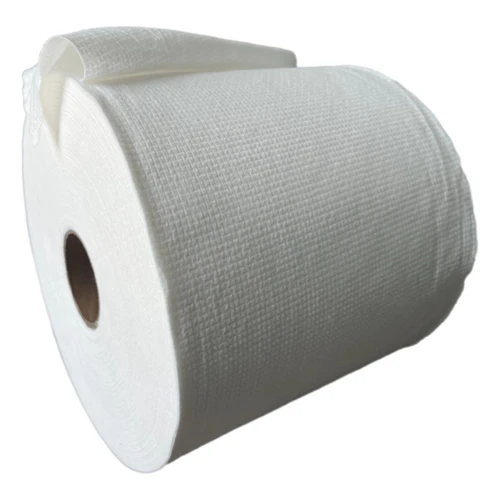
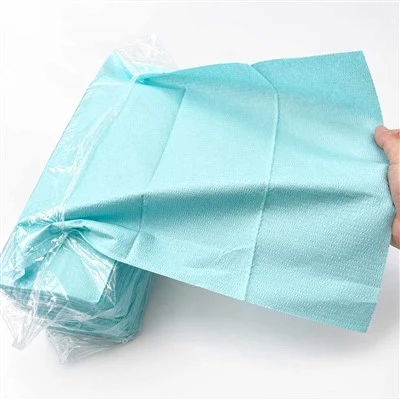
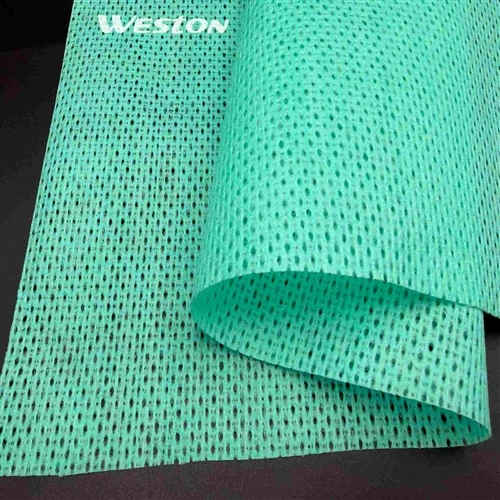
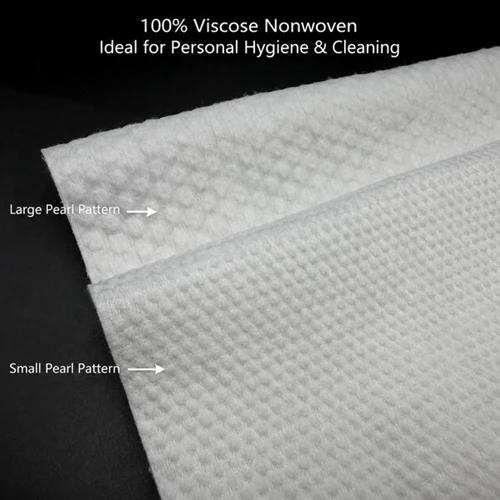
Here are more detailed insights into non-woven spunlace fabric:
Production Process:
Fiber Selection: Fibers used in spunlace fabric production can vary widely. Natural fibers like cotton, bamboo, and wood pulp are common due to their softness and absorbency. Synthetic fibers such as polyester, polypropylene, and viscose are also frequently used for their strength and durability. Blends of different fibers may be employed to achieve specific performance characteristics.
Web Formation: After fiber selection, the fibers are formed into a loose web or mat. This can be done through processes like carding, in which the fibers are aligned into a thin web, or airlaying, where the fibers are blown onto a conveyor belt to form a random web.
Entanglement: The fiber web is then passed through a series of high-pressure water jets. These jets force the fibers to entangle and intertwine with each other, creating a strong, cohesive fabric structure. The pressure and velocity of the water jets can be adjusted to control the degree of entanglement and the properties of the final fabric.
Drying and Finishing: Following entanglement, the fabric may undergo drying to remove excess moisture. Depending on the desired characteristics, additional finishing treatments such as heat setting, calendaring, or chemical treatments may be applied to enhance properties like softness, strength, or absorbency.
Characteristics:
Softness: Spunlace fabrics are prized for their soft and smooth texture, often compared to traditional woven fabrics like cotton. This softness makes them gentle on the skin and suitable for use in products intended for sensitive areas.
Absorbency: Due to the entanglement of fibers and the open structure of the fabric, spunlace fabrics can exhibit high absorbency. They can quickly and efficiently absorb liquids, making them ideal for use in applications like wipes and medical dressings.
Strength: Despite their softness, spunlace fabrics can possess considerable strength and tear resistance. The entangled fibers create a strong fabric structure that can withstand handling and use in various applications.
Versatility: Spunlace fabrics are highly versatile and can be tailored to meet specific requirements for different applications. They can be produced in various weights, thicknesses, and compositions to suit a wide range of needs across industries.
Applications:
Non-woven spunlace fabric finds applications in numerous industries and products, including:
Personal Care: Wet wipes, facial wipes, baby wipes, feminine hygiene products.
Medical and Healthcare: Surgical gowns, medical wipes, wound dressings, disposable bedding.
Household Cleaning: Cleaning wipes, kitchen wipes, floor wipes, mop pads.
Industrial: Filter media, protective apparel, automotive interiors, industrial wipes.