Low Lint Wipes: Critical for Electronics Manufacturing
The Hidden Danger in Your Circuit Board: Why Low Lint Wipes Matter More Than You Think
Every electronic device you hold has survived an invisible battle-one fought not against malfunction, but against contamination so small you cannot see it. That battle happens during manufacturing, where a single stray fiber can doom a circuit board's reliability. This is where low lint wipes become not a luxury, but a necessity.
When you solder components onto a printed circuit board, you are not just connecting wires and chips. You are creating a system where electrical signals travel through microscopic pathways, where solder joints must maintain perfect contact, and where microscopic moisture can trigger corrosion that spreads like a slow poison. Any particle left behind becomes a potential failure point.

The Silent Saboteur: Why Lint Destroys Electronics
Flux residue clings to circuit boards after soldering-sticky, acidic, and hungry for moisture. Left uncleaned, it attracts dust and becomes conductive, forming pathways where electricity should not flow. Dust settling on exposed circuits acts like an insulator, trapping heat and choking off air circulation that components desperately need. But here is what most manufacturers miss: the cleaning tool itself can introduce contamination. Standard paper towels and ordinary cloths shed fibers constantly. When a technician wipes a PCB with a common cloth, those loose fibers embed themselves into flux residue, under component leads, or into circuit traces.
The result is not always immediate. Many failures happen in the field, months or years after manufacturing. A customer's device suddenly fails because a fiber that was left behind finally made electrical contact under thermal stress. This is why controlling lint contamination is not optional-it is existential to product reliability.
Understanding the Physics of Lint: Why Fiber Size Matters
Not all "lint" is created equal. A human hair measures roughly 70 micrometers in diameter. Most dust particles are 5 to 50 micrometers. Standard synthetic fibers in ordinary wipes range from 10 to 30 micrometers-large enough to lodge under solder balls, trap under component pads, and accumulate in connectors.
Microfiber materials change this equation. A true microfiber has a diameter of 0.1 to 1 micrometer-100 times finer than standard fibers. This extreme fineness serves two purposes: it reduces the likelihood of a fiber becoming visible contamination, and it allows the material to be engineered with a far more tightly interlocked structure that does not shed easily.
The chemistry also matters. Polyester fibers are inherently hydrophobic-they repel moisture-which can cause them to migrate across oily or wet surfaces during cleaning. Blended fabrics that combine polyester with cellulose or nylon create materials with better wetting properties, meaning the fibers stay put and do not wander.
The Water Jet Revolution: How Modern Nonwoven Fabrics Are Built
This is where the manufacturing process itself becomes critical. Traditional woven or knitted fabrics depend on mechanical loops and tangles to hold fibers together. These loops are vulnerable: they can catch on sharp components, fray under abrasion, and release fibers when stressed.
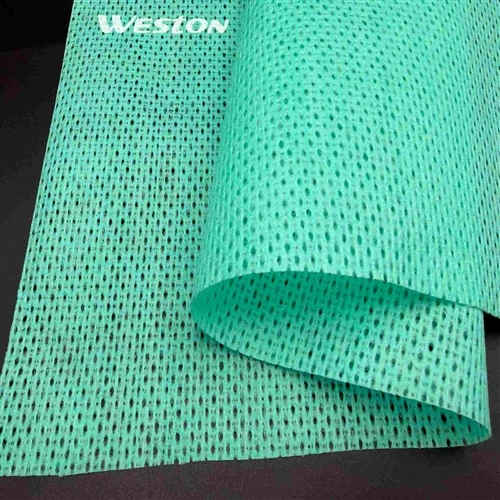
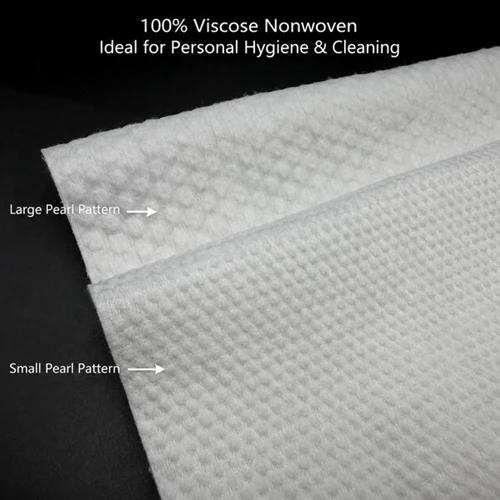
The spunlace process-also called hydroentanglement-uses something radically different: high-pressure water jets. Fibers are arranged in a loose web, then exposed to jets of water moving at thousands of pounds per square inch. The water does not bond the fibers chemically; instead, it physically entangles them, weaving them into a three-dimensional matrix. This method produces a fabric with no chemical binders, no heat-induced distortion, and no loose loops waiting to shed. The sealed edges, often created during manufacturing to prevent unraveling, further lock down the fiber structure.
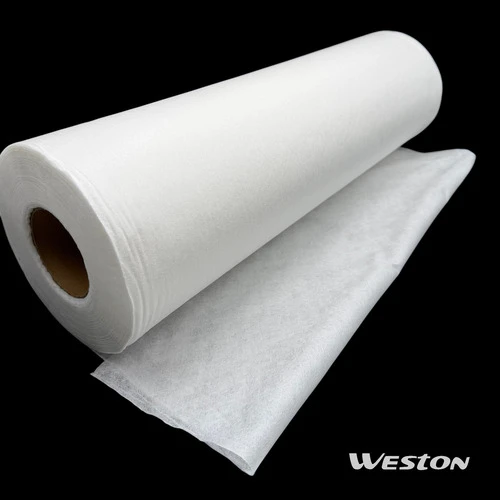
Products like the Industrial Combi Roll exemplify this approach-spunlace nonwoven fabric engineered specifically for the rigorous demands of electronics manufacturing, offering consistent low-lint performance across large-scale production runs.
Comparing Wipe Materials: The Data Tells the Story
Performance Comparison of Wipe Materials in Electronics Manufacturing
The numbers are stark. A standard polyester wipe sheds roughly 85 particles per 100 square centimeters during use. Sealed-edge microfiber wipes shed approximately 5 particles over the same area. Spunlace nonwoven fabric-when properly constructed-sheds between 20 and 30 particles, placing it in a middle ground that balances absorbency, cost, and contamination control.
Absorbency matters too. Circuit boards are cleaned with isopropyl alcohol (IPA), acetone, or other solvents. A poor wipe absorbs liquid unevenly, leaving puddles that seep under components. A good wipe absorbs up to 3.5 milliliters of liquid per gram of fabric, pulling the solvent away from the board and into the material itself. Spunlace nonwoven fabrics, especially those produced using advanced water-jet bonding, achieve this level of absorbency naturally-the entangled fiber structure creates capillary pathways that draw liquid in quickly.
The Grey Industrial Cleaning Cloth: Built for Real Work
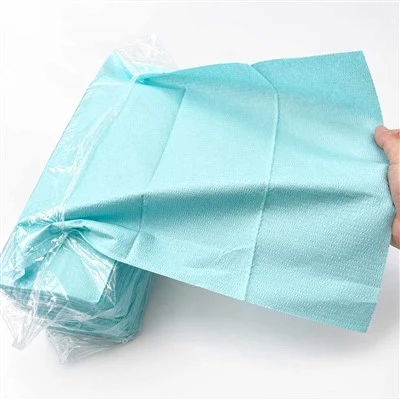
When manufacturers need a wipe that handles both precision cleaning and heavy-duty maintenance, they reach for industrial-grade options designed to withstand harsh solvents and repeated use. A Grey Color Industrial Cleaning Cloth made from quality nonwoven material strikes this balance: grey coloring hides staining and visible dirt, making it easier for operators to see when a cloth is genuinely soiled and needs replacement, rather than continuing to use a seemingly clean cloth that has become contaminated. The nonwoven construction provides low lint release while resisting the tearing and fraying that traditional fabrics suffer when used with aggressive solvents.
Solvent Compatibility: The Chemical Reality
Here is a detail that separates products that work from products that merely claim to work. When you soak a wipe in acetone or strong IPA, the fabric matrix itself must resist breakdown. Polyester wipes have broad chemical resistance-they survive most solvents-but their loop structure makes them vulnerable to mechanical shedding. Microfiber blends with nylon provide excellent oil-absorption properties but must be carefully formulated to avoid swelling or degrading in aggressive solvents.
Nonwoven spunlace fabrics, because they are bonded mechanically rather than chemically, remain structurally stable across a wide range of solvents. The water-jet entanglement process creates no chemical binders to dissolve, no glues to weaken. This stability means that a technician can use the same cloth type across different cleaning processes-whether wiping bare copper traces with IPA, cleaning optical surfaces, or removing flux residue-without worrying that the wipe itself will degrade and contaminate the board.
The Cost Question: Why Cheaper Is Not Always Smarter
A standard paper towel costs pennies. A basic polyester cloth costs slightly more. A low-lint nonwoven wipe costs more still. So why choose low-lint wipes for electronics manufacturing?
The mathematics of failure is unforgiving. A single defect caught in production costs time and materials to rework. A defect that escapes to a customer costs reputation, warranty claims, and potential recalls. If a low-lint wipe prevents even one field failure per thousand units manufactured, it has paid for itself many times over. For industries like aerospace, medical devices, or automotive electronics, where reliability is literally a matter of safety, the choice becomes obvious.
Practical Standards: Matching the Wipe to the Environment
ISO 14644-1 defines cleanroom classes based on particle counts per cubic meter. This standard extends naturally to wipe selection. An ISO Class 5 cleanroom (used for critical assembly work) demands wipes with less than 5 to 10 particles per 100 square centimeters of shedding-a threshold that rules out standard polyester. ISO Class 7 environments (typical for many electronics assembly facilities) can tolerate slightly higher shedding but still benefit dramatically from nonwoven or microfiber options.
The practical lesson: match the wipe to the process criticality. For hand-soldering and visual inspection stations, a quality nonwoven like spunlace serves well. For precision optical cleaning or final substrate verification, sealed-edge microfiber becomes necessary. For general shop maintenance and tool cleaning, an industrial-grade nonwoven cloth provides durability and low-lint performance without unnecessary expense.

The Fiber Entanglement Difference
The water-jet bonding process creates a fabric that behaves differently from woven alternatives. Because fibers are entangled throughout the depth of the material, not merely looped on the surface, the wipe continues to perform even after extended use. Loose fibers do not accumulate on the surface waiting to be dragged across your board; they are locked in place by surrounding fibers. This is why spunlace wipes remain "low-lint" even after dozens of uses, whereas a standard cloth degrades noticeably with repeated washing or use.
Making the Transition
If your manufacturing process currently relies on standard cloths or paper towels, switching to low-lint wipes requires more than just placing a new order. Operators need training on proper technique: gentle wiping motions rather than aggressive scrubbing, understanding that a low-lint wipe should not be reused once it is visibly soiled (even if it still appears mostly clean), and recognizing that compatibility with your specific solvents has already been engineered in-you do not need to experiment.
Many facilities use a two-tier system: a rugged, economical nonwoven cloth for general tool and workstation cleaning, where some lint shedding is acceptable, and a premium sealed-edge option for actual circuit board and optical surface cleaning. This approach balances cost with contamination control.
The Reality Check
Low-lint wipes are not a miracle solution. They cannot clean a board that has been exposed to salt spray or heavily contaminated with ionic residues. They cannot compensate for poor soldering technique or inadequate conformal coating application. What they do is eliminate one variable from the contamination equation-the wipe itself. When everything else in your process is optimized, removing the cloth as a source of contamination becomes the logical next step.
The choice to specify low-lint wipes seems small on the surface. In reality, it represents a commitment to reliability that your customers will never see but will always appreciate. A board that arrives at a customer's facility without hidden fiber contamination, without ionic residues, without the seeds of future corrosion, is a board that will perform consistently for years. In electronics manufacturing, that consistency is everything. The wipe you choose is not just a cleaning tool-it is a guardian of quality, working silently to ensure that every device shipped carries the reliability your reputation depends on.