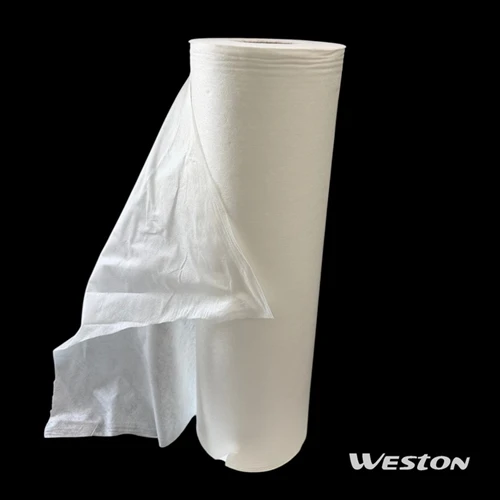
Why Your 'Clean' Surface Isn't Actually Clean - And What Microfiber Gets Right
Here's the truth most cleaning routines ignore: wiping a surface with the wrong material doesn't remove contamination - it just redistributes it. A cotton rag or paper towel can leave behind up to 40% of the bacteria and residue it picks up, simply smearing the rest across a wider area. Surface Preparation Microfibre Cloths solve this at the fiber level, trapping particles instead of pushing them around - and that single structural difference is why professionals in healthcare, automotive, and food service refuse to use anything else.
The Numbers Don't Lie: A Material Comparison
|
Metric |
Cotton Rag |
Paper Towel |
Surface Preparation Microfibre Cloth |
|
Bacteria removal rate (single wipe) |
~30% |
~25% |
up to 99% |
|
Absorbency (own weight in liquid) |
4–5x |
2–3x |
7–8x |
|
Lint/fiber shedding |
High |
Very High |
Near-zero |
|
Average wash cycles before performance drop |
20–30 |
N/A (single-use) |
300–500 |
|
Scratch risk on sensitive surfaces (glass, screens, coated metal) |
Moderate–High |
Low–Moderate |
Low (with split-fiber weave) |
|
Cost per use (amortized over lifespan) |
Moderate |
High (disposable) |
Lowest |
Data reflects typical performance ranges reported across industrial and laboratory cleaning studies; actual results vary by fiber density (GSM) and weave quality.
The table tells a simple story: it's not that cotton and paper "don't work" - it's that they were never built to trap contamination at the microscopic level. Microfiber's split-fiber structure creates thousands of tiny hooks per square inch, and that's the mechanical advantage no amount of scrubbing with traditional materials can replicate.

Where the Gap Shows Up Most
|
Industry Scenario |
Traditional Material Result |
Microfibre Cloth Result |
|
Auto detailing - wiping down a freshly polished panel |
Cotton rags leave micro-scratches (swirl marks) visible under direct light |
Split-fiber weave lifts residue without abrading clear coat |
|
Electronics assembly - cleaning circuit boards before coating |
Paper towels shed fibers that cause short circuits or coating defects |
Lint-free weave leaves zero particulate on sensitive components |
|
Healthcare facilities - pre-cleaning a patient tray before disinfection |
Cotton rags spread biofilm across the surface instead of lifting it |
High bacteria-trapping rate reduces bioburden before disinfectant contact |
|
Food service - wiping prep counters between tasks |
Paper towels tear and require multiple sheets, raising per-use cost |
Single reusable cloth handles the full shift with consistent absorbency |
|
Household cleaning - glass and mirrors |
Cotton leaves streaks from fiber shedding |
Streak-free finish due to near-zero lint transfer |
Each scenario points to the same underlying issue: the surface was "wiped," but not actually prepared. And preparation - not just wiping - is the step that determines whether everything that follows, including disinfection, actually works.
What Makes Microfiber Actually Work (The Science, Made Simple)
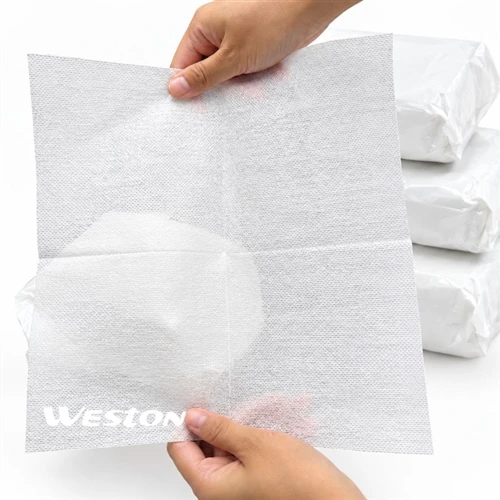
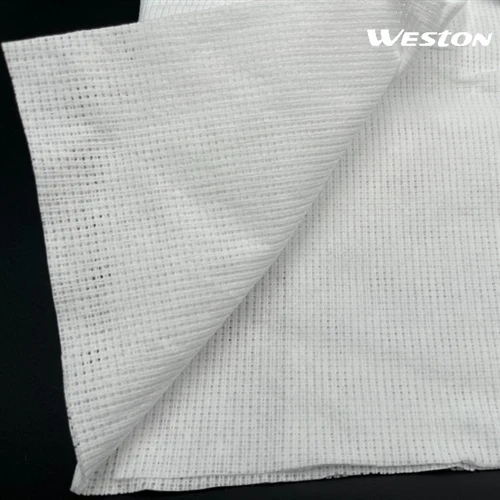
Zoom into a microfiber strand and you'll find something ordinary cotton simply doesn't have: split fibers, each one thinner than a strand of silk, fanned out into a star-shaped cross-section. That geometry is the entire secret. Instead of a flat surface pushing dirt around, you get thousands of microscopic wedges per square inch - each one able to lodge into a groove, an oil film, or a bacterial cluster and physically pull it away.
Cotton and paper work by absorption alone. Microfiber works by absorption and mechanical capture - which is why the removal rates in the table above aren't a marginal improvement, they're a different category of performance.
Durability follows the same logic. A cotton rag's fibers break down after two or three dozen wash cycles because the fiber itself is a single, relatively thick strand - once it frays, it's gone. A quality Surface Preparation Microfibre Cloth, woven at the right density (measured in GSM - grams per square meter), can survive 300 to 500 wash cycles before its capture performance meaningfully declines. Reframe that as a cost conversation: a $3 microfiber cloth that lasts a year is cheaper per use than a roll of paper towels replaced weekly.
Versatility: One Cloth, Many Jobs
"Surface preparation" sounds like a single task. It isn't. A cloth built to polish a car's clear coat needs a different weave than one built to degrease a kitchen exhaust hood, which needs a different edge finish than one used to wipe down a hospital tray before disinfection.
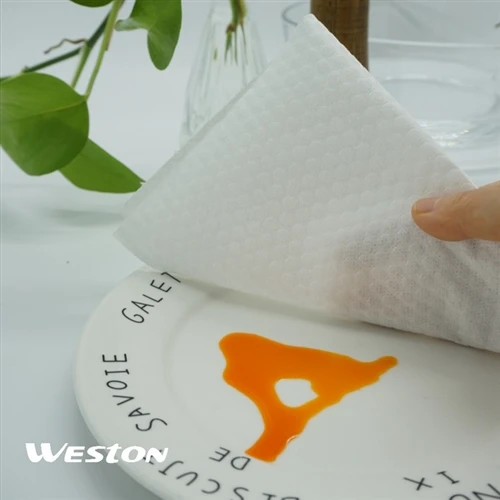
Polishing and detailing: tight, ultra-soft weave to avoid micro-scratching
Degreasing: denser weave with higher absorbency for oil-heavy residue
Pre-disinfection wiping: lint-free, low-residue weave that won't interfere with chemical contact on the surface
This is where the category earns its name - Surface Preparation Microfibre Cloths aren't one product, they're a family of products engineered around what happens before the surface is considered ready. And "ready" almost always means ready for the next step: disinfection.
The Overlooked Partnership: Prep Cloths + Disinfectant Wipes
Here's a detail most cleaning protocols skip: disinfectant only works on a surface it can actually reach. A layer of grease, dust, or organic residue blocks chemical contact, and a wipe that's supposed to kill 99.9% of pathogens can underperform dramatically on a surface that was never properly prepped.
This is why Multi-Surface Disinfectant Wipes are most effective as the second half of a two-step protocol, not a standalone solution:
Mechanical preparation - a microfibre cloth physically lifts particulate, oil, and organic residue
Chemical disinfection - the disinfectant wipe makes full contact with a clean surface and performs at its rated efficacy
Skip step one, and step two is working at a fraction of its potential. This isn't a sales pitch for buying two products instead of one - it's a straightforward mechanical fact about how disinfection chemistry behaves on contaminated surfaces.

Behind the Scenes: Why Manufacturing Quality Isn't Optional
Most microfiber complaints - pilling, shedding, fading absorbency after a few washes - don't trace back to microfiber as a material. They trace back to inconsistent manufacturing. Three variables separate a cloth that performs for a year from one that degrades in a month:
Fiber density (GSM): higher GSM generally means more fiber per square inch, translating to better absorbency and capture
Weave tightness: a loose weave sheds fibers and loses structural integrity faster
Edge finishing: laser-cut edges resist fraying better than raw-cut or loosely stitched edges, especially under repeated industrial washing
These aren't marketing specs - they're the actual determinants of whether a cloth survives 50 wash cycles or 500.
Inside the Weston Factory: Customization as a Competitive Edge
This is where theory meets production reality. The Weston factory approaches microfiber manufacturing as a specification problem, not a one-size-fits-all product line - because the honest answer to "what's the best microfiber cloth" is always: it depends on what it's cleaning.
What customization looks like in practice:
- GSM range: adjustable fiber density depending on whether the end use is light dusting, heavy degreasing, or delicate polishing
- Edge finishing options: laser-cut for a clean, sealed edge or stitched for reinforced industrial durability
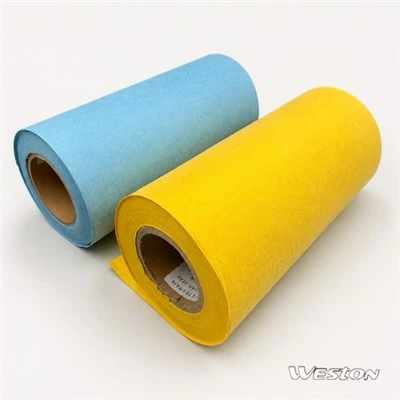
- Color-coding systems: batch production in distinct colors to support cross-contamination control protocols - a standard requirement in healthcare and food service procurement
- Private labeling and packaging: configurable for B2B buyers who need branded, retail-ready, or bulk industrial packaging
- Why this matters for buyers: A hospital, a hotel chain, and an auto detailing shop each need cloths built to different specifications - but sourcing from three different suppliers to get three different specs adds friction, cost, and lead time. A factory capable of adapting GSM, edge type, and color-coding at production scale - not just in small custom batches - removes that friction entirely.
Beyond customization, the practical strengths that matter to procurement teams are straightforward: consistent quality control across production runs, scalable order volumes without sacrificing spec accuracy, and turnaround times that support just-in-time inventory rather than forcing large speculative orders.
How to Choose the Right Cloth (Practical Buyer's Checklist)
- Match GSM to use case - lighter GSM for polishing, higher GSM for degreasing and heavy-duty prep
- Check edge type - laser-cut for sealed, low-shed edges; stitched for reinforced industrial durability
- Consider color-coding - essential for any environment with cross-contamination protocols
- Confirm wash-cycle durability - ask for tested cycle counts, not just marketing claims
- Verify compatibility with your disinfection protocol - the cloth should complement, not interfere with, Multi-Surface Disinfectant Wipes used downstream
Redefining "Clean"
Clean was never a single wipe - it's a system. The surface has to be mechanically prepared before it can be chemically disinfected, and the material doing that preparation determines whether everything downstream actually works. Surface Preparation Microfibre Cloths aren't a commodity item sitting next to the paper towels - they're infrastructure for hygiene, durability, and surface care, built at the fiber level and, increasingly, built to spec.
For buyers who need that spec dialed in - GSM, edge finish, color-coding, volume - that's a sourcing conversation, not a shopping one.