1. The Scientific Connection Between Disposable Wipes and Plumbing Clogs
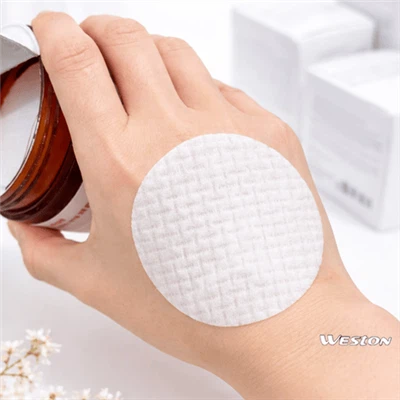
To answer whether disposable wipes clog plumbing, we must first start with the chemical composition and structural characteristics of disposable wipes-this is the core of solving the problem. Unlike toilet paper, which is mainly made of short-fiber plant pulp (such as wood pulp or bamboo pulp), most ordinary disposable wipes contain a large proportion of synthetic fibers, such as polyester (PET) and polypropylene (PP). These synthetic fibers have high crystallinity and strong intermolecular forces; in the aqueous environment of plumbing systems, they cannot be decomposed by enzymes secreted by microorganisms, nor can they be broken down by the shear force of water flow.
A set of comparative experiments conducted by the Water Environment Federation (WEF) shows that under the same conditions (20℃, simulated domestic sewage environment), ordinary toilet paper can be completely dispersed into fiber fragments within 30 minutes, and the particle size is less than 2mm, which can smoothly pass through the pipe and be further treated in the sewage plant. However, ordinary disposable wipes still maintain a complete sheet structure after 72 hours, and even if they are torn by external force, the fiber length is still more than 5mm. These long fibers will easily hook onto the inner wall of the pipe, hair, grease, and other impurities, gradually forming a "fiber cluster"-the initial form of pipe clogging.
In addition, the moisture-locking agents and preservatives added to disposable wipes (such as propylene glycol, phenoxyethanol) will increase the adhesion of the fiber surface. When the wipes flow through the curved part of the pipe (such as the U-bend of the toilet) or the pipe diameter changes, they are more likely to stay and accumulate. Over time, the "fiber cluster" will expand with the accumulation of impurities, eventually narrowing the pipe diameter or even blocking it completely.
2. How Disposable Wipes Cause Blockages in Different Plumbing Links
The plumbing system is a multi-level network composed of household internal pipes, community sewage pipelines, and municipal sewage treatment facilities. Disposable wipes can cause blockages at each link, and the mechanisms vary.
2.1 Household Internal Pipes: The First "Blockage Risk Point"
Household drainpipes (especially toilet drainpipes) usually have a diameter of 50-75mm, and there are multiple bends to prevent odor. When ordinary disposable wipes are flushed, their poor water solubility and flexibility make them easy to "get stuck" at the bend. A survey by the American Society of Plumbing Engineers (ASPE) found that 68% of household plumbing blockages caused by non-toilet paper items are related to disposable wipes. These blockages often do not appear immediately-instead, after 2-4 weeks of accumulation, symptoms such as slow water discharge and gurgling sounds occur, and by then, the wipes have formed a hard "plug" with hair and grease, which is difficult to clear with ordinary dredging tools.
2.2 Community Sewage Pipelines: The "Accumulation Amplifier"
Even if disposable wipes pass through the household pipes smoothly, they will face greater risks in the community sewage pipeline network. Community pipelines have a larger diameter (usually 100-300mm), but the water flow speed is slower, and the sewage contains more impurities (such as kitchen waste residues, sand). At this time, the synthetic fibers in the wipes will act as a "framework" to adsorb other impurities, forming a larger "blockage mass." In 2023, a community in Chicago experienced a large-scale sewage backflow incident. After inspection, the blockage in the main pipeline was a 1.2-meter-long "mass" composed of disposable wipes, grease, and plastic fragments. This kind of blockage not only affects the normal use of residents but also requires high-cost excavation and maintenance by property management.

2.3 Municipal Sewage Treatment Facilities: The "Hidden Troublemaker"
Disposable wipes that enter the municipal sewage treatment plant will not disappear. In the primary treatment stage, the sewage first passes through the grille to remove large impurities. However, the soft texture of the wipes makes them easy to wrap around the grille, reducing the filtration efficiency. In the secondary treatment stage, the activated sludge process relies on microorganisms to decompose organic matter, but synthetic fibers cannot be decomposed by microorganisms and will remain in the activated sludge. If the activated sludge is used for agricultural fertilization (a common disposal method), the synthetic fibers will enter the soil, causing soil microplastic pollution.
Even worse, some small wipe fragments will pass through the treatment process and enter the natural water body along with the effluent. A study by the University of Plymouth found that disposable wipe fragments account for 12% of microplastics in urban rivers-these fragments can be ingested by aquatic organisms, affecting their digestive systems and entering the food chain.
3. The Truth About "Flushable Wipes": Not All "Flushable" Is Safe
In response to the clogging problem, the market has launched "flushable wipes," which are labeled "safe to flush" by merchants. But does this mean they will not clog the plumbing? The answer is "no."
The "flushability" of flushable wipes is based on industry testing standards (such as the International Water Services Flushability Group (IWSFG) standard), which requires that the product can be dispersed into small fragments within a certain time under simulated pipe flow conditions. However, this standard is based on "single-piece flushing" and "ideal water flow." In actual use, many users will flush multiple wipes at one time, or mix them with other non-flushable items (such as facial tissues), which will still cause blockages.
A 2024 test by the British Water Industry Association (BWIA) showed that even products that meet the "flushable" standard will form small fiber clusters when 3 or more pieces are flushed at the same time, and these clusters will still accumulate in the community pipeline. This shows that "flushable" is not a "free pass"-it still requires correct use and compliance with the "single-piece flushing" principle.
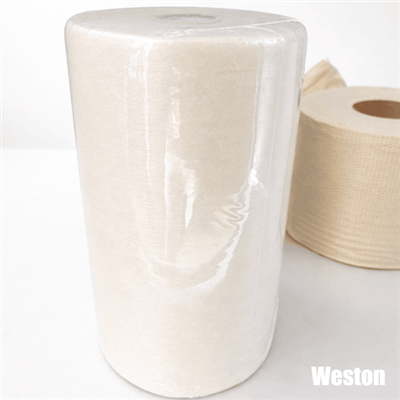
In this context, products such as Paper Alternative Flushable Wipes launched by Weston Nonwoven have optimized the fiber formula. They use a blend of lyocell (a biodegradable fiber) and short-fiber plant pulp, which improves the dispersibility in water while maintaining the cleaning function. However, even with such optimized products, it is still necessary to remind users: follow the flushing guidelines, do not flush in large quantities, and avoid mixing with other non-flushable items.
4. Pros and Cons of Disposable Wipes: A Comprehensive Perspective
To objectively evaluate the relationship between disposable wipes and plumbing, we cannot ignore their practical value while emphasizing the clogging risk-only a comprehensive view of pros and cons can guide scientific use.
4.1 Advantages: The Practical Value That Cannot Be Ignored
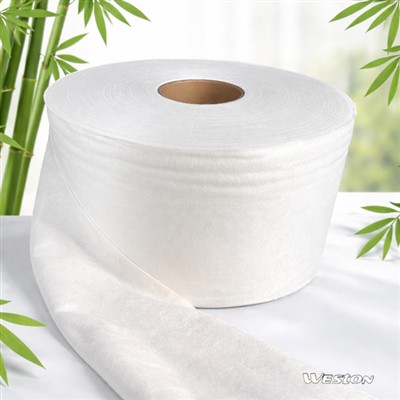
Disposable wipes have irreplaceable advantages in specific scenarios: in maternal and child care, they can quickly clean the baby's skin without irritating it; in outdoor activities, they can provide convenient cleaning when there is no running water; in medical scenarios, disinfected wipes can prevent cross-infection. For example, Toilet Paper & Seat Wipes produced by Weston Nonwoven are designed for public toilet scenarios-they can effectively disinfect the toilet seat surface, reducing the risk of bacterial infection, and their fiber structure is optimized for occasional flushing, reducing the clogging risk compared with ordinary wipes.
4.2 Disadvantages: Beyond Plumbing Clogs
In addition to clogging the plumbing, disposable wipes also have environmental problems: the production of synthetic fibers relies on petroleum resources, and the incineration of used wipes will release harmful gases (such as dioxins). Even biodegradable wipes require specific environmental conditions (such as high temperature and sufficient oxygen in the composting plant) to decompose-if they enter the anaerobic environment of landfills, the decomposition time will be extended to several years.
Scientific Suggestions to Avoid Plumbing Clogs Caused by Wipes

To balance the practicality of disposable wipes and the safety of plumbing, we can take the following measures:
Clarify the scope of use: Use disposable wipes only for scenarios that really need them (such as outdoor cleaning, disinfection), and use toilet paper for daily toilet use. Do not use ordinary wipes as a substitute for toilet paper.
Choose and use flushable wipes correctly: If you need to use flushable wipes, choose products with optimized fiber formulas (such as Paper Alternative Flushable Wipes) and strictly follow the "single-piece flushing" rule. Do not flush multiple wipes at one time, and avoid flushing when the pipe water flow is slow (such as during peak water use).
Properly dispose of non-flushable wipes: For ordinary disposable wipes (such as facial wipes, baby wipes), put them into the trash can after use, and do not flush them into the pipe.
Regular maintenance of household pipes: Once a month, pour hot water (not boiling water) into the toilet and sink drains to dissolve the grease attached to the pipe wall, reducing the possibility of wipes hooking onto grease.
6. Weston Nonwoven's Exploration in Reducing Plumbing Risks
While focusing on product functionality, Weston Nonwoven has been committed to reducing the impact of disposable products on plumbing systems. In addition to Paper Alternative Flushable Wipes and Toilet Paper & Seat Wipes, the factory also develops biodegradable products such as Bulk Lyocell Compressed Mask Pellets-lyocell fiber, as a renewable material, has good biodegradability, and its decomposition products will not pollute the environment. For users who want to understand the performance of these products, they can obtain free samples by contacting info@westonmanufacturing.com, and experience the balance between product practicality and environmental protection.
It should be emphasized that no matter how optimized the product is, the key to avoiding plumbing clogs caused by disposable wipes lies in "correct use." Only by combining scientific product selection with standardized use habits can we truly solve the problem of wipes clogging plumbing, and achieve a win-win situation between daily convenience and plumbing safety.