DIY Disaster or Genius Hack? The Material Science Revolution in Eye Makeup Removal
Why eye makeup removal needs a science lesson
Here's a small frustration most people recognise: you spend good money on a waterproof mascara that survives a rainstorm, a swim, and three hours of humidity - and then it dissolves all over your pillowcase overnight. Or the opposite: you use a high-end micellar water and a pad that looks perfectly fine, but you're still tugging your eyelid three times before the mascara actually budges.
Is it the product? Is it your technique? Nine times out of ten, it's the fabric.
Most conversations about eye makeup removal focus entirely on the liquid: which cleanser formula, which brand, oil-based versus micellar. But the pad you press against your eyelid is doing equally important work - and almost nobody talks about it. The fiber type, the surface structure, the finish applied to it: all of these silently determine how much force you need, how well pigment actually transfers off your skin, and whether your lash line ends up irritated by the end of a week.
This is not a scare piece. It's just fabric physics applied to your face - and once you understand it, it genuinely changes how you shop.
When you press a pad to your eyelid, what is actually doing the work? The cleanser? The fabric? The pressure you apply? The answer is all three - but the fabric is the one variable almost nobody controls.

The eye area is unlike anywhere else on your face
Before getting into fabrics, it helps to understand why the eye area deserves its own set of rules.
Eyelid skin is roughly 0.5 mm thick - the thinnest on the entire body. Mechanical friction here accumulates over time in ways it simply doesn't on your cheek or forehead. Repeated tugging at the lash line can affect lash follicle health, accelerate fine-line formation, and stress the delicate tear film that keeps the eye surface comfortable.
Waterproof mascara compounds this. It's engineered to resist water using film-forming polymers and waxes - materials designed specifically not to budge. Removing them requires two things working simultaneously: an emulsifier to chemically dissolve the film, and mechanical lift from the pad surface to physically carry the loosened pigment away from the skin. Neither works optimally without the other. And the pad is the mechanical half of that equation.
Most consumers optimise for cleanser chemistry and ignore the delivery vehicle. The pad is not neutral - it's an active part of the removal system.
There's a concept from engineering called tribology - the study of friction, wear, and lubrication between surfaces - that's worth knowing about in plain terms. When a pad moves across your eyelid, the texture of that pad determines how much micro-friction is generated per pass, how efficiently pigment is lifted, and whether the skin's surface layer stays intact. A rough surface with coarse fibers generates more friction. A fine, smooth surface distributes contact across more points at lower individual pressure. Over the hundreds of evenings you'll spend doing this, that difference adds up to something real.
Material science 101: what "spunlace nonwoven" actually means
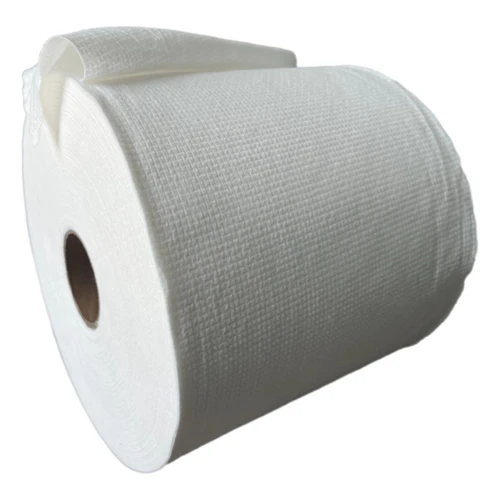
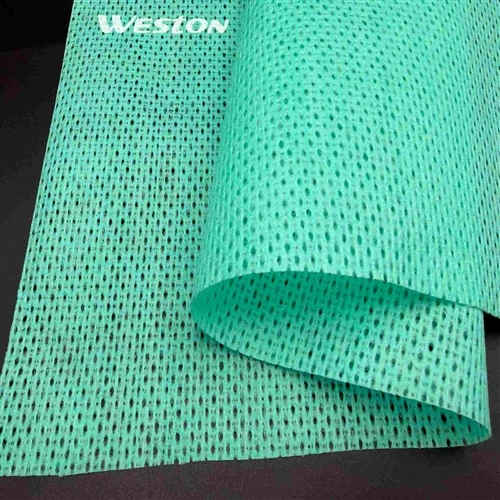
Most Eye Makeup Remover Pads you'll find in a pharmacy or on your bathroom shelf are made from spunlace nonwoven fabric. The name sounds technical, but the process is elegantly simple: loose fibers are laid into a web, then bombarded with high-pressure jets of water. The water physically entangles the fibers together - no chemical binders, no weaving, no knitting. The result is a soft, consistent sheet with controlled strength and predictable surface properties.
This matters for several reasons. No chemical binders means less potential for skin reactivity - important near the eye. The process itself can be precisely tuned: fiber type, fiber length, jet pressure, and web density all influence the final surface texture and absorption rate. And the same manufacturing platform can produce very different end products depending on which fiber you start with.
Compare this to a standard knit cotton round (coarser fiber, more lint, variable surface), a tissue (pressed cellulose pulp, low wet strength, lint-heavy), or a reusable microfibre cloth (very fine synthetic fiber, excellent initial feel, but degrades with washing and is difficult to fully sanitise near mucous membranes). Each is a completely different engineering proposition - and understanding the base process is what lets you read product claims critically.
The honest fiber comparison
Here is where it gets genuinely interesting. The five main plant-based fibers used in high-quality Eye Makeup Remover Pads each have distinct physical properties, and those properties translate directly into different real-world experiences at the bathroom mirror.
100% Cotton is the most familiar. It offers high absorbency and a well-understood feel. It works well with water-based and micellar cleansers that need to saturate the pad quickly and evenly. The honest note: cotton is naturally lint-prone, and not all cotton pads are equally soft. Fiber quality and processing discipline vary widely, and a poorly made cotton pad can pill or leave residue near the eye. Cotton is reliable when the source and process quality are controlled - less so when it isn't.
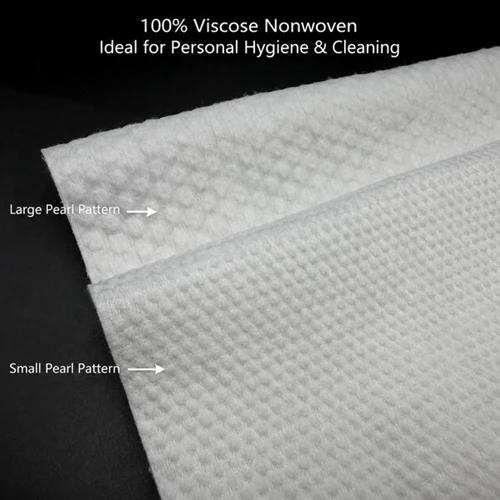
Viscose is derived from cellulose - usually wood pulp - and processed into a smooth, soft fiber with excellent drape. Viscose pads have a distinct surface energy that makes them particularly good partners for oil-based and biphasic cleansers, where the emulsifier needs to stay active on the surface rather than disappear immediately into the pad. The feel is consistently smooth, and the surface contact is even across the pad face - less mechanical variation than cotton.
Lyocell (commonly sold under the brand name Tencel) is also cellulose-based, but processed using a closed-loop solvent system that recovers and reuses roughly 99% of its chemical inputs. From a fiber perspective, lyocell is notable for its fine diameter and low friction coefficient - both of which translate directly into gentler contact with the eyelid surface. For anyone with sensitive or reactive skin, and for anyone who uses Eye Makeup Remover Pads daily, lyocell is a genuinely strong candidate for the periorbital area. It is also the most defensible sustainability choice among cellulose fibers, when the processing method is considered alongside the raw material.
Bamboo fiber brings natural antimicrobial properties through a compound called bamboo kun, which is inherent to the plant itself. Bamboo-based pads also tend to have a soft, smooth hand feel. One important caveat: "bamboo" on a label can mean different things. Bamboo viscose (the most common) involves chemical processing similar to standard viscose production. Mechanically processed bamboo retains more of the original fiber character. Performance differs between the two, and the label doesn't always tell you which you're holding. Look for fiber processing disclosures or third-party certifications rather than the word "bamboo" alone.
PLA (Polylactic Acid) is derived from plant starch - typically corn or sugarcane - and is industrially compostable under controlled conditions. For Eye Makeup Remover Pads, PLA's story is primarily about end-of-life sustainability rather than superior in-use performance. It is a genuinely plant-based, non-petroleum-derived fiber, and its compostability is real - with the honest qualification that industrial composting infrastructure is required, and home compost conditions are generally insufficient. Brands choosing PLA for sustainability reasons should communicate that distinction clearly.
The variable that most consumers never think about across all of these fibers is diameter. A finer fiber creates more contact points per unit area against the skin. More contact points means more efficient pigment transfer at less applied force per point. This is why a lyocell or fine viscose pad can feel both softer and more effective at the same time. It is not marketing - it is geometry.
Hydrophilic, hydrophobic, antimicrobial: what these finishes actually do
The fiber itself is only part of the story. Spunlace nonwoven can be treated with functional finishes that change how the surface interacts with liquid and skin. These finishes explain why two pads made from the same base fiber can behave very differently in practice - and matching the right finish to the right cleanser type is the performance insight that most people, and many brands, completely miss.
Hydrophilic (water-loving) finishes maximise how quickly and evenly liquid spreads through the pad. For Eye Makeup Remover Pads used with micellar water or water-based cleansers, this means the active ingredients saturate the pad thoroughly and are delivered consistently to the skin surface. More uniform saturation means less variation in how much product reaches different parts of the eyelid - which matters when you're working in a small area with minimal room for error.
Hydrophobic (water-repelling) finishes are the counterintuitive one. Why would a cleansing pad benefit from repelling water? The answer is biphasic and oil-based removers. In a two-phase formula, the oil phase is where the emulsification work happens. A hydrophobic surface treatment keeps that oil phase active on the pad surface rather than allowing it to absorb through the fabric and away from where it needs to work - pressed against your lash line. Matching surface finish to cleanser type is a practical, specific performance variable, not an abstraction.
Antimicrobial finishing is particularly relevant near the eye. Silver-ion treatments, zinc-based compounds, and natural-fiber antimicrobials like bamboo kun all inhibit bacterial growth through different mechanisms and with different durability profiles. For single-use Eye Makeup Remover Pads, antimicrobial treatment is most meaningful during production and shelf life - ensuring the product reaches the consumer in a clean, stable state. For reusable products, this becomes a more complex conversation, since the longevity of any applied treatment across wash cycles is not guaranteed.
Soft-touch finishing is worth distinguishing from fiber-inherent softness. A pad that feels soft in the packet because of a surface calendering or brushing treatment may feel different once saturated, because the finish and the saturated fiber structure interact. Softness that comes from fine fiber diameter - as in lyocell or high-quality viscose - tends to be more consistent across the use cycle, from first contact to the point when the pad is fully loaded with cleanser and pigment.
Matching surface finish to your cleanser type is as important as matching cleanser to your skin type. This is the material science insight that most people - and many brands - completely overlook.
The DIY disaster zone: three common mistakes
None of these are catastrophic. But they are all fixable once you know what is actually happening.
Scenario one: rough pad with a thin cleanser. Using a coarse or pilling cotton pad with a light micellar water means the cleanser provides insufficient lubrication for the surface texture. The result is more mechanical friction per pass than necessary - concentrated at the lash line and inner corner of the eye, which are both high-contact zones with particularly thin skin. If you find yourself going over the same area four or five times before the makeup lifts, the pad-cleanser mismatch is probably the culprit, not the makeup formula or your technique.
Scenario two: reusable microfibre for eye makeup removal. Reusable cloths are a reasonable choice for some parts of a skincare routine, but they have specific limitations near the eye. The microfibre structure degrades with repeated washing, and the surface texture changes in ways that are difficult to detect visually. More practically: fully sanitising a cloth that has been in direct contact with your tear line, lash follicles, and the mucous membrane lining of the lower lid is genuinely difficult at standard home washing temperatures. Single-use Eye Makeup Remover Pads made from certified plant fibers are frequently the more hygienic choice for this specific area - not because reusable products are bad, but because the hygiene requirements near the eye are higher than elsewhere on the face.
Scenario three: unqualified sustainability claims. A product marketed as "bamboo," "biodegradable," or "eco-friendly" may contain synthetic binders or processing chemicals that prevent it from breaking down in any realistic timeframe, or that reduce the sustainability benefit substantially. This is not a reason to distrust plant-fiber products - it is a reason to read past the front-of-pack claim. Third-party certifications (OEKO-TEX Standard 100, FSC for wood-derived cellulose fibers, recognised industrial compostability standards for PLA) exist specifically to give you a verification layer beyond the label copy.
Sustainability without the greenwashing
Plant-based fibers are genuinely better than petroleum-based synthetics at end-of-life. But "plant-based" is not a single standard - and the processing route matters enormously in how meaningful that claim actually is.
Lyocell's closed-loop solvent system is a real and substantive difference from conventional viscose production. Both materials start from cellulose; the environmental footprint during manufacture is not equivalent, and treating them as interchangeable in sustainability marketing is inaccurate.
PLA's industrial compostability is real and meaningful - in the right conditions. If a brand is making a compostability claim on Custom makeup remover pads or any other single-use product, that claim should come with honest guidance about what disposal infrastructure is required. "Compostable" without that context is a marketing adjective, not a useful consumer instruction.
Cotton's sustainability story depends heavily on whether it is conventionally farmed or organically certified, and on water use in the growing region. "100% cotton" on a label says nothing about those variables.
The more honest framing for brands developing Custom makeup remover pads with genuine sustainability goals is this: identify which part of the lifecycle you are optimising for - growing, processing, performance, or end-of-life - and make that specific. A product that is honest about what it has improved, and what it hasn't yet, is more credible than one that claims to have solved everything.
The good news is that environmental and performance goals are increasingly aligned in this material category. Finer fibers tend to require less material per unit area to achieve the same performance. Better processing methods tend to produce cleaner, more consistent surfaces that perform better with less mechanical effort. These are not trade-offs; they are pointing in the same direction.

About Weston Nonwoven
Weston Nonwoven has been producing spunlace nonwoven fabrics for over 20 years. That length of time in a single manufacturing discipline means something specific: hands-on, production-level understanding of how each fiber in this article actually behaves - not just on a specification sheet, but under high-pressure water jets, at scale, across hundreds of production runs and seasonal material variations.
Weston's plant-based fiber range covers 100% viscose, bamboo fiber, 100% cotton, PLA, and lyocell. Each of these materials can be produced with different functional finishes - hydrophilic, hydrophobic, antibacterial, or soft-touch - to create disposable skincare and cleansing products engineered for specific performance outcomes. The product range includes Eye Makeup Remover Pads, Multi-Size Round Makeup Pads, and fully Custom makeup remover pads developed in partnership with brands that need a specific material story, a specific performance profile, or both.
The 20-year manufacturing track record matters here because sustainable nonwoven production is not simple. It requires material sourcing relationships built over time, process discipline that reduces waste and variance across runs, and quality consistency that a brand can stake a product claim on. These things take years to develop and cannot be replicated quickly.
How to choose the right pad - a practical guide
Whether you are a consumer choosing a product off a shelf or a brand sourcing Custom makeup remover pads and Multi-Size Round Makeup Pads for a product line, the decision logic follows the same structure.
For waterproof mascara: a hydrophilic lyocell or viscose pad paired with an oil-based or biphasic cleanser. Saturate the pad fully, hold it against the eye for ten to fifteen seconds, and let the emulsifier dissolve the polymer film before applying any mechanical pressure. One gentle swipe should then lift the majority of product. The key is patience with saturation, not force.
For sensitive or reactive skin: 100% cotton or bamboo fiber, binder-free, with a soft-touch or fine-fiber finish, paired with a fragrance-free cleanser. Fewer passes with adequate saturation is always better than more passes with insufficient liquid. If your current pad requires more than two or three passes, saturation or fiber texture is likely the issue.
For sustainability as a priority: lyocell or PLA with third-party certification. The certification is the claim - a leaf icon on packaging is a design choice, not a verification. OEKO-TEX Standard 100 covers chemical safety. FSC certification covers wood-derived fiber sourcing. Industrial compostability standards cover end-of-life. Look for the specific mark, not just the vocabulary.
For brands sourcing custom products: specify fiber, finish, grammage, and size together, because they interact with each other. A heavier grammage with a hydrophilic finish will behave differently from a lighter grammage with the same fiber and finish. A manufacturer with genuine process depth can show you how adjusting one variable affects the others before you commit to a production run - which is the conversation worth having before the packaging is designed, not after.
On size specifically: Multi-Size Round Makeup Pads are worth a dedicated note. Size variation is a performance variable, not just a convenience feature. A larger pad - typically 65 to 80mm in diameter - provides broader coverage for initial removal across the entire eye area. A smaller pad - 40 to 50mm - gives precision and control around the lash line, inner corner, and lower lid, where technique matters more than surface area. Offering both in a matched set, from the same fiber and finish, so the experience is consistent regardless of which size you're using, is a practical and underused product design decision.
What to look for on a label, regardless of format:
Fiber content declared by percentage, not just by category name
Presence or absence of chemical binders - relevant for any biodegradability claim
Third-party certifications, named specifically and matched to the claim being made
Single-use or reusable designation, with hygiene guidance where relevant
Industrial versus home compostability distinction for any PLA product
The revolution is already in your hand
Here is the practical upshot of all of this: none of it requires a chemistry degree or a new routine. It requires noticing one variable you have probably been ignoring - the fiber content of the pad in your bathroom.
The cleanser you've been using may already be excellent. Your technique may be fine. But if you're using a coarse, loosely-structured cotton pad with a thin micellar water, you are working harder than you need to and stressing your eyelid skin more than necessary. Switching to a fine-fiber lyocell or viscose pad matched to your cleanser type is a change that is immediate and physical in its effect - not marketing language, but a difference in how many passes you need and how the skin around your eye feels the following morning.
For brands developing Eye Makeup Remover Pads or Multi-Size Round Makeup Pads, the same principle scales. The product claim starts in the fiber. The performance claim starts in the fabric-cleanser interaction. Getting that right - with a manufacturing partner who understands the material science and can deliver the process consistency required to back it up - is the difference between a product that genuinely performs as described and one that only claims to.
Custom makeup remover pads are not a niche or specialist request. They are the baseline expectation for any brand that wants to make a specific, honest claim about material, performance, or sustainability. The fibers exist. The process exists. The manufacturing discipline to deliver it consistently at scale exists. The question is simply whether you are choosing your pad with the same care and intentionality you already bring to choosing your cleanser.
Next time you open a pack of Eye Makeup Remover Pads, look at the fiber content. If it says only "cotton" with nothing further, that is a starting point - not a complete answer. A pad that declares its fiber type, specifies its finish, and carries a third-party certification is communicating something meaningful about what went into making it. That transparency is worth something at the bathroom mirror. It is worth considerably more at the supply chain level.
Good options already exist. They are getting better. You just need to know what to look for.
Weston Nonwoven - spunlace nonwoven manufacturing, 20+ years. Plant-based materials including 100% viscose, bamboo fiber, 100% cotton, PLA, and lyocell. Hydrophilic, hydrophobic, antibacterial, and soft-touch performance finishes. Eye Makeup Remover Pads, Multi-Size Round Makeup Pads, and Custom makeup remover pads for brand partners.