Sewing Non-Woven Fabric: Technical Realities and Advanced Material Solutions
The question "Can you sew non-woven fabric?" appears deceptively simple. For professional buyers navigating complex material specifications, the answer demands nuanced technical understanding. Non-wovens are not a monolithic category; their diverse structures and bonding mechanisms critically determine their response to traditional sewing techniques. Success hinges on aligning material science with application engineering.
Fundamental Properties Influencing Sewability
The inherent characteristics of non-wovens present distinct challenges compared to traditional wovens or knits:
Dimensional Instability: Many non-wovens lack inherent grain lines or high tensile recovery, making them prone to distortion, puckering, or tearing under needle puncture and thread tension.
Limited Edge Cohesion: Fibrillated edges or loosely bonded fibers can unravel dramatically when pierced by a needle, compromising seam integrity and aesthetics.
Variable Density & Porosity: Inconsistent density through the cross-section can cause skipped stitches, uneven thread tension, or needle deflection. High porosity offers minimal resistance for thread locking.
Abrasive Nature: Certain fiber types or bonding residues accelerate needle wear, increasing production downtime and defect rates.
Elastic Memory Deficiency: Most non-wovens exhibit minimal elastic recovery, placing significant stress on the sewn seam during use, potentially leading to catastrophic failure.
Traditional Sewing Approaches: Limitations Exposed
Conventional sewing often struggles with standard non-wovens:
Needle Damage: Fragile fiber webs are easily severed or displaced by standard needles, creating large perforations rather than clean stitches.
Thread Pull-Through: Low surface friction and tear strength allow thread to cut through the material under load, especially at seam margins.
Seam Slippage: Without interlocking yarns, layers joined by thread alone can shift independently, negating structural integrity.
Aesthetic Compromise: Puckering, tunneling, and visible perforations are common, unacceptable in demanding technical or consumer-facing applications.
Performance Degradation: The sewing process itself can weaken the surrounding material, creating failure points distinct from the seam.
Advanced Bonding Technologies: Engineering Sewability

Addressing these limitations necessitates material engineering at the production level. Specific bonding technologies enhance structural integrity to withstand sewing forces:
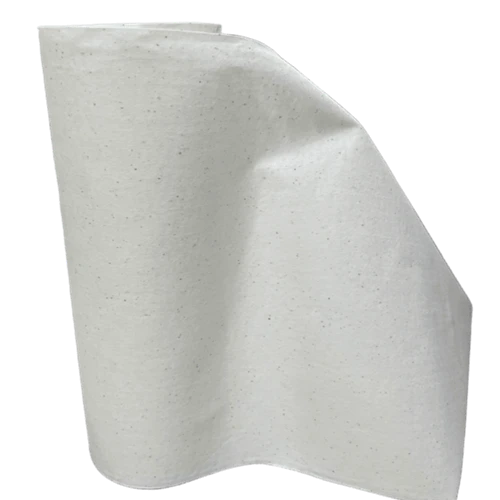
Stitched Non-Woven Fabric Technology: This method employs warp-knitting principles during formation. Yarns are stitched through a fiber web during production, creating integral reinforcement zones. These zones provide:
Defined pathways for subsequent sewing needles, reducing deflection and material damage.
Significantly enhanced tear resistance and edge stability around sewn seams.
Improved dimensional stability, minimizing distortion during the sewing process.
A built-in structural framework that synergizes with added sewing threads.
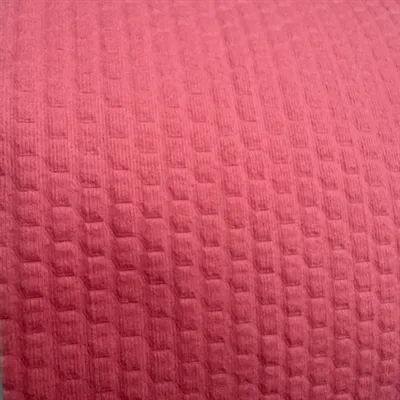
Heavy Duty Stitch Bonded Nonwoven Fabric: Building on stitch bonding, this variant utilizes robust, high-tenacity yarns (e.g., polyester, nylon, glass) and optimized stitch densities. It delivers:
Exceptional puncture and tear resistance, crucial for seams in load-bearing applications (geotextiles, filtration cages, industrial covers).
Superior dimensional stability under high sewing tensions and in-service stresses.
Resistance to seam slippage and thread pull-through, even under extreme dynamic loads.
A predictable, uniform substrate that enhances sewing machine efficiency and consistency.
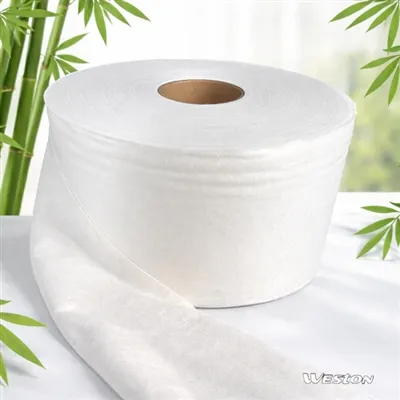
Frictional Pulp Spunlace Integration: Combining staple fibers with pulp creates a uniquely dense, entangled matrix via high-pressure water jets. This process yields:
Enhanced surface friction and fiber entanglement, significantly improving thread grip and resistance to pull-through.
Increased density and homogeneity throughout the cross-section, providing consistent resistance for needle penetration and stitch formation.
Excellent lint control and reduced abrasiveness compared to some dry-laid nonwovens, extending needle life.
Softness combined with structural integrity, suitable for sewn applications requiring drape and comfort alongside durability (e.g., medical components, high-end wipes converted into pouches).
Optimizing Sewing Processes for Engineered Non-Wovens
Even with advanced substrates like Stitched Non-Woven Fabric or Heavy Duty Stitch Bonded Nonwoven Fabric, process optimization remains critical:
Needle Selection: Precision-ground needles (e.g., RG, R) with modified points (e.g., slim set, spear point) minimize fiber damage. Larger diameters might be needed for Heavy Duty fabrics.
Thread Specification: High-tenacity, low-lubricity threads (e.g., bonded polyester, core-spun) maximize grip within the non-woven structure and resist abrasion.
Stitch Type & Density: Lockstitch (301) is generally robust; chainstitch (401) offers stretch but requires careful tension control. Higher stitch densities distribute load but increase perforation. Consider multi-needle setups for critical seams.
Tension Control: Precise thread tension is paramount. Excessive tension cuts material; insufficient tension creates weak, unstable seams. Automatic tensioners are highly recommended.
Feed Mechanisms: Differential feed systems or walking feet minimize material shifting and distortion during sewing, especially crucial for intricate shapes.
Machine Settings: Optimized presser foot pressure, throat plate design, and sewing speed prevent material drag, bunching, or needle breakage.
Strategic Advantages of Sewable Non-Wovens
Mastering the sewing of engineered non-wovens unlocks significant value:
Design Freedom: Enables complex 3D shapes, attachment points, reinforcements, and integration with other components impossible with adhesives or welding alone.
Structural Integrity: Creates seams capable of withstanding high tensile, shear, and peel forces essential for safety-critical and long-life applications.
Repairability & Disassembly: Sewn components can often be disassembled for repair or material recovery, aligning with circular economy principles.
Aesthetic Versatility: Allows for decorative stitching, top-stitching, and clean edge finishes demanded in consumer goods and technical apparel.
Process Integration: Facilitates automation using existing sewing infrastructure alongside other converting processes like cutting or ultrasonic sealing. Materials like Frictional Pulp Spunlace offer excellent compatibility across diverse conversion technologies.

Material Selection: Matching Substrate to Seam Function
Selecting the optimal non-woven involves rigorous analysis:
Load Requirements: Anticipate static, dynamic, and cyclic stresses on the seam. Heavy Duty Stitch Bonded Nonwoven Fabric excels under sustained high loads.
Environmental Exposure: Consider UV, chemicals, moisture, temperature extremes, and abrasion. Fiber type and bonding affect longevity.
Flexibility Needs: Does the application require drape, conformability, or repeated flexing? Stitched Non-Woven Fabric often balances strength with flexibility.
Abrasion Resistance: Critical for seams in contact with other surfaces. Surface treatment and fiber choice are key.
Regulatory Compliance: Ensure material meets relevant industry standards (medical, automotive, filtration, etc.) inherently, without relying solely on post-sewing treatments. Engineered substrates provide inherent performance traceability.
The evolution of non-woven technologies like Stitched Non-Woven Fabric, Heavy Duty Stitch Bonded Nonwoven Fabric, and Frictional Pulp Spunlace transforms sewing from a manufacturing challenge into a strategic advantage. These materials are engineered not just to be sewn, but to perform exceptionally because they are sewn. They represent a fundamental shift towards non-wovens designed with the demands of downstream conversion and end-use performance as core parameters. For the professional buyer, understanding this intricate interplay between material science, bonding technology, and sewing engineering is paramount for specifying components that deliver reliability, innovation, and value in demanding applications. The future of sewn non-wovens lies in proactive material design anticipating the needle's path.