Professional buyers face a deceptively simple question with complex technical layers: when, and under what conditions, are antibacterial wipes appropriate for use on food-contact surfaces? The answer is not binary. It depends on chemistry, substrate engineering, dose control, surface type, soil load, user behavior, and the specific "food-contact" scenario. This article provides a clear, defensible framework that goes beyond slogans and gets to the science that actually governs safety and performance.
Our goal is practical clarity: equip you to specify the right wipe for the right job, enforce disciplined procedures on the floor, and protect both consumers and your operation without sacrificing speed. We'll dissect the mechanics of food-contact suitability, the residue question, the microbiological realities, and the supply considerations buyers must weigh with the same rigor used for any critical input.
What "Food Safe" Should Mean in the Context of Wipes
"Food safe" for wipes is often treated as a label claim. For professional buyers, it should be treated as a system property-an interaction between:
The antimicrobial solution (actives, solvent, pH, additives, volatility, rinse requirement).
The nonwoven substrate (fiber chemistry, basis weight, binder, pore structure, absorbency, release profile).
The surface and process (material compatibility, soil, temperature, dwell time, rinsing, drying, post-process verification).
In practical terms, a wipe intended for food-contact surfaces is "safe" when:
Its ingredients and residues, under intended use and reasonably foreseeable misuse, do not transfer to food at unsafe levels.
Required steps (e.g., rinsing with potable water after disinfection) are feasible and consistently executed.
The wipe's physical substrate does not shed fibers that contaminate food or damage equipment.
The wipe's chemistry is compatible with the substrate and food-contact materials (e.g., stainless steel, HDPE, polycarbonate, silicone) and will not corrode, crack, or embrittle them.
"Food safe" is not only about the antimicrobial agent. It is about the whole intervention, including the behavior of the operator and the quality of the nonwoven engineering.
The Chemistry Inside Antibacterial Wipes: Why It Matters for Food Contact
Different active chemistries create different safety profiles on food-contact surfaces. Understanding these differences is the backbone of responsible procurement.
Alcohols (typically ethanol/isopropanol, or blends)
Strengths: Rapid evaporation; rapid microbial kill on many bacteria and some enveloped viruses; minimal residue when pure; good for touchpoints and non-soiled surfaces.
Watchouts: Reduced efficacy in heavy organic soils; flammability; may harden or haze certain plastics over time; can strip finishes. "No-residue" can be misleading if additives (humectants, skin conditioners) remain.
Food-contact note: When the formulation is minimal and volatile, the residue load is low; however, explicit label guidance for food-contact surfaces still governs. If any non-volatile additives are present, treat as potential residue sources.
Quaternary ammonium compounds (QACs)
Strengths: Broad antibacterial activity; substantive on surfaces; stable; effective film formation.
Watchouts: Leave cationic residues that can transfer; taste/odor risk; potential build-up; compatibility issues with certain anionic detergents and some plastics.
Food-contact note: In practice, many operations require a potable water rinse after QAC-based disinfection on food-contact surfaces unless the label specifically indicates otherwise for the intended use. This is because residues can persist and migrate.
Oxidizers (e.g., low-level peroxide, peracids) and organic acids
Strengths: Effective bactericidal action; acidic or oxidative mechanisms; relatively clean residue profiles at low concentrations; some rapidly decompose into benign byproducts.
Watchouts: Potential for corrosion on metals at elevated concentrations or improper dwell; eye/skin irritation; odor considerations.
Food-contact note: Proper formulation and control can yield very low-residue outcomes. Rinse requirements depend on concentration and label directions.
Biguanides and related skin antiseptics
Strengths: Skin-compatible in some formulations; persistent activity on skin when intended for that use.
Watchouts: Designed for skin, not for direct food-contact surfaces; may leave residues inappropriate for food-contact applications.
Food-contact note: Use these on people, not on cutting boards or filling lines, unless a product is clearly intended and labeled for food-contact surfaces and use conditions.
The operative principle: residues are a function of both chemistry and process. "Antibacterial" is not synonymous with "food-contact safe." For food-contact surfaces, volatile actives with low non-volatile additions tend to be easier to manage; substantive actives require disciplined rinse protocols to control residues.

Residues, Rinsing, and Dwell Time: The Operational Core
Three variables govern whether an antibacterial wipe is suitable in food environments:
Dwell time: The surface must remain visibly wet for the claimed antimicrobial performance to occur. Inadequate dwell undermines kill claims and can breed false confidence.
Soil removal: Wipes are not magical. Heavy organic soil absorbs actives and shields microbes. Pre-cleaning is essential. Many "one-step" products assume light soil; misapplication on heavy soil undermines outcomes.
Rinse requirement: If a wipe is not explicitly specified for no-rinse food-contact use under your conditions, treat it as rinse-required. The practical, conservative SOP is:
Pre-clean to remove visible soil.
Apply the wipe, ensuring complete wetting and specified dwell.
Rinse with potable water if the product requires it-or if you lack unambiguous no-rinse direction for your application.
Allow to air dry or dry with a clean, food-safe towel as your process dictates.
Rinse practicality matters. If your line speed or staffing cannot support a rinse step, you must specify a wipe designed for no-rinse food-contact use under your exact conditions-and audit execution to confirm residual control.
The Nonwoven Substrate: Hidden Engine of Safety and Performance
Buyers often over-index on liquid chemistry and under-index on substrate science. The nonwoven controls how the liquid exits the wipe, how the wipe holds together under shear, and how much fiber ends up in your product.
Key substrate variables:
Fiber chemistry: Cellulose (hydrophilic, strong when dry, weaker when wet) vs. polyester/viscose blends (wet strength, controlled release) vs. polypropylene (chemically inert, hydrophobic without treatment).
Basis weight and pore structure: Determines uptake and release-the "dose" per pass. Over-wet wipes cause dripping; under-wet wipes starve the surface, undermining dwell time.
Binders and linting: Binder-free spunlace substrates can deliver low lint with strong integrity when engineered correctly. Excessive lint is unacceptable for open food lines.
Abrasion and edge strength: The wipe must not shed under scrubbing loads typical of conveyor guards, filler nozzles, or slicer housings.
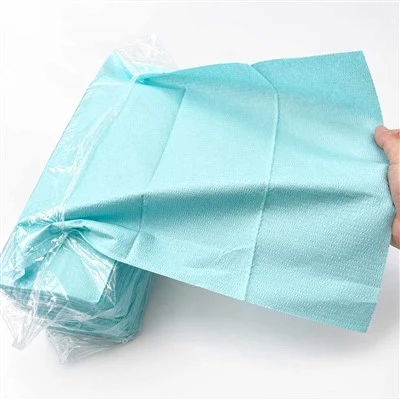
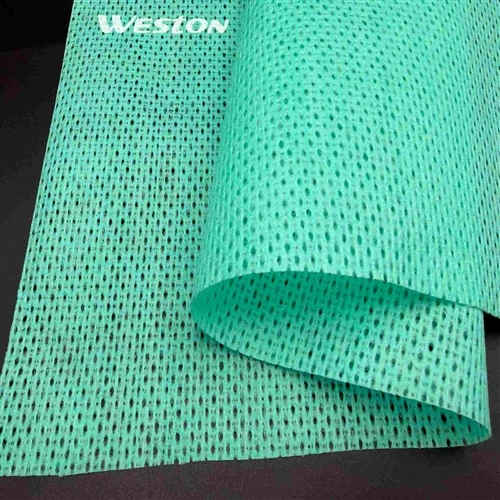
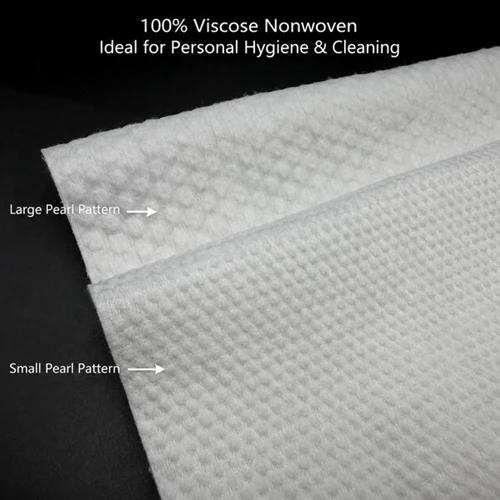
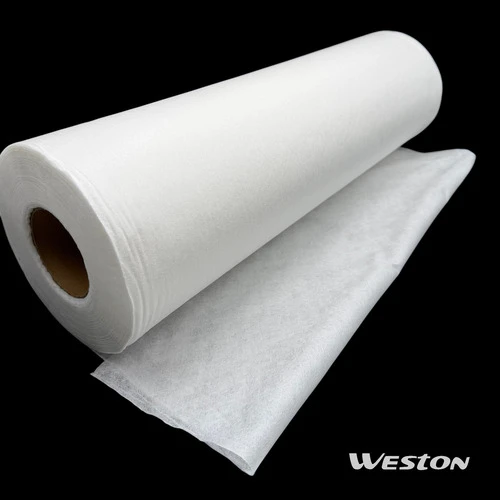
Spunlace technology deserves special attention. Properly engineered spunlace balances softness, strength, and low lint with consistent liquid release, making it suitable for hygienic environments. As a touchstone, medical-grade spunlace used in trauma or clinical care-akin to Spunlace First Aid Wipes-illustrates the structural stability and cleanliness expectations relevant for food processing, even though the chemistry differs.
The Food-Contact Spectrum: Different Surfaces, Different Rules
Not all "food-contact" surfaces are equal. Map your environment:
Direct food-contact, high-risk (cutting boards, slicers, fillers, RTE conveyors)
Least tolerance for residue, lint, and application error.
Prefer volatile/low-residue systems or rinse-required protocols with strict enforcement.
Indirect food-contact, medium-risk (exterior housings near product zones, scales, cart handles within prep zones)
More flexibility on actives; still require low lint and compatible chemistry; consider no-rinse only if residual transfer to food is unlikely.
Non-food-contact in food areas (door handles, touchscreens, PPE staging surfaces)
Standard antibacterial wipes may be appropriate; residue tolerance is higher, but overspray/drip migration still matters.
This segmentation helps you standardize SKUs and SOPs without compromising safety.
Antibacterial vs. Food Safety Realities: The Microbial Coverage Gap
"Antibacterial" is not synonymous with comprehensive foodborne risk control. Several high-impact pathogens in food environments are viral or spore-forming. If your wipe is optimized only for bacteria, it may not address viruses of concern on touchpoints or spores on resistant surfaces. That matters for risk communication and for sanitizing protocols. Use the wipe for what it is designed to do; don't let a broad-sounding label substitute for an actual hazard analysis.
Pros and Cons of Antibacterial Wipes in Food Operations
Advantages:
Dose control and convenience: Pre-saturated wipes deliver consistent liquid per unit area under controlled conditions.
Cross-contamination reduction: Single-use format reduces the risk of contaminated mop buckets or re-used cloths.
Speed: Faster to deploy than multi-bottle systems; useful for quick-turn clean-as-you-go tasks.
Compliance: Operators are more likely to use them correctly when the task is simple, especially during peak throughput.
Packaging integrity: Closed canisters or flow-wraps reduce airborne contamination of the cleaning solution.
Limitations:
Residual chemistry: Potential for taste/odor transfer, especially with substantive actives; may necessitate rinsing.
Soil capacity: Limited pickup for heavy fats and proteins; may require a dedicated pre-clean step.
Material compatibility: Repeated exposure can stress plastics, seals, or coatings; oxidizers can corrode certain metals if misused.
Cost-to-coverage: On large surfaces, wipes are less efficient than foams or sprays with dedicated towels; logistics must be rationalized (though pricing is out of scope here, the operational efficiency trade-off is real).
Waste: Single-use formats increase solid waste load; end-of-life considerations and compaction must be managed.
False confidence: Improper dwell time, inadequate pre-cleaning, or bypassing rinse requirements can degrade the safety margin.
Material Compatibility and Equipment Integrity
In food plants, the wrong wipe can degrade assets:
Stainless steel (304/316): Generally compatible; avoid high-acid or strong oxidizers at prolonged dwell; rinse per protocol to prevent pitting.
Aluminum: Sensitive to alkaline and oxidizing chemistries; test before broad use.
Polycarbonate and acrylic: Alcohols and some solvents can cause crazing; select compatible chemistry for clear guards.
Elastomers and seals (EPDM, NBR, silicone): QACs and solvents can swell or harden certain elastomers; confirm with vendors and conduct soak tests.
Coatings and inks: Some actives strip labels or safety markings; engineer around it.
A disciplined buyer requires material compatibility data, in-use testing on representative assets, and a feedback loop with maintenance to detect slow damage.
The Nonwoven–Chemistry–User Triad: How Failures Happen
Most failures trace to interactions:
Under-wet wipes + complex geometry = insufficient wetting and zero kill where it matters.
High-residue actives + no rinse + direct food-contact = taste defects, customer complaints.
High-lint substrate + high-speed conveyors = particle contamination in product zones.
Alcohol-heavy wipes + polycarbonate shields = stress cracking over time.
Preventing these requires choosing the right substrate, right chemistry, and realistic SOPs-plus training to the point of muscle memory.
Validating Performance Without Illusions
Validation goes beyond reading a spec sheet:
Surface cleanliness verification: Rapid ATP tests used correctly can monitor organic soil removal. They do not confirm pathogen kill but provide a practical cleanliness proxy between deep microbiological audits.
Dwell time audits: Observe real operators on real lines. Are they keeping the surface wet for the required time? Are they over-wiping too soon?
Residue checks: Simple sensory panels (odor/taste on sacrificial product lines, where allowed) and swab residues can detect off-notes. For critical lines, arrange lab analysis for residue accumulation across shifts.
Migration assessment: Where possible, simulate worst-case: repeated applications without rinse to see if residue accumulates. Use this to justify SOPs and replenishment intervals.
Packaging and lot integrity: Track open-pack age, evaporation rates, and first-wipe/last-wipe saturation uniformity. End-of-life evaporative loss can alter chemistry concentration.
The point is operational truth. A laboratory claim detached from your line speed, soils, and surfaces is insufficient.
Substrate Engineering Details Buyers Should Request
Ask suppliers for:
Fiber blend and basis weight, with target and tolerance.
Linting metrics and test methodology.
Wet tensile strength (MD/CD) under your chemistry.
Liquid add-on by weight, saturation uniformity, and release profile per stroke.
Extractables and leachables profile relevant to your chemistry.
Packaging barrier properties (water loss rate over shelf life and use life).
Lot traceability and change control for fiber, binder, and formulation inputs.
Engineering transparency predicts consistent field performance-and protects you against unplanned change.

Special Cases: Where Food Safety Needs Are Sharpest
Ready-to-eat (RTE) lines: Treat residues as unacceptable unless a no-rinse food-contact claim with your exact use case is present and validated. Prefer low-residue systems and documented operator compliance.
Infant and clinical nutrition: Elevate conservatism; simplify chemistry; verify absence of fragrance and unnecessary additives.
Raw protein prep: Focus on soil removal; pair wipes with pre-cleaning tools; enforce rinse where required.
Produce: Mind pH and sensitizers; consider surfaces in direct contact with high-water-activity foods where uptake of residues is more likely.
Wood and porous surfaces: Wipes have limited penetration; prefer removable, cleanable, or sealed surfaces where possible; otherwise, adjust expectations.
Sustainability and Worker Safety Considerations
Waste management: Plan compaction, segregation, and safe handling of chemically laden wipes; never flush.
Volatile organic content: Balance evaporation benefits with worker exposure and ventilation realities.
Fragrances and dyes: Avoid them in food zones; they add residue and allergy risk without hygienic benefit.
Refill systems vs. one-time packs: Refill systems reduce plastic but can invite contamination if not managed; consider sealed refills with controlled connectors.
A modern procurement brief must integrate these considerations without compromising microbial control.
A Practical Decision Framework for Buyers
Use this as a procurement and validation checklist:
Define the surfaces and risks
Direct vs. indirect food contact; RTE vs. non-RTE; materials involved; typical soils; available rinse capability.
Choose chemistry class aligned to risk and process
Favor low-residue actives when no-rinse is required; otherwise, pair substantive actives with enforceable rinse SOPs.
Specify the substrate
Low lint spunlace or equivalent for open food zones; adequate wet strength; quantified add-on and release.
Validate on-site
Dwell time observations; ATP for soil removal trends; residue checks; material compatibility soak tests; end-of-pack consistency.
Lock SOPs and training
Pre-clean, apply, dwell, rinse/dry steps; visual aids at point of use; audit cadence.
Monitor and iterate
Maintenance feedback on material effects; QA on residues; operator compliance trending; supply chain change notifications.
This framework keeps decisions measurable, repeatable, and defensible.
Where Weston Nonwoven Factory Fits
Weston Nonwoven factory operates at the intersection of chemistry and substrate engineering. For professional buyers who need control rather than wishful thinking, Weston can align substrate specifications and liquid delivery to your exact risk profile:
Substrate competency: Engineered spunlace options with low linting and tuned release for hygienic environments.
Formulation alignment: Low-residue, no-fragrance systems for food-contact scenarios where rinse is impractical; higher-substantive systems paired with explicit rinse SOP guidance where appropriate.
Category breadth that informs quality: Products such as Antiseptic Wipes For Skin highlight formulation discipline for human-contact applications; Spunlace First Aid Wipes demonstrate substrate integrity under demanding conditions; and nonwoven load-bearing designs like Patient Transfer Sheet With Handles showcase process control over fiber orientation and strength-capabilities that translate into consistency and reliability for food-zone wipes.
Traceability and change control: Factory-level control allows transparent documentation and proactive notification prior to any material or process adjustments.
For free sample requests and technical discussions: info@westonmanufacturing.com
Common Missteps to Avoid
Assuming "antibacterial" equals "safe for food-contact." It does not. Context and label directions rule.
Ignoring rinse feasibility. If you cannot rinse reliably, do not specify high-residue actives for direct-contact surfaces.
Treating all substrates as equal. Lint, release, and wet strength are decisive operational variables.
Overlooking material compatibility. Polycarbonate guards and seals are often the first casualties.
Skipping validation. Lab reports do not substitute for on-line observations and residue checks.
Implementation Playbook for Operations Leaders
Zone labeling: Color-code wipe canisters by zone and application (e.g., direct food-contact vs. non-contact).
Visual standards: Post dwell-time pictograms and "pre-clean required" cues at each station.
Open-pack controls: Record date/time of first opening; retire packs past use-life to avoid chemistry drift.
Pre-shift huddles: Quick daily refreshers on dwell and rinse where applicable; show-before/after swab results periodically to keep stakes visible.
Exception logging: Any deviation (missed rinse, wrong wipe, equipment reaction) is logged and reviewed within 24 hours with corrective action.
This is the difference between having wipes and having a controlled hygiene intervention.
Technical Edge Points for Buyers Who Want Depth
Surface energy and wetting: High-energy surfaces (clean stainless) wet more uniformly; residue films reduce energy, creating beading and micro-dry spots that harbor microbes. Scheduling periodic detergent resets breaks film buildup from substantive actives.
Additive stacks: Humectants and skin conditioners fit in skin antiseptics but are often unnecessary in food-contact wipes and can leave sensory-active residues. Push for stripped-down formulas in zones where taste/odor matter.
Film-forming behavior: Certain cationic systems deliberately leave monolayers for persistent action; useful for non-food-contact touchpoints but risky on direct-contact surfaces without rinse. Reserve these for the right zones.
Packaging permeability: Water and alcohol loss alter concentration over time. Request real use-life data that reflects container openings per shift, not just sealed shelf life.
Release curve tuning: Ideal wipes deliver near-constant solution per stroke from first to last wipe. Ask for release profiling; it affects both dwell time and cost-in-use.

Practical Verdict for Professional Buyers
Are antibacterial wipes food safe? They can be-if the chemistry, substrate, process, and operator behavior align with the realities of your environment. Low-residue systems and disciplined rinse protocols are the pivots. Substrate engineering is not a footnote; it is the delivery engine. Validation is non-negotiable.
For operations that demand rigor, the shortest path to a safe, fast, and compliant program is to specify deliberately, validate locally, and train relentlessly. Do that, and antibacterial wipes become an asset rather than a variable.
When you are ready to align substrate engineering with the right chemistry and a workable SOP, Weston Nonwoven factory can support trials and refinements tailored to your lines. To explore options or request a free sample set for on-site validation, contact: info@westonmanufacturing.com