Understanding the HS Code for Spunlace Nonwoven Fabric: A Comprehensive Guide
The Global Importance of Spunlace Fabrics
Spunlace nonwoven fabrics have become increasingly vital in our modern world, appearing in everything from medical supplies to household cleaning products. Yet many people remain unaware of the intricate classification system that governs international trade for these materials. Understanding the HS code for spunlace nonwoven fabric is essential for manufacturers, importers, exporters, and anyone involved in the global supply chain of textile products.
What Exactly Is Spunlace Nonwoven Fabric?
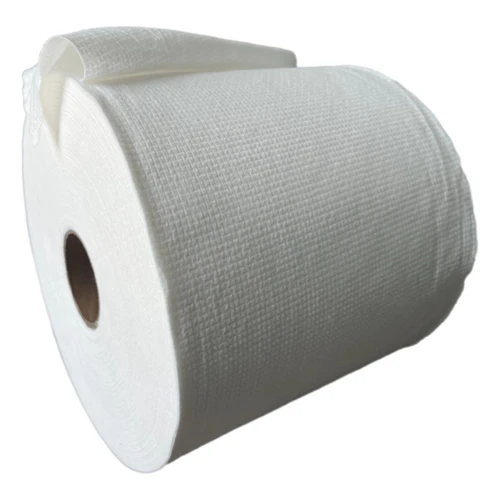
Spunlace, also known as hydroentanglement, is a sophisticated bonding technology that uses high-pressure water jets to mechanically entangle fibers without relying on chemical adhesives or heat. Unlike traditional weaving or knitting processes, spunlace represents a revolutionary approach to fabric production that dates back to innovations in the 1970s.
The process begins with fiber preparation, where raw materials-such as viscose, polyester, cotton, bamboo, or polypropylene-are carefully selected and carded into a loose web. This web then undergoes the hydroentanglement process, where extremely fine, high-pressure water jets penetrate the fabric layer, striking a conveyor belt and bouncing back to entangle the fibers together. The result is a fabric that combines remarkable softness with exceptional durability, making it suitable for demanding applications across multiple industries.
The HS Code System: A Foundation for International Trade
The Harmonized System (HS) code is an internationally standardized classification system maintained by the World Customs Organization (WCO). Established to facilitate international trade and ensure consistent tariff application across nations, the HS code system provides a universal language for describing goods crossing international borders.
The HS code for spunlace nonwoven fabric falls under heading 5603, which encompasses all types of nonwovens, whether impregnated, coated, covered, or laminated. The complete HS code typically appears as 5603.92.00 for standard spunlace fabrics, though subcategories exist based on specific characteristics such as fiber composition and weight density (measured in grams per square meter, or GSM).

Breaking Down the HS Code Structure
Understanding the HS code requires familiarity with its hierarchical structure:
Chapters (first two digits: 56): These represent the broad product category. Chapter 56 covers textiles and textile articles, with specific focus on man-made fibers and nonwovens.
Headings (first four digits: 5603): This narrows the classification to nonwoven textiles specifically, distinguishing them from woven and knitted fabrics.
Subheadings (first six digits: 560392): This identifies nonwovens made from fibers other than pure man-made filaments, which encompasses most spunlace fabrics.
Items (all eight digits: 56039200): This final level accounts for factors such as whether the fabric has been impregnated, coated, or otherwise treated, as well as weight categories.
The flexibility within these categories is crucial. For instance, spunlace fabrics weighing less than 25 g/m² fall under 5603.91.00, those weighing between 25-70 g/m² are classified under 5603.92.00, those between 70-150 g/m² appear in 5603.93.00, and heavier varieties exceeding 150 g/m² are coded as 5603.94.00.
Fiber Composition: A Key Classification Factor
The specific fiber content significantly influences both the HS code assignment and the fabric's performance characteristics. Spunlace nonwovens commonly incorporate various fiber types, each contributing distinct properties:
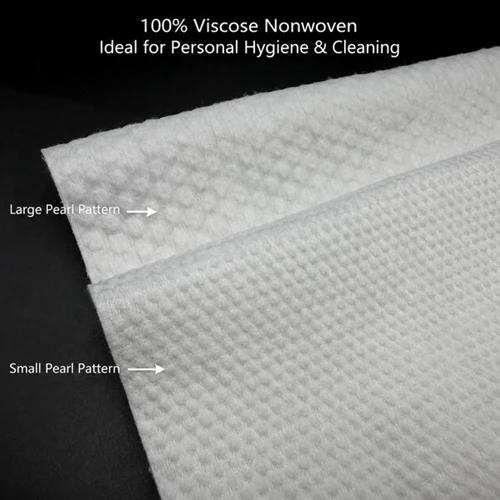
Viscose and Lyocell Fibers: Represent cellulosic options derived from wood pulp. Viscose fibers, produced through the viscose process, offer excellent absorbency and softness, making them ideal for personal care products like baby wipes and cosmetic applications. Cross Viscose Spunlace represents advanced formulations that combine viscose fibers in cross-laid patterns, enhancing structural integrity and absorption characteristics. Viscose fibers, however, have a serrated cross-section that can result in slightly higher friction coefficients compared to their more advanced counterparts.
Lyocell fibers, produced through a more environmentally friendly closed-loop process, deliver superior characteristics including smoother surfaces, exceptional softness, and remarkable chemical resistance. Pulp Lyocell Spunlace fabrics represent premium options particularly suited for high-end medical applications and environmentally conscious consumers, as lyocell maintains its strength better during repeated washing and withstands disinfection treatments more effectively than viscose.
Polypropylene and Polyester serve as synthetic options, providing durability and cost-effectiveness. Woodpulp PLA Spunlace represents an emerging category that combines biodegradable polylactic acid (PLA) fibers-derived from renewable resources like corn starch or sugarcane-with wood pulp components, creating fabrics that align with growing sustainability demands. PLA-based materials break down into water and carbon dioxide under industrial composting conditions, offering significant environmental benefits.
Cotton and Bamboo fibers appeal to consumers seeking natural alternatives, delivering breathability and skin-friendliness without chemical processing concerns.
Color and Treatment Variations
The appearance and treatment of spunlace fabric also influence its classification and market positioning. Black Spunlace Fabric exemplifies how color selection extends functionality-dark pigmentation can provide improved stain resistance, enhanced aesthetic appeal for specific applications, and reduced visibility of soiling, making it particularly valuable for industrial wiping cloths, automotive applications, and premium personal care products where appearance significantly impacts consumer perception.
Spunlace fabrics can undergo various post-production treatments including embossing, lamination, and coating, each modifying the base HS code if substantial enough to constitute a separate product classification. These treatments enhance specific performance characteristics such as liquid barrier properties, texture variation, or adhesive compatibility with other materials.
Applications Across Industries
The versatility of spunlace nonwovens creates demand across remarkably diverse sectors:
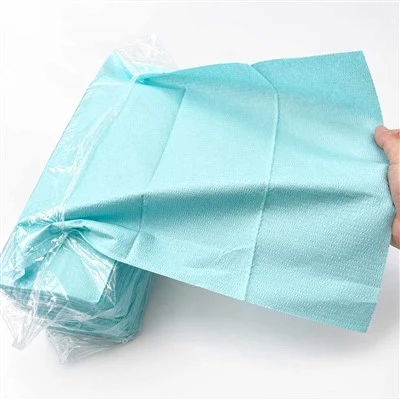
Medical and Healthcare: Surgical gowns, wound dressings, face masks, and sterilized medical drapes rely on spunlace's combination of softness and strength without chemical binders that could irritate sensitive skin or compromise sterility.
Personal Hygiene and Care: Baby wipes, facial cleansing products, cosmetic application cloths, and feminine hygiene products benefit from the fabric's exceptional softness, absorbency, and biodegradability potential.
Household and Cleaning: General-purpose cleaning wipes, mop heads, and reusable household cloths leverage spunlace's durability and water absorption properties.
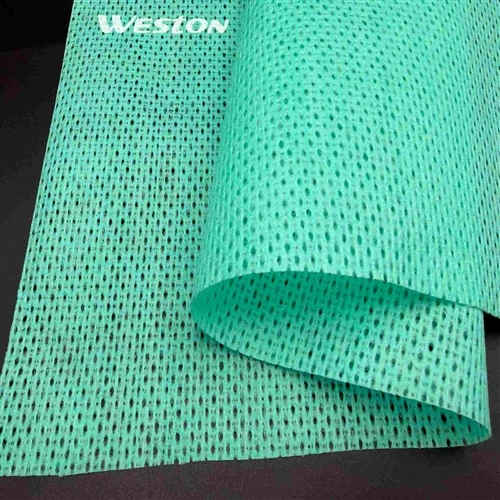
Industrial and Filtration: Automotive upholstery, noise dampening materials, air and liquid filters, and protective equipment utilize spunlace's customizable porosity and strength characteristics.
Packaging and Textiles: Eco-friendly packaging solutions increasingly incorporate spunlace materials, particularly those incorporating biodegradable fibers, as companies respond to environmental regulations and consumer preferences.
The Certification and Compliance Landscape
Proper HS code classification is fundamental to navigating international regulatory requirements. Different classifications trigger different standards and certifications. Medical-grade spunlace fabrics require alignment with ISO 13485 standards, while consumer products may need compliance with AATCC testing protocols. Biodegradable variants must meet composting standards such as EN 13432 or equivalent certifications depending on target markets.
Incorrect classification can result in substantial financial penalties, customs delays, and reputational damage. The precise HS code communicates essential information to customs officials, enabling proper duty assessment and regulatory compliance verification.
Advantages of Accurate Classification
Economic Efficiency: Proper HS coding ensures accurate tariff calculation, allowing businesses to budget effectively and eliminate unexpected duties or penalties that erode profit margins.
Supply Chain Transparency: Standardized classification enables real-time tracking and transparent communication between suppliers, manufacturers, distributors, and retailers across international borders.
Market Access: Many trade agreements offer reduced tariffs for products correctly classified within specific HS codes, making accurate categorization essential for competitive advantage.
Regulatory Compliance: Matching the HS code to actual product specifications ensures compliance with country-specific regulations regarding material composition, safety standards, and environmental requirements.
Data Integrity: Consistent use of correct HS codes enables accurate market research, competitive analysis, and strategic planning based on legitimate trade statistics.

Challenges in HS Code Application
Despite the standardized framework, several practical challenges persist:
Cross-Border Interpretation Variations: While the HS code should be uniform globally, different national customs authorities sometimes interpret classifications differently, particularly for blended-fiber products with ambiguous primary composition.
Rapid Innovation Pace: As manufacturers develop novel fiber combinations and production techniques, the existing HS code framework sometimes struggles to accommodate genuinely new products, creating gray areas in classification.
Knowledge Gaps: Small and medium enterprises may lack expertise in proper HS coding, inadvertently exposing themselves to compliance risks.
Documentation Requirements: Comprehensive fiber composition documentation, weight specifications, and treatment certifications are necessary to defend chosen classifications if questioned by customs officials.
Making Sense of Your Specific Needs
When selecting spunlace nonwoven fabrics for your specific application, consider not only the finished product characteristics but also how the chosen composition and weight will affect HS code classification and associated import/export duties. Different markets prefer different specifications-premium medical applications often demand Pulp Lyocell Spunlace for its superior performance characteristics, while cost-sensitive mass-market applications might utilize Woodpulp PLA Spunlace or Cross Viscose Spunlace options. Industrial applications sometimes benefit from Black Spunlace Fabric variants specifically engineered for durability and aesthetic performance.
Manufacturers like Weston Nonwoven specialize in producing precisely engineered spunlace nonwoven solutions across diverse specifications and fiber combinations, understanding how each formulation intersects with proper HS code classification, tariff optimization, and regulatory compliance. Should you seek professional guidance on matching your application requirements to both optimal product specifications and proper HS coding, connecting with experienced manufacturers can prove invaluable.
For technical consultations regarding spunlace nonwoven fabric selection, specifications, and HS code clarification, interested parties are encouraged to contact: info@westonmanufacturing.com to discuss free sample availability and customized solutions tailored to your specific requirements.
Looking Forward
As global trade evolves and environmental consciousness shapes manufacturing priorities, the HS code system continues adapting to reflect new materials and sustainable alternatives. Understanding not just the code itself, but the logic underlying its structure, enables stakeholders to navigate international commerce with confidence and strategic advantage.
Whether you're an importer calculating landed costs, an exporter ensuring compliance, or a manufacturer optimizing product development strategies, proper HS code knowledge transforms a seemingly bureaucratic requirement into a competitive tool that accelerates market access and enhances profitability across the global spunlace nonwoven supply chain.