Spunbond and spunlace are two different manufacturing processes used to produce nonwoven fabrics, each with its own unique characteristics and advantages. Here are the key differences between spunbond and spunlace fabrics:
Manufacturing process:
Spunbond: Spunbond nonwoven fabrics are produced by extruding continuous filaments of synthetic polymers (such as polypropylene or polyester) onto a moving conveyor belt or drum. The filaments are then bonded together using heat and pressure or by applying binders, adhesives, or mechanical methods. This process creates a web of continuous filaments with high tensile strength and dimensional stability.
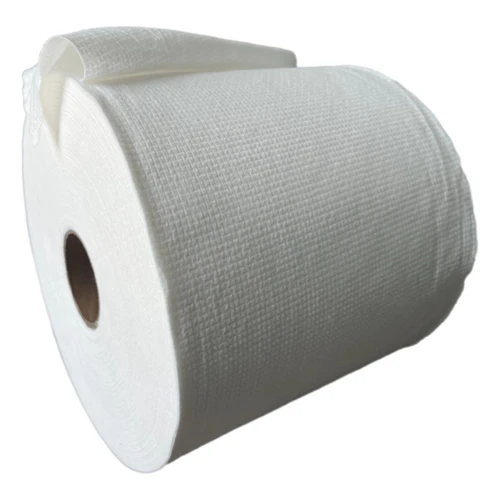
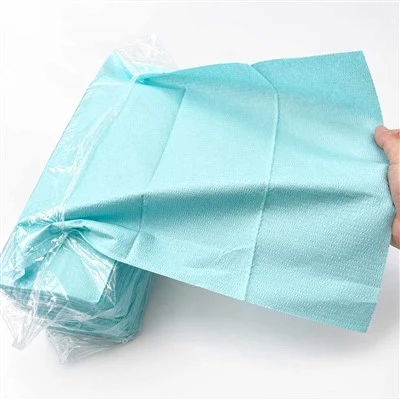
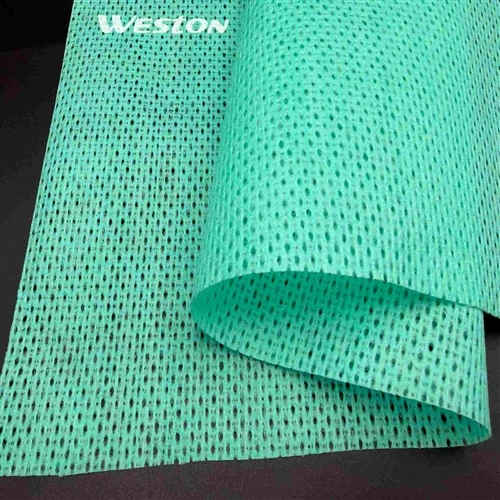
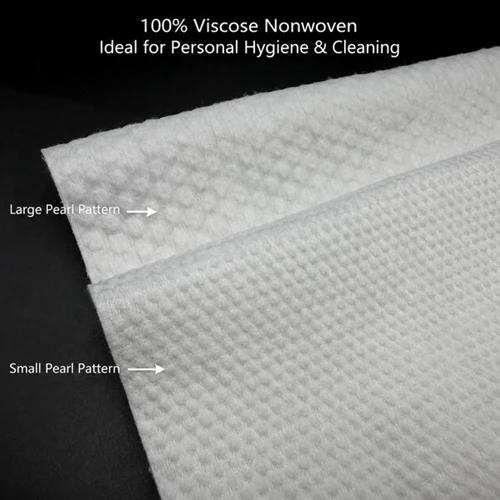
Spunlace: Spunlace nonwoven fabrics, also known as hydroentangled or hydroentanglement fabrics, are produced by entangling fibers using high-pressure water jets. In this process, a blend of staple fibers (such as cotton, viscose, polyester, or lyocell) is carded and laid out onto a conveyor belt. High-pressure water jets are then used to entangle the fibers, interlocking them together to form a cohesive fabric.
Fiber orientation:
Spunbond: Spunbond fabrics consist of continuous filaments arranged in a random orientation. The filaments are laid out onto the conveyor belt or drum in a crisscross pattern, creating a fabric with uniform strength and stiffness.

Spunlace: Spunlace fabrics consist of staple fibers entangled together in a random three-dimensional network. The entangled fibers create a fabric with a soft, cloth-like texture and excellent drapeability.
Properties:
Spunbond: Spunbond fabrics are known for their high strength, durability, and dimensional stability. They have good resistance to tearing, abrasion, and puncture, making them suitable for applications requiring robust and long-lasting materials. Spunbond fabrics are commonly used in applications such as geotextiles, agriculture, automotive interiors, and industrial packaging.
Spunlace: Spunlace fabrics are valued for their softness, absorbency, and breathability. They have a cloth-like texture and drape, making them comfortable to wear and ideal for applications where skin contact is involved. Spunlace fabrics are commonly used in medical wipes, personal care products, hygiene products, facial masks, and apparel.
Applications:
Spunbond: Spunbond fabrics are used in a wide range of industrial, commercial, and consumer applications where strength, durability, and stability are paramount. They are commonly used in construction, agriculture, geotextiles, filtration, automotive, and industrial packaging.
Spunlace: Spunlace fabrics are used in applications where softness, comfort, and absorbency are desired. They are commonly used in medical and personal care products, wipes, hygiene products, apparel, and home textiles.