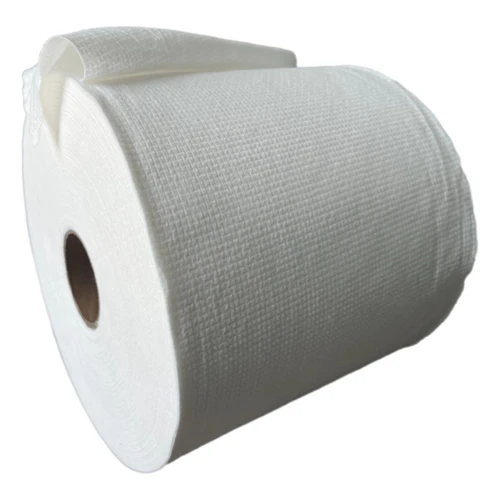
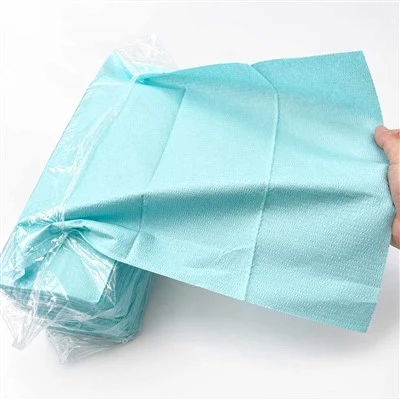
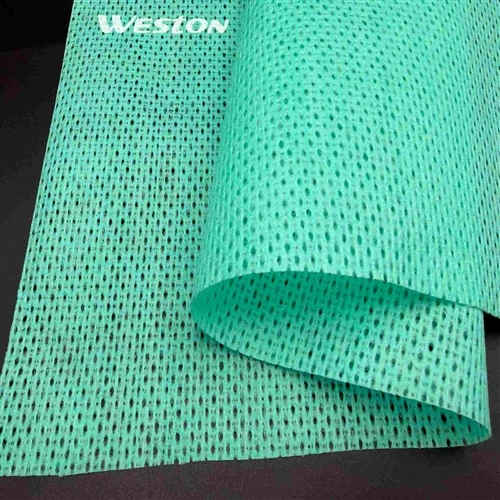
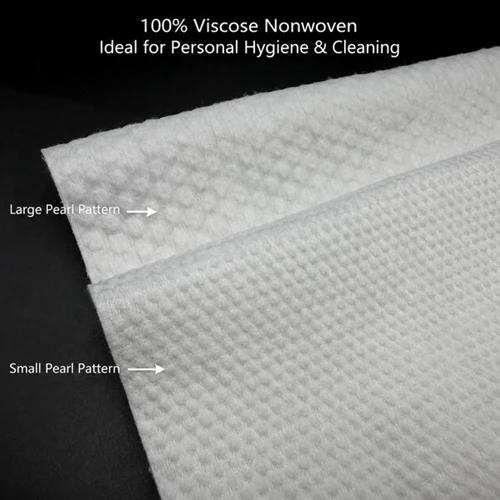
Spunlace fabric, also known as hydroentangled fabric, is a type of nonwoven material made by entangling fibers together using high-pressure water jets. Unlike traditional woven fabrics, which are created by interlacing yarns together through weaving, spunlace fabric is made directly from fibers without the need for yarn formation.
Here's an overview of how spunlace fabric is made and its characteristics:
Production Process:
Fiber Selection: Fibers are selected based on the desired properties of the final fabric. These fibers can be natural (such as cotton, bamboo, or wood pulp) or synthetic (like polyester, polypropylene, or viscose), or a blend of both.
Web Formation: The selected fibers are formed into a loose web or mat using various methods such as carding (aligning fibers into a thin web) or airlaying (blowing fibers onto a conveyor belt to form a random web).
Entanglement: The fiber web is then passed through a series of high-pressure water jets. These jets cause the fibers to entangle and interlock with each other, creating a cohesive fabric structure. The pressure and intensity of the water jets can be adjusted to control the properties of the final fabric, such as its density, thickness, and strength.
Drying and Finishing: After entanglement, the spunlace fabric may undergo drying to remove excess moisture and finishing treatments to enhance specific properties like softness, absorbency, or strength.
Characteristics:
Softness: Spunlace fabric is known for its soft and smooth texture, making it comfortable against the skin. This softness makes it suitable for applications where comfort is essential, such as wipes and hygiene products.
Strength: Despite its softness, spunlace fabric can have good strength and tear resistance, depending on the types of fibers used and the entanglement process.
Absorbency: Spunlace fabric can be highly absorbent, making it ideal for use in products like wipes, medical dressings, and cleaning cloths.
Lint-Free: Spunlace fabric typically produces minimal lint, making it suitable for applications where cleanliness is important.
Versatility: Spunlace fabric is versatile and can be engineered to meet specific requirements for different applications. It can be produced in various weights, thicknesses, and compositions to suit a wide range of needs across industries.