The Science Behind Streak-Free Cleaning Cloths for Sensitive Stainless Surfaces
Why Stainless Steel Surfaces Show Every Cleaning Mistake
Stainless steel is widely used in commercial kitchens, medical facilities, laboratories, elevators, appliances, and industrial equipment because of its corrosion resistance, durability, and clean appearance.
However, maintaining a flawless stainless steel surface is more challenging than it appears. Even after cleaning, users often notice:
- Visible streaks
- Water marks
- Fingerprint residues
- Micro scratches
- Uneven shine
These problems are not always caused by the cleaning solution itself. In many cases, the cleaning cloth plays a critical role in determining the final surface appearance.
The performance of a streak-free cleaning cloth depends on several scientific factors, including fiber structure, liquid absorption, lint generation, surface contact, and contamination removal efficiency.

1. Understanding Why Stainless Steel Surfaces Are Sensitive
Stainless steel has a smooth, reflective surface that easily reveals imperfections.
Unlike porous materials, stainless steel does not absorb liquids. During cleaning, moisture and dissolved contaminants remain on the surface until removed by the wiping process.
Common residues include:
- Water minerals
- Oil and fingerprints
- Cleaning chemical residues
- Dust particles
- Fine organic contamination
A cloth that spreads liquid unevenly or leaves fibers behind can create visible streaks after drying.
Therefore, effective stainless steel cleaning requires:
Controlled liquid management + efficient particle removal + low residue performance
2. The Role of Fiber Structure in Streak-Free Cleaning
The structure of cleaning fibers directly influences cleaning performance.
Traditional woven cotton cloths often have:
- Larger fiber diameter
- Irregular surface structure
- Lower liquid distribution control
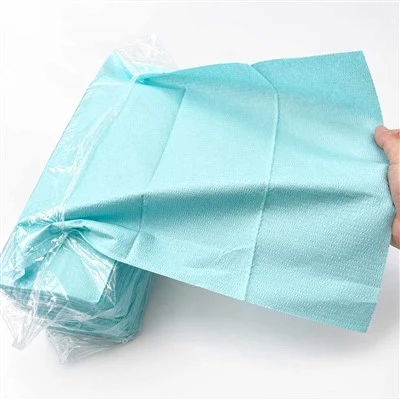
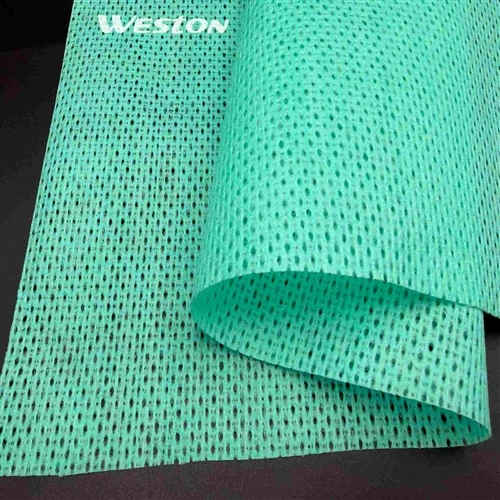
- Modern spunlace nonwoven fabrics provide a different cleaning mechanism.
During the hydroentanglement process, high-pressure water jets entangle fibers together without chemical binders, creating a uniform three-dimensional fiber network.
This structure provides:
High Surface Contact
Fine fibers create more contact points with stainless steel surfaces, allowing better removal of oils and particles.
Controlled Absorption
The internal fiber network absorbs liquids quickly while helping distribute moisture more evenly during wiping.
Low Lint Performance
A well-designed spunlace structure reduces loose fibers that may remain on polished surfaces.
3. Why 100% Viscose Spunlace Performs Well on Delicate Surfaces
Viscose fiber is regenerated from cellulose, giving it several characteristics suitable for sensitive cleaning applications.
Excellent Absorbency
Viscose has a hydrophilic molecular structure, allowing it to absorb water-based liquids efficiently.
This helps remove:
Water droplets
Cleaning solutions
Light contamination
without excessive liquid spreading.
Soft Fiber Touch
Compared with many synthetic fibers, viscose fibers provide a softer surface feel.
This is important when cleaning:
Brushed stainless steel
Appliance panels
Elevator surfaces
Decorative metal finishes
because aggressive fibers may increase the risk of visible surface marks.
Uniform Fiber Distribution
In spunlace production, fiber entanglement creates a consistent web structure.
A more uniform structure helps provide:
Stable wiping performance
Consistent cleaning results
Reduced variation between cloth pieces
4. How Embossing Improves Cleaning Performance
Embossing is not only a visual design feature.
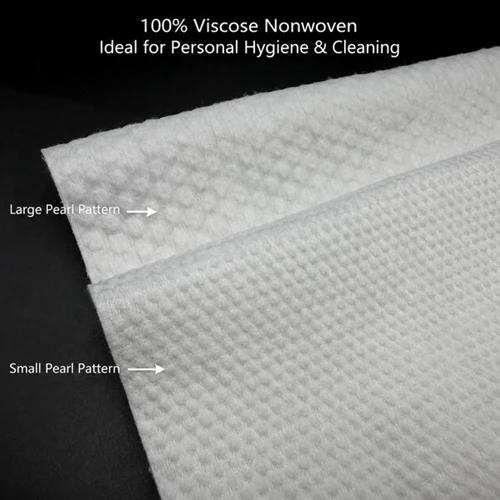
A square embossed pattern can create:
Increased Surface Area
The raised pattern increases the effective contact area between the cloth and surface.
This can improve:
Dirt pickup
Liquid distribution
Contaminant retention
Better Particle Capture
During wiping, embossed areas can create small spaces that help hold removed particles instead of pushing them across the surface.
This is especially useful for:
Dust
Fingerprint oils
Fine residues
5. Why Some Cloths Leave Streaks
Streaking usually happens because of several factors:
Excess Liquid
Too much cleaning solution leaves a thin uneven film after evaporation.
Poor Fiber Absorption
If the cloth cannot absorb and distribute liquid effectively, moisture remains on the surface.
Residual Fibers
Loose fibers can create visible marks on reflective surfaces.
Incorrect Wiping Method
Even a high-quality cloth performs poorly if the surface is repeatedly wiped with a saturated or contaminated area.

6. Testing Factors for Professional Cleaning Cloths
A reliable cleaning cloth should be evaluated through measurable properties, not only appearance.
Important testing parameters include:
Absorption Capacity
Measures how much liquid the fabric can hold.
Absorption Rate
Measures how quickly liquid enters the fiber structure.
Lint Generation
Evaluates loose fiber release during use.
Surface Compatibility
Checks whether the material is suitable for sensitive surfaces.
Tensile Strength
Ensures the cloth maintains integrity during wiping.
For industrial applications, cleaning performance should be verified through repeatable testing rather than marketing claims.
7. Choosing the Right Cleaning Cloth for Stainless Steel Applications
Different stainless steel applications require different cleaning materials.
|
Application |
Recommended Features |
|
Kitchen equipment |
High absorbency, grease removal |
|
Elevator panels |
Low lint, soft touch |
|
Medical facilities |
Clean processing, consistent quality |
|
Electronics & appliances |
Low residue, gentle wiping |
|
Industrial equipment |
Strength and durability |
Clean Performance Comes From Material Science
A streak-free stainless steel cleaning cloth is not created by one single feature.
Its performance depends on the combination of:
- Fiber selection
- Nonwoven structure
- Absorption capability
- Surface contact
- Manufacturing consistency
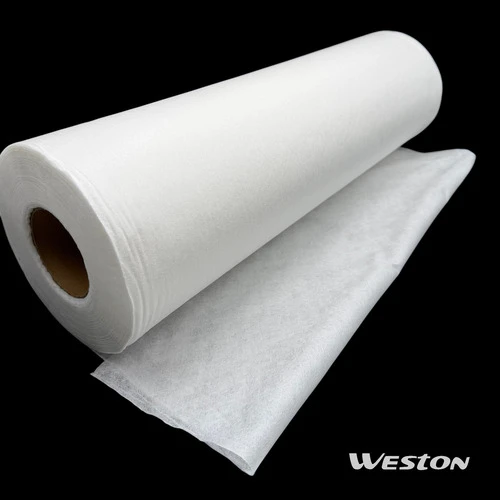
- 100% viscose spunlace nonwoven fabrics provide a balanced solution for applications requiring softness, absorbency, and low-lint performance.
For professional cleaning manufacturers, choosing the correct raw material is the first step toward producing reliable streak-free cleaning products.