The Invisible Hero of Modern Medicine: Why Spunlace Non-Woven Fabric Deserves Your Attention
Every time a surgeon scrubs in, a nurse wraps a wound, or a newborn is cleaned in a delivery room, there is a strong likelihood that spunlace nonwoven fabric is in direct contact with that moment. It is not a niche industrial material - it is a substantial and fast-growing segment of the global healthcare supply chain, and the numbers behind it are worth examining closely.
A Market Larger Than Most People Assume
Global demand for medical-grade nonwoven materials is not a minor line item. The global spunlace market is valued at $5.2 billion in 2025 and is projected to reach $9.57 billion by 2034, expanding at a compound annual growth rate of 6.8% from 2026 to 2034. Within that market, healthcare is not a passive beneficiary - it is one of the primary growth engines. Medical-grade spunlace products, including surgical gowns, wound dressings, and diagnostic equipment components, represent the fastest-growing segment, holding 28.3% market share with an estimated CAGR of 8.1% from 2026 to 2034.
Put simply: medical applications are growing faster than the spunlace industry as a whole.
This is reinforced by broader nonwovens data. Hygiene and medical applications together account for nearly 57% of total consumption in the global spunlace non-woven fabric market, and at a production level, medical spunlace shipments rose to represent 45% of global material volume in recent reporting - a figure that signals medical use has moved from a secondary application to a core driver of the industry.

Why Regulatory and Procurement Standards Matter
Hospitals do not select materials casually. Spunlace substrates offer measurable performance advantages over traditional nonwovens in applications requiring sterility assurance, liquid barrier properties, and biocompatibility, making them essential for regulatory compliance in FDA-approved and CE-marked medical devices. This is why leading manufacturers are investing in cleanroom production facilities and obtaining ISO 13485 certifications to serve pharmaceutical and medical device markets - certification is not a formality, it is a precondition for hospital procurement.
The scale of underlying demand is structural, not cyclical. Global healthcare spending is projected to exceed $12 trillion annually by 2030, driven by aging populations in developed nations and expanding hospital networks in emerging markets, with surgical procedure volumes in Asia Pacific having increased by 22% since 2020. More procedures mean more single-use, sterility-critical material consumption - and spunlace is positioned as the substrate of choice for much of it.
What the Material Actually Does
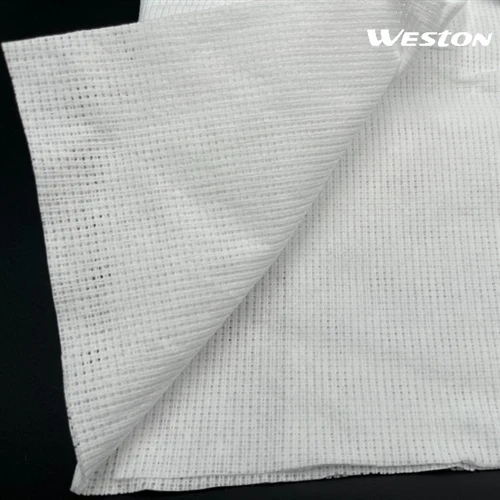
Spunlace fabric is produced through hydroentanglement: high-pressure water jets interlock fibers mechanically, without adhesives or chemical binders. The clinical relevance of this process shows up in four measurable properties:
Low irritation potential - the absence of chemical binders reduces contact-related skin reactions, relevant for wound-adjacent and prolonged-contact use.
Combined breathability and fluid resistance - a balance required in surgical drapes and gowns, where barrier performance cannot come at the cost of usability.
Wet and dry tensile strength - critical given repeated exposure to blood, saline, and disinfectant during procedures.
Low linting - a property with direct implications for surgical site infection risk, since loose fibers introduced into an open wound are a documented contamination pathway.
Where the Material Is Used
Surgical gowns and drapes. This is the primary barrier separating a sterile field from a non-sterile environment during procedures.
Wound care and dressings. Softness reduces tissue disruption during dressing changes; absorbency manages exudate without adhering to healing tissue.
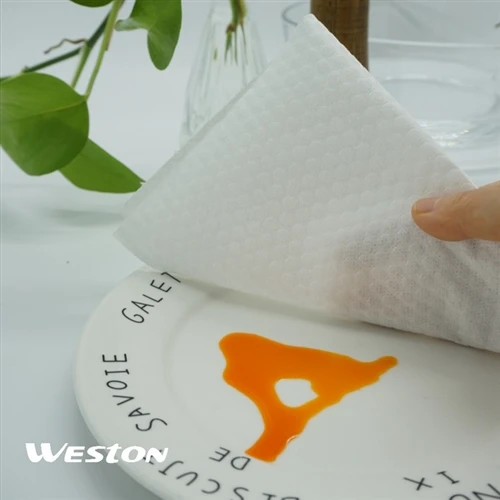
Disinfectant and surface wipes. Spunlace substrates hold and release liquid evenly under repeated wiping pressure, a functional advantage over paper-based alternatives that tend to shred.
Face masks and PPE. The COVID-19 pandemic accelerated consumption of spunlace nonwoven fabrics in personal protective equipment and broader medical supplies, and this demand baseline has persisted well beyond the acute phase of the pandemic.
Baby and elder care. Medical-grade material specifications extend into incontinence products, hygiene wipes, and home-care items, connecting hospital-grade standards to everyday consumer use.
Manufacturing specialization within this category reflects how specific clinical use cases have become. Product lines such as Antimicrobial Nonwoven Obstetric Drapes engineered for high-risk delivery settings, Spunlace Nonwoven For Medical Tape Roll built for consistent adhesion without skin trauma, and Waterproof Dental Drapes designed for fluid control in close-contact procedures illustrate the degree of engineering precision the category now demands - precision that factories such as Weston Nonwoven build their production around, rather than treating spunlace as a single generic grade of fabric.

Regional Production Data
Manufacturing capacity is heavily concentrated. China accounts for approximately 42% of global spunlace production capacity, and announced capacity additions across Asia Pacific, Latin America, and Eastern Europe exceed 450,000 metric tons annually during 2026-2029. Asia Pacific leads the spunlace nonwovens market as both the largest production hub and consuming region, holding 42% share, driven in part by India's PMJAY healthcare expansion, which covers more than 500 million people.
This concentration of manufacturing scale is directly relevant to procurement decisions: it shapes lead times, cost stability, and the ability of suppliers to meet certification requirements at volume.
The Unresolved Sustainability Question
The growth data above is inseparable from an environmental cost that the industry has not fully resolved. Single-use nonwovens are favored precisely because disposability supports infection control - but that same property generates material waste at scale. There has been real movement toward addressing this: a biodegradable spunlace line produced 25,000 tonnes of plant-based fiber fabric in 2024, meeting over 40% of demand for compostable hygiene wipes in Europe while maintaining tensile strength of 50-80 N. Regulatory frameworks including the Plastics Directive, Waste Framework Directive, and Extended Producer Responsibility schemes are driving further innovation in biodegradable materials and recycling systems.
This remains a genuine tension rather than a solved problem - one that will likely define the next phase of material development in this sector.