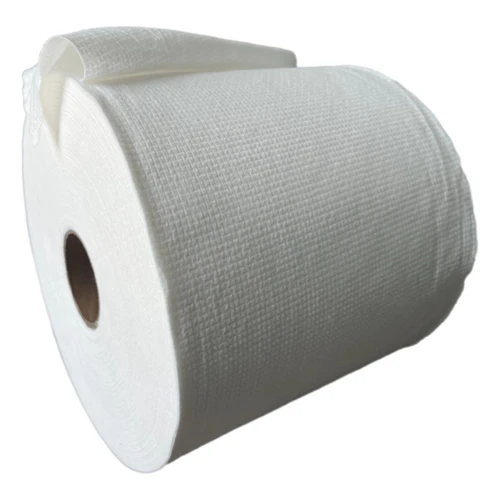
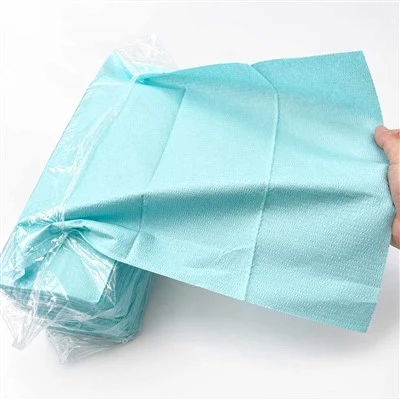
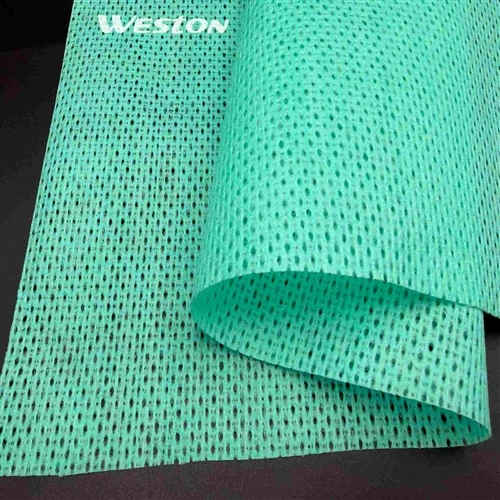
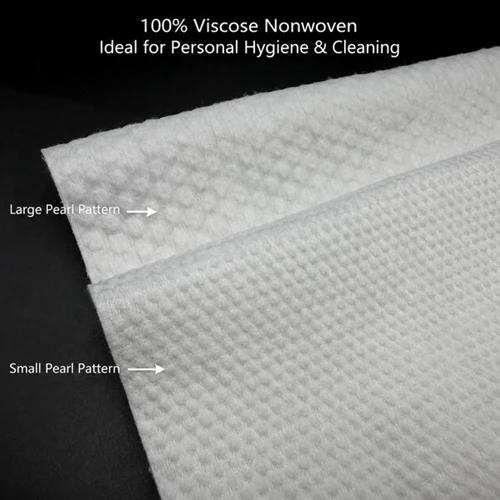
Spunlace nonwoven fabric, often referred to simply as spunlace fabric, is a type of nonwoven material manufactured through a process known as hydroentanglement or spunlacing. Unlike traditional woven fabrics, which are made by interlacing yarns together through weaving, spunlace fabric is produced by entangling fibers together using high-pressure water jets. Here's what spunlace nonwoven fabric entails:
Production Process: Spunlace fabric is created by first forming a web of fibers, which can be natural (such as cotton, bamboo, or wood pulp) or synthetic (such as polyester or viscose). This web is then subjected to high-pressure water jets that entangle the fibers, creating a cohesive fabric structure without the need for weaving or knitting.
Characteristics: Spunlace nonwoven fabric is known for its softness, strength, absorbency, and breathability. The entanglement of fibers results in a fabric with excellent integrity and cohesion. It typically has a smooth surface texture and can be produced in various weights, thicknesses, and compositions to suit different applications.
Applications: Spunlace fabric finds applications across a wide range of industries, including medical, personal care, hygiene, wipes, apparel, automotive, and industrial sectors. It is used in products such as medical dressings, wipes, facial masks, hygiene products, cleaning cloths, apparel linings, and automotive interiors, among others.
Advantages: Spunlace nonwoven fabric offers several advantages over traditional woven fabrics and other types of nonwoven materials. It has a soft and cloth-like texture, making it comfortable for use in contact with the skin. It also has superior absorbency and strength compared to some other nonwoven fabrics, making it suitable for applications requiring high performance.
Customization: Spunlace fabric can be customized in terms of fiber composition, weight, thickness, and surface finish to meet specific requirements. Manufacturers can tailor the fabric to achieve desired characteristics such as softness, absorbency, strength, and durability for different applications.