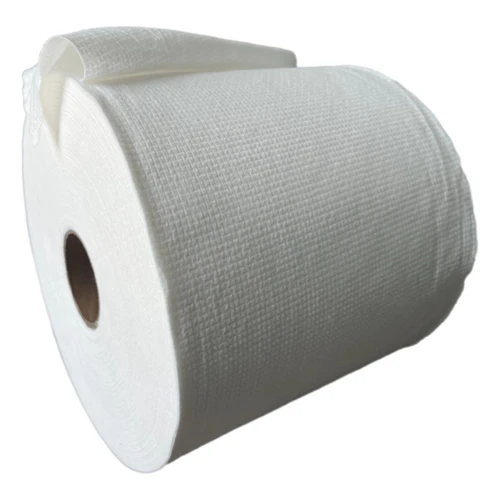
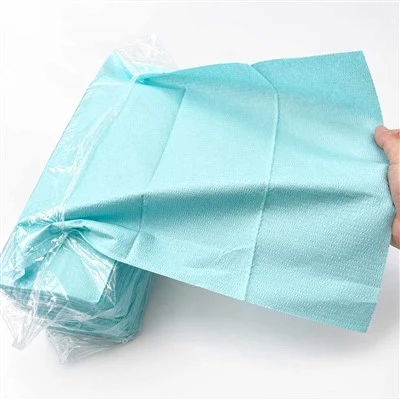
Spunlace non woven fabric has revolutionized the wet wipe industry, becoming the backbone material for over 90% of all wet wipes manufactured globally. This specialized textile plays a crucial role in determining the softness, strength, and overall performance of wet wipe products. Understanding the unique properties of spunlace material is essential for manufacturers looking to create high-quality wipes that meet consumer expectations.
Unlike traditional woven textiles, spunlace fabric derives its strength from a hydroentanglement process that uses high-pressure water jets to interlock fibers. This technique creates a material that's particularly suitable for wet wipe applications due to its excellent liquid absorption capabilities and skin-friendly texture. Furthermore, the versatility of spunlace technology allows for various fiber combinations-from PET and viscose blends to wood pulp and cotton-each offering specific benefits for different wipe applications.
This comprehensive guide explores everything manufacturers need to know about spunlace non woven fabric, from its production process and material composition to performance characteristics and specific applications across baby care, medical, household, and biodegradable wipe segments.
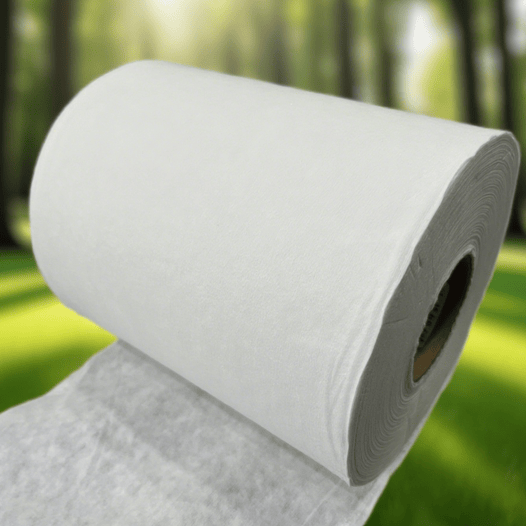
Understanding Spunlace Nonwoven Fabric
Spunlace non woven fabric represents a distinct category within nonwoven textiles, characterized by its unique bonding mechanism and exceptional performance properties. This innovative material has established itself as the premier choice for wet wipe manufacturing across various industries.
Definition and Classification under Nonwoven Category
Spunlace, also known as hydroentangled fabric, belongs to the nonwoven textile family-materials manufactured without traditional weaving or knitting processes. Instead of interlacing yarns, spunlace fabric is created through a mechanical bonding process that entangles fibers into a cohesive structure. The fabric primarily uses short staple fibers, with viscose and polyester being the most commonly utilized materials, though polypropylene and cotton are also frequently incorporated.
What sets spunlace apart from other nonwovens is its classification based on lapping technique. Two primary types exist:
Parallel lapped spunlace: Features fibers predominantly oriented in one direction, making it easier to tear in a straight line along its vertical direction.
Cross lapped spunlace: Demonstrates higher strength in both machine direction (MD) and cross direction (CD), with fibers oriented in multiple directions.
This classification directly influences application suitability-parallel lapped varieties excel in wet wipe production, while cross lapped versions are preferred for dry wiping cloths and leather applications.

Hydroentanglement Process Overview
The hydroentanglement process forms the core of spunlace manufacturing. This technique employs high-pressure water jets to entangle fibers, creating strong bonds without chemical additives or thermal processing. The manufacturing sequence follows specific steps:
Fiber preparation: Selected fibers (polyester, rayon, cotton, or blends) are opened, cleaned, and mixed to the desired composition.
Web formation: Fibers are organized through carding to form a uniform drylaid web.
Water jet entanglement: The web passes through a series of high-pressure water jets (typically operating at 10-300 bar) that penetrate the material, causing the fibers to entangle and interlock.
Dewatering and drying: Excess moisture is removed through vacuum slots before the fabric undergoes hot air drying.
Finishing and winding: The material receives any special in-line processing before being wound into rolls.
The water jets function as "water needles," delivering kinetic energy that reorganizes fibers and creates strong mechanical bonds. Modern systems employ specialized injectors with precisely engineered water distribution systems to optimize energy efficiency and entanglement quality.
Comparison with Other Nonwoven Types
When contrasted with other nonwoven varieties, spunlace exhibits distinctive attributes that make it particularly suitable for wet wipe applications:
Spunlace vs. Spunbond: While spunbond fabrics rely on thermal or chemical bonding for strength, spunlace achieves integrity through mechanical entanglement. Consequently, spunbond materials typically offer greater tensile strength, but spunlace provides superior softness, flexibility, and absorbency.
Spunlace vs. Needlepunch: Both processes employ mechanical bonding, but needlepunch uses barbed needles rather than water jets. This difference results in needlepunch fabrics having a denser, more compact structure, whereas spunlace yields a softer, more drapeable material with better skin-feel.
Spunlace vs. Meltblown: Meltblown fabrics, created by extruding molten polymer fibers, feature extremely fine fiber diameters and excellent filtration properties. However, spunlace materials generally demonstrate greater strength, durability, and absorbency-critical factors for wet wipe performance.
The distinguishing characteristics of spunlace-notably its softness, absorbency, isotropic strength, and breathability-have established it as the dominant material in wipe manufacturing, medical products, and applications requiring gentle contact with skin.
Spunlace Manufacturing Process Explained
The manufacturing of spunlace non woven fabric involves a sophisticated sequence of processes that transform loose fibers into cohesive textiles without using chemical binders or adhesives. This production method stands out for its ability to create strong yet soft materials ideal for wet wipe applications.
Fiber Blending: PET, Viscose, Cotton, and Wood Pulp
The journey of spunlace fabric begins with careful selection and blending of fibers. Manufacturers typically utilize various combinations of:
Synthetic fibers: Polyester (PET) and polypropylene (PP) provide strength, durability, and resistance to moisture.
Natural fibers: Cotton offers softness and absorbency.
Regenerated cellulosic fibers: Viscose delivers skin-friendliness and liquid retention.
Wood pulp: Contributes cost efficiency and enhanced absorbency.
Fiber selection directly influences the final product's characteristics. For instance, PET-viscose blends represent the most common combination in wet wipe manufacturing, balancing strength with absorbency. Meanwhile, wood pulp-polyester mixtures offer cost advantages while maintaining functional properties.
The fiber blend ratio significantly affects the fabric's performance characteristics. Manufacturers adjust these ratios based on the intended application-such as increasing polyester content for durability or enhancing viscose proportion for superior absorbency.
High-Pressure Water Jet Entanglement
The defining feature of spunlace production is the hydroentanglement process. After fiber preparation, the material undergoes this critical bonding step:
The fiber web passes beneath a series of injector heads containing precisely engineered water jet strips.
These injectors produce fine columnar water jets approximately 60-140 μm in diameter.
The jets operate at pressures ranging from 25-250 bar in standard production, with advanced systems capable of reaching up to 400 bar.
Water impacts the fiber web at speeds reaching 280 m/s, creating a continuous curtain of force.
This energy causes fibers to displace, twist, and entangle into a three-dimensional network.
Modern spunlace equipment features specialized components like the neXjet injector, which delivers high performance with water purity controls. These systems incorporate EXH (Extra Hard) strips made of durable materials that resist wear from high-velocity water. Additionally, innovative seal-holding systems allow maintenance without production downtime. Suction is applied beneath the web at each injector to remove excess water. The conveyor belt's design and surface structure significantly influence the resulting fabric characteristics.
Web Formation and Drying Techniques
Prior to hydroentanglement, the fibers must be formed into a uniform web through one of several methods:
Dry-laid (carding): Individual fibers are aligned using carding machines to create a uniform web with higher strength properties. This represents the most common approach for spunlace production.
Wet-laid: Similar to papermaking, fibers are suspended in water then deposited onto a screen to form a wet web. This technique yields lightweight, uniform fabrics with excellent formation quality.
Air-laid: Fibers are dispersed in an airstream and deposited onto a moving conveyor, creating a loose web with good bulk and absorbency.
Following web formation and hydroentanglement, the fabric undergoes:
Dewatering: Mechanical removal of excess water through vacuum slots.
Drying: Usually via hot air systems or drum drying equipment.
Special processing: Optional treatments such as softening or antimicrobial finishing.
Winding: The finished material is wound into rolls for further processing.
The entire spunlace manufacturing process creates a versatile textile that maintains excellent strength without harsh chemical bonding agents-a crucial advantage for skin-contact applications like wet wipes.
Material Composition and Fiber Blends in Wet Wipes
The fiber composition of spunlace non-woven fabric decisively shapes wet wipe performance characteristics, determining everything from absorbency to strength and cost-effectiveness. Manufacturers select specific fiber combinations based on the intended application, balancing performance requirements with economic considerations.
PET + Viscose: Most Common Blend
The combination of polyester (PET) and viscose represents the standard choice for most wet wipe products, primarily because it offers an optimal balance of properties. Manufacturers typically produce these blends in several ratio variations:
30% viscose/70% polyester: Provides normal absorbency with excellent durability.
50% viscose/50% polyester: Delivers superb absorbency with balanced cost.
70% viscose/30% polyester: Offers maximum softness and liquid retention.
Each ratio presents distinct advantages. Higher polyester content improves strength and reduces cost, making it suitable for industrial wipes. Conversely, increased viscose content enhances softness and absorbency, ideal for baby and facial applications. The viscose component contributes biodegradability, good absorbency, and superior cleaning properties, whereas polyester adds structural integrity, elasticity, and extended durability.
Wood Pulp + PP/PET for Cost Efficiency

Wood pulp combined with synthetic fibers (polypropylene or polyester) creates an economical alternative for wet wipe manufacturers. This blend maintains functional performance while significantly reducing production costs. Wood pulp fibers exhibit excellent cleaning capability and absorbency, making them particularly effective for household cleaning applications. Additionally, these combinations offer moldability advantages, allowing manufacturers to produce wipes with various thicknesses and densities as needed. Their strength and resistance to chemicals make wood pulp/PP blends especially suitable for industrial wiping applications where durability matters more than luxurious feel.
Cotton and Bamboo for Premium Applications
For high-end wet wipe products, cotton and bamboo fibers provide superior qualities that justify their premium positioning. Pure cotton delivers exceptional softness and absorbency, creating a premium user experience despite higher production costs. Bamboo offers unique advantages through its natural antimicrobial properties and hypoallergenic characteristics. Bamboo-based wipes have gained popularity in eco-conscious markets because bamboo grows rapidly without pesticides, making it a sustainable resource. Some manufacturers create specialized blends like the 67% bamboo/28% cotton/5% spandex combination, which maximizes comfort while maintaining strength.
Tencel and Lyocell for Biodegradability
Tencel (a trademark for Lyocell) represents the cutting edge in biodegradable wipe materials. These fibers originate from sustainably harvested eucalyptus wood pulp, processed through an environmentally responsible closed-loop system that recycles 99% of solvents used in production. Unlike conventional materials, 100% Tencel fibers completely decompose in soil within approximately 12 weeks, leaving no microplastic residue. Moreover, they absorb 50% more moisture than cotton while maintaining superior tensile strength. This combination of environmental benefits and performance advantages has positioned Tencel as the preferred choice for flushable and fully biodegradable wet wipes, especially important as regulatory pressure against non-degradable wipes increases.
Performance Characteristics of Spunlace Fabric
The exceptional performance attributes of spunlace non-woven fabric make it the preferred material for wet wipe manufacturing across various industries. These unique characteristics result from the specialized hydroentanglement process that creates a distinctive textile structure without chemical binders.
Softness and Skin Compatibility
Spunlace fabrics provide a remarkably soft texture that closely resembles traditional woven textiles. This inherent softness makes the material particularly suitable for applications requiring direct skin contact. Since no chemical binders are used during manufacturing, spunlace fabrics remain gentle on skin, creating an ideal foundation for sensitive applications like baby wipes and facial cleansers. The absence of chemical additives further enhances skin compatibility, minimizing the risk of irritation or allergic reactions-a critical consideration for medical and personal care products.
Absorbency and Liquid Retention
High absorbency stands as one of the most valuable properties of spunlace non-woven fabric. The unique fiber arrangement allows for rapid liquid absorption and excellent wicking capabilities. This characteristic proves essential for wet wipe functionality, enabling efficient liquid distribution and retention throughout the material. Depending on fiber composition, spunlace fabrics can be engineered to achieve specific absorption rates and retention properties tailored to different applications-from medical wound care to household cleaning.
Tensile Strength and Durability
Although lightweight, spunlace fabrics maintain impressive tensile strength and durability. The water jet entanglement creates strong fiber bonds that resist tearing and maintain structural integrity even when wet. Machine direction (MD) tensile strength typically ranges between 9.5N/50mm and 6.3N/50mm for wet wipe applications, providing sufficient durability without compromising flexibility. Pore size and orientation significantly impact tensile performance, with horizontal pore orientation enhancing machine direction strength.
Breathability and Texture Variants
Spunlace fabrics offer superior breathability compared to other nonwoven types, preventing moisture buildup and creating a comfortable user experience. Fabric weight directly influences both texture and performance:
Lightweight varieties (45-60 GSM): Provide excellent breathability and flexibility.
Medium weight (60-120 GSM): Balance strength with softness.
Heavyweight (120+ GSM): Deliver enhanced durability and absorption.
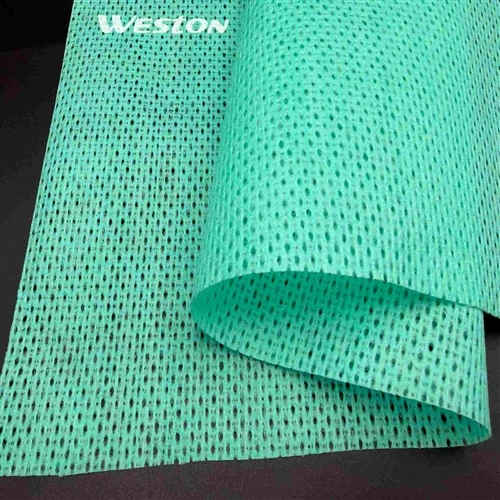
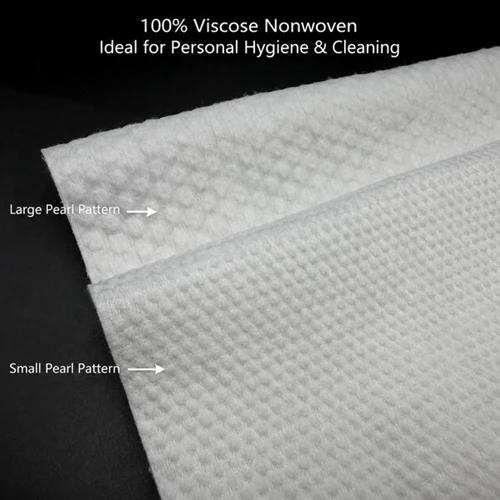
Texture variations can be engineered through specialized manufacturing techniques, such as creating mesh or concave-convex structures that improve cleaning efficiency and perceived thickness.
Applications of Spunlace in Wet Wipe Manufacturing
Across multiple industries, spunlace non-woven fabric serves as the foundation for diverse wipe applications, each leveraging specific performance characteristics of this versatile material.
Baby and Personal Care Wipes
Baby wipes represent the largest consumer application for spunlace fabric, primarily due to its exceptional softness and skin compatibility. These wipes effectively clean delicate skin without causing irritation, making them ideal for infant care. Personal care applications extend beyond baby products to include:
Facial wipes for makeup removal and skincare.
Body wipes for refreshing and cleansing when traditional bathing isn't possible.
Feminine hygiene products requiring both softness and absorbency.
The premium segment frequently utilizes cotton-based spunlace for enhanced softness, alongside bamboo fibers that offer natural antimicrobial properties.
Medical and Healthcare Wipes
In medical environments, spunlace wipes provide critical infection control solutions. These products commonly appear as:
Disinfectant wipes containing alcohol-based or non-alcoholic sanitizing solutions.
Surgical wipes designed to be lint-free for sterile procedures.
Patient care wipes for daily hygiene in hospitals and elderly care facilities.
The low-lint characteristics and wet strength of spunlace make it particularly valuable in healthcare settings where contamination prevention remains paramount.
Household and Industrial Cleaning Wipes

Industrial applications harness spunlace's durability and chemical resistance. Indeed, these wipes maintain their integrity even when exposed to solvents, oils, and other challenging substances. Key applications include:
Manufacturing environments for equipment maintenance and cleaning.
Automotive sectors for both vehicle production and maintenance.
Printing industries where solvent resistance proves essential.
Household versions typically feature enhanced absorbency for effective surface cleaning and spill management.
Flushable and Biodegradable Wipes
Increasingly, environmental regulations are driving growth in flushable wipe technology. Spunlace fabrics composed of wood pulp and viscose offer both flushability and biodegradability. These products:
Break down quickly in water systems when properly engineered.
Meet stringent international standards.
Provide an eco-friendly alternative to traditional synthetic wipes.
The global market for biodegradable wipes continues expanding as consumers seek environmentally responsible alternatives alongside growing regulatory pressure limiting disposable plastics.
Conclusion
Spunlace nonwoven fabric stands as the cornerstone material for modern wet wipe manufacturing across global markets. Throughout this guide, we have examined how the unique hydroentanglement process creates exceptional textiles without chemical binders, resulting in products that excel in both performance and skin compatibility.
The versatility of fiber blends certainly contributes to spunlace's widespread adoption. PET-viscose combinations deliver balanced performance for everyday applications, while wood pulp blends offer cost advantages without sacrificing essential properties. Premium options such as cotton and bamboo cater to high-end markets, whereas Tencel and Lyocell meet growing demands for sustainable, biodegradable alternatives.
Performance characteristics likewise position spunlace as the preferred choice for wet wipe manufacturers. The material exhibits remarkable softness alongside impressive tensile strength, essentially creating products that clean effectively without falling apart during use. These qualities make spunlace particularly valuable across diverse applications-from gentle baby wipes to robust industrial cleaning products.
The future of spunlace fabric appears increasingly aligned with sustainability concerns. Biodegradable compositions gain prominence as regulatory frameworks worldwide implement stricter environmental standards. Manufacturers consequently adapt by developing innovative fiber combinations that maintain performance while reducing ecological impact.
Understanding the nuances of spunlace technology ultimately empowers manufacturers to select optimal materials for specific applications. The fabric weight, fiber composition, and production methods directly influence final product performance, allowing precise customization for target markets. This knowledge provides a competitive advantage in an industry where consumer expectations for both effectiveness and comfort continue to rise.