What Is Spunlace Fabric, Really?
Walk through any hospital supply room and you'll find stacks of soft, cloth-like wipes and covers. Most of them are made from spunlace nonwoven fabric - and most people in the room can't tell you exactly what that means. That's fair. The name doesn't give much away.
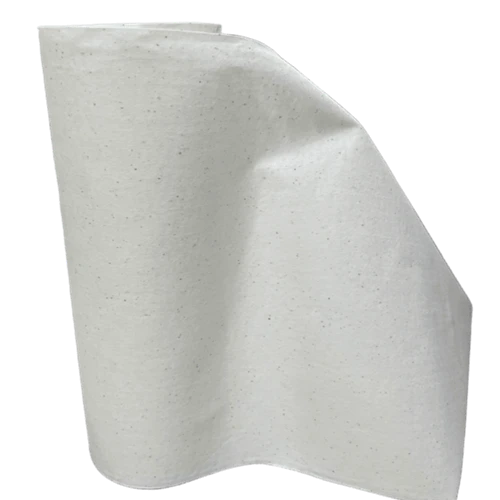
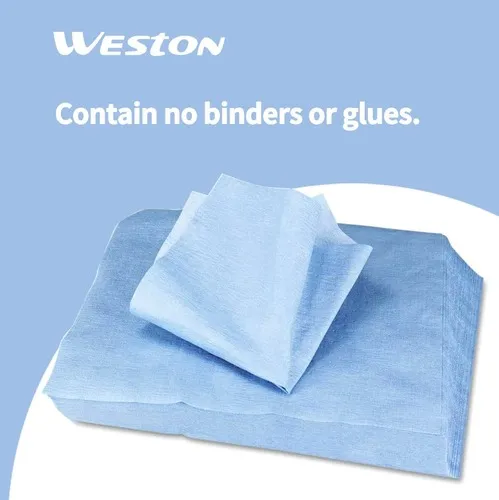
Here's the short version: spunlace fabric is made by shooting high-pressure jets of water through a loose layer of fibers. The water forces the fibers to tangle and interlock with each other - no glue, no chemical binders, no heat bonding. The result is a soft, strong, uniform sheet that feels more like cloth than paper.
That absence of binders matters in a medical setting. Products made from bonded or chemically treated nonwovens can leave residues. Spunlace doesn't have that problem. The integrity of the fabric comes entirely from mechanical entanglement - physical structure, not chemistry.

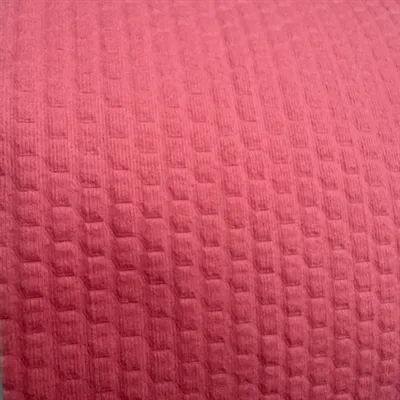
Spunlace fabric is also distinctly softer and more drapey than most other nonwovens. It conforms to skin surfaces and curved equipment instead of holding a stiff shape - a real difference when you're wiping down a patient or cleaning around an IV line.
Weston Nonwoven has focused on spunlace manufacturing for over 20 years. That focus matters because spunlace isn't a single material - it's a platform. The final product's performance depends on fiber selection, water pressure, fabric weight, and any functional finishes applied. Getting those parameters right for medical applications requires experience, not just equipment.
The Fiber You Choose Changes Everything
Spunlace isn't one material - it's a manufacturing process applied to different fibers. And those fibers behave very differently in use. A procurement spec that just says "nonwoven wipe" is missing the most important variable.
Weston's product range is built around plant-based and biodegradable fiber options. Here's what each one actually does:
|
Fiber |
Key strengths |
Best suited for |
|
100% Viscose |
Excellent absorbency, very soft, cost-effective, biodegrades quickly |
Patient hygiene wipes, body wash cloths, general clinical wipes |
|
100% Cotton |
Hypoallergenic, naturally breathable, no synthetic components, lint-free |
Wound-adjacent use, sensitive skin patients, neonatal care |
|
Bamboo Fiber |
Naturally mild antibacterial properties, silky surface feel, good absorbency |
Patient comfort wipes, elderly care, skin-contact applications |
|
Lyocell (Tencel) |
Closed-loop production process, very low lint, exceptionally smooth surface |
Surface disinfection wipes, equipment cleaning, low-lint environments |
|
PLA (Polylactic Acid) |
Fully plant-derived, compostable under industrial conditions |
Facilities with sustainability targets and industrial composting infrastructure |
The fiber isn't a branding detail. It determines how the wipe performs on skin, how much solution it holds, whether it tears under scrubbing pressure, and what happens to it after disposal. Ask your supplier for the fiber composition on the data sheet - not just the product name.
Where Spunlace Does the Real Work - Three Key Products
Spunlace nonwoven shows up across almost every department in a healthcare facility. But three product categories stand out for how specifically the material properties map to clinical needs. These are areas where getting the fabric right makes a direct, observable difference.
Standard hospital bed sheets aren't designed for bariatric patients. The fit is wrong, the dimensions are too small, and the material often isn't soft enough for extended skin contact under higher pressure load. Bariatric Hospital Bed Sheets made from spunlace nonwoven address this directly.
The challenge in bariatric patient care is that skin integrity matters more, not less. Extended pressure on skin folds and contact points raises the risk of irritation and breakdown. A Bariatric Hospital Bed Sheet in spunlace - particularly in 100% cotton or soft-finish viscose - provides a surface that is genuinely gentle: no rough edges, no fiber shedding, no chemical residue from binders.
Single-use design eliminates the laundry cycle entirely. There's no risk of insufficient washing, no cross-patient contamination through shared linen, and no wear-related degradation of the fabric surface over time. For bariatric patients who may spend long periods in bed, the consistency of a fresh, clean sheet at each change is a real clinical benefit.
Weston's Bariatric Hospital Bed Sheets are available in extended widths and lengths, with soft-touch finish applied to the fiber surface. Weight is specified to balance adequate durability with the kind of suppleness that comes from spunlace - not stiff like paper, not slippery like film.
Recommended Fiber
100% Cotton / Viscose blend
Finish
Soft-touch + Hydrophilic
Key Benefit
Skin-safe, zero cross-contamination
Use Type
Single-use disposable
Ward Environment
Disposable Curtain for Hospital
Hospital privacy curtains are one of the most consistently contaminated surfaces in a ward environment. Studies from infection control research have found bacterial colonization on shared curtains within days of installation - and reusable curtains rarely get changed or laundered at the frequency the contamination load actually demands.
The Disposable Curtain for Hospital is a direct answer to this problem. Made from spunlace nonwoven - typically lyocell or viscose, with an optional antibacterial finish - these curtains are designed to be replaced on a regular schedule rather than laundered. The fabric is lightweight enough to hang and drape naturally, durable enough to last a defined rotation period, and can be treated to resist the growth of bacteria on its surface during use.
From a practical standpoint, the Disposable Curtain for Hospital simplifies the infection control protocol. There's no laundry coordination, no waiting for curtains to return from a linen service, and no guesswork about whether the previous patient's curtain was adequately cleaned. Replacement is fast, the schedule is predictable, and the environmental footprint is lower than it might seem - plant-fiber spunlace biodegrades far faster than the polyester-blend fabrics used in most reusable hospital curtains.
Weston produces Disposable Curtain for Hospital in standard panel widths with top-sewn header tape for easy hook installation. Custom sizing and antibacterial treatment are both available to specification.
Recommended Fiber
- Lyocell / Viscose
- Finish Options
- Antibacterial + Hydrophobic
Key Benefit
- Eliminates curtain-borne HAI risk
- Use Type
- Scheduled replacement
Dental Practice
Dental Bib Rolls
Dental bibs have a deceptively simple job: protect the patient's clothing and skin from water, debris, and procedure fluids during treatment. But the material does more than just catch what drips. It's in direct contact with the patient's neck and chest for the full length of the appointment.
Dental Bib Rolls made from spunlace nonwoven perform better at this job than their paper or bonded-fiber equivalents in several concrete ways. The absorbency is better - spunlace holds liquid without the wet-through that makes paper bibs uncomfortable and messy. The surface feel is softer - no scratching or crinkling against skin during an already stressful appointment. And spunlace bibs don't disintegrate when wet, so they stay intact and functional throughout the procedure.
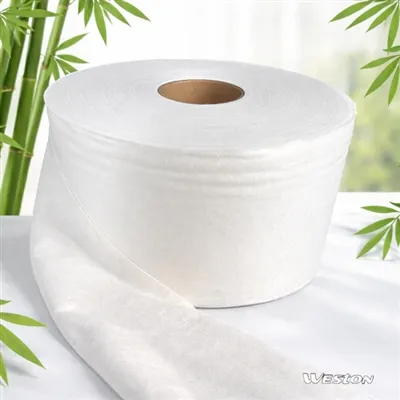
The roll format is the standard supply model for high-volume dental practices. Dental Bib Rolls in spunlace are perforated for clean tear-off and sized to standard dental bib dimensions. Weston's Dental Bib Rolls are produced in viscose or cotton base materials, with a hydrophilic treatment to maximize liquid absorption and a soft-touch finish for patient comfort. Waterproof backing - a thin PE layer laminated to the underside - is available for practices that need full fluid barrier protection.
Recommended Fiber
Viscose / 100% Cotton
Finish
Hydrophilic + Soft-touch
Format
Perforated roll, standard bib size
Option
PE waterproof backing available
Section 04 Functional Finishes

What the Finishes Actually Do
The base fabric is the foundation, but the functional finish is often what makes a medical product perform correctly for its specific application. These aren't cosmetic treatments - they change how the fabric interacts with liquids, bacteria, and skin.
|
Finish Type |
Core Function |
Key Application Scenarios |
|
Hydrophilic |
Draws liquid in quickly and holds it. Ensures the cleaning solution stays on the cloth, rather than pooling or beading off the surface. |
Patient wipes, wound cleaning products |
|
Hydrophobic |
Repels surface saturation and prevents liquid from absorbing through to the opposite side of the fabric. |
Medical curtains, barrier products requiring splash resistance |
|
Antibacterial |
Inhibits microbial growth on the fabric surface during both storage and in-use periods. |
Medical curtains, pre-moistened wipe products stored in dispenser packs |
|
Soft-touch |
Reduces surface friction between the fabric's individual fibers. |
Skin-contact medical applications: bariatric sheets, dental bibs, neonatal wipes, post-surgical care products |
The Environmental Case for Plant-Based Disposables
Single-use medical textiles generate waste. That's a real fact and there's no point softening it. The reason single-use persists in healthcare - and should persist - is infection control. A reusable curtain shared between patients, or a cotton cloth washed at insufficient temperature, carries infection risk that a fresh disposable does not. In clinical settings, that trade-off consistently falls in favor of single-use.
The more useful question is: given that we're using single-use products, what happens after they're used? And this is where plant-based spunlace fiber makes the answer meaningfully better.
Biodegradation timelines matter
Cotton, viscose, bamboo fiber, and lyocell are all cellulosic materials. Under standard landfill conditions, they break down within months. Polyester-based nonwovens - the other widely used option - can persist for decades. This isn't a marginal difference. Over the volume of disposable textiles a hospital system uses annually, the downstream material burden is substantial.
PLA offers a step further
PLA (polylactic acid) fiber is produced from plant starch and is compostable under industrial composting conditions. For facilities that already sort clinical waste streams and have access to industrial composting infrastructure, PLA-based products offer a genuinely closed-loop option. The caveat is honest: PLA requires the right disposal infrastructure to deliver its environmental benefit. Without industrial composting, it behaves like other plastics in landfill.
Lyocell's production story
Lyocell (sold commercially as Tencel) is produced through a closed-loop solvent system in which roughly 99% of the processing liquid is recovered and reused. This makes it one of the cleaner production pathways for any textile fiber, natural or synthetic. For procurement teams trying to reduce supply chain environmental impact, lyocell-based products are worth considering beyond just their end-of-life story.
Weston's product range is built on plant-based materials not as a marketing addition, but as the core manufacturing position. The plant-fiber base was there before sustainability became a purchasing criterion. Performance has always come first - the environmental profile follows from the material choice, not the other way around.

Buying Right: What to Actually Check
The purchasing spec for a medical nonwoven product should be specific enough to ensure consistent real-world performance. "Nonwoven wipe" or "disposable sheet" tells you almost nothing about what you'll actually receive. Here's what the specification should contain:
Fiber composition - cotton, viscose, lyocell, bamboo, PLA, or blend. This is the most important variable. Require it on the data sheet, not just the sales conversation.
Weight (gsm) - grams per square meter. Higher isn't always better. A well-made 45 gsm viscose wipe can outperform an 80 gsm paper-fiber product for skin contact and absorbency. Ask for what the application actually needs.
Wet tensile strength - medical wipes must stay intact when saturated with cleaning solution or patient fluids. Request wet tensile test data, not just dry strength figures.
Lint performance - critical for surgical and wound-care environments. Low-lint is a testable specification. Ask for lint test results.
Chemical compatibility - for pre-loaded or disinfectant wipes, confirm the fabric won't degrade or react with the specific solutions in your protocol. This needs to be tested, not assumed.
Finish certification - antibacterial finish claims should reference a recognized test standard (such as AATCC 100). Generic language like "antimicrobial properties" without a test reference is not a specification.
Dimensions and format - for Dental Bib Rolls, confirm roll length and perforation interval. For Bariatric Hospital Bed Sheets, confirm actual extended dimensions. For Disposable Curtain for Hospital, confirm panel width, drop length, and header tape specification.
Working directly with a factory like Weston means specifications can be adjusted at the source - fiber blend, gsm, finish, size, packaging format - without going through a distributor chain. That matters when a standard catalog product doesn't fit the application exactly.