How Is Printed Spunlace Nonwoven Fabric Made? The Process Explained
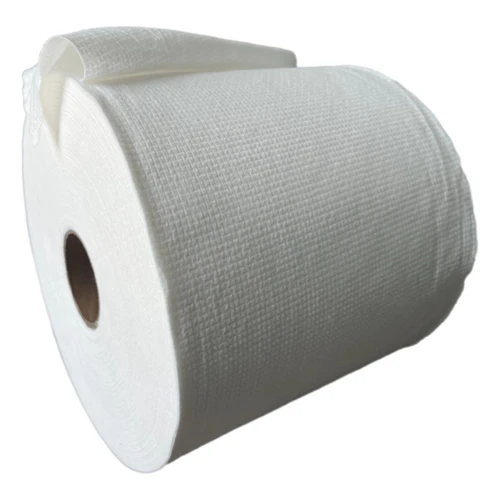
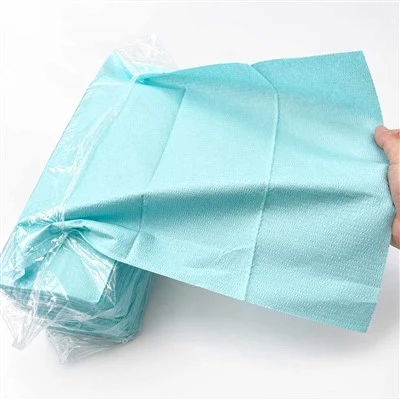
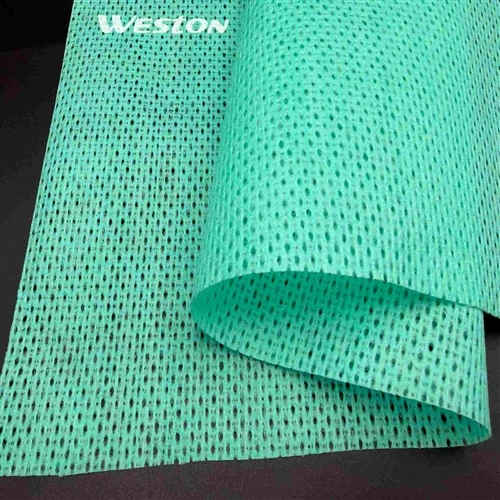
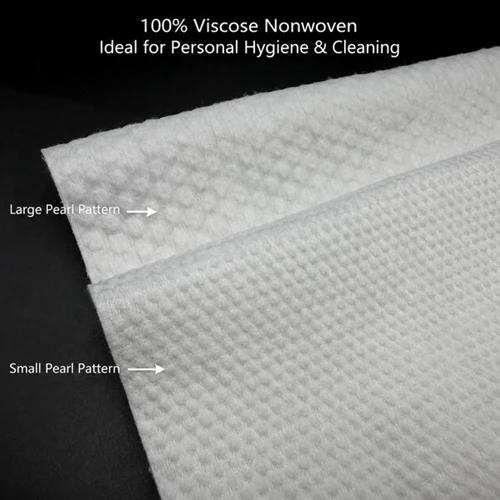
Printed spunlace nonwoven fabric is made by tangling loose fibers together with high-pressure water jets, then printing patterns onto the finished sheet - no thread, no loom, no glue involved. That's the short answer.
Most people touch this fabric several times a week and never think twice about it. Wipes, face masks, industrial rags, hospital pads - all quietly made from the same family of material. And yet if you asked ten people how it's actually put together, most would guess "woven" or "glued." Neither is right.
Spunlace Isn't What Most People Think It Is
The word "spunlace" refers to hydroentanglement - a process where fibers get tangled together using nothing but water. Think about how wet hair naturally knots when you rub it between your hands. That's roughly the same physics, just controlled, scaled up, and made repeatable in a factory.
This matters because "nonwoven" tends to get lumped in with "cheap" or "disposable" in people's minds. But hydroentanglement is actually one of the stronger bonding methods available for fabric like this, precisely because there's no adhesive breaking down over time and no heat damaging the fibers. The strength comes from the fibers themselves, physically locked together.

Step 1: Laying Out the Fibers
Before any water touches anything, raw fibers - usually viscose, polyester, cotton, or a blend - get carded and laid out into an even sheet, called a web. This step sounds simple, but it isn't a small decision. Different fibers absorb differently, feel different against skin, and hold up differently under stress. A wipe meant for skincare needs a different fiber mix than a cloth meant for industrial wiping. Getting this ratio right is more engineering than people assume.
Step 2: Where the Water Does the Real Work
This is the core of the whole process. The fiber web moves under rows of high-pressure water jets. The water forces individual fibers to twist, bend, and interlock with their neighbors. No stitching, no melting, no chemical bonding agents - just physical entanglement holding the sheet together.
It's a strange thing to picture at first: fabric that essentially holds itself together through friction and structure alone. But that's exactly what's happening. The pressure, spacing, and speed of the water jets are all tuned depending on what the final fabric needs to do - softer for skin contact, tighter for durability.
Step 3: Drying Without Ruining the Work
Once the fibers are bonded, the fabric is soaked and needs to be dried carefully. This step gets overlooked constantly, but it shouldn't be. Dry it too fast or unevenly, and the fabric warps, weakens, or textures unevenly. Through-air drying or drum drying methods are used to pull moisture out slowly and consistently. It's not a glamorous step, but skipping shortcuts here is usually where lower-quality fabric comes from.
Step 4: Now, the Printing
Here's where "printed" enters the picture. Rotary screen printing and digital printing are the two most common methods used to apply patterns onto spunlace fabric. But printing on this material isn't the same as printing on paper or woven cloth - nonwoven fabric has a more open fiber structure, so it absorbs ink differently, and print quality actually depends heavily on how well the fibers were bonded in the earlier steps.
This is worth pointing out because these steps aren't independent of each other. A rushed or uneven hydroentanglement process will show up later as blotchy, inconsistent printing - no amount of good ink or equipment can fix a problem that started three steps earlier. At Weston Nonwoven, this is one reason multi-tone and detailed designs - what we call Multi-color Printed Spunlace - require tighter control earlier in the line, not just better printing equipment.

Step 5: Testing Before It Ever Leaves the Factory
Before a roll of fabric goes anywhere, it gets tested - tensile strength, absorbency, and print adhesion are the basics. This isn't about slogans or claims. It's a roll either passing or failing a real physical test. If it doesn't hold up, it doesn't ship.
A Myth Worth Retiring
Here's a stance worth taking directly: "nonwoven" doesn't mean low quality, and it's time that assumption faded. Spunlace nonwoven fabric shows up in medical dressings, surgical products, and premium skincare applications not by accident, but because hydroentanglement bonding can be engineered to outperform some lower-grade woven fabrics in strength and consistency. The process earns its place in serious applications - it's not a budget substitute.
Where It Actually Ends Up
Tie the process back to real use, and it makes more sense why each step matters:
Wet wipes and skincare products rely on the absorbency built in during fiber selection
Medical dressings depend on the strength from hydroentanglement
Industrial wiping cloths need the durability from properly controlled drying
Packaging and decorative fabric rely on clean, consistent printing
Each use case traces back to a specific decision made earlier in the process - the fiber choice, the water pressure, the drying method. None of it happens by accident.
If there's one thing worth remembering from all this, it's that the process is simple in concept - fibers, water, pressure, ink - but every step depends on the one before it. Get one wrong, and it shows up somewhere down the line, whether that's a weak spot in the fabric or a smudged print pattern.
For anyone sourcing this kind of material at scale, working with an established Spunlace Nonwoven Fabric Manufacturer that controls every one of these steps in-house tends to make the biggest difference - not in marketing language, but in whether the fabric actually performs the way it's supposed to.