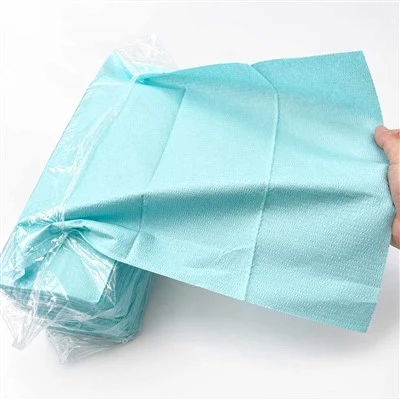
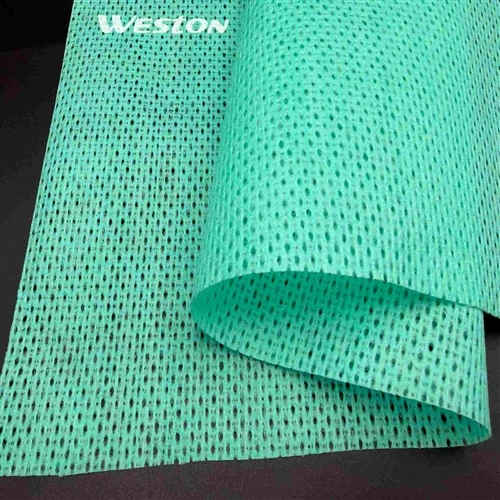
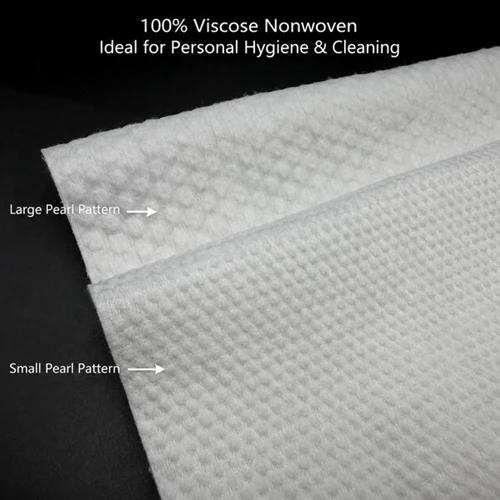
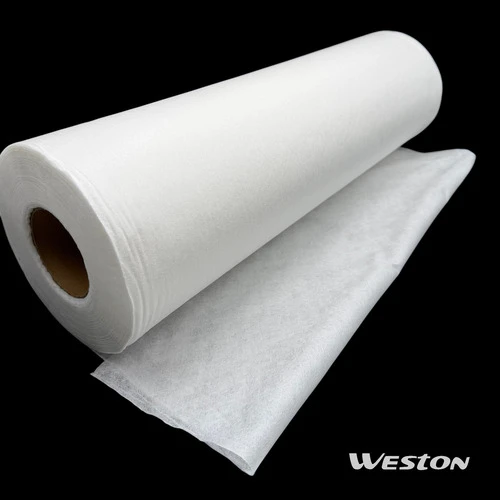
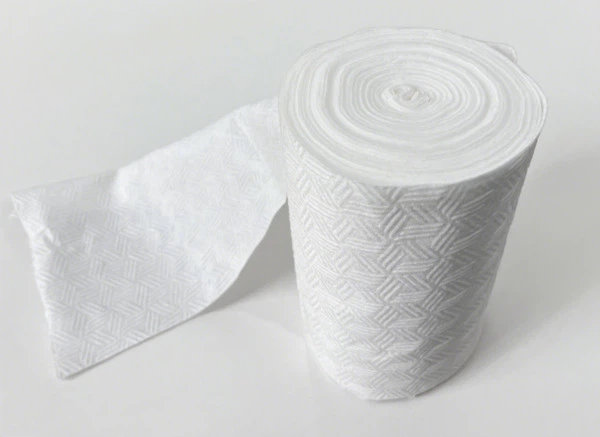
In the world of textiles, few materials spark as much curiosity and debate as viscose. Shoppers run their hands over soft, flowing fabrics labeled "viscose" or "rayon," wondering: Is this born purely from nature, or crafted in a lab? The answer lies in the sweet spot between both worlds-a story of cellulose extracted from trees, transformed through chemical ingenuity, and reborn as a fiber that drapes like silk, breathes like cotton, and adapts to countless applications. At Weston Nonwoven, we specialize in harnessing this unique duality to create innovative products like Square Embossed Spunlace Viscose, Parallel Viscose Spunlace, and Diamond Pattern Nonwoven Fabric Roll, which showcase the best of viscose's natural origins and engineered precision. Let's unravel the science, debunk the myths, and explore why viscose stands as a testament to humanity's ability to enhance nature's bounty.

What Exactly Is Viscose?
Viscose is a material with an identity as fluid as its drape. Born in the late 19th century as a response to the desire for an affordable silk alternative, it emerged from a blend of scientific curiosity and industrial ambition. Chemists discovered they could break down cellulose-nature's most abundant organic polymer, found in plant cell walls-into a viscous solution, then reform it into fine threads. This process gave birth to "artificial silk," later standardized as "rayon" in the U.S. and "viscose" in Europe, a name derived from the sticky "viscous" liquid used in its creation.
The raw material at viscose's core is undeniably natural: wood pulp from sustainably managed forests, or agricultural byproducts like bamboo and cotton linter. These sources are rich in cellulose, the same compound that gives plant stems their rigidity and leaves their structure. But here's where the line between "natural" and "man-made" blurs: while cotton or linen are spun directly from plant fibers, viscose requires a transformative journey. The cellulose is stripped from its plant matrix, dissolved in chemicals, and reconstituted into fibers with properties tailored for specific uses. This is why viscose is often mistaken for a natural fiber-its origins are rooted in nature, but its form is a product of human innovation.
At Weston Nonwoven, we start with the highest-quality cellulose feedstocks, ensuring our Square Embossed Spunlace Viscose and other products inherit the purity of nature while gaining the durability and consistency of engineered textiles. The result is a material that honors its botanical beginnings while embracing the possibilities of modern manufacturing.
Is Viscose a Natural Fiber? Let's Get Real
Let's cut through the confusion: viscose is not a purely natural fiber, nor is it a synthetic one like polyester or nylon. It belongs to a distinct category: semi-synthetic or regenerated cellulose fibers. Here's the breakdown:
Natural Origin, Chemical Transformation
Natural Starting Point: The cellulose in viscose comes from plants, just like cotton or linen. It's biodegradable at its core, derived from renewable resources that can be grown and replenished.
The Viscose Process: To turn wood pulp into fiber, manufacturers like Weston Nonwoven subject cellulose to a series of chemical treatments. First, it's dissolved in caustic soda (sodium hydroxide) to form a sticky substance called "cellulose xanthate," then mixed with carbon disulfide to create the eponymous viscose solution. This solution is extruded through tiny holes in a spinneret, regenerating into solid fibers as it contacts a chemical bath.
This process is a masterclass in transformation. The resulting fibers retain cellulose's hydrophilic (water-loving) nature, making them breathable and absorbent, but gain new traits-like silk-like sheen or enhanced strength-through precise manufacturing control. When we craft our Parallel Viscose Spunlace products, we leverage this process to create nonwovens with uniform texture and superior performance, proving that semi-synthetic doesn't mean second-best.
How Is Viscose Made? The Journey from Tree to Textile

Understanding viscose's production reveals why it's both a tribute to nature and a feat of engineering. Let's follow the journey:
Harvesting and Pulping: Sustainably sourced wood-often from fast-growing species like eucalyptus or pine-is chipped and cooked into a soft pulp, removing lignin (the glue that holds plant cells together) to isolate pure cellulose. At Weston Nonwoven, we prioritize suppliers with strict forestry certifications, ensuring our Diamond Pattern Nonwoven Fabric Roll starts with a commitment to environmental responsibility.
Dissolving the Cellulose: The pulp is treated with caustic soda to create "alkaline cellulose," which is then aged and crumbled. This crumb is reacted with carbon disulfide to form cellulose xanthate, a golden-yellow substance that dissolves in more caustic soda to create the thick, sticky viscose solution.
Regeneration into Fibers: The viscose is forced through spinnerets into a coagulation bath, where the chemical environment causes the cellulose to precipitate back into solid fibers. These fibers are washed, bleached, and dried, ready to be spun, woven, or-like in our nonwoven processes-bonded into sheets using spunlace technology.
This blend of natural raw materials and industrial precision is what gives viscose its unique identity. Our Square Embossed Spunlace Viscose exemplifies this harmony: the cellulose provides innate softness and absorbency, while the spunlace process-using high-pressure water jets to entangle fibers-adds strength and a distinctive embossed texture, ideal for applications where both comfort and durability matter.
What Makes Viscose Unique?
Viscose stands out in the textile world for its versatile performance, blending the best of natural and synthetic traits. Let's explore its key properties:
Key Attributes
Luxurious Softness: Smooth to the touch, viscose drapes elegantly, making it a favorite for clothing that feels gentle against the skin-perfect for the sensitive applications our Parallel Viscose Spunlace products serve.
Breathability & Absorbency: Like cotton, viscose fibers absorb moisture and release it quickly, keeping wearers cool and comfortable. This makes it ideal for medical dressings, wipes, and home textiles where breathability is critical.
Dramatic Drape & Sheen: The smooth fiber surface gives fabrics a fluid, silky look, mimicking the elegance of silk without the high maintenance.
Versatility: From lightweight summer dresses to heavy-duty industrial wipes, viscose adapts to thickness, texture, and finish-just as our Diamond Pattern Nonwoven Fabric Roll adapts to diverse end uses, from packaging to personal care.
How It Compares
|
Fiber Type |
Natural Origin |
Softness |
Strength (Wet vs. Dry) |
Sustainability |
|
Cotton |
100% natural |
Soft, cozy |
Weakens when wet |
High (if organic) |
|
Viscose |
Semi-synthetic |
Silky soft |
Moderate (improved with modern processing) |
Depends on sourcing/production |
|
Polyester |
Fully synthetic |
Stiff, smooth |
Strong when wet or dry |
Low (non-biodegradable) |
Viscose bridges the gap: it inherits cotton's natural breathability and polyester's adaptability, but with a sustainability profile that-when produced responsibly-outshines many synthetics. At Weston Nonwoven, we enhance these traits through innovative embossing and bonding techniques, ensuring our nonwovens deliver performance that meets the highest industry standards.
The Big Debate: Natural, Synthetic, or Something In-Between?
The confusion around viscose starts with definitions. In fiber science:
Natural fibers (cotton, wool, silk) are extracted directly from plants or animals, with minimal processing.
Synthetic fibers (polyester, nylon, acrylic) are created entirely from chemical monomers, often derived from petroleum.
Semi-synthetic/regenerated fibers (viscose, lyocell, modal) start with natural cellulose but undergo chemical transformation to change their physical forms.
Viscose's place in this middle ground is both its strength and its source of debate. Critics argue that the chemical processing removes it from the "natural" category, while advocates highlight its renewable origins and biodegradability (unlike fully synthetic fibers, which persist in landfills for centuries). At Weston Nonwoven, we view this duality as a superpower: by respecting nature's raw material and enhancing it through science, we create products that offer the best of both worlds. Our Square Embossed Spunlace Viscose isn't just a fabric-it's a testament to what happens when nature and human ingenuity collaborate.
Environmental Impact: Is Viscose Eco-Friendly?
The sustainability of viscose depends on how it's made. Let's break down the pros and cons:
The Good: Renewable Sourcing
When sourced from certified forests or agricultural waste, viscose's cellulose is a renewable resource. Unlike petroleum-based synthetics, it doesn't deplete finite resources, and its production can support reforestation efforts. Weston Nonwoven partners with suppliers who prioritize sustainable forestry, ensuring our Parallel Viscose Spunlace and other products start with a low-impact raw material.
The Concern: Chemical Processing
Traditional viscose production uses chemicals like carbon disulfide and sulfuric acid, which can harm workers and pollute water if not managed properly. However, modern manufacturers-including Weston Nonwoven-have adopted closed-loop systems that recycle and treat wastewater, reducing chemical discharge. Innovations like enzyme-based pulping and solvent recovery are further minimizing the environmental footprint.
The Future: Cleaner Production
As demand for sustainable textiles grows, the industry is shifting toward greener viscose. Our Diamond Pattern Nonwoven Fabric Roll reflects this progress: by optimizing our processes to use less water and energy, and by investing in waste reduction technologies, we're ensuring that viscose can be both high-performing and environmentally conscious.
Everyday Questions About Viscose-Answered
Is viscose biodegradable?
Yes-eventually. Since it's made from cellulose, viscose breaks down in composting environments, unlike synthetic fibers. However, the rate depends on its processing: heavily dyed or treated viscose may degrade more slowly. Our undyed, chemical-free nonwovens, like Square Embossed Spunlace Viscose, are designed to return to nature more readily, making them a smarter choice for disposable products.
Does it breathe like cotton?
Even better, in many cases! Viscose fibers have a porous structure that allows air to circulate, while their high absorbency pulls moisture away from the skin. This makes viscose ideal for summer clothing, medical wipes, and other applications where breathability is key-qualities we leverage in our Parallel Viscose Spunlace products.
Is it safe for sensitive skin?
Absolutely, when produced without harsh chemicals. Pure viscose is hypoallergenic and gentle, which is why Weston Nonwoven prioritizes minimal processing in our sensitive-skin applications. Our nonwovens are free from irritants, making them suitable for baby wipes, medical dressings, and other delicate uses.
How should you care for viscose garments?
Viscose can be delicate if mistreated. Wash in cold water with a gentle detergent, avoid wringing or twisting (it weakens when wet), and air dry to maintain shape. For our nonwoven products like Diamond Pattern Nonwoven Fabric Roll, follow application-specific care guidelines to ensure longevity and performance.
Why Does This Matter? The Future of Fibers
In a world increasingly focused on sustainability and transparency, understanding what's in our textiles is more important than ever. Viscose challenges us to look beyond simplistic labels-"natural" vs. "synthetic"-and appreciate the nuance of materials that blend the best of both realms. It's a fiber that honors nature's wisdom while embracing human innovation, proving that progress doesn't mean turning away from the earth, but learning to work with it.
At Weston Nonwoven, we see viscose as a canvas for possibility. Our Square Embossed Spunlace Viscose, Parallel Viscose Spunlace, and Diamond Pattern Nonwoven Fabric Roll are more than products; they're examples of how thoughtful engineering can enhance nature's gifts. Whether you're designing medical supplies that demand softness and strength, creating home textiles that balance beauty and functionality, or seeking industrial solutions that prioritize sustainability, viscose offers a versatile, responsible choice.
The next time you encounter a viscose product, remember: it's a story of trees transformed into threads, of chemistry and care, of nature enhanced by human hands. It's a reminder that the best solutions often lie in the space between categories-where innovation and integrity meet. And as we look to the future, viscose stands ready to lead the way in a new era of textiles: one where performance, sustainability, and ingenuity go hand in hand.
So, is viscose a natural fiber? It's more than that. It's a testament to what happens when we dare to ask: What if we could make nature even better? The answer is in the fabric of every Weston Nonwoven product-where the beauty of the natural world meets the precision of human innovation.