Is Microfiber Cloth Good for Phone Screen?
Your phone screen is basically a grease magnet. A few swipes, a couple of calls, and it's already wearing a thin film of skin oil, dust, and whatever mystery residue your pocket decided to donate today. At some point, everyone grabs the nearest soft thing - a shirt hem, a sleeve, a tissue - and gives it a wipe. Sometimes it helps. Often it just moves the smudge around. And sometimes, over months and years, those casual wipes slowly dull the glass you paid good money for.
So the question worth asking is a simple one: is microfiber cloth actually the right tool for cleaning a phone screen, or is it just something we all assumed was fine?
The short answer is yes - microfiber is genuinely good for phone screens. But the longer answer, the one that actually protects your display, is a bit more interesting than that.

What Your Phone Screen Is Really Made Of
Modern smartphone screens are not bare glass. They're a layered system. The outermost surface is typically aluminosilicate glass - engineered to be hard and scratch-resistant - but sitting on top of that is an oleophobic coating. Oleophobic means oil-repelling. This ultra-thin layer, often just a few nanometers thick, is what makes fingerprints wipe off easily and keeps the glass feeling smooth under your thumb.
Here's what most people don't realize: that coating is the fragile part. The glass underneath can handle a lot. The oleophobic layer cannot. Rough fabrics, paper products, and abrasive materials don't just smear oil around - they physically wear that coating down, one wipe at a time. Once it's gone, your screen feels stickier, smudges harder, and cleaning it becomes noticeably more frustrating.
What you wipe with matters far more than how often you wipe.
What Microfiber Actually Is (Not Just "Soft Cloth")
Microfiber is a specific engineered material, not a catch-all term for anything that feels gentle. True microfiber is made from fibers that are finer than one denier - for reference, that's thinner than a strand of silk, and about 1/100th the width of a human hair. Most microfiber products combine polyester (for structure) and polyamide, also called nylon (for absorbency), typically in a 70/30 or 80/20 ratio.
What makes microfiber genuinely different from cotton or flannel is its fiber shape. Under a microscope, the fibers have a star-shaped or wedge-shaped cross-section. When you wipe a surface, these split fibers act like tiny scoops - they physically lift oil and dust particles off the surface and pull them into the cloth. Cotton fibers, by contrast, are round and smooth. They tend to push particles across the surface rather than capture them, which is why wiping your screen with a cotton T-shirt often just relocates the smudge.
Microfiber is also significantly softer than glass on the Mohs hardness scale. Gorilla Glass scores around 6 to 7. Clean microfiber fiber won't scratch it.
Why Microfiber Works So Well on Phone Screens
The mechanics are straightforward once you understand the structure. When a clean Microfiber Cloth For Phone makes contact with your display, a few things happen simultaneously. The split fibers create a large total surface area that traps oil through capillary action - the same principle that draws water up into a sponge. The fibers are soft enough to conform to the micro-topography of the glass without abrading it. And because the material is non-linting, it doesn't leave behind residue the way paper towels or tissue do.
For everyday fingerprints and light smudges, a dry wipe with a clean microfiber cloth is genuinely all you need. No spray, no liquid, no chemicals. The cloth picks up the sebum-and-dust film cleanly, and you're done in five seconds.
For a slightly deeper clean - sunscreen residue, food oils, heavier buildup - a very lightly dampened microfiber cloth works well. The emphasis is on "very lightly." The cloth should feel barely damp, not wet. A tiny amount of moisture helps loosen stubborn films without pushing liquid toward ports or gaps.
The Part Most Guides Forget: The Cloth Can Become the Problem
Here's the thing nobody puts in the headline: a dirty microfiber cloth is not a safe microfiber cloth.
Microfiber's great strength - trapping particles - is also its risk factor. After a few uses, those microscopic fibers are loaded with whatever they've collected: dust, skin cells, grit tracked in from a bag or pocket. When you wipe your screen with a cloth full of trapped particles, you're dragging those particles across the glass under light pressure. That's effectively wiping your screen with fine grit. Not sandpaper-level damage in one wipe, but cumulative over weeks of daily use. The oleophobic coating takes the hit first.
This is why microfiber care is not optional. The cloth is only as good as its current state.
Wash microfiber cloths regularly - every week or two for daily-use cloths. Use warm water and a small amount of mild detergent. The critical rule: no fabric softener, ever. Fabric softener coats the fibers and fills in the split structure that makes microfiber work. Once you've softened a microfiber cloth, it becomes far less effective at lifting oils. Air drying is preferable to a hot dryer, which can damage the fiber structure over time.
Before each use, give the cloth a quick shake or, if it's been sitting in a bag, a light rinse to dislodge any loose debris. It takes ten seconds and meaningfully reduces the risk of dragging hidden grit across your display.
Format and Size: More Practical Than You'd Think
One detail that gets overlooked is the physical form of the cloth. A small, thin cloth - the kind often bundled free with sunglasses - can concentrate pressure on a small contact area. A larger cloth distributes the same hand pressure across more surface area, which means gentler contact at any given point.
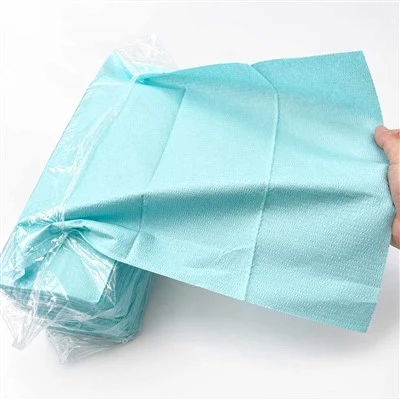
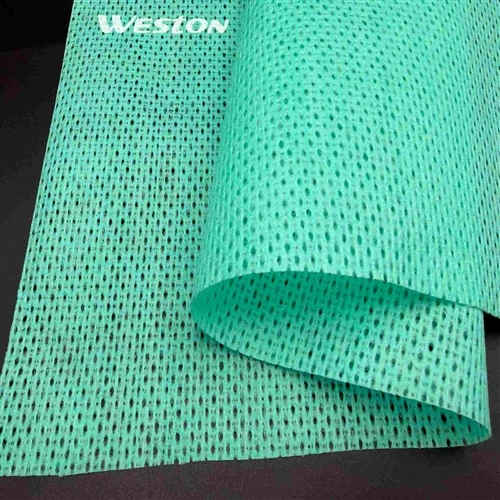
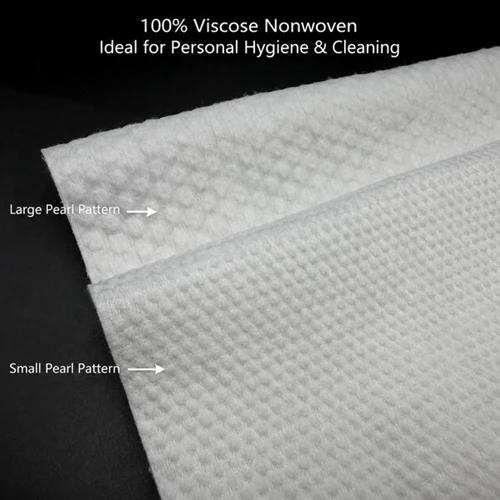
12x12 Microfiber Spunlace Pads represent a practical sweet spot for screen cleaning. At 12 inches square, there's enough material to fold into quarters for a firmer wiping surface, or used flat for a lighter, gentler pass. Spunlace manufacturing - a process that uses high-pressure water jets to mechanically entangle fibers rather than chemical binders - produces a cloth that is consistently uniform, lint-free, and durable through many wash cycles. Because there are no adhesive binders in the fabric, the cloth doesn't shed chemical residue onto sensitive surfaces.
The "spunlace" distinction matters in professional and precision-cleaning contexts because it affects both the uniformity of the fiber web and the long-term wash durability. A spunlace cloth holds its structure better after repeated laundering compared to thermally bonded alternatives.

What to Avoid
A few common mistakes that shorten the life of both the cloth and the screen's coating:
- Circular scrubbing with heavy pressure is counterproductive. The cloth is doing the work - your hand just needs to guide it. Gentle, overlapping strokes are enough.
- Alcohol wipes and disinfectant sprays are fine occasionally, but not as a daily routine. Isopropyl alcohol at 70% concentration is generally considered safe for glass in limited use, but repeated application gradually breaks down oleophobic coatings. If you want to disinfect regularly, check your phone manufacturer's guidance - most major brands have updated their recommendations in recent years.
- Paper towels, tissues, and rough fabrics should be avoided entirely for screen surfaces. Their fiber structure is simply too coarse, even when they feel soft to the touch. A single wipe with a tissue isn't catastrophic, but it's not a habit worth building.
- Aerosol sprays applied directly to the screen can allow liquid to seep into gaps around the display. Always apply any liquid to the cloth, never to the phone.
Putting It Together: A Simple System That Actually Works
The honest takeaway from all of this is that microfiber genuinely is the right tool for cleaning phone screens - but "right tool" means little if the tool itself isn't maintained. The cloth needs to be clean, the technique needs to be light-handed, and the expectation needs to be realistic (no cloth will fix existing scratches or restore a worn oleophobic coating).
A practical daily system looks like this: keep one dedicated microfiber cloth for your phone, stored in a clean pocket or pouch rather than loosely in a bag. Wipe the screen with light strokes as needed throughout the day. Wash the cloth weekly. That's it. No elaborate routine, no special products, no expense.
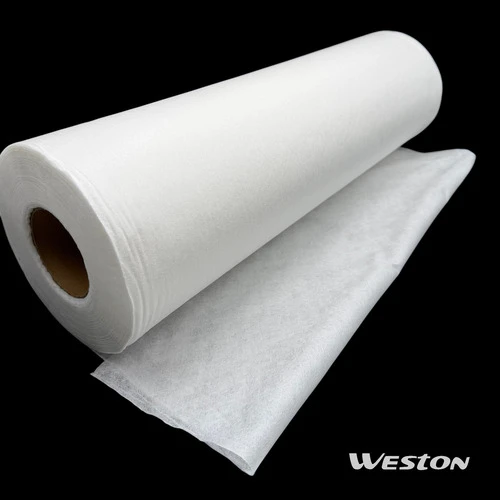
Companies that have been in the nonwoven materials space for decades - like Weston Nonwoven, a spunlace nonwoven manufacturer with over 20 years of production experience - understand that the fiber engineering is where the real difference lives. A well-manufactured spunlace microfiber cloth is not the same product as a budget option, even if they look identical in a product photo. Fiber density, split ratio, weave uniformity, and wash durability all affect real-world performance on surfaces that matter - lenses, displays, precision optics.
For something that touches your screen every day, it's worth using something built to the right standard.
The Bottom Line
Microfiber is genuinely good for phone screens. It lifts oil without spreading it, it's soft enough to leave coatings intact, and it requires no liquid for everyday smudges. The science behind it is solid and the logic is straightforward.
The one condition - and it's non-negotiable - is that the cloth must be clean. A loaded cloth is a liability. A clean cloth is one of the simplest and most effective screen-care tools available.
Wipe lightly. Wash regularly. Use the right material. Your screen will show it.