Advantages Of Non-woven Fabrics
Non-woven fabrics are used in wipes, hygiene products, medical supplies, filtration materials, packaging, construction products and many other applications. But what makes non-woven fabric different from conventional woven or knitted textiles? Why can the same material category be designed to be soft, absorbent, breathable, strong, water-resistant or low-lint?
The main advantage of non-woven fabrics is not one single property. It is the ability to engineer the material structure around the requirements of the final application. Fiber type, fiber blend, web formation, bonding method, basis weight, surface structure and finishing treatment can all be adjusted to achieve different performance characteristics.
This flexibility allows non-woven fabrics to provide a practical balance between weight, strength, softness, absorbency, liquid resistance, air permeability, processability and production efficiency.
What Are the Main Advantages of Non-woven Fabrics?
The major advantages of non-woven fabrics include:
- Lightweight construction with adjustable thickness and basis weight
- Soft and flexible surfaces
- Adjustable air permeability and liquid resistance
- Customizable absorbency
- Good strength-to-weight performance
- Compatibility with different natural, regenerated and synthetic fibers
- Flexible surface structures and functional treatments
- Efficient roll-to-roll and high-volume production
- Suitability for disposable and durable applications
- Easy conversion into sheets, wipes, folds, rolls and other finished formats
However, these advantages should not be treated as universal properties of every non-woven fabric. A polypropylene non-woven fabric and a viscose non-woven fabric, for example, can behave very differently because their fiber properties and structures are different.
The term non-woven fabric describes a manufacturing category, not a single performance profile.
Why Are Non-woven Fabrics Different From Woven Fabrics?
Traditional woven fabrics are produced by interlacing yarns in different directions. Knitted fabrics are created by forming interconnected loops. Non-woven fabrics follow a different route.
A simplified non-woven production process is:
Fiber selection → Web formation → Bonding → Finishing → Converting
Individual fibers are arranged into a web and then bonded together by mechanical, thermal, chemical or other methods.
This manufacturing structure creates an important advantage: the material can be engineered without first turning the fibers into conventional yarns.
Manufacturers can adjust fiber composition, fiber orientation, bonding, density, thickness and surface characteristics according to the required application.
For example, one material may prioritize softness and skin comfort, while another may prioritize tensile strength, liquid resistance or low lint generation.
This flexibility is one of the main reasons non-woven fabrics are widely used across industries with very different requirements.
Lightweight Does Not Mean Weak
One of the most practical advantages of many non-woven fabrics is their low weight.
Certain fibers, particularly polypropylene, have a relatively low density. Combined with efficient web formation, this allows manufacturers to create lightweight materials without automatically sacrificing useful mechanical performance.
For users, lightweight construction can mean:
- Easier handling
- Lower shipping weight
- Easier folding and cutting
- Lower material consumption per unit
- More efficient converting
- Better suitability for disposable products
However, the lightest material is not always the best choice.
A healthcare product may require a balance between softness, strength and barrier performance. An industrial wipe may need greater tear resistance. A construction material may require a higher basis weight for durability.
Therefore, the more useful question is not:
"What is the lightest non-woven fabric available?"
It is:
"What is the lowest basis weight that can still meet the required performance?"
This approach can help buyers avoid both over-specification and under-specification.
Why Are Non-woven Fabrics Soft?
Softness is not simply a matter of surface feel. It is closely related to fiber characteristics and bonding structure.
Fine fibers can create a softer surface, while the choice of bonding method can influence flexibility and drape. Fiber type, web density, basis weight, embossing pattern and finishing treatment can also change the tactile properties of the final fabric.
Softness becomes particularly important when a non-woven material will come into contact with skin or delicate surfaces.
In personal care and healthcare applications, a soft material can provide a more comfortable user experience. In cleaning applications, flexibility can help the fabric conform to uneven surfaces and reach corners or irregular shapes.
At the same time, excessive softness may reduce the mechanical performance needed for a particular application.
For this reason, good non-woven design often means finding the right balance between:
Softness + Strength + Flexibility + Durability
A material that feels soft but tears easily may not be useful in an industrial environment. A very strong material that feels stiff may not be appropriate for skin-contact applications.
How Can Non-woven Fabric Be Water-Resistant and Breathable?
This is one of the most misunderstood properties of non-woven materials.
Being water-repellent does not automatically mean being completely waterproof.
These terms describe different levels of liquid resistance. A material may resist water penetration while still allowing air to pass through its porous structure.
This is possible because two different factors are involved.
The fiber itself may have low water absorption or hydrophobic characteristics, while the spaces between fibers can provide pathways for air movement.
Therefore:
Air permeability and water resistance can coexist when the material structure is engineered correctly.
However, not every non-woven fabric provides the same level of liquid protection.
Higher liquid resistance may require:
- More compact structures
- Higher material density
- Special coatings
- Film lamination
- Functional finishing
- Application-specific structural design
When a specification says "waterproof," buyers should therefore ask what test method and performance level are being used rather than relying only on the product name.
Absorbency Depends Heavily on Fiber Selection
Another major advantage of non-woven fabrics is that absorbency can be designed through fiber selection and structure.
Synthetic fibers such as polypropylene do not behave like cellulosic fibers. Regenerated cellulose fibers, natural fibers and blended structures can provide different levels of moisture uptake and retention.
The final absorbency of a non-woven fabric depends on more than fiber type. Other factors include:
- Fiber fineness
- Fiber composition
- Web structure
- Basis weight
- Pore structure
- Surface treatment
- Liquid properties
This is why a non-woven fabric intended for wiping applications may use a very different fiber blend from one intended for liquid-barrier applications.
For absorbent products, choosing the correct fiber system is often more important than simply increasing GSM.
Good Physical Strength Can Be Engineered Without Woven Construction
Non-woven fabrics can achieve useful tensile and tear performance through the way fibers are arranged and bonded.
Different bonding technologies produce different mechanical behavior.
Thermal bonding can create stable structures using heat. Mechanical bonding methods can physically entangle or reinforce fibers. Hydroentanglement uses high-pressure water jets to entangle fibers and create a fabric-like structure while maintaining softness and flexibility.
Fiber orientation also matters.
Some non-woven materials may have greater strength in the machine direction, while cross-laid or specially engineered structures can improve balance between machine-direction and cross-direction properties.
For buyers, "strong" is not a sufficient specification.
It is better to review actual data such as:
- Tensile strength
- Tear strength
- Elongation
- Wet strength
- Thickness
- Basis weight
The correct performance target depends on how the material will be used, converted and handled.
Chemical Resistance and Material Stability
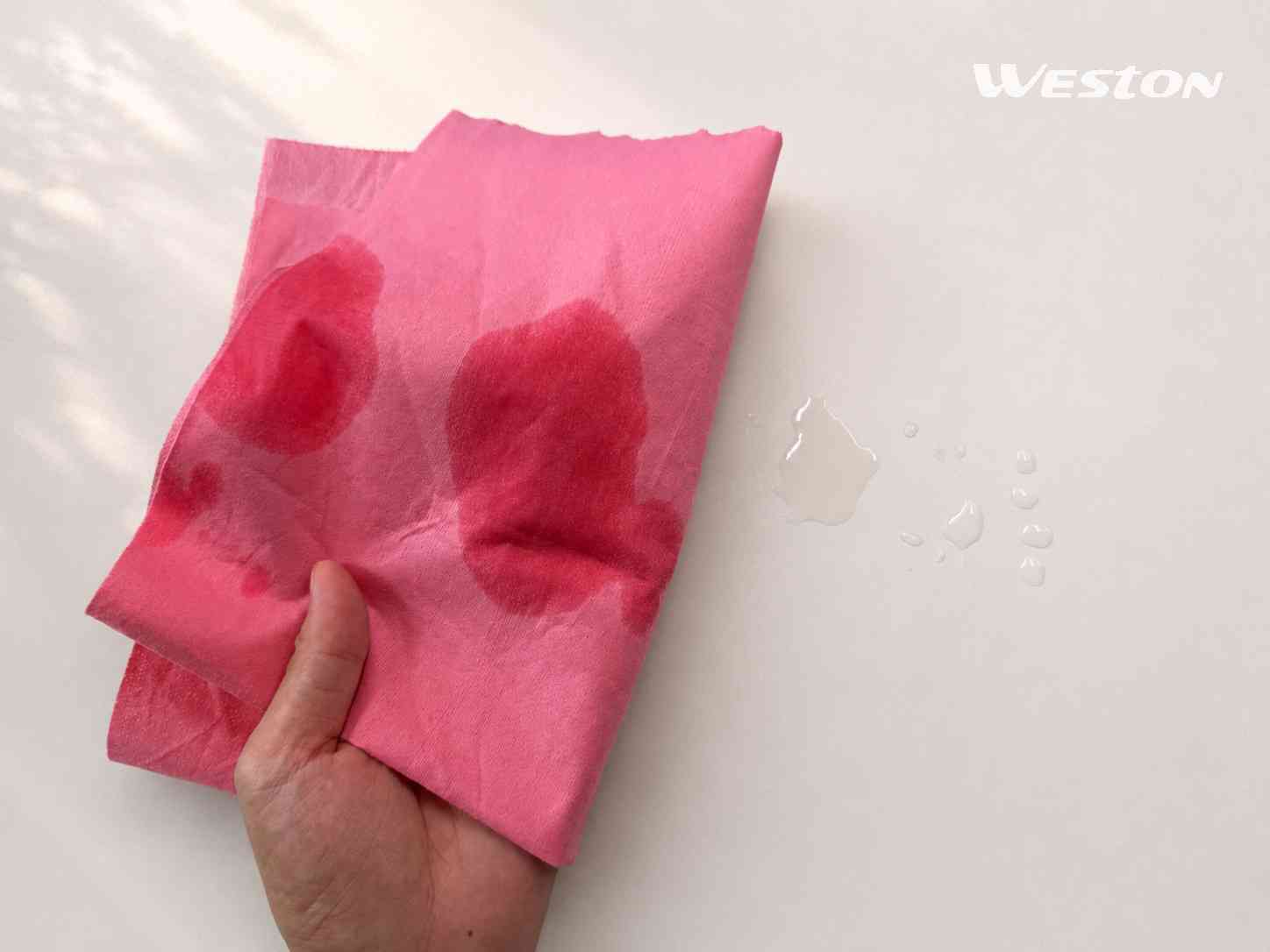
Certain non-woven fibers can provide useful resistance to moisture, oils and a range of chemicals.
Polypropylene, for example, has relatively good resistance to many common chemical environments. This can make polypropylene-based non-woven materials useful for industrial cleaning, machinery maintenance, protective components and other applications where contact with liquids or chemicals is possible.
However, chemical resistance should never be described as universal.
Performance can change according to:
- Chemical type
- Concentration
- Temperature
- Contact duration
- Mechanical stress
A fabric that performs well against one substance may behave differently when exposed to another.
For demanding applications, material compatibility should therefore be checked against the actual chemical and operating conditions rather than assumed from the fiber name alone.
Antibacterial Does Not Automatically Mean Mold-Proof
Antibacterial claims require especially careful interpretation.
A polypropylene non-woven fabric should not automatically be described as antibacterial simply because it is water-repellent or has low moisture absorption.
These are different properties.
An antibacterial non-woven material generally requires a specific functional treatment, additive or other antimicrobial technology, together with appropriate testing.
Likewise, mold resistance and antibacterial performance are not interchangeable concepts.
A low-moisture environment may reduce conditions favorable to microbial growth, but this does not mean the material actively kills microorganisms.
For buyers, it is useful to distinguish between:
Water resistance → Moisture management → Mold resistance → Antibacterial performance
Each describes a different technical characteristic.
Why Are Non-woven Fabrics Highly Customizable?
Customization is one of the strongest reasons non-woven materials are used across so many markets.
The same production concept can accommodate different fiber systems, weights, structures and finishes.
Fiber Selection
Depending on the application, manufacturers may use:
Polypropylene
Polyester
Viscose
Lyocell
Cotton
Bamboo-based fibers
PLA
Cellulosic and synthetic blends
Different fibers influence softness, strength, absorbency, moisture behavior and processing characteristics.
Basis Weight
Changing GSM can affect:
Thickness
Strength
Absorbency
Coverage
Flexibility
Material consumption
A higher GSM is not automatically better. It is simply another design variable.
Surface Structure
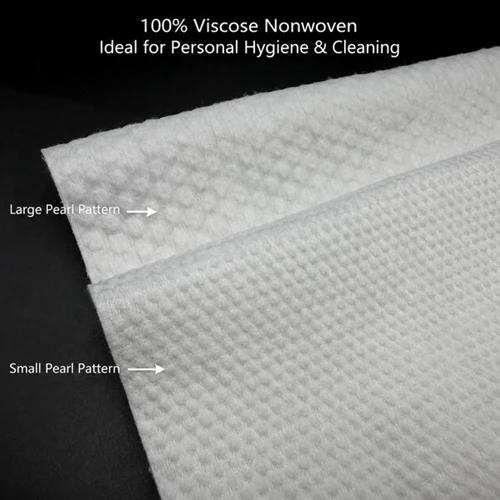
Surface patterns can be engineered to influence handling, texture, wiping performance and visual appearance.
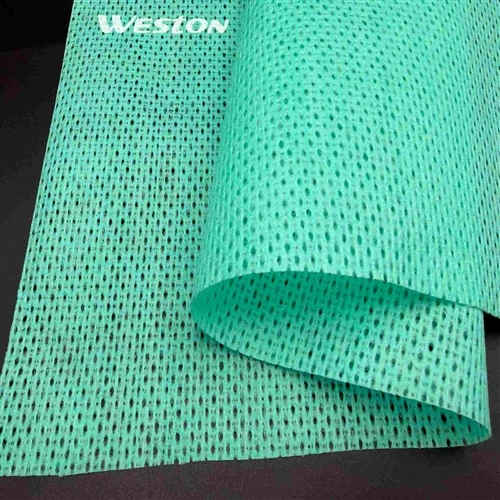
Possible structures include plain surfaces, mesh patterns and different embossed designs.
Functional Finishing
Depending on the application, additional treatments may be considered for properties such as:
Water resistance
Flame retardancy
Antistatic performance
Antibacterial performance
Other customized functional requirements
This makes non-woven fabric particularly suitable when a standard textile cannot provide the exact combination of properties required.
Why Are Non-woven Fabrics Efficient for High-Volume Production?
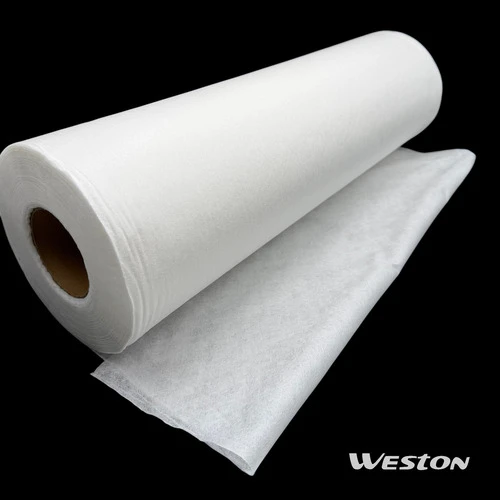
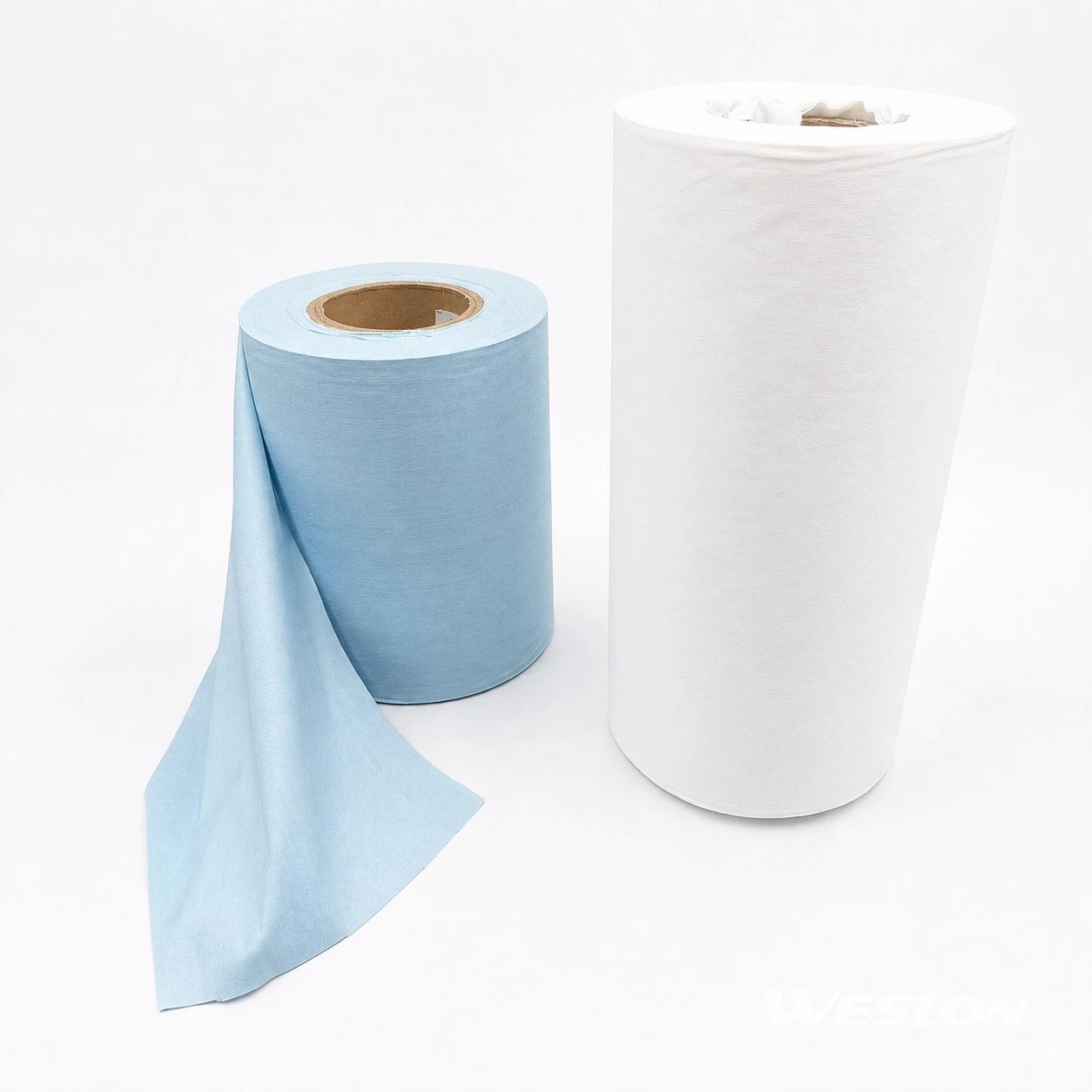
Non-woven materials can be manufactured in continuous production systems and supplied in rolls, making them suitable for high-volume converting.
The material can then be processed into:
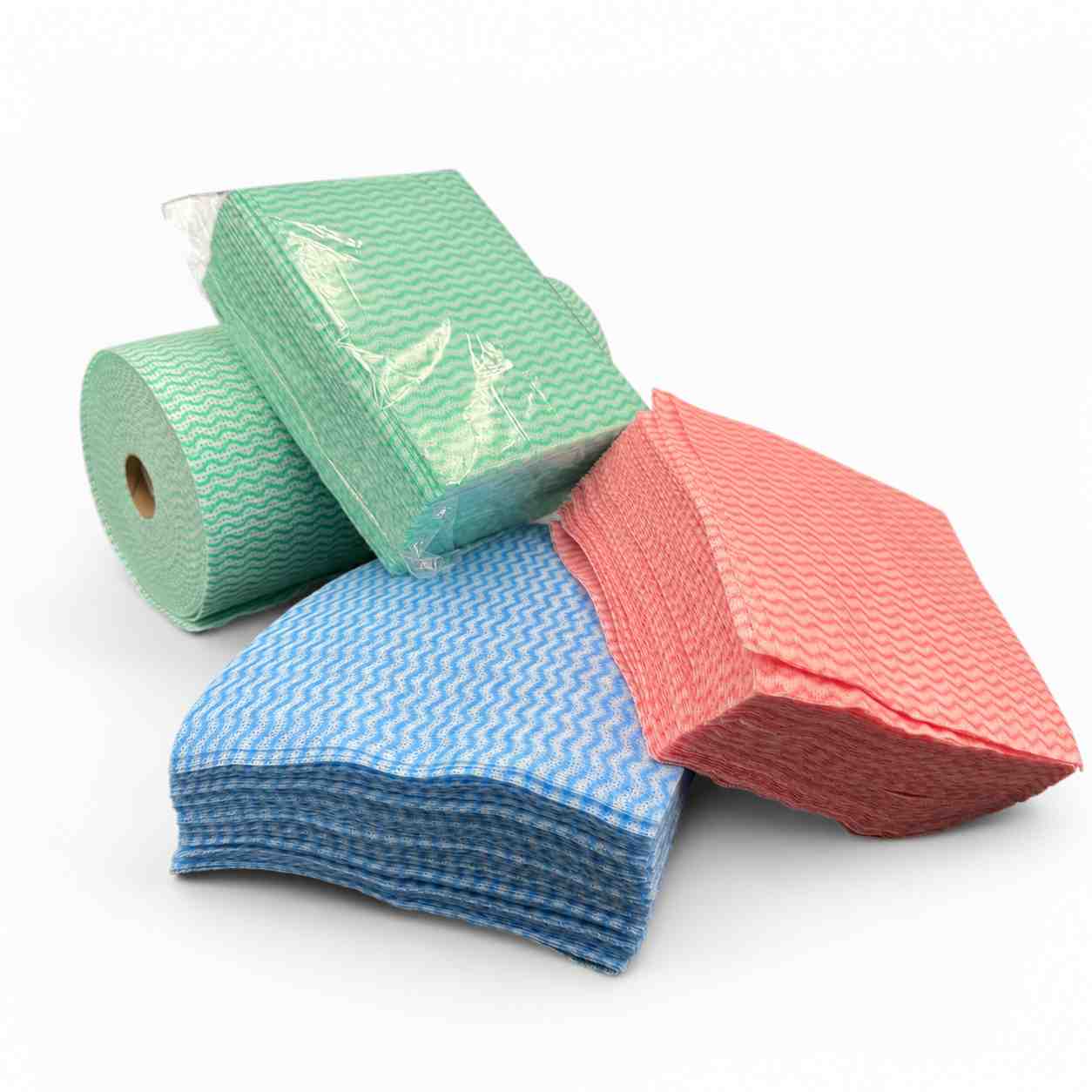
Sheets
Rolls
Folded materials
Wipes
Cut pieces
Disposable components
Laminated or converted products
This production flexibility is important for manufacturers that need consistent material supply over large production runs.
It also makes non-woven fabrics suitable for products where millions of pieces may need to be produced with relatively consistent dimensions and performance.
The key advantage is not simply production speed. It is the combination of continuous production, structural flexibility and efficient converting.
Are Non-woven Fabrics Environmentally Friendly?
This question requires a more careful answer than simply calling non-woven fabric "eco-friendly."
Not all non-woven fabrics are biodegradable.
A polypropylene non-woven fabric has a very different environmental profile from materials made with cellulose-based or biodegradable fibers. Likewise, a reusable non-woven bag should be evaluated differently from a product designed for short-term use.
Environmental performance depends on the entire product life cycle, including:
Raw material selection
Manufacturing energy
Product lifespan
Reuse frequency
Transportation
Waste management
Recycling or biological degradation pathways
A reusable product may provide environmental benefits when it replaces many single-use alternatives. On the other hand, a material should not be called biodegradable simply because it is non-woven.
A more useful question is:
Which material provides the appropriate environmental and functional balance for the intended application?
For applications where renewable or cellulosic fibers are preferred, manufacturers can consider alternative fiber systems rather than assuming that every non-woven product has the same environmental characteristics.
Non-woven Fabric vs Woven Fabric, Paper and Plastic Film
The best material depends on the application. Non-woven fabric does not outperform every alternative in every category.
|
Property |
Non-woven Fabric |
Woven Fabric |
Paper |
Plastic Film |
|
Lightweight design |
Excellent |
Good |
Excellent |
Excellent |
|
Softness |
Highly adjustable |
Good |
Limited |
Limited |
|
Air permeability |
Adjustable |
Generally high |
Moderate |
Generally low |
|
Absorbency |
Highly adjustable |
Fiber-dependent |
Generally high |
Very low |
|
Liquid resistance |
Adjustable |
Adjustable |
Limited |
High |
|
Strength customization |
High |
High |
Moderate |
High |
|
Disposable applications |
Excellent |
Less common |
Common |
Common |
|
Surface customization |
High |
Moderate–High |
Moderate |
High |
|
Continuous roll production |
Excellent |
Good |
Excellent |
Excellent |
The advantage of non-woven fabric is therefore not that it is always the strongest, softest or most waterproof material.
Its real advantage is its ability to combine several useful characteristics within one engineered structure.
What Are the Limitations of Non-woven Fabrics?
A technically credible material selection process also needs to consider limitations.
Lightweight non-woven fabrics may not provide the durability required for heavy-duty applications.
Some fibers have limited heat resistance compared with specialized high-temperature materials.
Water resistance varies significantly according to structure and treatment.
Natural absorbency depends strongly on fiber composition.
Environmental performance differs substantially between synthetic, natural, regenerated and biodegradable fiber systems.
Not every non-woven fabric is recyclable, biodegradable or compostable.
These limitations do not make non-woven materials unsuitable. They simply demonstrate why the phrase "non-woven fabric" is too broad to determine performance by itself.
How Should You Choose the Right Non-woven Fabric?
Before selecting a material, buyers should define the application rather than starting with a generic fabric name.
Ask the following questions:
What will the material contact?
Skin, water, oil, chemicals, dust, machinery or other surfaces can require very different material properties.
Does the material need to absorb liquid?
If yes, fiber composition and pore structure become important.
Does it need to resist water?
Determine whether the requirement is water repellency, water resistance or a tested waterproof barrier.
Is low lint important?
For precision cleaning, healthcare and controlled environments, fiber release can be a critical specification.
What basis weight is actually needed?
Select the lowest practical GSM that still meets strength, absorbency and durability requirements.
Is special functionality required?
Antistatic, flame retardant, antibacterial, water-resistant and other treatments may be appropriate for specific applications.
What test data should a supplier provide?
Depending on the application, useful specifications may include:
- GSM
- Thickness
- Tensile strength
- Tear strength
- Elongation
- Absorbency
- Air permeability
- Hydrostatic pressure
- Lint performance
- Chemical compatibility
A reliable specification should describe measurable performance rather than relying only on general terms such as "premium," "strong," "eco-friendly" or "waterproof."
Custom Non-woven Fabric Solutions for Different Applications
For manufacturers that need a specific combination of absorbency, softness, strength, low lint, liquid resistance or other performance characteristics, customization can be more practical than selecting a generic material.
Weston Nonwoven provides custom spunlace material development based on fiber composition, basis weight, web structure, surface pattern and application requirements. Its production approach can be used to develop materials for cleaning, healthcare, personal care, industrial and other applications.
For buyers looking for absorbent cellulose-based structures, Pulp Spunlace can be considered when the application requires a combination of softness, liquid uptake and flexible converting characteristics.
For applications where renewable or regenerated cellulosic fibers are preferred, Lyocell And Bamboo Fiber Spunlace provides another material direction for developing soft, absorbent and application-specific nonwoven structures.
The goal of customization is not simply to produce a different fabric. It is to match the material structure with the actual requirements of the finished product.
Frequently Asked Questions
Is non-woven fabric waterproof?
Not automatically. Some non-woven fabrics are water-repellent or water-resistant, while higher waterproof performance may require a denser structure, coating or lamination. The actual performance should be confirmed by the relevant test method.
Is non-woven fabric breathable?
Many non-woven structures are breathable because air can pass through the spaces within the fiber network. However, air permeability varies according to fiber density, basis weight, bonding and finishing.
Is polypropylene non-woven fabric absorbent?
Polypropylene itself has low water absorption. If high absorbency is required, cellulosic fibers or blended structures are often more suitable.
Is non-woven fabric antibacterial?
Not necessarily. Antibacterial performance generally requires a specific treatment or functional technology and should be supported by appropriate testing.
Is non-woven fabric biodegradable?
Not all non-woven fabrics are biodegradable. Biodegradability depends mainly on the fiber composition and the conditions under which the material is discarded or processed.
Is a higher GSM non-woven fabric better?
Not necessarily. Higher GSM can increase thickness, coverage and certain mechanical properties, but the optimal basis weight depends on the application.
What is the difference between woven and non-woven fabric?
Woven fabric is made by interlacing yarns, while non-woven fabric is formed from fibers that are bonded into a web. This gives non-woven materials greater flexibility in designing fiber composition and structure for specific uses.
Why are non-woven fabrics widely used in disposable products?
They can be lightweight, continuously produced, easily converted and engineered for properties such as softness, absorbency, strength and liquid resistance. These characteristics make them suitable for many high-volume applications.
Choosing Performance Instead of Just a Material Name
The main advantage of non-woven fabric is its design flexibility.
Instead of being limited to one fixed combination of properties, manufacturers can adjust fiber selection, web formation, bonding, basis weight, surface structure and finishing to create materials for very different applications.
That is why the right question is not simply:
"Which non-woven fabric is the best?"
A better question is:
"Which non-woven structure provides the right balance of performance, processing and environmental requirements for this application?"
When material selection starts with the actual end-use requirements, non-woven fabric becomes much more than a general textile substitute. It becomes an engineered material platform that can be adapted to the needs of modern healthcare, cleaning, hygiene, construction, packaging and industrial products.