Why Your Kitchen Looks Clean But Isn't
You wipe down the counter, spray some disinfectant, and call it done. The surface gleams under the fluorescent lights. But here's the uncomfortable truth: what your eyes see and what's actually happening at the microscopic level are two completely different stories.
The Illusion of Cleanliness
In professional kitchens, testing methods that measure organic matter and bacterial load reveal a surprising reality: chopping boards and food-contact surfaces can still register dangerously high contamination levels even after routine cleaning. We are talking about hundreds of thousands of microbial units remaining on surfaces that appear visually spotless.
Your countertop, cutting board, and sink drain are not just dirty-they are bacterial hotspots. Given moisture and minimal nutrients, bacteria multiply rapidly and silently.
The issue is not a lack of effort. The real problem is that traditional cleaning methods-wiping with reusable cloths or spraying disinfectants-have inherent limitations that leave critical gaps in hygiene control.

Why Traditional Methods Fail
When bacteria land on a kitchen surface, they do not remain isolated. In moist conditions, a small number of cells can multiply exponentially within hours. What begins as a few hundred bacteria can become several thousand in a single work shift.
More importantly, bacteria quickly form biofilms-structured communities that adhere tightly to surfaces. Once established, these biofilms become significantly more resistant to disinfectants than free-floating bacteria. This makes them extremely difficult to eliminate with casual spray-and-wipe routines.
This is why food safety issues frequently occur even in kitchens that "look" clean. While staff training, equipment maintenance, and documentation matter, none of them compensate for inadequate sanitation of food-contact surfaces.
Traditional disinfectants often require extended contact times to achieve full efficacy. In real-world kitchen environments-where speed and turnover matter-those contact times are rarely respected. The result is a dangerous gap between what is required for safety and what is realistically practiced.
The Science of Cross-Contamination
Pathogens such as E. coli, Salmonella, and Staphylococcus aureus transfer easily from contaminated surfaces to ready-to-eat foods. Studies consistently show that bacteria transfer rates between surfaces and food can reach 20–60 percent.
In practical terms, this means that preparing raw meat on one surface and then handling vegetables on the same surface-even after a quick rinse-creates a direct contamination pathway.
The highest-risk areas are shared kitchen touchpoints: chopping boards, sinks, faucet handles, and prep tables used by multiple staff members. In high-volume kitchens, these points act as transmission hubs, multiplying contamination risks across the entire operation.
Enter the Game-Changer: Food Safe Wipes
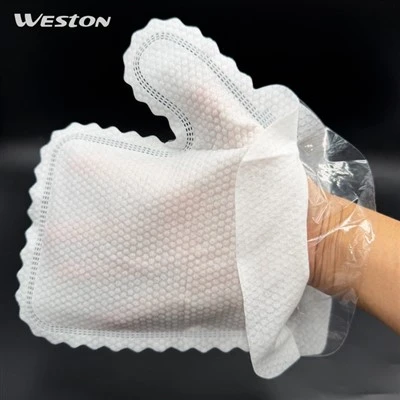
Pre-moistened Food Safe Wipes represent a fundamental shift away from the traditional spray-and-hope approach. Their effectiveness comes from three core advantages.
1. Consistent Chemistry
Unlike refillable spray bottles-where dilution errors are common-Food Safe Wipes deliver pre-calibrated antimicrobial formulations at consistent concentrations. This ensures reliable performance every time, without guesswork or variation between operators.
The antimicrobial agents commonly used in professional Food Safe Wipes disrupt bacterial cell membranes effectively when applied at the correct concentration, ensuring predictable and repeatable sanitation outcomes.

2. Mechanical and Chemical Action Combined
Sprays alone rely entirely on chemistry. Wipes add a crucial mechanical component.
The physical wiping action removes grease, proteins, and food residues that otherwise protect bacteria from disinfectants. This dual-action approach simultaneously breaks down bacterial defenses and physically lifts contaminants away from the surface.
Reusable cloths, including cotton and microfiber, often absorb a significant portion of the active disinfectant, reducing its effectiveness. Single-use Food Safe Wipes preserve the full chemical formulation, ensuring direct contact with the surface where it matters most.
3. Elimination of Operator Variability
Human inconsistency is one of the biggest weak points in sanitation programs. Preparation errors, rushed cleaning, and uneven standards are common-especially in high-turnover kitchens.
Food Safe Wipes eliminate these variables. There is no mixing, no measuring, and no subjective judgment. Each wipe delivers the same formulation, the same dosage, and the same performance, regardless of who is using it.
Why Nonwoven Technology Matters
The performance of Food Safe Wipes is not only about chemistry-it also depends on the substrate.
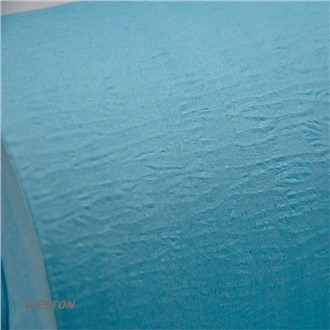
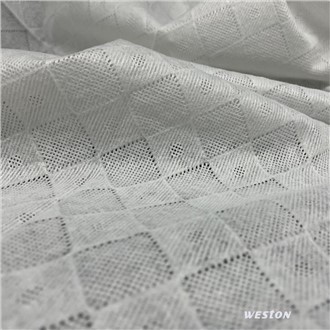
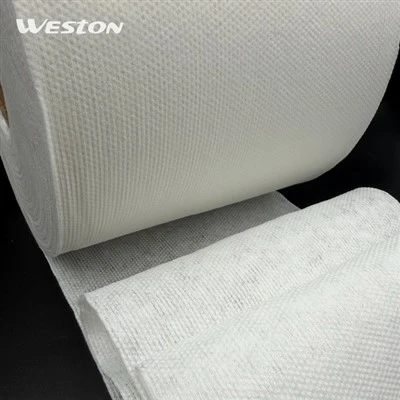
Advanced wipes are produced using spunlace nonwoven technology, a three-dimensional fiber structure designed specifically for demanding cleaning environments. This structure provides high absorbency for organic residues, strong mechanical integrity that resists tearing, and low lint release to avoid secondary contamination.
Nonwoven materials used in food-service wipes are disposable by design, preventing cross-contamination associated with reused cloths. They are lightweight, efficient, and increasingly available in sustainable, biodegradable material options.
Real-World Implementation
Commercial kitchens that adopt Food Safe Wipes often reduce sanitation cycle times significantly-without compromising safety. The efficiency comes from eliminating repeated spray applications, excessive dwell times, and re-cleaning caused by inconsistent results.
Color-coded wipe systems further strengthen hygiene protocols: one color for raw food preparation areas, another for ready-to-eat zones. Wipes are deployed at critical control points-immediately after raw food handling, between tasks, and before restocking food-contact surfaces.
The Regulatory Perspective
Food-contact surface sanitization is not optional. Regulatory standards require rapid and substantial reductions in bacterial load within short contact times.
Properly formulated Food Safe Wipes consistently meet these requirements when used according to instructions, supported by laboratory validation and real-world performance data.
What This Means for Your Kitchen
Adopting Food Safe Wipes is not just about switching products-it is about shifting mindset.
True cleanliness is not defined by shine or smell. It is defined by microbial control. Food-contact surfaces must be treated as critical control points, not as cosmetic tasks.
Food Safe Wipes-through consistent formulations, combined mechanical and chemical action, and engineered nonwoven substrates-offer a practical, science-based solution to bridge the gap between visible cleanliness and real food safety.
The countertop may look clean. But what matters is what an ATP test would reveal. That is where modern food safety truly begins.