Why Is My Floor Still Dirty Even After Mopping?
You mop the floor regularly.
You rinse the mop.
You follow the same routine every time.
Yet once the floor dries, it still looks dull, sticky, or unevenly clean. This is a situation many people face, both at home and in commercial spaces. The reason is rarely about effort. More often, it comes down to how floor dirt behaves-and how cleaning materials interact with it.

What "Dirty" Really Means on a Floor
Floor dirt is not just visible dust. It is usually a layered mix of:
Fine particles tracked in from outside
Oily residues from shoes, cooking, or skin contact
Microscopic debris that settles into surface texture
Cleaning product residue left behind after repeated use
Water alone does not remove these layers. If the cleaning cloth cannot lift and retain them, dirt is simply moved from one place to another.
Why Floors Look Clean When Wet but Dirty When Dry
Many floors appear cleaner during mopping because water temporarily masks residue. Once the water evaporates, remaining particles become visible again.
This happens when:
Dirt is diluted but not removed
Oily residue spreads thinly across the surface
Cleaning water dries unevenly
Fibers release trapped debris back onto the floor
In short, wet floors can be misleading. True cleanliness shows after drying.
The Limits of Traditional Mop Cloths
Conventional mop cloths often struggle with real-world floor contamination. Their limitations usually fall into several areas.
Advantages
Easy to use
Widely available
Suitable for basic wetting and wiping
Disadvantages
Smooth fiber surfaces push dirt forward
Limited absorption once saturated
Low ability to trap fine particles
Tendency to leave lint or streaks
These cloths are not ineffective-but they are not designed for capturing and holding complex floor residue.
Why Texture Matters More Than Pressure
Many people respond to poor results by scrubbing harder. However, pressure alone does not solve the problem.
What matters is surface interaction.
Textured cleaning materials create:
More contact points with the floor
Small channels that collect particles
Spaces where dirt can stay trapped
Without texture, dirt remains mobile. With it, dirt is physically removed from the surface.
How Embossed Structures Improve Floor Cleaning
Embossed patterns are not decorative. They are functional.
Raised structures on a mop cloth:
Increase friction without damaging the floor
Help dislodge particles from surface grooves
Separate absorbed liquid from collected dirt
Reduce re-deposition during repeated passes
This structural design is especially effective on tile seams, wood grain, and lightly textured commercial flooring.
Absorption Is Not Just About Holding Water
A common assumption is that more absorption equals better cleaning. In reality, uncontrolled absorption can cause problems.
Too little absorption
Dirt remains on the surface
Water spreads residue
Too much absorption
Cloth becomes heavy and ineffective
Dirty water is squeezed back out
Floors dry slowly and unevenly
Balanced absorption allows a cloth to lift moisture and dirt while keeping them away from the floor once captured.

Chemical Cleaners Are Not Always the Answer
Strong detergents may improve short-term appearance, but they introduce new issues.
Benefits
Break down grease
Improve immediate shine
Drawbacks
Leave residue that attracts more dirt
Create sticky surfaces over time
Require more frequent cleaning
Can damage floor finishes
Mechanical removal-physically lifting dirt from the surface-is often more sustainable than relying on stronger chemicals.
Where Nonwoven Materials Fit In
Nonwoven materials differ from woven fabrics in how fibers are formed and distributed. Instead of yarns crossing over each other, fibers are bonded in controlled layers.
This structure allows for:
Uniform cleaning performance
Reduced lint generation
Predictable absorption behavior
Greater flexibility in surface design
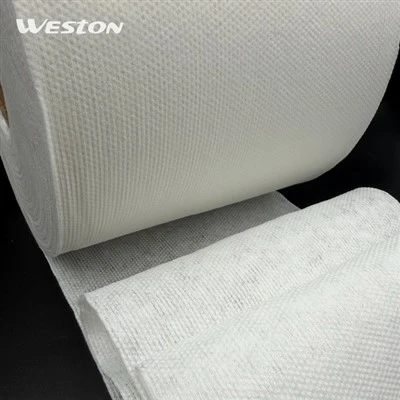
Within this category, Nonwoven Embossed Floor Mop Cloths combine material consistency with surface texture to address common mopping challenges.
A Practical Look at Trade-Offs
No cleaning material is perfect. Understanding trade-offs helps set realistic expectations.
Strengths
Improved particle pickup
Better moisture control
More even cleaning results
Reduced streaking after drying
Limitations
Not a substitute for deep floor maintenance
Requires proper rinsing and replacement
Performance depends on correct mop setup
Used appropriately, embossed nonwoven cloths support cleaner floors without adding complexity to daily routines.
Cleaning Is About Removal, Not Motion
Mopping is often treated as a movement task-back and forth, side to side. In practice, it is a removal task.
Effective cleaning requires that dirt:
Detaches from the floor
Transfers into the cloth
Stays there until disposal or rinsing
Materials that cannot complete all three steps leave floors looking clean only temporarily.
A Quiet Role for Manufacturing Design
Behind everyday cleaning products are material choices that determine performance. Fiber selection, bonding method, embossing depth, and consistency all affect results.
As a water-spunlace nonwoven manufacturer, Weston Nonwoven develops cleaning materials with these factors in mind. Products such as Nonwoven Embossed Floor Mop Cloths are designed to work within normal cleaning habits, not change them.
The goal is not to promise perfection, but to reduce the gap between effort and outcome.
When Cleaner Floors Start Making Sense
If floors remain dirty after mopping, the cause is rarely a single mistake. It is usually a combination of residue behavior, moisture control, and material structure.
Understanding how dirt moves-and how cleaning materials capture it-helps explain why some floors never seem fully clean.
Sometimes, improving results is less about doing more, and more about using materials that quietly do what they are meant to do.