Are Bamboo Baby Wipes Safe?
The short answer is yes-bamboo baby wipes can be safe for babies.
The longer, more useful answer depends on why they are safe, under what conditions, and where risks may still exist.
Safety in baby wipes is not determined by marketing language or plant origin alone. It is determined by fiber chemistry, fabric structure, and manufacturing discipline. Bamboo happens to be a strong candidate material-but only when handled correctly.
This article looks at bamboo baby wipes from a scientific and practical standpoint, using data, material behavior, and real-world manufacturing logic rather than claims.

Core Judgment: Bamboo Is Skin-Compatible by Nature
Conclusion: Bamboo-derived cellulose fibers are inherently compatible with infant skin.
Why this holds true (data & material facts):
Bamboo fibers used in wipes are regenerated cellulose
Cellulose has a neutral pH and low biological reactivity
Chemically, bamboo cellulose is comparable to medical-grade cotton
Multiple dermatological material studies show that cellulose-based fibers exhibit low irritation potential, especially when free from surface binders and coatings.
Practical implication:
If a wipe is made from purified bamboo cellulose and bonded mechanically (not chemically), the base material itself is unlikely to cause skin reactions.
Fiber Surface Matters More Than Fiber Origin
Conclusion: Skin safety depends more on fiber smoothness than on whether the fiber is "natural."
Supporting facts:
Infant skin is thinner and loses moisture faster than adult skin
Rough or broken fiber ends increase friction and micro-abrasion
Bamboo cellulose fibers, when properly regenerated, form round, smooth cross-sections
Compared with some low-grade synthetic fibers, bamboo-based fibers tend to produce less drag during wiping, reducing redness caused by repeated contact.
This is one reason bamboo-based materials are commonly used in:
Baby wipes
Cosmetic pads
Medical disposables
Chemical Safety Depends on Process Control
Conclusion: Bamboo baby wipes are safe only when chemical residues are properly controlled.
Key data points:
Bamboo itself contains no toxic substances relevant to wipes
Risk comes from fiber regeneration and finishing, not the plant
High-quality production includes:
Closed or semi-closed solvent systems
Multi-stage washing and purification
No added binders in the fabric structure
In well-managed production, residual solvent levels in bamboo-based nonwovens fall well below recognized safety thresholds for skin-contact products.
Case insight:
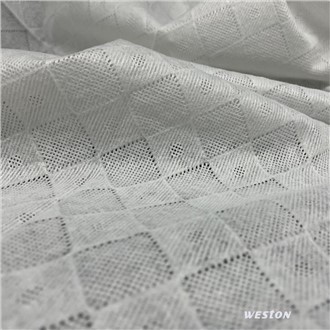
Manufacturers using water-entangled (spunlace) technology avoid resin binders altogether, reducing chemical exposure at the fabric level.
Fabric Structure Plays a Critical Role in Real Use
Conclusion: Even safe fibers can perform poorly if the nonwoven structure is wrong.
Observed performance data from wipe applications:
Low-density fabrics tear easily when wet
Overly compact fabrics increase friction
Poor entanglement leads to lint transfer onto skin
Spunlace nonwoven structures strike a balance:
Strong when wet
Soft under pressure
Stable during repeated wiping
This structure is widely recognized as one of the safest formats for baby wipes, regardless of fiber type.

Moisture Management and Diaper-Area Safety
Conclusion: Bamboo-based wipes manage moisture in a way that supports skin health.
Why this matters:
Over-wet skin is more prone to irritation
Uneven moisture release increases wiping pressure
Bamboo cellulose fibers absorb and release water evenly
Data from hygiene material testing shows that bamboo-based spunlace fabrics typically offer:
High absorbency per gram
Controlled liquid release
Reduced need for repeated wiping
This directly reduces mechanical stress on sensitive areas.
When Bamboo Baby Wipes May Not Be Ideal
Conclusion: "Bamboo" does not automatically mean safe.
Risk scenarios include:
Incomplete purification during fiber processing
Blends with stiff synthetic fibers without balance
Ultra-lightweight fabrics that collapse when wet
In these cases, irritation is caused by manufacturing shortcuts, not bamboo itself.
This distinction is important for buyers and brand owners evaluating suppliers.
Manufacturing Perspective: Weston Nonwoven
In industrial practice, safety is achieved through consistency, not claims.
At Weston Nonwoven, bamboo-based spunlace materials are engineered with attention to:
Fiber purity
Water-only entanglement
Controlled basis weight and surface uniformity
Products such as 100% Bamboo Fiber Towels are designed to maintain stable softness, strength, and cleanliness across large production runs-key requirements for baby wipe applications.
The emphasis is not on novelty, but on repeatable material behavior.