Nonwoven and polyester are often mentioned together-sometimes even used interchangeably in casual conversation. Yet they are not parallel terms. One is a structure; the other is a chemistry. One describes how fibers are assembled, while the other describes what those fibers are made of. Understanding this fundamental distinction is key to navigating product performance, environmental impact, and application fit-from hygiene wipes and medical disposables to filtration, salon towels, and antistatic industrial media.

Definitions That Matter: Structure vs. Substance
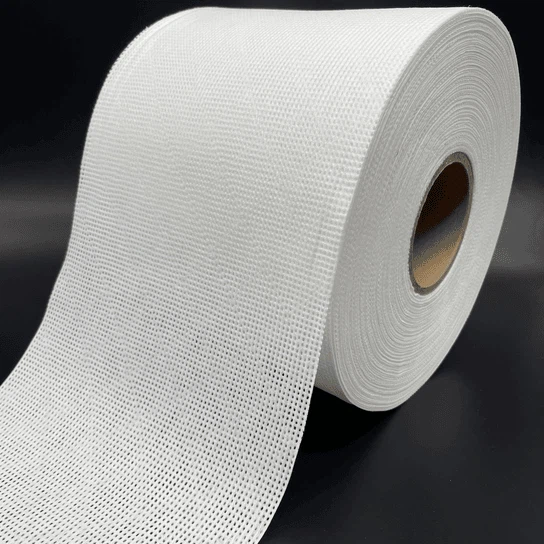
Nonwoven: A fabric engineered by bonding or entangling fibers without weaving or knitting. The term "nonwoven" is primarily about structure and manufacturing method. Common bonding methods include hydroentangling (spunlace), thermal bonding, needle-punching, chemical bonding, and meltblown/web forming techniques.
Polyester: A polymer family, most commonly polyethylene terephthalate (PET), used as a fiber (or film). Polyester is about chemistry and material properties-intrinsic strength, crystallinity, hydrophobicity, thermal behavior-not about how fibers are assembled.
Key takeaway: A nonwoven can be made from polyester, viscose, polypropylene, lyocell, wood pulp, or blends. Polyester can be formed into nonwovens, knits, or wovens. Mixing the two concepts leads to poor material choices and confused sustainability claims.
The Fabrication Landscape: How Nonwovens Are Made
Nonwovens derive their properties from three levers: fiber selection, web formation, and bond mechanism. Changing any one lever can significantly alter performance.
Web Formation:
Dry-laid (carded): Fibers are carded into a web; basis weight and orientation are controlled.
Wet-laid: Fiber slurry is deposited like paper; excellent uniformity, compatible with pulp.
Spunlaid (spunbond/meltblown): Polymer is extruded into continuous filaments or microfibers directly on the web.
Bonding:
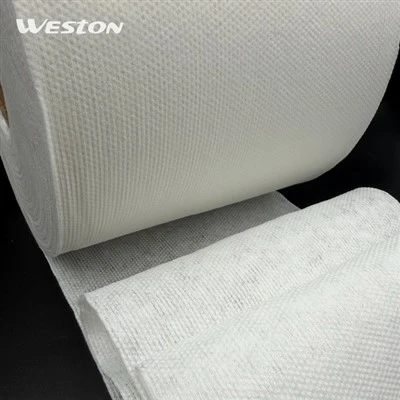
Hydroentangling (spunlace): High-pressure water jets entangle fibers, yielding soft, lint-low fabrics. Ideal for wipes and towels.
Thermal bonding: Heat and pressure fuse thermoplastic fibers or bicomponent fibers; precise patterning and stiffness control.
Needle-punching: Mechanical entanglement for thick, tough felts.
Chemical bonding: Binder resins that create a cohesive matrix; often used in wet-laid systems.
Fiber Choices:
Cellulosics: Viscose, lyocell, wood pulp-hydrophilic, good absorbency.
Synthetics: Polyester (PET), polypropylene (PP), polyethylene (PE)-tunable strength, durability, low moisture regain.
Blends: Composite property sets (e.g., pulp/PP, viscose/PET, tri-layer configurations).
Nonwovens live on a spectrum-from compressible, high-loft insulation felts to silky, drapable spunlace for skin contact-and their performance envelope is tuned by process architecture.
Polyester as a Fiber System: The Materials Science Angle
Polyester (PET) is defined by:
Crystallinity and Orientation: Controlled by drawing and thermal history, affecting strength, melting point, and shrinkage.
Surface Energy: Naturally hydrophobic; can be modified by plasma, surfactants, copolymers, or topical finishes.
Thermal Behavior: Melting near ~255–260°C for PET; bicomponent fibers use lower-melting copolyesters for thermal bonding.
Electrical Behavior: Insulating by default; antistatic properties achieved via carbon/metallic/ionic finishes or conductive bicomponent fibers.
As a fiber, polyester is:
Strong for its denier, abrasion-resistant, dimensionally stable.
Resistant to many chemicals, with moderate UV resistance (improved via stabilizers).
Recyclable in both mechanical and chemical routes, though application-dependent.
Therefore, polyester is a workhorse material platform that can appear in numerous formats, including non-woven spunbond, needle-punched felts, and hydroentangled (spunlace) blends.
Performance Axes: How to Evaluate Fit-for-Purpose
When selecting between "nonwoven" categories and "polyester" fiber systems, consider:
Absorbency and Wettability: Cellulose-rich non-wovens wick quickly and hold water. Polyester requires surface modification or blending for high absorbency.
Strength (Dry/Wet): Polyester contributes high tensile strength and wet integrity; pulp alone loses strength when wet unless supported by a network (e.g., spunlace entanglement or binder).
Softness and Drape: Hydroentangled nonwovens with fine denier and suitable emboss patterning provide a cotton-like handfeel. Polyester microfibers can achieve silkiness; cellulose adds plushness.
Linting and Cleanliness: Properly bonded spunlace minimizes lint; polyester filaments reduce particle release vs. short staple fibers if engineered correctly.
Thermal and Chemical Resistance: Polyester outperforms cellulose in many solvents and at elevated temperatures; choose PET-rich blends for sterilization or solvent exposure.
Electrostatic Behavior: By default, polyester insulates and can build static; antistatic finishes or conductive fibers neutralize charge for ESD-sensitive environments.
Sustainability and End-of-Life: Blends complicate recycling; mono-material polyester enhances recyclability but may reduce absorbency. Wet-laid pulp systems can be compostable under specific conditions, but wet-strength additives and finishes matter.
Science Deep Dive: Fiber-Matrix Interactions in Spunlace
Hydroentangling is illustrative because it relies on physics rather than added binders:
High-pressure jets impart kinetic energy that wraps fibers around each other, forming numerous frictional contact points.
Fiber length and fineness matter: longer and finer fibers increase entanglement density, enhancing strength and softness.
Mixing polyester with cellulosics increases fiber-fiber friction because of differing stiffness and cross-sectional profiles, improving cohesion and wet strength while maintaining absorbency in blended designs.
Such micro-mechanics explain why certain blends in spunlace deliver "paradoxical" combinations-silky yet strong, absorbent yet low-lint.
Environmental Lens: Claims That Withstand Scrutiny
Resource Footprint:
Polyester: Petro-origin for virgin PET; however, rPET from bottle streams is increasingly used in non-wovens, reducing virgin input.
Cellulosics: Derived from biomass; sustainability depends on feedstock sourcing and processing chemistry.
End-of-Life Realism:
Mono-material PET non-wovens are theoretically recyclable but face infrastructure and contamination barriers.
Pulp-rich non-wovens may be biodegradable under controlled conditions, but real-world outcomes depend on finishes, thickness, and waste streams.
Process Energy:
Spunbond/meltblown: High thermal load during extrusion; efficient at scale.
Spunlace: Significant water and energy use for pumping and drying; closed-loop water and heat recovery systems can mitigate impact.
The nuanced conclusion: design for disassembly or mono-material streams when possible; otherwise, design for performance longevity to reduce total throughput.
Application-Driven Comparisons
Skin Contact Wipes: Aim for low lint, softness, and controlled fluid release. Spunlace with cellulose/PET blends provides a balanced profile. For infants with sensitive skin, surface chemistry and lotion compatibility matter more than polymer ideology.
Salon and Barber Towels: Need good tensile strength when wet, low lint on dark fabrics, and quick absorption. Polyester adds backbone; spunlace entanglement keeps softness without shedding.
Industrial Antistatic Media: Require consistent surface resistivity and charge decay. Polyester architecture with antistatic pathways (additives or fibers) ensures ESD safety and dimensional stability.
Filtration: Fiber diameter and pore structure dominate; meltblown microfibers or fine denier PET in layered non-wovens achieve target efficiencies. Electrostatic charging strategies can be integrated.
Quiet Innovations Reshaping the Category
Surface-Engineered Polyester: Durable hydrophilicity without rapid wash-off.
Nanofiber Overlays: Electrospun skins on spunlace backbones for high capture efficiency without large pressure drop.
Pulp-Polyester Gradient Structures: Wet-laid pulp layers fused via hydroentangling into PET support, balancing absorbency with strength.
Conductive Pathways: Intrinsically conductive polymers or carbon-loaded bicomponent fibers achieving stable anti-static performance with minimal impact on handfeel.
These innovations expand what "polyester non-wovens" can accomplish, particularly in tactile, skin-safe applications that were once the domain of cellulosics alone.
A Brief Spotlight on Weston Nonwoven
Weston Nonwoven focuses on engineered spunlace and composite non-wovens that align structure and polymer science with application realities. Portfolio directions include:
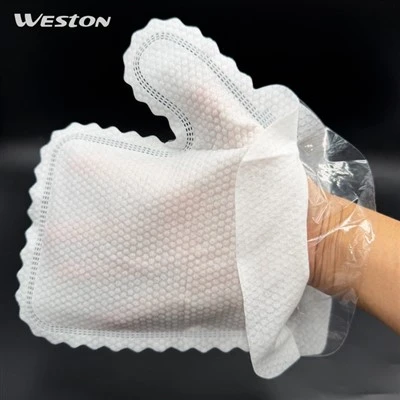
Cellulose-PET Spunlace for skin-contact wipes, including sensitive-skin formats such as Baby Wipes for Red Butt.
Professional Service Textiles like Spunlace Nonwoven Barber Towels emphasizing low lint and wet strength.
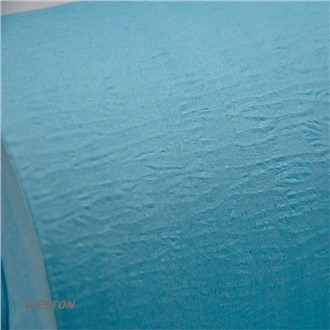
Composite Sheets such as Creped Pulp Polyester Spunlace that combine texture, absorbency, and structural stability.
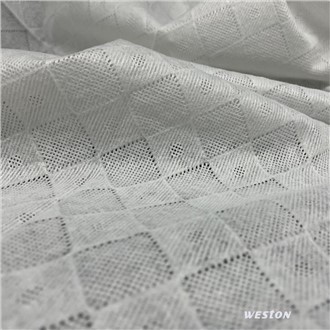
Functional Media like Anti-static Polyester Spunlace with durable charge-dissipation pathways.
For technical inquiries or free sample requests, contact info@westonmanufacturing.com.
Final Thoughts: Beyond Buzzwords
Nonwoven is how you build the fabric; polyester is what you build it from. The best products arise when you deliberately choose both-architecture and chemistry-to match a clear performance target. That's where science translates into touch, strength, safety, and sustainability, and where well-engineered spunlace and composites can quietly outperform assumptions across hygiene, grooming, industrial, and specialty applications.