Selecting a nonwoven for medical use is not a matter of labeling a fabric category and moving on. It is an engineering decision that couples fiber physics, pore architecture, surface energetics, electrostatic behavior, and multi-layer design with clinical risk and process realities. Spunlace, SMS (spunbond–meltblown–spunbond), and Meltblown each offers distinct microstructural advantages and constraints. This article builds a decision framework from first principles-structure, mechanism, and scenario mapping-so medical buyers, engineers, and quality teams can converge on the "right" material for the specific risk profile, not a generic best-in-class claim.
Key messages:
Filtration, liquid barrier, and wet strength are not always a zero-sum trade. With layer sequencing, pore gradient engineering, and surface treatments, one can elevate multiple axes simultaneously.
Clinical context-specifically aerosol risk, splash exposure, and skin contact time-determines which axis to optimize first.
The "minimum effective layer" principle reduces unnecessary basis weight while preserving functional thresholds.
Biobased and compostable directions are now technically credible for many contact and absorption tasks, but wet-state durability and heat stability must be engineered deliberately.

Mechanisms and Microstructure: Why These Materials Behave Differently
Spunlace (Hydroentangled)
High-pressure water jets entangle staple fibers into a coherent web, producing a high surface area, multi-scale pore network without thermal binders. The technology supports diverse fiber chemistries-woodpulp, viscose, PLA, PP blends-allowing fine control of absorbency, wet strength, hand feel, and sustainability profile.
SMS (Spunbond–Meltblown–Spunbond)
Spunbond outer layers deliver mechanical integrity, abrasion resistance, and dimensional stability; the meltblown core provides micro- to submicron fibers for fine-particle filtration. With electrostatic charging (electret), the core layer captures aerosols efficiently at manageable pressure drops, making SMS a cornerstone for masks, gowns, and drapes.
Meltblown
Hot air attenuates a polymer melt into extremely fine fibers (often sub-5 μm), creating a dense web with exceptional filtration per unit weight. Single-layer meltblown, however, is mechanically fragile and typically serves as a core layer within a composite. Targeted surface treatments can tune it for oil affinity, enabling selective sorption in contamination control and spill response tasks.
Takeaway: Spunlace excels in absorbency and skin comfort; SMS balances barrier and strength; Meltblown dominates fine-particle filtration and selective sorption.
Performance Axes: Quantifying "Fit for Purpose"
Filtration and Barrier
Meltblown achieves high particulate capture via small fiber diameters and electrostatic effects. SMS leverages its trilaminate architecture to combine filtration with tensile and tear strength. Spunlace can improve interception through fiber selection and densification but typically requires composite layering to approach aerosol-grade filtration.
Absorbency and Wet-State Strength
Spunlace-especially woodpulp/PLA/viscose systems-exhibits rapid intake, wicking, and uniform release of fluids, with robust wet strength from fiber entanglement. Standard PP meltblown and SMS are inherently hydrophobic; they require surfactant or plasma treatments for absorbent or wet-wipe applications. Wet conditions can degrade the charge retention of electret meltblown; performance envelopes must reflect that.
Breathability and Thermal-Moisture Comfort
Spunlace's interconnected pores promote airflow and evaporative transfer. SMS can be tuned via basis weight and fiber diameter to balance barrier and comfort. Dense meltblown can raise breathing resistance rapidly if not carefully optimized.
Mechanical Strength and Abrasion
SMS's spunbond skins confer superior abrasion and tear resistance under donning/doffing cycles and seam load. Spunlace offers favorable hand feel with moderate strength; reinforcement at stress points may be required. Standalone meltblown is not a load-bearing outer layer.
Chemical/Biological Compatibility and Sterilization
Fiber chemistry and additives dictate extractables and sterilization compatibility. Polyolefin-based SMS/meltblown is stable across common sterilization routes but can experience charge decay. Spunlace recipes must control residuals and surfactants to meet clinical cleanliness and cytocompatibility targets.
Sustainability
Woodpulp and PLA-based Spunlace open pathways to renewable and potentially compostable solutions for contact and wiping tasks. Polypropylene systems rely on clean stream recycling or energy recovery at end-of-life. Real environmental benefit comes from system-level design: reduced mass via performance targeting and improved end-of-life handling.
Scenario Mapping: Place the Material Back in the Use Case
Surgical and Isolation Gowns
SMS/SMMS is the default architecture. The meltblown core sets splash/aerosol barrier; spunbond outers deliver durability. Localized reinforcements at sleeves, chest, and elbows manage high-splash zones. Performance tuning hinges on hydrostatic resistance, breathability, and mobility balance.
Medical and Procedural Masks
Meltblown is the filtration heart. Charge stability, oil aerosol challenge, and storage-aging behavior determine in-field reliability. Spunbond or soft Spunlace inner layers improve skin comfort and reduce microfibers at the skin-lining interface.
Wound Care and Dressings
Spunlace's soft fiber ends, low lint, and rapid fluid uptake support atraumatic contact layers and absorbent composites. Woodpulp/PLA blends can improve sustainability without sacrificing function when engineered for wet strength and clean release.
Disinfection and Clinical Wipes
Spunlace excels in liquid loading, uniform release, and wet-state durability. For oil-rich soils or solvent tasks, treated meltblown can offer selective sorption. Pore-size distribution directly influences soil retention and streaking artifacts.
High-Risk Aerosol Environments
High-efficiency meltblown or multi-layer SMMS structures offer the most predictable protection. Validate electret retention under humidity and post-sterilization where relevant, and ensure liquid barrier coexists with acceptable pressure drop.

Hidden Tuners: Variables That Decide Real-World Outcomes
Fiber diameter and distribution
Finer meltblown fibers elevate diffusion and interception but increase pressure drop and fragility. In Spunlace, fiber recipe (woodpulp/PLA/PP/viscose) controls absorbency, wet strength, shedding, and environmental profile.
Porosity and connectivity
Governs airflow and liquid migration. High porosity improves comfort yet can invite penetration unless supported by capillary barriers or repellency. Gradient porosity can bias one-way moisture transport.
Surface energy and wettability
Hydrophobic surfaces repel liquid penetration; hydrophilic surfaces promote intake and wicking. Many medical builds use "hydrophobic outside, hydrophilic inside" to reconcile barrier with wearer comfort or wipe performance.
Electret charging and stability
Meltblown filter layers often rely on electrostatic capture. Humidity, oil aerosols, and time erode charge. The supply chain must validate post-sterilization and storage performance minima, not just as-made metrics.
Basis weight and densification
Performance should be targeted via structure, not simply more grams per square meter. The "minimum effective layer" principle preserves breathability and thermal comfort while meeting barrier requirements.
A Practical Decision Framework: Five Questions That Cut Trial-and-Error
What is the primary risk-splash, aerosol, or contact absorption?
Aerosol: Meltblown core or SMS; Contact absorption: Spunlace; Combined barrier: SMS/SMMS.
How long and how humid is the use scenario?
High humidity and duration favor materials with stable wet strength and electret retention; Spunlace maintains structural integrity in wet contact tasks.
Will the material be in prolonged skin contact?
Prioritize skin comfort via Spunlace liners or soft spunbond. Manage friction and micro-shedding at the skin interface.
Which sterilization and chemical exposures are expected?
Match materials to the sterilization route and validate post-process performance. Prevent filter downgrades from charge decay.
Are there sustainability or end-of-life constraints?
Consider woodpulp/PLA Spunlace for contact and wipes; establish clean-stream disposal or energy recovery for polyolefin-heavy builds.
Typical Pairings: From Risk to Recipe
Core layers for gowns: SMMS with tuned meltblown density; localized reinforcements at high-risk panels.
Mask filtration: High-efficiency electret meltblown flanked by spunbond or soft Spunlace liner.
Wound contact and absorbent pads: Woodpulp/PLA/viscose Spunlace with low lint and reliable wet strength.
Disinfection and clinical wipes: High-absorbency Spunlace; add oil-affine meltblown where hydrocarbon soils dominate.
Oil and solvent control: Textured or specialty-fiber meltblown for targeted sorption.

R&D and Quality Control: From Lab Insight to Stable Supply
Use functional KPIs, not material labels: filtration efficiency vs. pressure drop, synthetic splash resistance, WVTR, wet tensile, linting, electret retention.
Build a process–performance map: fiber fineness distribution, line speed, jet pressure/nozzle spacing (Spunlace), charge level and decay curve (Meltblown).
Modular composites: assemble "minimum effective layers" into SKUs tailored by department and risk level.
Environmental endurance testing: humidity, temperature, UV, sterilization chemicals-define lower performance bounds after exposure.
Statistical process control: track basis weight, pore-size distribution, surface energy, and electret parameters to minimize batch-to-batch variability.
Sustainability, Without Wishful Thinking
Biobased viability is real for many roles. Woodpulp/PLA Spunlace can deliver soft hand, rapid absorbency, and improved end-of-life potential; heat stability and cyclic wet durability must be engineered via fiber blends and entanglement density.
No single layer meets every need efficiently. Split functions across layers and design end-of-life pathways. Often, a renewable inner with a recyclable outer offers better system performance than an "all-in-one" compromise.
Measure environmental benefit in context. Extending filter life or right-sizing barrier can reduce total mass and waste far more than incremental changes to polymer content.
Industrialization and Supply Chain Fit
Define standard performance windows by clinical risk tier to avoid both under- and over-spec.
Ensure converting compatibility: cutting, ultrasonic welding, thermal sealing, pleating, and roll handling must match thermal and mechanical properties.
Treat sterilization and packaging as co-design elements: thermal steps may alter pore structure or electret charge; shelf-life should reflect validated stability windows.
A Short Note on Capabilities
Application-driven design and batch stability determine clinical reliability. Within this philosophy, Weston nonwoven supports tuned builds and sampling across:
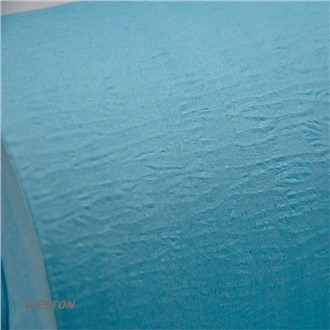
High-efficiency filtration and selective sorption: examples include textured meltblown sorbents such as Crows Feet Melt Blown Oil Absorbent Wipers.
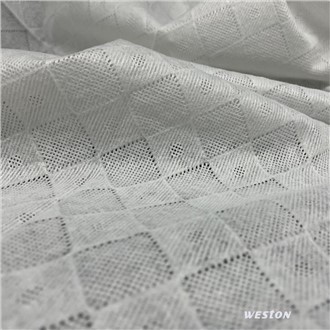
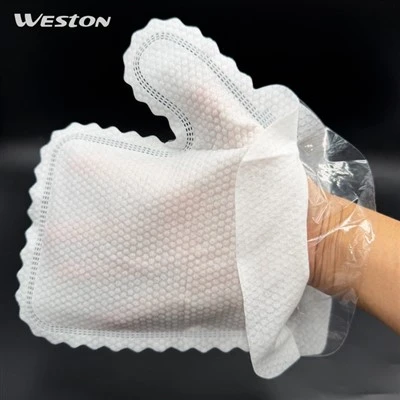
Medical wipes and wet wipes: absorbency, even release, and low lint Spunlace architectures, e.g., Meltblown Nonwoven For Disposable Wet Wipes.
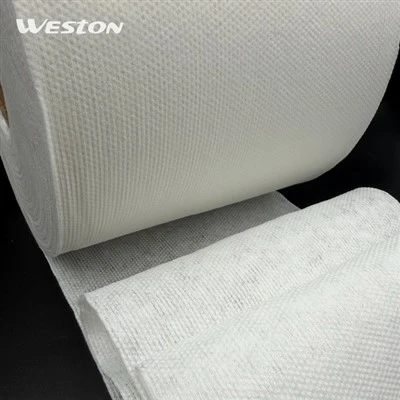
Sustainable directions: woodpulp/PP and woodpulp/PLA blends for balanced strength, feel, and environmental profile, such as Eco-Friendly Woodpulp PP Spunlace Nonwoven Rolls and Woodpulp PLA Spunlace.
Composite barrier systems: optimized SMS/SMMS stacks with electret stability and tunable breathability–barrier trade.
For targeted trials or parameter windows tailored to your medical scenario, contact Weston for a free sample.

Action Checklist: Turning Science into Sourcing
Define performance thresholds (minimum/target/maximum) for filtration vs. ΔP, liquid penetration, wet tensile, WVTR, and linting.
Choose the pathway:
Strong barrier, wearable: SMS/SMMS, verify electret stability and breathing comfort.
High absorbency, skin contact: Spunlace (woodpulp/PLA/viscose), add hydrophobic outer where splash is present.
Ultra-filtration or oil sorption: introduce high-efficiency Meltblown cores or oleophilic treatment.
Validate environment: performance retention after humidity, temperature exposure, sterilization, and chemical contact.
Scale-up guardrails: monitor basis weight drift, pore-size shift, and charge decay from pilot to production.
Document and control change: maintain a technical dossier and change management so clinical performance is reproducible.
Final Note
There is no universally "best" nonwoven-only the right structure for the right risk. Spunlace anchors absorbency and skin comfort. SMS delivers structured barrier and durability. Meltblown remains the irreplaceable engine for fine-particle capture and targeted sorption. With layer design, surface engineering, and electret control, one can minimize compromises among barrier, comfort, and sustainability. For sampling and technical discussion, reach out at info@westonmanufacturing.com for a free sample.