While lyocell has been widely celebrated as an eco-friendly textile, a thorough scientific examination reveals several significant disadvantages that are often overlooked in mainstream discussions. This article delves beyond the sustainable marketing claims to provide a comprehensive analysis of lyocell's often-unmentioned drawbacks, from production challenges to performance limitations.
The Delicate Nature of Lyocell Textiles
Lyocell's renowned softness comes with an inherent trade-off in durability that consumers frequently discover only after purchase. The very molecular structure that creates lyocell's smooth, luxurious hand also makes it surprisingly delicate in everyday use.
Care Intensity Compared to Other Fabrics
|
Fabric Type |
Recommended Washing |
Drying Method |
Ironing Temperature |
Prone to Pilling |
|
Lyocell |
Cold water, gentle cycle or hand wash |
Air dry or low heat |
Low temperature |
Moderate to high over time |
|
Conventional Cotton |
Warm water, regular cycle |
Medium to high heat |
Medium to high |
Low |
|
Polyester |
Warm water, regular cycle |
Low to medium heat |
Low |
Very low |
|
Wool |
Cold water, gentle cycle |
Flat air dry |
Low with steam |
Moderate |
The structural vulnerability of lyocell manifests particularly in wet conditions, where the fibers become more susceptible to damage. Unlike synthetic fabrics that maintain their strength when saturated, lyocell's cellulose-based structure undergoes subtle morphological changes that compromise its integrity. This paradox of being "strong when wet" in laboratory measurements yet delicate in actual home washing situations stems from the difference between controlled tensile strength tests and the abrasive, twisting action of modern washing machines.
The care requirements for lyocell garments present practical challenges for consumers. The need for cold water washing, gentle cycles, and air drying contradicts the convenience expectations of contemporary lifestyles. Furthermore, the tendency of lyocell to develop wrinkles during washing necessitates additional care in maintenance, often requiring steaming or ironing at low temperatures-another time-consuming step that offsets some of its aesthetic benefits.
Environmental Concerns Beyond the Hype
While lyocell's closed-loop production process represents a significant improvement over conventional viscose manufacturing, a deeper scientific examination reveals several environmental challenges that temper its sustainability credentials.
The primary environmental advantage of lyocell lies in its solvent recovery system. The N-Methylmorpholine N-oxide (NMMO) solvent used to dissolve wood pulp is indeed recycled at rates exceeding 99% in modern facilities. However, this celebrated closed-loop system doesn't eliminate waste entirely-it merely reduces it. The remaining solvent and byproducts, while minimal, still require appropriate handling and treatment. More concerning is the chemical instability of NMMO itself, which poses safety concerns if not meticulously managed throughout the production process.
The wood pulp sourcing for lyocell presents another nuanced environmental challenge. While major manufacturers tout sustainable forestry practices, the increasing demand for cellulose-based fibers inevitably exerts pressure on global forest ecosystems. The conversion of natural forests to managed plantations, even when certified, results in biodiversity loss and habitat fragmentation. Though eucalyptus and beech trees-the primary feedstocks for lyocell-grow relatively quickly and typically don't require irrigation or pesticides, their cultivation as monocultures raises ecological concerns that are often absent from sustainability discussions.
Energy consumption during production constitutes another frequently overlooked aspect of lyocell's environmental footprint. The process of dissolving wood pulp, extruding fibers, and recovering solvent demands substantial energy inputs. While some manufacturers utilize renewable energy sources, this isn't universal across the industry. The energy-intensive nature of lyocell production partially offsets the water savings achieved compared to cotton cultivation.
Recent research has uncovered yet another environmental concern: lyocell microfibers. A 2024 study revealed that while lyocell microfibers are less harmful than plastic-based alternatives, they still accumulate in soils and affect organisms like earthworms, disrupting their growth and reproduction. This finding challenges the assumption that natural-based fibers carry zero ecological burden in their end-of-life phase.

⚙️ Performance Limitations in Specialized Applications
Lyocell's performance characteristics present distinct limitations that necessitate specialized engineering for technical applications. Weston Nonwoven addresses these challenges through advanced manufacturing techniques that enhance lyocell's inherent properties while mitigating its drawbacks for industrial use.
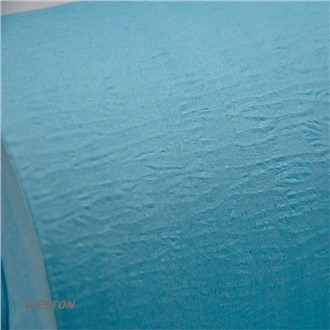
The inherent hydrophilicity of lyocell-while beneficial for moisture-wicking in apparel-becomes a limitation in applications requiring controlled absorbency. For Botanical Lyocell Spunlace Nonwoven For Masks, Weston Nonwoven employs precision hydroentanglement technology to optimize the fiber arrangement, creating a layered structure that balances moisture management with filtration efficiency. This processing counteracts lyocell's tendency toward inconsistent absorption patterns in its natural state.
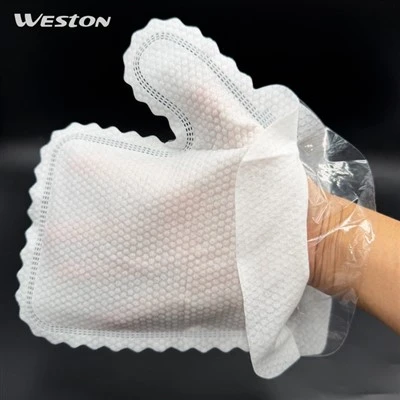
Durability concerns under repeated stress are particularly relevant in medical and sanitary applications. Lyocell's tendency to lose structural integrity when saturated presents challenges for products like wound care dressings. Weston Nonwoven's 100% Lyocell Fiber Wound Cleansing Wipes incorporate a proprietary bonding technique that maintains fiber cohesion even when thoroughly saturated, ensuring the material doesn't fragment during use-a critical consideration for medical applications where fiber residue could compromise wound healing.
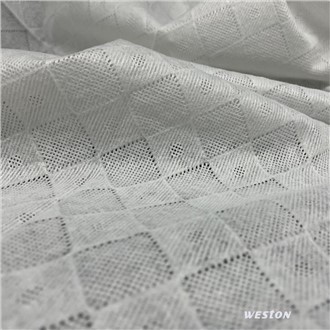
The limitations of pure lyocell become especially pronounced in food service contexts where durability and liquid resistance are paramount. For 100% Lyocell 3D Printed Spunlace For Food Service Application, Weston Nonwoven utilizes three-dimensional patterning technology that creates reinforced zones within the nonwoven matrix. This approach distributes stress more evenly and creates capillary channels that direct moisture away from the surface, addressing lyocell's natural tendency to weaken when saturated while maintaining its compostability advantages.
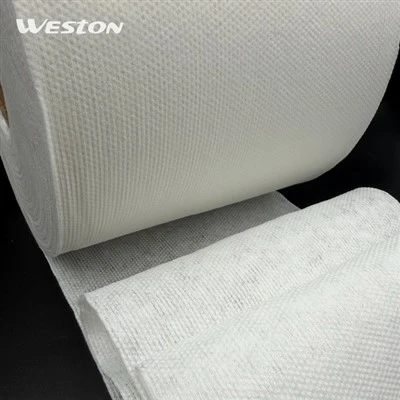
In high-volume manufacturing contexts, lyocell's natural fiber variations can challenge production consistency. The Bamboo Lyocell Nonwoven Jumbo Roll production process incorporates advanced monitoring systems that compensate for lyocell's inherent thickness variations, ensuring uniform sheet formation despite the raw material's natural fluctuations. This technical solution allows for reliable performance in converting operations where consistency is critical.
♻️ The Biodegradability Misconception
The biodegradability claims surrounding lyocell require careful scientific scrutiny, as real-world conditions rarely match ideal laboratory settings. While lyocell does biodegrade more readily than synthetic fibers, the process is significantly influenced by environmental factors that are often unmentioned in sustainability marketing.
Under optimal conditions-specifically in industrial composting facilities with controlled temperature, moisture, and microbial activity-lyocell can decompose in a matter of months. However, in typical landfill environments where most textiles ultimately end up, decomposition occurs much more slowly due to limited oxygen, moisture, and microbial activity. The common practice of co-disposing textiles with other waste further inhibits biodegradation, as the compacted conditions restrict airflow and microbial penetration.
A more significant limitation emerges when lyocell is blended with other fibers-a common practice in textile production. The introduction of even small percentages of synthetic fibers fundamentally alters the biodegradation profile of the resulting fabric. When lyocell is combined with polyester, nylon, or elastane, the blended material cannot fully biodegrade, instead fragmenting into smaller particles while the synthetic components persist in the environment. This reality starkly contrasts with the complete biodegradability claims made for pure lyocell.
The biodegradability of lyocell also presents practical challenges for product longevity. While rapid decomposition is advantageous from an end-of-life perspective, it can limit the usable lifespan of lyocell products in applications requiring extended durability. This paradox forces manufacturers and consumers to balance environmental concerns with practical utility.
Technical Challenges in Production
The manufacturing complexities of lyocell present substantial obstacles that contribute to its premium pricing and limit its widespread adoption compared to more established textiles.
The sophisticated equipment required for the closed-loop solvent system represents a significant capital investment that creates barriers to entry for smaller manufacturers. The precision engineering needed to maintain the chemical stability of the NMMO solvent throughout the production process further increases operational complexity and cost. Unlike the viscose process, which can be performed with more standardized equipment, lyocell manufacturing requires specialized machinery that limits production capacity worldwide.
The production yield of lyocell fibers also presents economic challenges. While the process efficiently recycles solvent, the conversion rate of wood pulp to spinnable fiber remains less efficient than synthetic alternatives. The multi-step process of dissolving wood pulp, filtration, spinning, and solvent recovery creates multiple points where yield can be compromised, particularly when working with alternative feedstocks that may contain higher levels of impurities.
Research into alternative feedstocks for lyocell production, such as industrial hemp stalks, reveals additional technical hurdles. These raw materials often require extensive pretreatment to remove non-cellulosic components like lignin and hemicellulose, which can interfere with the dissolution process. The variable composition of agricultural residues compared to wood pulp introduces consistency challenges that complicate industrial-scale production.
The pursuit of 100% Lyocell Fiber Wound Cleansing Wipes exemplifies how specialized manufacturing can overcome lyocell's natural limitations. Through controlled fiber alignment and bonding techniques, Weston Nonwoven enhances the material's performance in medical applications where consistency and reliability are paramount-demonstrating how technical innovation can address inherent material constraints.
Economic Constraints Beyond Pricing
While lyocell's price premium is frequently noted, the economic constraints extend beyond direct consumer costs to encompass broader market dynamics that affect its accessibility and scalability.
The specialized nature of lyocell manufacturing infrastructure creates significant barriers to market entry and expansion. Unlike cotton or polyester, which benefit from established global production networks and standardized equipment, lyocell production remains concentrated among a limited number of manufacturers worldwide. This constrained production capacity creates inherent limitations on availability, allowing synthetic fibers to maintain their market dominance based on economies of scale alone.
The research and development costs associated with advancing lyocell technology further contribute to its economic challenges. While significant progress has been made in developing lyocell fibers from alternative feedstocks like hemp, bamboo, and even recycled cotton, the commercialization of these innovations requires substantial investment that may not yield returns for years. The competing demands of maintaining production efficiency while pursuing environmental innovation create financial pressures that often result in higher costs being passed along the supply chain.
The technical specifications required for different applications further complicate the economic picture. Products like Bamboo Lyocell Nonwoven Jumbo Roll require consistent quality across large production runs, demanding rigorous quality control measures throughout manufacturing. Similarly, specialized applications such as 100% Lyocell 3D Printed Spunlace For Food Service Application necessitate precise engineering to meet regulatory standards-adding layers of complexity that conventional textiles avoid.
These economic realities ultimately constrain lyocell's potential to displace less sustainable textiles at scale. Without significant technological advancements that reduce production costs and expand manufacturing capacity, lyocell may remain a premium product with limited impact on the broader textile industry's environmental footprint.
The Path Forward: Acknowledging Limitations While Advancing Potential
A scientifically honest assessment of lyocell reveals a material with significant advantages but equally important limitations that require thoughtful consideration. The future development of lyocell must address these challenges through technical innovation and transparent communication.
For manufacturers, acknowledging these limitations represents an opportunity for meaningful improvement rather than a critique of sustainability credentials. Weston Nonwoven's approach to developing specialized lyocell products demonstrates how understanding material constraints can drive innovation rather than hinder it. The creation of application-specific solutions-from Botanical Lyocell Spunlace Nonwoven For Masks to advanced wound care materials-showcases how technical challenges can be transformed into performance advantages.
The integration of lyocell into circular systems represents another promising direction. While current recycling infrastructure for cellulose fibers remains limited, emerging technologies offer potential pathways for improvement. The development of truly closed-loop systems that recover not only production solvents but also post-consumer materials would address several of lyocell's environmental limitations simultaneously.
For those interested in experiencing how advanced manufacturing techniques transform lyocell's properties for specialized applications, Weston Nonwoven provides free samples of their technical nonwovens. These materials demonstrate the potential of engineered lyocell to overcome its natural limitations in professional and industrial contexts. Inquiries can be directed to info@westonmanufacturing.com for those seeking to evaluate lyocell's performance in specific applications.
The scientific community continues to investigate methods for enhancing lyocell's performance while mitigating its drawbacks. Ongoing research explores everything from alternative solvents with lower environmental impact to fiber modifications that enhance durability without compromising biodegradability. This work-conducted with clear-eyed recognition of lyocell's current limitations-represents the most promising path toward realizing the material's full potential as a truly sustainable textile option.