The Scientific Nature of Lyocell Nonwoven Fabric: From Fiber Structure to the Technical Logic of 30gsm Specification
To understand Eco-Friendly 30gsm Lyocell Nonwoven Material, it is essential to first trace the scientific properties of its core component-Lyocell fiber. Lyocell is a type of regenerated cellulose fiber produced via the N-methylmorpholine-N-oxide (NMMO) solvent process: natural wood pulp is dissolved in anhydrous NMMO to form a homogeneous solution, which then undergoes spinning, coagulation, and washing to form fibers. This entire process generates no toxic by-products (such as carbon disulfide in viscose fiber production), laying a solid foundation for environmental friendliness from the source.
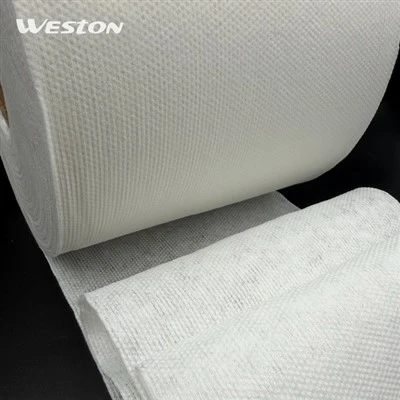
"30gsm" (grams per square meter) is a critical physical parameter of this nonwoven material, representing its weight per unit area. This specification is not randomly determined: from a materials science perspective, 30gsm sits at the "golden balance point" between lightness/thinness and structural strength. When the weight is below 25gsm, the fiber interweaving density is insufficient, leading to poor tear resistance and low load-bearing capacity. When it exceeds 35gsm, the material's air permeability decreases (air permeability can drop from 800 L/m²·s for 30gsm to below 650 L/m²·s), and both costs and processing difficulties increase significantly. The 30gsm design allows it to meet the "thin and breathable" requirements of products like facial masks and wipes while also enabling tight fiber interweaving through the spunlace process (a mainstream nonwoven forming technology) to ensure toughness during use.
Scientific Verification of Biodegradability: Molecular Mechanisms and Environmental Impact Assessment
"Biodegradability" is a core advantage of Lyocell nonwoven fabric, but its scientific validity must be verified from both molecular structure and environmental behavior perspectives. The main component of Lyocell fiber is cellulose, whose molecular chain consists of glucose units linked by β-1,4 glycosidic bonds, with a large number of hydroxyl groups (-OH) distributed on the molecular surface. This structure provides "target sites" for microbial degradation: cellulase in soil or compost environments can specifically break β-1,4 glycosidic bonds, decomposing long-chain cellulose into short-chain oligosaccharides, which are further metabolized into glucose. Finally, microorganisms convert these into CO₂, H₂O, and biomass, with no toxic residues throughout the process.

According to standardized tests (such as the ISO 14855 compostable degradation test), 30gsm Lyocell nonwoven fabric can achieve a biodegradation rate of over 90% within 180 days under composting conditions of 58°C and 60% humidity-far higher than synthetic fibers (e.g., PP nonwoven fabric, which has a biodegradation rate of less than 5% over 10 years under the same conditions). From the perspective of environmental science's Life Cycle Assessment (LCA), the full-cycle carbon footprint of this material-from wood pulp raw materials (sourced from sustainably certified forests) to final degradation-is reduced by approximately 40% compared to traditional PET nonwoven fabric, significantly alleviating environmental burdens.
Performance Balance of 30gsm Lyocell Nonwoven Fabric: In-depth Adaptation of Advantages to Application Scenarios
Beyond biodegradability, the core competitiveness of 30gsm Lyocell nonwoven fabric lies in the synergistic balance of multiple properties, enabling it to adapt to diverse B2B application scenarios. Weston Nonwoven's products serve as typical examples of this adaptability:
(1) Moisture Absorption and Skin Feel: Core Adaptation for Cosmetics and Hygiene Sectors
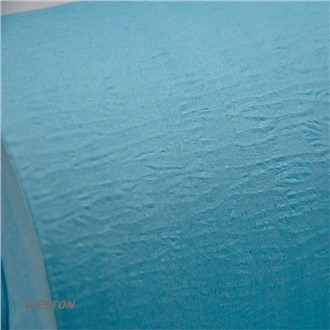
The hydroxyl structure of Lyocell fiber gives it excellent moisture absorption, with a balanced moisture regain rate of up to 13% (higher than cotton fiber's 8%), while maintaining structural stability even after absorbing moisture. This property makes it an ideal base material for cosmetic facial masks-Moisturizing Lyocell Spunlace Mask is formed using the 30gsm spunlace process. It can quickly absorb and lock in mask essence (liquid absorption capacity up to 15 times its own weight) while fitting skin texture through its thin structure, avoiding the heaviness and irritation of traditional cotton masks. Meanwhile, its biodegradable property aligns with the cosmetics industry's trend of "sustainable packaging."
(2) Friction Coefficient and Durability: Technological Breakthroughs in the Cleaning Sector
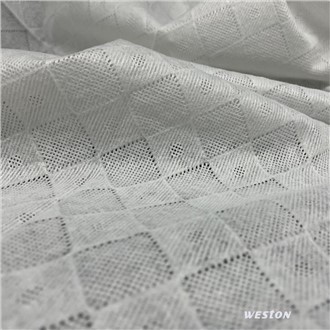
The friction performance of nonwoven fabric directly affects cleaning efficiency. By adjusting the fiber interweaving angle through the spunlace process, 30gsm Lyocell nonwoven fabric can achieve a high dynamic friction coefficient (0.45-0.50). The High-friction Lyocell Spunlace Fabric developed by Weston Nonwoven leverages this property, making it suitable for precision industrial wiping or deep household cleaning. The high friction coefficient ensures effective removal of oil and dust, while the 30gsm lightness prevents scratches on wiped surfaces (such as electronic components and furniture paint). Additionally, its biodegradability solves the pollution problem of "use-and-discard" with traditional cleaning cloths.
(3) Hygienic Safety and Convenience: Meeting Rigid Demands for Disposable Hygiene Products
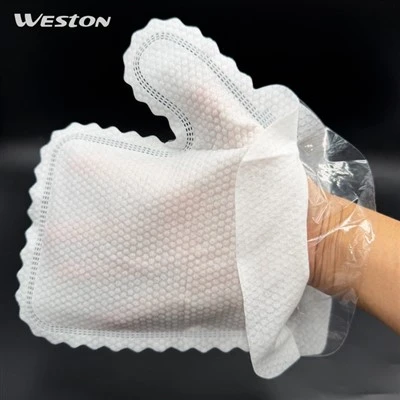
In the hygiene sector, the advantages of Disposable Lyocell Spunlace Wipes For Sanitary Use (30gsm specification) are particularly prominent: Lyocell fiber itself is non-irritating (skin irritation test score is below 0.5, far lower than the national standard limit of 2). The spunlace process also enables high porosity (up to 70%) in the material, facilitating the addition of antibacterial ingredients (e.g., silver ions) without compromising air permeability. The disposable design avoids cross-contamination, and its post-use biodegradability addresses the "white pollution" issue of traditional chemical fiber wipes, making it suitable for B2B scenarios such as medical care, maternal and infant care, and personal care.
Technical Limitations and Industry Challenges: A Rational View of the Development Boundaries of Lyocell Nonwoven Fabric

Despite its significant advantages, 30gsm Lyocell nonwoven fabric still has technical limitations that require objective recognition:
(1) Raw Material Dependence and Resource Constraints
Lyocell fiber is made from wood pulp. Although sustainable forestry (e.g., FSC certification) can achieve circulation, high-quality wood pulp resources are unevenly distributed globally. Moreover, wood pulp production consumes large amounts of water (approximately 20 cubic meters per ton of wood pulp), which may lead to supply pressure in water-scarce regions.
(2) Complexity and Energy Consumption of Production Processes
The spunlace forming process for nonwoven fabric requires high-precision equipment to control fiber interweaving density. Additionally, Lyocell fiber has low wet strength (the ratio of dry strength to wet strength is approximately 1:0.8, lower than polyester's 1:0.95), so humidity and tension must be strictly controlled during production. This results in higher equipment investment and energy consumption compared to traditional chemical fiber nonwoven fabrics (energy consumption per ton of product is approximately 800 kWh, 20% higher than PP nonwoven fabric).
(3) Chemical Resistance and Application Scenario Limitations
The cellulose structure of Lyocell fiber is susceptible to erosion by strong acids and alkalis: in environments with pH < 3 or pH > 11, fiber strength decreases by more than 30%. Therefore, it cannot be used in scenarios such as industrial wiping with strong acids/alkalis or as a carrier for high-concentration medical disinfectants. Coating modification (e.g., laminating with PLA films) is required to expand application boundaries, which increases costs and process complexity.
From Laboratory to Industrialization: Weston Nonwoven's Technical Transformation Practice
In response to the technical characteristics and challenges of Lyocell nonwoven fabric, Weston Nonwoven has achieved industrialization through process optimization: at the raw material end, it uses FSC-certified wood pulp to ensure raw material sustainability; at the production end, it has developed specialized spunlace equipment, increasing solvent recovery rate to over 99.5% and reducing energy consumption and environmental pressure; at the product end, it optimizes the performance of 30gsm materials for different scenarios-for example, adding a skin-friendly coating to Moisturizing Lyocell Spunlace Mask and adjusting fiber thickness (from 1.2dtex to 0.8dtex) for High-friction Lyocell Spunlace Fabric to enhance friction performance, achieving precise alignment between "scientific properties and application needs."
For an in-depth understanding of the technical parameters of Eco-Friendly 30gsm Lyocell Nonwoven Material, or to request free samples of Moisturizing Lyocell Spunlace Mask, High-friction Lyocell Spunlace Fabric, and Disposable Lyocell Spunlace Wipes For Sanitary Use, please contact us via the exclusive B2B channel: info@westonmanufacturing.com, to obtain customized technical solutions and application cases.