The Scientific Foundation of Embossed Spunlace Nonwovens - The Core Premise for Dispensing Performance
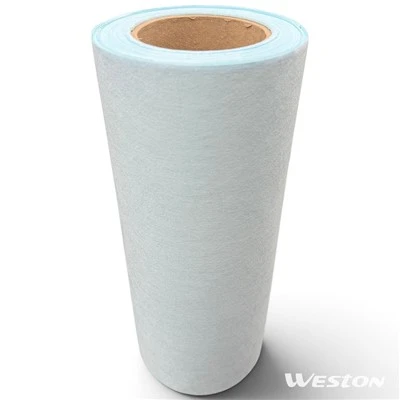
To understand the convenience of Pull-Up Dispensing Embossed Spunlace Nonwoven, it is essential to first grasp the material essence of embossed spunlace nonwovens. Spunlace nonwovens are produced by subjecting fiber webs to high-pressure water jets (with pressures ranging from 30 to 150 MPa), which entangle the fibers to form a three-dimensional network structure. This process endows the material with high flexibility, strong water and oil absorption capabilities, and excellent mechanical strength. The embossing process, in turn, is a critical step in optimizing dispensing performance.
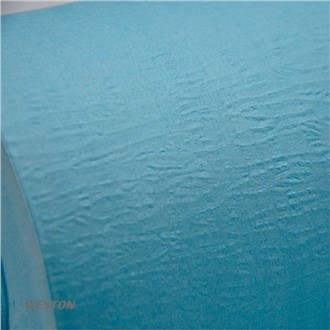
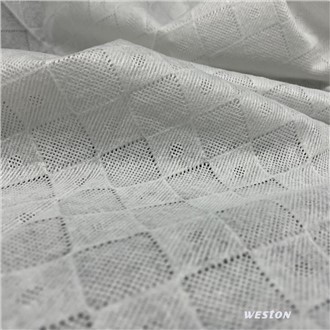
Embossing is not merely a cosmetic modification; it involves using precision embossing rollers (controlled at temperatures of 60–120°C and pressures of 5–15 MPa) to create regular patterns (commonly diamond, hexagonal, or grid-shaped) on the nonwoven surface. Its scientific value lies in altering the local fiber density of the material: the raised parts of the patterns have denser fibers (with a 15–20% increase in density), forming "mechanical support nodes"; the recessed parts have relatively loose fibers, creating "separation gaps." This structural difference establishes a "controllable separation interface" - during dispensing, tension concentrates on the raised nodes to prevent fiber breakage, while the gaps in the recessed areas reduce the adhesion force between adjacent sheets (by 30–40%), laying the material foundation for smooth single-sheet dispensing.
The Technical Logic of Convenient Pull-Up Dispensing - The Essence of Multidisciplinary Collaborative Design
Pull-Up Dispensing is not a simple "packaging upgrade" but a collaborative achievement of materials science, mechanics, tribology, and engineering design. Its core technical logic can be broken down into three dimensions:
Mechanical Regulation: Precisely Controlling "Separation Tension"
The core contradiction in the dispensing process is balancing "easy separation" and "no tearing." When developing Pull-Up Dispensing Embossed Spunlace Nonwoven, Weston used finite element analysis to simulate the stress distribution during dispensing, setting the embossed pattern depth to 0.3–0.5 mm and spacing to 5–8 mm. Under these parameters, the tension required to pull a single sheet (approximately 5–8 N) is just enough to overcome the adhesion force between adjacent materials, without exceeding the load-bearing limit of the embossed nodes (which can withstand 12–15 N), enabling precise "one-sheet-per-pull" control.

Tribological Matching: Optimizing Interaction Between Material and Dispensing Device
Dispensing smoothness also depends on the matching of the friction coefficient between the material and the dispensing device. The embossing process reduces the surface friction coefficient of the nonwoven from 0.4 (for ordinary spunlace nonwovens) to 0.25–0.3, minimizing sliding resistance against the inner wall of the device. Additionally, the guide grooves inside the dispensing device feature 15°–30° arc transitions to avoid snagging on sharp edges. Combined with the material's elastic recovery rate of over 85%, this ensures the material quickly regains its shape after dispensing, without affecting subsequent use.
Environmental Adaptability: Maintaining Performance Stability Under Variable Temperature and Humidity
In practical applications, temperature and humidity can affect material performance. For high-humidity environments (relative humidity > 85%), Weston adds 0.5% antistatic agent to the fibers to prevent dispensing jams caused by electrostatic adsorption. In low-temperature environments (-5°C to 10°C), the fiber ratio is adjusted (e.g., 80% viscose + 20% polyester) to maintain the material's elastic recovery rate above 80%, preventing hardening and breakage and ensuring stable dispensing across different scenarios.
A Balanced Analysis of Pull-Up Dispensing - Scientific Insights from Practical Applications
Advantages: Multidimensional Improvements from Efficiency to Hygiene
Hygiene and Safety Enhancement: The pull-up dispensing design reduces contact between hands and unused materials. Laboratory data shows that its contamination rate is over 60% lower than that of stacked packaging, making it particularly suitable for scenarios with high sterility requirements, such as medical care and cosmetics.
Operational Efficiency Optimization: Single-handed operation enables a dispensing speed of 1 sheet per second, three times faster than traditional stacked packaging. In industrial settings, for example, Efficient Oil Spill Cleanup Nonwoven Cloth equipped with pull-up dispensing can be installed near machine tools; workers can quickly address oil leaks without interrupting operations, increasing production line efficiency by 8–12%.
Space and Cost Savings: Pull-up dispensing packaging occupies 25% less volume than stacked packaging of the same quantity, reducing warehouse space usage and lowering logistics and transportation costs by approximately 15%.
Challenges: Material and Environmental Adaptation Difficulties
Material Basis Weight Limitations: Embossed spunlace nonwovens with a basis weight below 30 g/m² lack sufficient mechanical strength and are prone to tearing during dispensing. Those with a basis weight above 80 g/m² have increased rigidity, leading to jams. This requires targeted adjustments to embossing parameters (e.g., increasing pattern depth to 0.6 mm), which raises process complexity.
Extreme Environment Impact: In environments with humidity > 90% or temperatures < -10°C, material performance tends to degrade. In high-humidity conditions, the material absorbs moisture and softens, increasing adhesion force by 30% and reducing dispensing smoothness. In low-temperature conditions, the material becomes more brittle, raising the risk of tearing by 20%. Additional hydrophobic coatings or antifreeze agents are needed, increasing production costs.
Long-Term Usage Stability: After more than 500 dispensing cycles, the edge wear rate of the material can reach 10–15%, potentially causing "sheet breakage" or "multiple-sheet pulling." Optimizations to the internal buffer structure of the packaging (e.g., adding silicone gaskets) are required to improve long-term reliability.
Scientific Adaptation to Application Scenarios - From Laboratory to Practical Needs
Medical and Healthcare Field
In operating rooms, sterile Pull-Up Dispensing Embossed Spunlace Nonwoven is used as surgical hand towels. The pull-up design prevents contamination after opening, and the embossed structure accelerates water absorption by 20% compared to ordinary nonwovens, meeting the "quick drying and instant access" requirements during surgeries.
Cosmetics and Personal Care Field
In the cosmetics sector, Bulk Lyocell Compressed Mask Pellets require matching facial cleansing towels. The accompanying embossed spunlace nonwoven cleansing towels adopt a pull-up dispensing design, enabling seamless "mask retrieval + face wiping" operations. The concave-convex texture of the embossed patterns also enhances frictional cleaning power, improving the removal efficiency of residual cosmetics by 25%.

Industrial Cleaning Field
In mechanical processing workshops, Efficient Oil Spill Cleanup Nonwoven Cloth with pull-up dispensing is installed near machine tools. Its embossed structure has a porosity of 70% and an oil absorption capacity 15 times its own weight, allowing workers to instantly retrieve and use it to handle leaks, preventing oil contamination of equipment.
Household Scenarios
Embossed spunlace nonwoven wipes for kitchens use a pull-up dispensing design, adapting to single-handed operation (with the other hand holding kitchen utensils). The diamond-shaped embossed patterns enhance oil entrapment, improving the cleaning efficiency of stubborn oil stains by 30% compared to ordinary wipes.
Weston Nonwoven's Technical Practice - Collaborative Optimization of Material and Dispensing
In the research and development of Pull-Up Dispensing Embossed Spunlace Nonwoven, Weston Nonwoven focuses on the core principle of "material-device-scenario collaboration." Through independently developed double-roller embossing equipment, it achieves precise control of embossing depth and spacing (with an error of ±0.05 mm), ensuring the material is compatible with dispensing devices of different designs. For facial cleansing towels matching Bulk Lyocell Compressed Mask Pellets, a high-flexibility fiber ratio is used to prevent tearing during dispensing. For Efficient Oil Spill Cleanup Nonwoven Cloth, hexagonal embossed patterns are adopted to enhance structural stability after oil absorption while maintaining smooth dispensing.
For more technical details about Pull-Up Dispensing Embossed Spunlace Nonwoven, Bulk Lyocell Compressed Mask Pellets, and Efficient Oil Spill Cleanup Nonwoven Cloth, or to request free samples, please contact: info@westonmanufacturing.com.