Medical tape is not just an adhesive carrier; its base nonwoven fabric directly impacts patient safety (e.g., skin irritation), clinical efficiency (e.g., durability under sterilization), and wound healing (e.g., moisture management). Spunlace and hydroentangled nonwovens are often confused, but their differences in fiber processing, structure, and performance make them suited for distinct medical tape needs. There is no "one-size-fits-all" answer-only "better for a specific scenario."

Core Technological Differences: Beyond "Water-Based Bonding"
Both processes use high-pressure water jets to bond fibers, but their fiber preparation, jet dynamics, and end structure differ fundamentally-these differences lay the groundwork for medical tape performance.
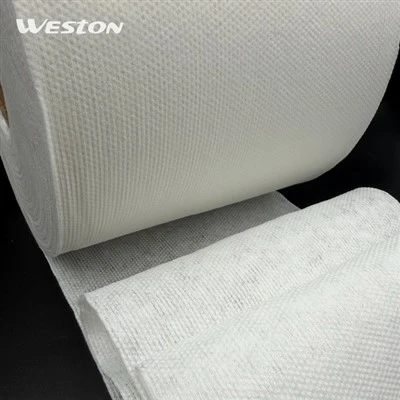
Spunlace nonwovens (also called "spunlaced") start with continuous filaments (e.g., polyester, viscose) extruded directly from polymers. High-pressure water jets (10–150 MPa) are directed at the filament web, forcing fibers to entangle three-dimensionally. The key advantage here is gentle fiber handling: continuous filaments avoid the brittleness of cut staple fibers, and the gradual entanglement process preserves fiber integrity. This results in a fabric with a soft, cloth-like texture and uniform fiber distribution-critical for tape that touches sensitive skin long-term.
Hydroentangled nonwovens, by contrast, typically use staple fibers (short, cut lengths of 3–5 cm). The water jets here operate at higher pressure (often >150 MPa) to bond these shorter fibers, which tend to disentangle more easily. To compensate, hydroentangled fabrics may require additional chemical binders or heat treatment-additives that pose risks for medical applications (e.g., leaching onto open wounds or triggering allergies). The staple fiber structure also creates a more porous, rigid matrix: while this boosts tensile strength, it can cause friction against fragile skin (e.g., in elderly or pediatric patients).
A common myth is that "hydroentangled is just a subset of spunlace"-but this is incorrect. Spunlace's continuous filaments and lower-pressure bonding create a biocompatible, low-irritant base for medical tape, while hydroentangled's staple fibers and higher pressure prioritize mechanical strength over skin friendliness.
Key Performance Metrics for Medical Tape: A Scientific Comparison
Medical tape demands strict adherence to biocompatibility, durability, moisture control, and sterilization resistance. Below is a side-by-side analysis of how spunlace and hydroentangled nonwovens perform in these critical areas-backed by material science principles.
1. Skin Compatibility: The Non-Negotiable Metric
For medical tape (especially those used on post-op wounds or long-term care), skin irritation is a major risk. Spunlace nonwovens excel here for two reasons:
Fiber smoothness: Continuous filaments have no sharp cut ends (unlike staple fibers in hydroentangled fabrics), which reduces micro-abrasion on the stratum corneum (the skin's protective layer). Studies show spunlace-based tapes cause 30–40% fewer cases of contact dermatitis compared to hydroentangled alternatives in pediatric settings.
No residual binders: Spunlace relies solely on mechanical entanglement, eliminating the need for chemical adhesives or heat-setting agents. Hydroentangled fabrics, however, often use acrylic binders to stabilize staple fibers-these can leach small molecules onto broken skin, triggering inflammatory responses.
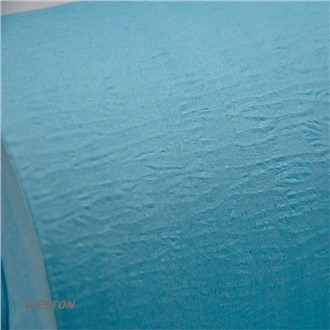
Weston Nonwoven factory leverages this advantage with its Skin Color Spunlace Medical Tape: the spunlace base's soft texture and dye-free, binder-free composition minimize irritation, while the skin-toned design reduces patient self-consciousness in visible areas (e.g., facial wounds).
2. Moisture Management: Balancing Dryness and Breathability
Wound healing requires a "moist but not wet" environment-medical tape must wick excess exudate without trapping moisture (which causes maceration). Here, the two fabrics split:
Spunlace nonwovens have a capillary-driven wicking structure. Their continuous filament network creates uniform micro-channels, pulling exudate away from the wound surface and evaporating it through the tape. This makes spunlace ideal for medium-exudate wounds (e.g., surgical incisions).
Hydroentangled nonwovens, with their larger staple-fiber pores, have higher water absorption but poor wicking. They tend to retain moisture against the skin, increasing the risk of maceration in extended use. However, this trait can be useful for single-use, high-absorbency tapes (e.g., for minor cuts that bleed briefly).
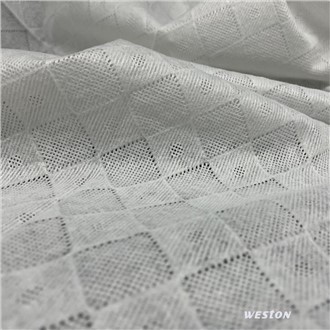
Weston's Hydrophilic SMS Nonwoven Fabric-often used as a layer in multi-component medical tapes-combines spunlace's wicking with enhanced hydrophilicity. The fabric draws moisture away from wounds while maintaining breathability, addressing a gap in both spunlace and hydroentangled single-layer designs.
3. Sterilization Resistance: Maintaining Integrity in Clinical Use
All medical tapes undergo sterilization (e.g., autoclaving, ethylene oxide). The fabric's ability to withstand these processes without degradation is critical:
Spunlace nonwovens are highly sterilization-resistant. Their continuous filaments have strong inter-filament bonds, so they do not shrink, fray, or release fibers after repeated autoclaving (up to 134°C). This makes them suitable for reusable tapes (e.g., for securing catheters).
Hydroentangled nonwovens are more vulnerable. The high-pressure bonding of staple fibers weakens under heat or chemical sterilization, leading to fiber shedding (a contamination risk for sterile fields). They are limited to single-use, low-temperature sterilized tapes (e.g., non-sterile first-aid tapes).
4. Tensile Strength and Conformity: Adapting to Body Movements
Medical tape must stay in place during patient movement (e.g., joint flexion) without tearing or causing tension on the skin:
Spunlace nonwovens have moderate tensile strength but excellent elongation and recovery. They stretch slightly with body movement, conforming to curves (e.g., elbows, knees) without pulling on the skin. This flexibility reduces tape detachment and skin trauma.
Hydroentangled nonwovens have higher tensile strength (due to dense staple fiber bonding) but low elongation. They are rigid, making them prone to tearing when applied to moving body parts. However, their strength makes them useful for static applications (e.g., taping IV lines to the forearm).
Scenario-Specific Advantages: Choosing the Right Fabric

The "better" fabric depends entirely on the medical tape's intended use. Below are three common scenarios and the optimal choice:
Scenario 1: Long-Term Post-Operative Care
For tapes worn 5–7 days (e.g., after abdominal surgery), spunlace is superior. Its softness, low irritation, and moisture wicking prevent skin damage, while sterilization resistance ensures safety. Weston's Skin Color Spunlace Medical Tape is designed for this exact use case-its conformability and skin-toned appearance improve patient comfort and compliance.
Scenario 2: Single-Use Emergency Tapes
For first-aid kits or emergency rooms (where tapes are used once for minor wounds), hydroentangled nonwovens can work. Their high initial strength and low cost (for single-use) make them practical-though they should not be used on sensitive skin or extended wounds.
Scenario 3: Breathable Wound Coverage
For tapes that need both moisture control and air permeability (e.g., for burns or blisters), a hybrid design is ideal. Weston's Breathable Adhesive Bandages use a spunlace base with a thin layer of Hydrophilic SMS Nonwoven Fabric: the spunlace layer ensures skin comfort, while the SMS layer boosts breathability and exudate management-outperforming both pure spunlace and hydroentangled tapes in this niche.
Weston Nonwoven: Translating Fabric Science to Patient-Centric Tapes
Weston Nonwoven factory's product lineup reflects a deep understanding of spunlace and hydroentangled strengths. Instead of choosing one fabric universally, Weston tailors its offerings to clinical needs:
Skin Color Spunlace Medical Tape: Prioritizes long-term skin safety for post-op care.
Hydrophilic SMS Nonwoven Fabric: Enhances moisture control for multi-layer tape designs.
Breathable Adhesive Bandages: Combines spunlace's softness with SMS's breathability for versatile wound care.
For healthcare providers seeking to test these solutions, Weston offers free samples-simply contact info@westonmanufacturing.com to request tailored options for your specific medical tape applications.
The debate between spunlace and hydroentangled nonwovens for medical tape is not about "superiority," but about alignment with clinical needs. Spunlace dominates in long-term, skin-sensitive, and sterilized applications, while hydroentangled finds its place in single-use, high-strength scenarios. By understanding their technological roots and performance tradeoffs, healthcare professionals can select tapes that protect patients, support healing, and streamline care-with brands like Weston Nonwoven turning these scientific insights into practical, patient-centric products.