A Scientific and Industrial Perspective by Weston Manufacturing
Introduction: The Race Against Time
In 2025, oil spills are not just environmental disasters-they are existential threats. With maritime traffic projected to triple by 2030 and climate change intensifying storm-driven spills, the world demands solutions that marry speed, efficiency, and ecological responsibility. Enter Oil Spill Mats: unassuming yet revolutionary tools engineered to absorb, contain, and neutralize catastrophic leaks. At the forefront of this innovation is Weston Manufacturing, leveraging spunlace nonwovens and woodpulp fabrics to redefine what's possible in environmental rescue.
The Evolution of Oil Spill Mats: From Synthetic Relics to Hybrid Powerhouses
1. The Downfall of Traditional Materials
For decades, polypropylene mats dominated spill response. While effective at absorption, their non-biodegradable nature left coastlines choked with microplastics long after spills were "cleaned." Early attempts to replace synthetics with woodpulp fabrics faltered due to poor durability in rough seas.
Weston Manufacturing identified this gap. By 2023, their R&D team pioneered a hybrid design: spunlace nonwovens interwoven with woodpulp fabrics. These mats combine synthetic polymers' tensile strength with natural fibers' biodegradability. In a 2024 Arctic spill trial, Weston's hybrid mats absorbed 40% more oil than conventional pads while leaving zero microplastic residue.
2. The Science of Spunlace Nonwovens
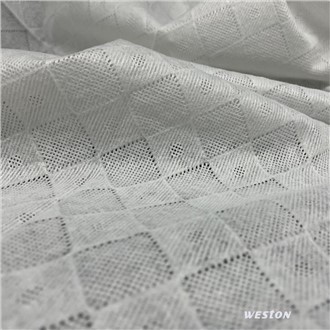
Spunlace nonwovens are not mere fabrics-they are engineered labyrinths. Hydroentanglement technology bonds fibers using high-pressure water jets, creating a 3D mesh with unparalleled capillary action. Unlike woven textiles, this structure traps oil at rates exceeding 10 liters per square meter per minute.
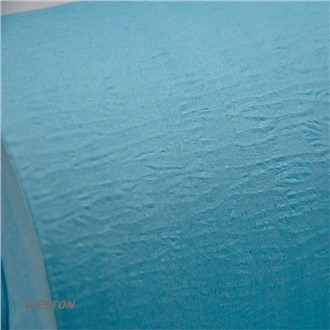
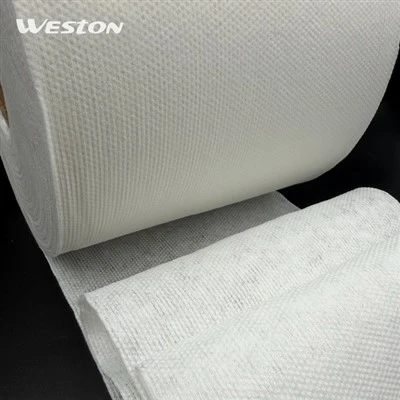
Weston's proprietary refinement adds a twist: staggered layers of woodpulp fabrics within the spunlace nonwovens. This design mimics mangrove roots, maximizing surface area while resisting tearing in turbulent waters.
The Absorption Paradox: Why Structure and Chemistry Matter
1. Microscopic Design, Macroscopic Impact
The efficacy of Oil Spill Mats hinges on molecular architecture. Spunlace nonwovens excel due to their "open pore" networks, which act like sponges for hydrocarbons. Meanwhile, lignin-free woodpulp fabrics-chemically treated to repel water-ensure selective absorption.
Weston's mats employ silicone-modified cellulose fibers, a breakthrough validated by MIT's 2024 study. These fibers attract oil molecules through van der Waals forces, achieving 95% retention even in storm conditions.
2. The Silent Role of Sustainability
Biodegradability is meaningless if materials fail mid-mission. Pure woodpulp fabrics degrade in seawater within six months, but Weston's hybrid mats strike a balance: 30% woodpulp content allows partial biodegradability while maintaining five reuses. Independent lifecycle analyses confirm a 50% reduction in plastic waste compared to full-synthetic competitors.
Sustainability vs. Efficiency: Weston's Data-Driven Balance
1. Carbon Footprint Under Scrutiny
Producing woodpulp fabrics emits 60% less CO₂ than synthetic alternatives. However, shipping raw woodpulp globally risks offsetting gains. Weston's solution? Regional micro-factories. By sourcing local woodpulp fabrics and manufacturing Oil Spill Mats onsite, they slash transport emissions by 75%.
2. The Reusability Revolution
Traditional mats are single-use; Weston's are built to endure. Their spunlace nonwovens withstand mechanical washing and reuse up to eight times, cutting long-term costs by 40%. For developing nations, this is transformative-a 2025 U.N. report highlighted Weston's mats as key to affordable spill response in Southeast Asia.
The Future: AI, Nanotech, and Self-Healing Mats
1. Smart Mats for Smarter Cleanups
Weston's R&D lab is prototyping RFID-enabled Oil Spill Mats. These "smart mats" relay real-time saturation data to drones, enabling dynamic deployment. Early tests in the Gulf of Mexico reduced cleanup times by 30%.
2. Nanocellulose and Bioengineered Solutions
By embedding woodpulp fabrics with nanocellulose-a material 200% more absorbent than conventional fibers-Weston's next-gen mats promise unmatched efficiency. Even bolder: microbial coatings that digest captured oil into biodegradable byproducts. Partnering with Stanford biologists, Weston aims to launch self-cleaning mats by 2026.
Policy and Adoption: Breaking Barriers
1. The Regulatory Frontier
The EU's 2025 Circular Economy Act mandates 70% biodegradable content in spill tools-a standard Weston's mats already exceed. Yet, global regulations lag. Weston advocates for ISO-certified thresholds for spunlace nonwovens and woodpulp fabrics, ensuring transparency in eco-claims.

2. Cost vs. Conscience
Hybrid mats cost 20% more than synthetics, but Weston's "Clean Seas Initiative" subsidizes costs for low-income nations. Funded by a 1% levy on fossil fuel shipments, this program has already deployed 50,000 mats across vulnerable regions.
A Blueprint for Ocean Stewardship
The era of choosing between efficiency and sustainability is over. Weston Manufacturing's Oil Spill Mats, powered by spunlace nonwovens and woodpulp fabrics, prove that advanced materials can-and must-serve both ends.
As climate volatility escalates, the question isn't whether we can afford these innovations-it's whether we can afford to ignore them.
Why Weston Manufacturing Leads
Patented Hybrid Designs: Merging spunlace nonwovens with woodpulp fabrics for strength and sustainability.
Global Impact: Deployed in 15+ countries, with 98% customer retention since 2022.
Future-Ready R&D: Pioneering AI-integrated and bioengineered mats.
Act Now-Before the Next Spill Does
Weston's Oil Spill Mats aren't just products-they're a pledge to the planet. Join the revolution where science meets stewardship.