Defining the New Standard in Technical Substrates
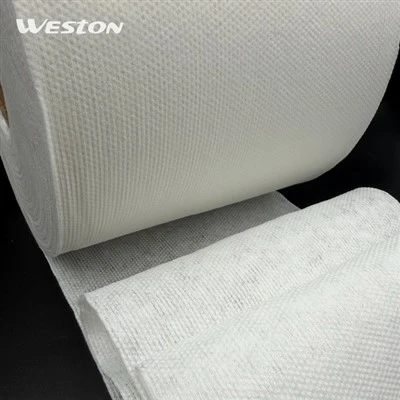
For procurement leaders in filtration, hygiene, industrial maintenance, and controlled manufacturing, substrate selection is no longer a commodity task-it is a strategic lever. Material performance cascades into throughput, defect rate, warranty exposure, and even occupational safety. Within this context, Long Fiber Nonwoven Fabric Rolls have emerged as a structurally distinct platform material, blending the continuity of extended fiber morphology with the process flexibility of nonwovens. Unlike short-staple matrices that trade strength for softness, long-fiber architectures enable both: fast liquid transport with low linting, high tensile integrity at low basis weights, and dimensional stability under mechanical and wet stress.
The objective of this article is to build a technically grounded framework for evaluating long-fiber nonwovens in real-world, high-spec applications. We will dissect fiber morphology, web engineering, process parameters, and end-use stressors; map pros and cons with specificity; and position selection criteria that can be audited by quality teams. Along the way, we will illustrate how patterns and chemistries-such as hydroentanglement in a wave topology-translate into field performance, and how specialized SKUs like Multipurpose Wave Pattern Spunlace Fabric Cloths, Heavy-Duty Degreasing Wipes, and Durable Spunlace Nonwoven For Pool And Spa Filters fit into a technical buying roadmap.
What "Long Fiber" Actually Changes in the Web
"Long fiber" is not a marketing adjective; it is a design decision with measurable consequences.
Load distribution and crack propagation: Extended fiber length increases inter-fiber contact points without over-relying on binders. When hydroentangled, the web forms a self-locking network. The result is higher tensile and tear strength per gsm, and slower crack propagation under cyclic bending.
Lint control and surface integrity: Fewer cut ends mean fewer loose particulates. In ISO-classified or paint-critical environments, this translates to lower defect probability, cleaner optics, and reduced downstream filtration load.
Fluid kinetics: Longer fibers create tortuous yet continuous capillary pathways. Capillary pressure remains high, while flow channels remain open under compression, improving pick-up and release cycles.
Dimensional stability in wet use: Extended fiber anchoring resists z-axis delamination. Wet modulus is retained, reducing edge fray and sloughing during scrubbing or filtration pulses.
These are first-order effects observable in tensile curves, Taber abrasion, particle shedding counts, and wet expansion ratios. For buyers, the significance is simple: stronger at equal weight, cleaner at equal softness.
Process Architecture: Why Spunlace Matters
Hydroentanglement (spunlace) is the dominant method for premium long-fiber webs because it forges mechanical bonds without thermal hand penalties or excessive binder residues. High-energy waterjets drive fibers into 3D entanglement, locking the web while preserving porosity.
Jet energy and manifold sequencing: Higher energy improves entanglement depth but can over-consolidate if unmanaged, reducing absorbency. Tiered sequencing-low to set, high to lock, low to finish-balances handfeel with durability.
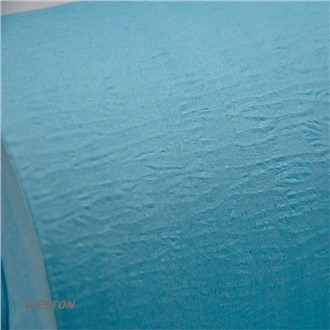
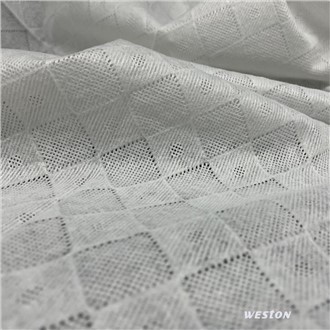
Patterning and topology: A wave topology dictates load distribution. Multipurpose Wave Pattern Spunlace Fabric Cloths leverage distributed sinusoidal ribs to increase effective surface area and shear traction while maintaining compressibility. The result is better debris capture with reduced surface scratching.
Fiber blends: Viscose/polyester blends remain common for wet strength and absorbency. Polypropylene brings chemical resistance and buoyancy for filtration; specialty PET or bi-component fibers enable thermal post-consolidation without losing drape.
For procurement, process transparency matters: consistent manifold pressures and filtration cleanliness during production directly influence lint reliability and pore size control lot-to-lot.

Engineering Properties That Matter to Professionals
Tensile and tear strength: Long-fiber spunlace typically demonstrates superior MD/CD balance. In wipes, this prevents "necking" and corner failures. In filters, it resists pleat collapse and media rupture under differential pressure spikes.
Low linting: Key for electronics, coating lines, and sterile fill finishes. Particle counts stay low because consolidation is mechanical, not brittle. This is the differentiator against cheap short-staple thermo-bond webs.
Breathability vs. barrier: Air permeability can be tuned via basis weight, fiber denier, and pattern density. The wave pattern maintains a breathable plateau while controlling particle migration by tortuosity rather than film lamination.
Chemical resilience: Selection of polymer families (PET, PP, cellulose derivatives) and post-finishes determines compatibility with solvents, oils, oxidizers, and surfactants. Heavy-Duty Degreasing Wipes often pair long-fiber spunlace with oil-wet finishes to increase sorption of non-polar soils.
Hygienic stability: Microbiological risk is mitigated by rapid drying, low nutrient profile, and optional antimicrobial finishes when compliant. Long-fiber structures dry faster due to open channels, reducing microbial colonization between shifts.
Where Long-Fiber Architecture Outperforms-and Where It Doesn't
Strengths:
Mechanical durability at lower gsm reduces total material use without sacrificing safety.
Cleanliness: inherently low lint and fiber sloughing, critical for precision assemblies and paint booths.
Wet-state integrity: resists deformation and pilling in saturated or recirculating systems.
Process versatility: accepts embossing, calendering, printing, and chemical finishing without catastrophic property loss.
Breathable comfort: in hygiene or apparel-adjacent uses, supports thermal comfort while providing functional protection.
Limitations:
Cost of energy-intensive hydroentanglement may raise unit costs compared to simple airlaid or thermal-bond webs.
Over-consolidation risk: aggressive jetting or tight calendering can diminish bulk and absorbency if not tuned.
Not a substitute for barrier films in high-pressure liquid strike-through scenarios unless laminated.
Fiber selection trade-offs: cellulosic-heavy blends swell in high-alkali or prolonged immersion; pure synthetic blends may need surfactant finishing for adequate wettability.
Mitigations:
Specify target tensile and absorbency windows, not just gsm, to prevent over-consolidation.
Use composite builds: long-fiber spunlace as a face or scrim over meltblown for barrier-critical tasks.
Match polymer chemistry to the solvent map of your process line.
Advanced Patterning: The Role of the Wave Topology
Why does the wave pattern matter? It is more than aesthetics. The sinusoidal or quasi-sinusoidal emboss controls:
Shear interface: alternating ridges increase friction without harsh edges, enhancing soil pick-up in Heavy-Duty Degreasing Wipes while preserving substrate safety.
Fluid reservoirs: micro-cavities retain cleaning solution and re-wet the contact point on demand, improving pass efficiency.
Pore distribution: patterned densification creates a gradient of pore sizes, enabling both coarse capture and fine retention without elevating pressure drop excessively.
In practice, Multipurpose Wave Pattern Spunlace Fabric Cloths deliver consistent wipe-down results across metals, polymers, and coated surfaces because the contact geometry adapts: the ridges float over peaks while valleys collect debris, reducing re-deposition.
Filtration Use Case: Pools and Spas
Filtration in recreational water is deceptively stringent. Temperature fluctuations, biocides, sunscreen oils, calcium scaling, and intermittent flow impose a complex stress profile. Durable Spunlace Nonwoven For Pool And Spa Filters addresses three core challenges:
Mechanical fatigue: Pleated elements cycle between static and dynamic pressure. Long-fiber entanglement resists pleat tip cracking and maintains fold memory longer than short-staple arrays.
Fouling balance: Oils and fine particulates require bimodal porosity. Long-fiber mats can be engineered with mixed denier and controlled calendering to create depth loading-trapping fines within the matrix while keeping surface cleanable.
Chemical exposure: Chlorinated and brominated environments demand oxidation-resistant fibers. PET and PP blends with stabilized finishes maintain tensile properties over more cycles.
Performance metrics to watch:
Initial pressure drop vs. flow rate: should remain within pump efficiency bands.
Dust holding or contaminant capacity: quantified through surrogate tests (e.g., ISO fine test dust analogs or oil uptake).
Cleaning recoverability: pressure rinse or backwash should restore a high fraction of original permeability.
Industrial Maintenance: Degreasing Without Compromise
In machining, MRO, and fabrication, wiping tasks are not neutral-they alter surface energy and adhesion. Heavy-Duty Degreasing Wipes constructed from long-fiber spunlace excel because:
Solvent compatibility: Proper fiber selection resists swelling and shedding in hydrocarbons, esters, and common shop solvents.
Particle control: Low lint prevents re-contamination that can inhibit coatings or thread-lockers.
High drag and edge stability: Reinforced edges resist roll-up and tearing on burrs, maintaining wipe area and operator efficiency.
A critical practice is pairing the wipe chemistry with the soil load: non-polar oils demand oleophilic finishes; mixed soils may benefit from amphiphilic surfactants loaded into the wipe. Long-fiber matrices retain these chemistries evenly, releasing on contact rather than pooling.
Hygiene, Healthcare, and Controlled Environments

Long-fiber spunlace is inherently skin-friendly when engineered at appropriate basis weights and finishes. Breathability and softness reduce skin maceration in prolonged contact scenarios, while low linting decreases airborne contamination. When used in cleanrooms or assembly lines:
Electrostatic considerations: Fiber choice and antistatic finishes mitigate charge accumulation.
Residue control: Mechanical bonding limits extractables compared to heavily bound webs.
Repeatability: Roll-to-roll uniformity in basis weight and porosity ensures predictable wipe-down validation across shifts.
Sustainability Without Handwaving
Sustainability must be quantitative:
Material efficiency: Higher strength at lower gsm reduces kilograms consumed per functional unit (wipe, filter cycle, or installed square meter).
Durability: Reusable cycles cut waste generation, especially for maintenance wipes or filter media with backwash capability.
Fiber sourcing: Viscose from certified sustainable forestry and recycled PET options can be integrated without crippling performance, provided process parameters adjust for fiber variability.
End-of-life: Monomaterial configurations ease recycling; where not feasible, design for mass reduction and safer incineration profiles.
Long-fiber architecture contributes by enabling thinner builds that still pass performance thresholds, reducing total throughput of materials.
Data-Driven Buying: What to Specify
Move beyond gsm and color. Write specifications that predict field behavior:
Mechanical: MD/CD tensile, Elmendorf tear, SAP-free burst values in dry and wet states.
Surface: Particle shedding counts under standardized rubbing and solvent exposure.
Fluid: Absorbency rate (sorptivity), capacity by fluid class (water, oil, glycol), drip retention.
Porosity: Air permeability and mean flow pore size; for filtration, pressure-drop curves before/after loading.
Durability: Abrasion cycles to defined endpoint; delamination or pill formation thresholds.
Chemical map: Compatibility grid against your solvent inventory, pH range, oxidation exposure.
Process fitness: Roll OD/ID tolerances, splice frequency and integrity, edge cut quality, and rewind tension uniformity.
These KPIs align procurement with production and quality assurance, creating a common language for acceptance criteria.
Risk Management and Quality Control
Incoming inspection: Randomized tensile pulls across the roll width detect edge vs. center variation. Cross-check basis weight by gravimetric sampling to verify calendering consistency.
Batch traceability: Lot-level mapping of manifold pressures and water purity correlates with lint anomalies; insist on logged process data availability.
Storage and handling: Control humidity to prevent dimensional drift in cellulosic blends; keep rolls in protective wrap to limit particulate deposition.
Process integration: Verify compatibility with your converting equipment-die-cutting, perforation tear profiles, and ultrasonic bonding behavior-before full release.
Translating Features Into Total Cost of Ownership
Even without discussing unit prices, total cost is reducible via:
Reduced consumption: Higher durability lowers wipes per task; stronger filters extend service intervals.
Less downtime: Webs that do not tear or shed reduce rework and line stoppages.
Higher yield: Clean, consistent substrates improve first-pass quality in painting, coating, and assembly.
Safer operations: Low-lint, solvent-compatible wipes reduce ignition and inhalation hazards; stable filters reduce pump strain.
Quantify these with your plant's KPIs-mean time between changeouts, defect rates, and rework hours-to build an internal ROI case.
Application Mapping: Three Anchor Families
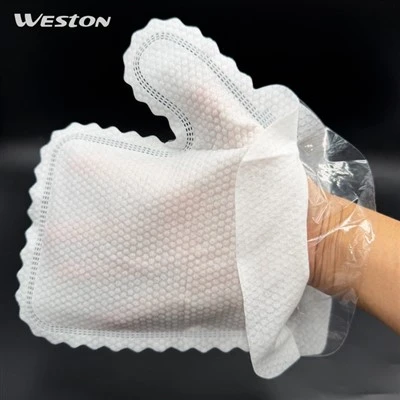
Multipurpose Wave Pattern Spunlace Fabric Cloths: Best for cross-functional facilities needing one SKU for surface prep, equipment wipe-down, and spill response. The wave topology bridges gentle and aggressive tasks with controlled friction and reservoir behavior.
Heavy-Duty Degreasing Wipes: Targeted at machining, automotive, and industrial assembly lines with significant oil and adhesive residues. Long-fiber strength resists edge tear on sharp features; optimized finishes elevate oil uptake.
Durable Spunlace Nonwoven For Pool And Spa Filters: Designed for pleated cartridges and pad filters exposed to oxidizers and intermittent flow. Long-fiber depth structures support contaminant loading with recoverability after cleaning cycles.
Each family benefits from the same architectural DNA-long fibers, hydroentanglement precision-but the tuning is different: pattern density, fiber chemistry, and finishing.
Field Validation and Piloting
Before committing plant-wide:
Run side-by-side trials with controlled task lists and identical chemistries.
Capture metrics: number of wipes per task, time per task, post-clean particle counts, and surface energy (dyne levels) if coatings follow.
For filters, track pressure differential rise rate, backwash recovery, and visual fouling modes.
Document operator feedback: perceived drag, handfeel, edge stability-human factors often predict real-world consumption.
Statistical analysis (e.g., paired t-tests on consumption or ΔP slope) converts anecdote into decision equity.
Why Consistency Beats Occasional Peak Performance
In operations, the worst-case shift defines your quality floor. Long-fiber spunlace excels not because it hits a single high number on a spec sheet, but because it sustains acceptable numbers across environmental swings, fluid variability, and operator behavior. The wave-patterned surface evens out contact variability, and the entangled network resists catastrophic failure modes. This stability is what procurement should reward-predictability reduces hidden costs.
Weston's Role in Practical Deployment

Weston's approach to Long Fiber Nonwoven Fabric Rolls centers on process control and application tuning:
Stable hydroentanglement windows: Manifold energy profiles are locked by recipe and verified per lot, supporting lint and tensile repeatability.
Pattern engineering: The wave topology is calibrated for shear traction without surface scratching, enabling the reliability users report in Multipurpose Wave Pattern Spunlace Fabric Cloths.
Chemistry alignment: Finishing options are matched to your solvent and soil map, forming the basis of Heavy-Duty Degreasing Wipes that absorb and release predictably.
Filtration readiness: Media aimed at recreational water are engineered as Durable Spunlace Nonwoven For Pool And Spa Filters, balancing porosity, strength, and oxidation tolerance for prolonged service.
For buyers, what matters is not catalog breadth but execution discipline: roll geometry, splice integrity, basis weight uniformity, and cleanroom-grade packaging when specified.
Frequently Overlooked Details That Affect Performance
Edge cut quality: Micro-fibrillation along poor cuts seeds linting. Demand precision slitters and verify under magnification.
Splice identification: Barcode and contrasting flags reduce line stoppages-ensure splices meet your converting tension thresholds.
Water purity during entanglement: High solids introduce embedded contaminants; insist on controlled filtration and regular maintenance records.
Finish durability: Confirm that surfactants or antistatic agents survive your process steps without leaching that could compromise downstream coatings or bonding.
Decision Framework for Professional Buyers
Define the operational target: durability, cleanliness, absorbency, or filtration life-rank them.
Translate priorities into measurable thresholds: tensile, lint counts, pressure-drop curves, absorbency kinetics.
Choose architecture: long-fiber spunlace for balanced strength-cleanliness; pattern density for application-specific traction.
Align chemistry: polymer base and finishes with your solvent and contaminant profile.
Pilot with instrumentation: measure, don't guess.
Lock supplier process windows: require documented process control and lot traceability.
Monitor in production: periodic audits maintain the standard you validated.
The Strategic Advantage
Adopting Long Fiber Nonwoven Fabric Rolls is a strategic choice that pays off in fewer changeovers, cleaner assemblies, more reliable filtration cycles, and safer, more consistent operations. The engineering rationale is clear: longer fibers create stronger, cleaner, more stable networks; hydroentanglement secures these networks without compromising porosity; and wave patterning refines surface mechanics for real work on real equipment.
When these principles are translated into tailored products-like Multipurpose Wave Pattern Spunlace Fabric Cloths, Heavy-Duty Degreasing Wipes, and Durable Spunlace Nonwoven For Pool And Spa Filters-the result is not just incremental improvement, but a change in how plants plan materials, schedule maintenance, and manage quality risk.
For professional buyers, the mandate is straightforward: specify what matters, validate rigorously, and partner with a supplier that executes consistently. Weston is structured to support that mandate with disciplined process control and application-centric engineering-so that each roll you receive performs like the one that earned the business.
For a free sample, contact us at info@westonmanufacturing.com.