How Does Oil Cleaning Work?
The chemistry and fiber engineering behind effective oil-only absorbents
A hydraulic line lets go on a factory floor. By the time a technician reaches it, the oil has already crept into the concrete's pores, turned a walkway into a hazard, and started working its way toward the nearest drain. Grab the wrong material - a cotton rag, a push broom, a bucket of soapy water - and the spill doesn't disappear so much as spread. Grab the right one, and the oil lifts cleanly off the surface in seconds, with nothing added to the mess.
That difference isn't about effort. It comes down to fiber chemistry and structure. This article looks at what's actually happening when an oil-only absorbent does its job, why polypropylene (PP) nonwoven material behaves the way it does, and how to match the right product format to the spill - using the verified technical data behind Weston Nonwoven's Industrial Oil Absorbing Sheets (TDS-OAB016) as the working example throughout.
Why Oil Doesn't Clean Up Like Water
Water spreads, evaporates, and rinses away with more water. Oil does none of those easily. It spreads into thin, persistent sheens across hard surfaces and open water alike, clings to texture and porosity rather than sitting on top of it, and barely evaporates at room temperature. A cloth or squeegee can relocate oil, but relocating a hazard isn't the same as removing it.
Genuine oil cleanup asks a material to do three things at once: pull oil molecules toward itself, ignore the water molecules sitting right next to them, and hold onto that oil once captured - even under the mechanical stress of being walked on, dragged, wrung out, or left floating in moving water. Whether a material can manage all three comes down to two properties: how strongly its fiber surface attracts oil versus water (its surface chemistry), and how much internal space its fiber network provides to store oil once it's pulled in (its structure).
The Real Mechanism: How Polypropylene Fiber Grabs Oil and Rejects Water
Oleophilic and hydrophobic - and why the combination matters
Polypropylene is a nonpolar hydrocarbon polymer. Oil - whether mineral, synthetic, or petroleum-based - is also nonpolar. Water is polar. Molecules with matching polarity attract each other far more strongly than molecules with mismatched polarity, so a PP fiber surface bonds readily to oil molecules through weak intermolecular (van der Waals) forces while largely ignoring the water sitting alongside it. That's the basis for "oleophilic" (oil-attracting) and "hydrophobic" (water-repelling) behavior, and it's why an oil-only absorbent dropped into a puddle that's part oil, part water comes out having picked up only the oil.

What the technical data sheet confirms
This isn't a marketing claim - it shows up directly in the product's own composition data. Weston Nonwoven's Industrial Oil Absorbing Sheets are built from polypropylene fiber at greater than 99% purity in both the skin and filler layers (CAS 9003-07-0), with no cellulose or other water-attracting fiber blended in to compromise that selectivity.
Two other data points from the same sheet explain behavior that's easy to notice but harder to explain:
Relative density of 0.9 (versus 1.0 for water). Because the fiber is lighter than water, the finished sheet floats. On a wash-bay floor, in a machine sump, or on open water, that means the material rides right at the surface - exactly where a floating oil sheen sits - instead of sinking below it or drifting unpredictably.
Practically insoluble in water at 25°C. The fiber doesn't swell, soften, or break down from prolonged contact with water or humidity, so it holds its shape and doesn't shed fiber into the water it's floating on.
From surface contact to real absorption
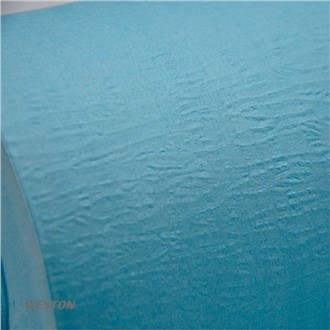
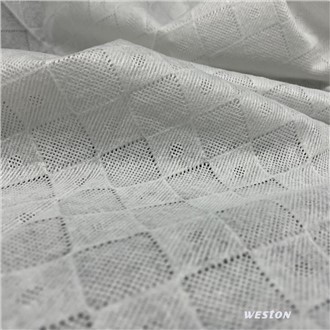
Attracting oil to a fiber's surface is only half the job - a wipe with any oleophilic material picks up a thin film, but not much volume. Real capacity comes from the fiber network itself. In spunlace (hydroentanglement) manufacturing, high-pressure water jets interlock loose PP fibers into a web without chemical binders, leaving behind a matrix of fine, irregular pores. Oil is drawn into that pore network by capillary action and held inside the fiber matrix, not just on its outer surface - which is the actual difference between "wiping" and "absorbing." A denser weave holds less; a looser, more porous web holds more, up to the point where structural strength starts to suffer. [Insert your tested absorption ratio here - e.g., "X times its own weight in oil" - to give buyers a concrete capacity figure.]
Six Ways to Clean Up Oil, Compared
Absorption is one of several approaches used across industries, and each fits a different situation:
|
Method |
How it works |
Best suited for |
|
Absorption (nonwoven pads, socks, booms) |
Oleophilic fiber captures oil via surface chemistry; porous structure stores it via capillary action |
Spills on floors, machinery, and water; fast, no added chemicals or water |
|
Emulsification |
Surfactants reduce oil-water surface tension so oil disperses into water |
Situations where the resulting mixture will go through further wastewater treatment |
|
Mechanical removal |
Scraping, wiping, or vacuuming oil off a surface |
Small, localized spots; usually paired with an absorbent |
|
Pressure washing |
High-pressure water jets dislodge oil and grime |
Large, heavily soiled hard surfaces; runoff must be contained or it spreads contamination |
|
Chemical cleaning |
Solvents or detergents break down oil and grease |
Stubborn, baked-on residue; requires careful handling and disposal |
|
Bioremediation |
Oil-degrading microorganisms consume the contamination over time |
Large spills or contaminated soil/water where speed matters less than long-term cleanup |
For anything that needs to happen fast, without adding water or chemicals to the site and without special equipment, absorption is usually the first line of response - which is why it's worth understanding in more depth than the other five.
Why Nonwoven PP Sheets Outperform Rags, Granules, and Guesswork
Cotton rags are hydrophilic by nature - they soak up water just as readily as oil, get heavy fast, and eventually need laundering, which just relocates the oil into the wastewater system. Loose granular absorbents like clay or sawdust work reasonably well on flat, dry floors, but they're messy to apply, need to be swept up and bagged afterward, and are of little use on water, where they either float uselessly or sink.
A nonwoven PP sheet sidesteps both problems. Per the Industrial Oil Absorbing Sheets data sheet, the material is rated to absorb animal, vegetable, mineral, synthetic, and petroleum-based oils while repelling water and water-based liquids - meaning one product covers everything from cooking oil in a kitchen to hydraulic fluid on a shop floor to bunker fuel on open water, without switching materials or risking cross-contamination between oil and rinse water. It's also a dry, self-contained process: nothing to mix, nothing to rinse away, and no wastewater stream to manage afterward.
One Material, Seven Forms: Matching the Format to the Spill
A sheet that's perfect for wiping down a workbench is the wrong shape for corralling a fuel sheen on open water. Weston Nonwoven's Industrial Oil Absorbing Sheets are produced across the full range of oil-only absorbent formats, and each one is built for a different part of a spill:
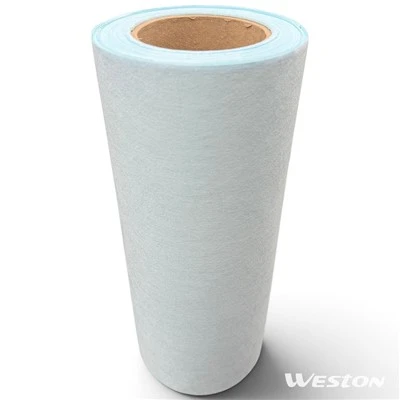
Mats & Rolls - flat sheets or a continuous roll, cut to size. Best for lining drip trays, laying under equipment with a slow, ongoing leak, or wiping down machinery and workbenches.
Socks & Booms - tube-shaped absorbents used to encircle or block a spill's perimeter, whether that's around a piece of equipment, across a doorway, or floating on water to contain a fuel sheen. These can include zinc-plated carbon steel clips and rings so multiple booms link end-to-end into a longer containment line, a polyester mesh casing for extra durability when dragged over rough ground or used in moving water, and in some configurations a static-dissipative agent for settings where flammable vapors make static discharge a concern.
Pillows - compact, cushion-shaped units placed directly under a chronic drip point, such as a leaking valve, pump seal, or drum spigot, where a passive catch-and-hold spot is more practical than a mat.
Spaghetti Booms - loose absorbent strands, typically in a mesh sleeve, that conform to irregular gaps a rigid mat or boom can't reach - tank rims, machine crevices, uneven terrain.
Pulp - loose fiber sold in bulk, spread by hand across large-area spills or fed directly into a containment zone for maximum surface contact, fast.
Choosing the wrong format usually isn't a failure of the material - it's a mismatch between the product's shape and the spill's shape. A boom won't wipe down a workbench efficiently, and a mat won't contain a spreading sheen on water.

Reading Between the Lines of a Technical Data Sheet
A few lines on a TDS that look like routine boilerplate carry real operational meaning for anyone specifying or storing this material.
Working temperature has a real ceiling. The maximum working temperature is rated at 170°F (77°C), well below the material's melting point of over 320°F (160°C) and its auto-ignition temperature of over 675°F (357°C). That gap is a safety margin, not an invitation - the sheets hold up fine against warm engine bays, hydraulic lines, and typical industrial floor temperatures, but shouldn't be pressed directly against surfaces near their melting point, and they are not a fire-resistant material.
Storage conditions determine shelf life, not just quality. Kept in a cool, dry environment away from direct or reflected sunlight and other UV sources - including high-intensity lighting - the product carries a rated shelf life of five years or longer. UV exposure over time degrades polypropylene fiber, so stock stored near windows or under strong shop lighting for extended periods won't necessarily last as long as the rating suggests.
Basic PPE is recommended, not optional, for extended handling. The data sheet recommends gloves (cloth, canvas, leather, or rubber) and safety goggles or glasses with side shields as good industrial practice - worth building into a site's standard spill-response kit alongside the absorbents themselves.
Fire response depends on what the absorbent has picked up. Unused product can be handled with standard extinguishing agents - water, foam, or carbon dioxide. Once a sheet has absorbed oil, though, it needs to be treated according to whatever it absorbed, since the saturated pad is now carrying a flammable liquid with its own fire behavior. This distinction matters for anyone writing a site's emergency response plan, and it's easy to miss on a quick skim of the "fire control" line.
Disposal isn't automatic - it depends on what's inside it. The material itself is not defined as hazardous waste under the Resource Conservation and Recovery Act (RCRA). But per the data sheet, it's the end user's responsibility to determine, at the time of disposal, whether the product - once it has absorbed a particular oil or contaminant - needs to be classified and handled as hazardous waste. That's a judgment specific to what was cleaned up and where, not a blanket answer either way.
A few things degrade or damage the material. Strong oxidizing agents can degrade the product over time, and excessive heat, open flame, or contact with incompatible materials should be avoided. When heated, the material may emit toxic fumes - typical of a hydrocarbon-based polymer, and another reason it shouldn't be treated as fireproof.
Frequently Asked Questions
Does it actually work on water, or just on dry floors? Yes. Because the fiber is less dense than water (relative density 0.9) and practically insoluble in it, the sheet floats on the surface rather than sinking or dissolving - exactly where an oil sheen sits on open water.
What types of oil can it absorb? Per the technical data sheet, it's rated for animal, vegetable, mineral, synthetic, and petroleum-based oils - a broad enough range to cover most industrial, marine, and food-service spill scenarios with one product.
Is it classified as hazardous waste? The unused product is not defined as hazardous under RCRA. Once it has absorbed a spill, classification depends on what it absorbed - that determination is the end user's responsibility at the time of disposal.
How long can I keep unused stock in storage? Five years or longer, provided it's stored in a cool, dry space away from direct or reflected sunlight and other UV sources.
Is it fire-resistant? No. There's a meaningful safety margin between its normal working temperature (170°F/77°C) and its melting point (over 320°F/160°C) and auto-ignition point (over 675°F/357°C), but it's a hydrocarbon-based material, not a fireproof one, and should be kept away from open flame and excessive heat regardless of whether it's in use.
Which format should I choose? It depends on the spill's shape, not just its size: mats and rolls for flat surfaces and drip trays, socks and booms for containment lines, pillows for point-source leaks, spaghetti booms for irregular gaps, and pulp for fast bulk coverage.
Choosing the Right Absorbent for Your Site
The right oil cleanup solution isn't just "an absorbent material" - it's the right fiber chemistry, in the right format, sized for the actual spill profile at a given site. Weston Nonwoven's Industrial Oil Absorbing Sheets (TDS-OAB016) are engineered on that basis: verified polypropylene composition for genuine oil/water selectivity, a manufacturing process built for real absorption capacity rather than surface wiping, and a full range of formats to match containment, wiping, and point-leak scenarios.
For a copy of the full technical data sheet, product samples, or help selecting the right format and quantity for your site, [insert contact / request-a-quote link here].
Technical specifications referenced in this article are drawn from Weston Nonwoven Technical Data Sheet TDS-OAB016 (Oil-Only Absorbents).