Is Non-Woven Fabric Actually Good? (The Unsung Hero in Your Daily Life)
You likely touched non-woven fabric at least five times before you finished your morning coffee. It was in the tea bag you dunked, the wet wipe you used to clean a spill, the filter in your coffee machine, and perhaps even hidden inside the lining of your favorite chair.
We spend a lot of time debating the quality of cotton sheets or the thread count of silk ties, but we rarely stop to ask: Is non-woven fabric actually good?
The answer isn't a simple yes or no. It's a material that is often misunderstood, dismissed as "cheap," or confused with paper. But in reality, non-woven fabric is a scientifically engineered powerhouse that balances cost, hygiene, and utility in ways that traditional woven fabrics simply can't match. Let's strip away the marketing fluff and look at what this material really is, its honest pros and cons, and why it has quietly taken over the world.

The Science of the "Pressed Sandwich"
To understand if it's "good," you first have to understand what it is.
Imagine a traditional piece of cloth, like your denim jeans. That is woven. It relies on two sets of yarns interlaced at right angles. It takes time, it takes a loom, and it creates a fabric with a specific grain.
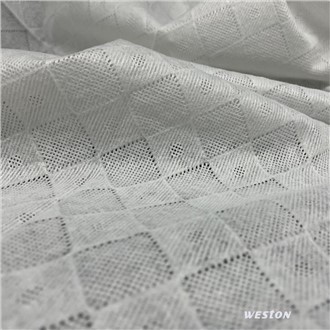
Non-woven fabric is completely different. Think of it less like knitting a sweater and more like pressing a sandwich. Manufacturers take small fibers-either long continuous filaments or chopped short fibers-and bond them together. This bonding happens through heat, chemicals, or mechanical pressure (like tangling them with high-pressure water jets).
The result is a sheet that has no "grain." You can cut it in any direction, and it won't unravel. This fundamental difference is what allows engineers to customize the fabric for specific jobs. They can make it water-repellent for a medical gown, or super-absorbent for a cleaning cloth.
The Advantages: Why It's Everywhere
The primary reason non-woven fabrics dominate industries from healthcare to automotive is not just because they are cheaper (though they often are), but because they can be engineered to do things woven fabrics fail at.
1. The Hygiene Barrier
In the medical world, "good" means "safe." Woven fabrics have tiny gaps between the threads where bacteria can pass through. Non-woven structures create a chaotic maze of fibers. This tortuous path makes it incredibly difficult for microbes to penetrate, yet air can still pass through to let the skin breathe. This is why your surgical mask and isolation gown are non-woven.
2. Tunable Absorbency
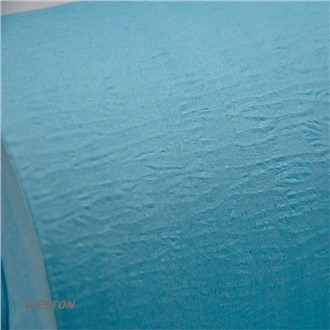
One of the most common everyday uses is in cleaning. Because the fibers are bonded rather than twisted tight, they have more surface area to grab dirt and moisture. This is particularly true for Viscose Polyester Nonwoven blends. By mixing the softness and high absorbency of viscose with the strength of polyester, you get a material that is tough enough to scrub a counter but soft enough to wipe a face. It's the secret behind high-quality wet wipes and salon towels.
3. Specialized Safety
Sometimes, a fabric needs to do more than just cover; it needs to protect. In the automotive and construction industries, or even in the mattress you sleep on, the fabric acts as a shield. Specialized Flame Retardant Nonwoven materials are used as thermal barriers. Because non-wovens don't have to be spun into yarn first, additives that stop fire can be mixed directly into the fiber slurry or applied more evenly during bonding, creating a consistent safety layer that doesn't wash out easily.

The Disadvantages: The Reality Check
We need to be grounded here. Non-woven fabric is not a magic solution for everything. There are distinct areas where it falls short compared to traditional textiles.
1. Durability vs. Laundering
If you buy a high-quality cotton shirt, you expect to wash it 100 times. Non-woven fabrics generally cannot withstand that level of agitation. While they are strong for their intended lifespan, the bonding points can break down in a tumble dryer. This is why reusable grocery bags (often made of non-woven polypropylene) eventually start to fuzz and degrade if you wash them too harshly. They are durable, but they aren't immortal.
2. The "Cheap" Perception
Because non-wovens are efficient to produce, they are often used for disposable items. This has created a stigma that the material itself is "cheap" or "throwaway." While true for a hotel slipper, this ignores the high-tech, durable versions used in civil engineering (geotextiles) that last for decades under roads.
The Sustainability Question
This is the big one. Is it eco-friendly?
The honest truth is: It depends entirely on the fiber.
Many non-wovens are made from synthetic plastics like polypropylene. While these are recyclable, they often end up in landfills if consumers don't have access to proper recycling facilities. However, the industry is shifting rapidly.
We are seeing a massive rise in Lyocell Spunlace Nonwoven fabrics. Lyocell is a cellulose fiber derived from wood pulp (usually eucalyptus). When processed via "spunlace" (using water jets to entangle fibers), the result is a 100% biodegradable, plastic-free fabric that is incredibly soft and compostable. It represents the "premium" eco-friendly side of non-wovens, proving that this technology doesn't have to burden the planet.
The Final Verdict
So, is non-woven fabric good?
Yes, but it's a tool, not a replacement for everything. It is "good" because it democratizes hygiene-making masks and wipes affordable for everyone. It is "good" because it allows for specific engineering-giving us Flame Retardant Nonwoven layers that save lives and Viscose Polyester Nonwoven blends that keep our homes clean.
The key for you, the consumer, is to recognize what you are holding. Don't treat a reusable non-woven bag like a single-use plastic sack; use it until it falls apart. Look for biodegradable options like Lyocell Spunlace Nonwoven when buying wipes or cosmetic pads.
This industry is driven by innovation behind the scenes. Manufacturers like Weston Manufacturing are constantly tweaking these "pressed sandwiches" of fibers to be stronger, safer, and greener. Whether you need industrial-grade filtration or a simple eco-friendly cleaning cloth, the science is likely already there.
If you are curious about how these specialized materials feel or want to see the difference between a standard blend and a high-tech biodegradable option, you don't have to guess.
Free sample contact: info@westonmanufacturing.com