Beyond the Price Tag
Many buyers begin their search with one question: How cheap can we get it?
But reliability in nonwoven wipes is mostly determined by engineering, not discounts. A stable supplier protects your production line, your brand, and the end users who rely on consistent performance. Price is simply one part of a bigger technical picture.
This article walks through the practical, grounded factors that define a dependable supplier-things you can test, observe, and verify. Along the way, you'll also see how specific wipe categories like Oil Stain Removal Industrial Cloth, Heavy-Duty Shop Wipes, and Grid Texture Facial Cotton Pads fit into these deeper principles.

1. Fiber Science Shapes Real-World Performance
1.1 Fiber Blend Predictability
Different blends behave differently.
Viscose absorbs quickly.
Polyester adds strength and abrasion resistance.
Woodpulp/PP blends withstand oils and solvents.
A reliable supplier keeps these ratios stable from batch to batch. When blends shift-even slightly-absorption speed, wipe strength, and solvent compatibility all change. This explains why some wipes perform perfectly one month and tear easily the next.
1.2 Structure and Uniformity Matter
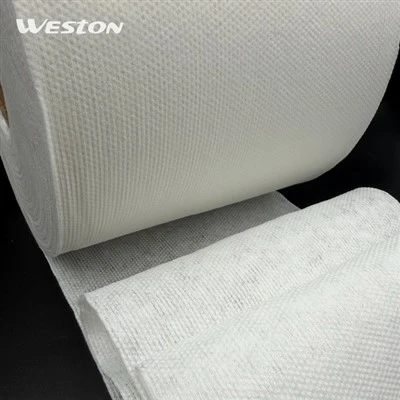
Water-jet-entangled (spunlace) nonwoven needs uniform fiber distribution. Uneven web formation creates hidden weak lines that break under tension. An experienced supplier controls:
GSM variation
Thickness consistency
Aperture or texture clarity
Fiber orientation
Uniformity is especially important for industrial categories like heavy-duty wipes and oil-absorption cloths.
2. The Texture Isn't Cosmetic-It's Functional
Embossing or aperture patterns alter how a wipe behaves:
Pearl: smooth, gentle, suitable for facial pads.
Mesh: improves scrubbing power.
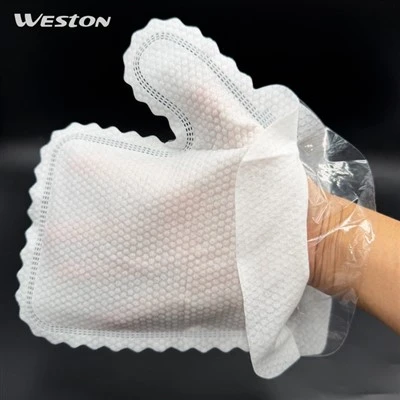
Honeycomb: boosts liquid pickup.
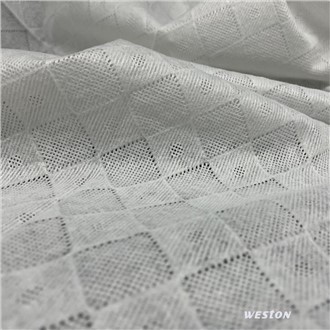
Grid texture: stabilizes surface friction for skincare use.
This is why Grid Texture Facial Cotton Pads don't feel slippery, and why industrial oil wipes often use stronger, more open textures to lift grease without shredding.
A reliable supplier doesn't treat texture as decoration. They can explain the engineering purpose behind each pattern-and offer consistent replication.
3. Process Control Is the True "Invisible Value"
3.1 Water Quality in Spunlace Jets
Spunlace lines depend on extremely clean, filtered water.
Impurities cause linting, fiber loss, and unpredictable weak spots. Consistent suppliers monitor water hardness, filtration efficiency, and pressure stability.
3.2 Heat and Drying Control
Drying temperature directly affects GSM accuracy, fabric hand-feel, and roll stability. Poor drying creates wavy rolls and moisture pockets that reduce shelf life.
3.3 Machine Calibration
A reliable supplier maintains:
Fixed jet pressure
Stable line speed
Calibrated drying cylinders
Clean, well-aligned nozzles
Cheap production is often unstable production. And unstable production causes inconsistent wiping performance.

4. Lab Testing Separates Assumptions from Reality
Buyers should always look for suppliers that provide measurable data, not sales slogans. Common tests include:
Tensile strength
Lint level
Wet strength
Absorption speed
Oil retention
Solvent compatibility
Basis weight variation
Industrial categories like Oil Stain Removal Industrial Cloth and Heavy-Duty Shop Wipes rely heavily on verifiable strength and solvent resistance. A dependable supplier treats these tests as routine, not optional.
5. Traceability Shows Professionalism
Every roll, pack, or pallet should connect back to:
A specific batch
A known raw-material lot
The corresponding QC inspection
This protects your brand during audits and helps ensure that any problem can be isolated quickly. Inconsistent suppliers often skip traceability because it requires disciplined record-keeping.
6. Why Lead Time Stability Signals Technical Maturity
Reliable suppliers give realistic timelines even when raw material prices fluctuate. They don't promise the fastest lead time-they promise achievable lead time. They also keep communication steady during production, confirm specs early, and update customers when adjustments are required.
Good lead time isn't luck. It is the result of controlled production flow, trained operators, and predictable finishing processes.
7. Customization Ability Reveals Manufacturing Depth
The deeper the supplier's technical ability, the wider their customization range.
This includes:
Roll widths and sheet formats
Fiber types (viscose, polyester, woodpulp, bamboo, PP, hemp)
Color dyeing and printing
Embossing plates
Oil/solvent-resistant formulations
Skin-contact-safe variants for cosmetic pads
Customization skill also demonstrates that the supplier actually manufactures rather than trading through others.
8. A Quick Visual Look: Factors That Influence Supplier Reliability
Below is a simple diagram-style chart summarizing the hidden elements behind consistent nonwoven wipe quality (to be generated as an image):
(A visual comparing Material Science, Process Control, Testing, and Communication as reliability pillars.)
9. A Quiet Example from Real Manufacturing
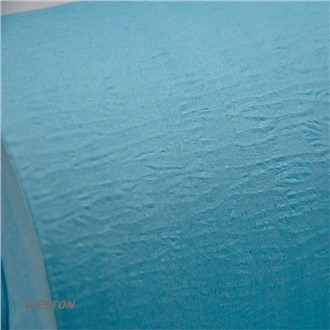
Some factories, such as Weston Nonwoven's spunlace lines, incorporate stable water-jet systems, routine lab tests, and documented production records. Their categories-like Oil Stain Removal Industrial Cloth, Heavy-Duty Shop Wipes, and gentle skincare-grade Grid Texture Facial Cotton Pads-follow the same material-science principles described above. This is not about self-promotion; it simply shows how these technical points appear in real production environments.
10. Why Reliability Outweighs Price Over Time
A cheaper-but unstable-wipe costs more in the long run:
More machine downtime
More customer complaints
More variation in performance
More rework and replacements
A stable supplier reduces invisible losses, which often matter far more than price-per-kilogram. When wipes behave the same every month, your production workflow becomes predictable. Predictability is the real hidden value buyers should look for.