Is Lyocell a Good Fabric?
Lyocell has become a familiar name in textiles, wipes, and hygiene materials, but familiarity does not always mean understanding. Many people hear that lyocell is "eco-friendly," "soft," or "high-performance," yet few know what that actually means in real use.
So instead of repeating popular claims, this article looks at lyocell as it really is: how it is made, how it performs, where it works well, and where it does not.

What Lyocell Really Is
Lyocell is a regenerated cellulose fiber. That means it starts with natural raw material-wood pulp-but goes through an industrial process before becoming fiber.
Most lyocell is made from fast-growing trees such as eucalyptus. The wood pulp is dissolved, filtered, and spun into long, uniform fibers. Unlike traditional viscose, lyocell is typically produced using a closed-loop solvent system, where most of the solvent is recovered and reused.
It is important to be precise here:
Lyocell is not a raw natural fiber like cotton
It is not a synthetic fiber like polyester
It sits in between, combining natural origin with engineered consistency
This combination explains much of its performance.
How Lyocell Performs in Daily Use
When people describe lyocell as "comfortable," they are usually reacting to several physical properties working together.
First, lyocell fibers are smooth and continuous. This reduces surface friction, which is why lyocell-based materials feel gentle against skin. Second, the fiber structure allows air and moisture to move through the fabric rather than staying trapped on the surface.
In practical terms, this means:
Less irritation in skin-contact products
Better comfort in warm or humid conditions
A cleaner feel during wiping or absorption
These properties are especially noticeable in nonwoven formats, where fiber behavior directly affects end performance.
Strength Where It Matters Most
One of lyocell's less talked-about advantages is its strength-especially when wet.
Many cellulose fibers lose a significant amount of strength once they absorb water. Lyocell retains more of its integrity, which makes it suitable for applications such as wet wipes, medical disposables, and industrial wiping materials.
In spunlace nonwovens, this translates to:
Better resistance to tearing during use
More stable fabric structure after wetting
Reduced lint and fiber breakage
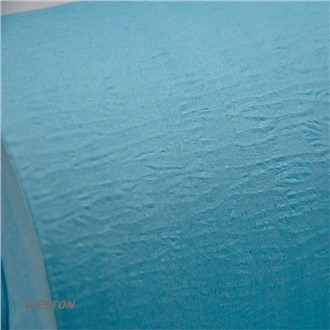
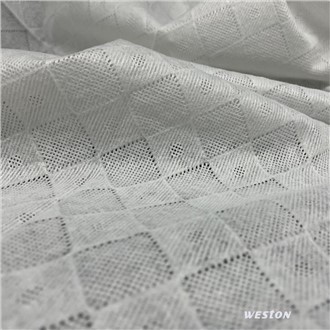
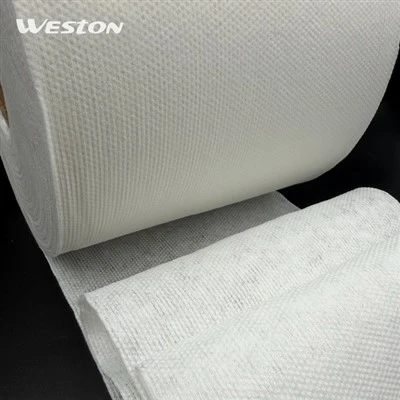
Manufacturers working with Lyocell Spunlace often choose it for this balance between softness and durability, not just for marketing reasons.
Absorbency Without Bulk
Lyocell absorbs water efficiently, but not in a way that makes the material collapse or feel heavy. The fiber draws in liquid and distributes it evenly through the web.
This matters for several reasons:
Liquids are absorbed quickly rather than pooling
The surface stays relatively clean after absorption
Less material is needed to achieve functional absorbency
Compared with polyester, lyocell absorbs far more moisture. Compared with cotton, it offers more predictable performance because fiber length and quality are tightly controlled.

The Sustainability Question, Explained Simply
Lyocell is often promoted as a sustainable fiber, but sustainability should be discussed carefully, not emotionally.
From a factual standpoint:
The raw material is renewable wood pulp
Modern production systems recover most processing chemicals
The fiber is biodegradable under appropriate conditions
However, lyocell is not impact-free. Energy use, forestry practices, and transportation all matter. Lyocell should be seen as a lower-impact option, not a perfect solution.
For companies focused on responsible material selection, Lyocell Spunlace provides a realistic balance between environmental consideration and industrial reliability.
Where Lyocell May Not Be the Best Choice
A clear discussion must also include limitations.
Lyocell is typically more expensive than standard viscose. For ultra-low-cost disposable products, it may not be economically viable. In some highly abrasive or chemical-heavy environments, synthetic fibers may outperform it.
Because of this, lyocell is often blended with other fibers to:
Control cost
Adjust strength or texture
Match specific application requirements
Understanding these trade-offs is part of using the fiber responsibly.
Why Lyocell Works So Well in Spunlace Nonwovens
Spunlace technology relies on water jets to entangle fibers rather than chemical binders. Fiber length, uniformity, and wet strength directly affect final fabric quality.
Lyocell performs well in this process because:
Fibers entangle evenly
The web remains stable during hydroentanglement
Finished fabric shows consistent surface and strength
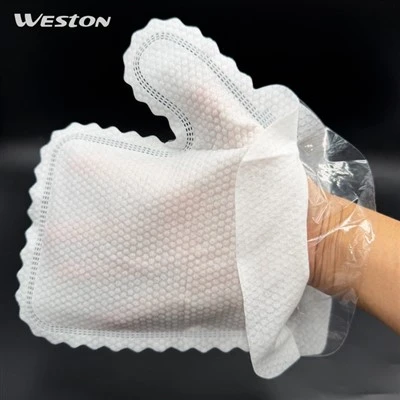
This is why Lyocell Spunlace is commonly used in hygiene wipes, medical textiles, and premium cleaning applications.
Manufacturers such as Weston Nonwoven apply lyocell selectively-either as a full fiber solution or as part of engineered blends-based on performance targets rather than trend-driven decisions.
Practical Applications You See Every Day
Lyocell-based nonwovens are already part of daily life, often without being noticed:
Personal care and baby wipes
Medical wipes and disposable pads
Facial tissues and cosmetic cloths
Household and industrial cleaning wipes
In these uses, the fiber's value comes from quiet reliability. It does its job without drawing attention to itself.
A Clear, Practical Takeaway
Lyocell is a good fabric when expectations are realistic.
It offers:
Comfort without fragility
Absorbency without heaviness
Strength without harshness
It is not a miracle material, but it is a well-engineered one. When used thoughtfully-especially in Lyocell Spunlace nonwoven structures-it provides dependable performance for applications where both function and material responsibility matter.
That is why lyocell continues to gain ground not as a trend, but as a practical choice grounded in material science and real-world use.