Static electricity in polyester isn't just an annoyance-it's a costly problem affecting manufacturing efficiency, product quality, and end-user satisfaction. Yet this challenge has straightforward, proven solutions. Understanding the science behind static buildup and knowing which solutions work best separates industry leaders from their competitors.

Why Polyester Generates Static
Polyester is inherently hydrophobic, meaning it repels water. Unlike natural fibers such as cotton or wool that naturally absorb moisture and conduct electrical charges safely away, polyester accumulates static charge rapidly. When synthetic fibers rub together-during manufacturing, processing, or use-electrons transfer between surfaces, creating electrical imbalance. This charge has nowhere to dissipate naturally.
The numbers are stark: polyester ranks 9.5 out of 10 for static proneness among common textile fibers, significantly higher than acrylic (8.5), nylon (7.0), or silk (5.5). Cotton and linen, by contrast, rank only 2.0-nearly five times less prone to static problems.
The Real Impact
Static electricity creates tangible consequences. In manufacturing, clinging fabrics jam production lines, requiring manual intervention and increasing downtime. In product quality, static attracts dust particles, creating defects unacceptable for medical, filtration, and cleanroom applications. For consumers, static cling in wipes or protective garments damages user experience and generates returns. In sensitive electronics manufacturing and explosive handling, uncontrolled static poses genuine safety risks.
Solution 1: Humidity Control-The Foundation
Here's the physics: water molecules are polar, possessing positive and negative ends that interact with electrical charges. When humidity increases, water vapor in air creates microscopic conductive pathways allowing charges to dissipate safely.
Research consistently shows 60-70% relative humidity (RH) dramatically reduces static electricity. The mechanism is straightforward: at this humidity range, sufficient water vapor exists to provide effective charge pathways, yet moisture absorption doesn't cause dimensional changes or mold growth. It's the engineering sweet spot.
Compare the performance across humidity ranges:
|
Relative Humidity |
Static Potential |
Manufacturing Reality |
|
15% RH |
Extreme (95/100) |
Frequent shocks, severe dust attraction |
|
30% RH |
High (70/100) |
Noticeable clinging, production problems |
|
50% RH |
Moderate (50/100) |
Manageable charge buildup |
|
65-70% RH |
Low (30/100) |
Optimal-minimal static issues |
|
85-95% RH |
Very Low (15/100) |
Excellent dissipation |
This humidity-controlled approach delivers approximately 60% static reduction with minimal infrastructure investment. Implementation through ultrasonic humidifiers, workshop design optimization, and real-time monitoring systems is cost-effective for most manufacturers.
Solution 2: Material Science-The Game Changer
While humidity control is essential, it's insufficient alone. Advanced treatment technologies deliver dramatically superior results.
Blended Anti-Static Additives represent the current industrial standard. Quaternary ammonium salts and polyamide polymers, when properly formulated together, create 85% static reduction. The critical insight: traditional anti-static additives have poor compatibility with polyester at manufacturing temperatures. Adding polyamide polymers solves this problem, acting as a "bridge" molecule that keeps additives uniformly dispersed throughout the polymer.
The optimal formulation is proven and specific:
Polyester: 85-98 weight parts
Polyamide polymer: 6-10 weight parts (the compatibilizer)
Anti-static additive: 2-5 weight parts
This combination works because the polyamide ensures uniform distribution, allowing manufacturers to reduce required additive from 10-15 parts to just 2-5 parts while maintaining superior effectiveness.
Conductive fibers offer an alternative approach, delivering 75% reduction by creating electrical pathways through the fabric structure. These fibers-containing metallic or carbon components-allow charge dissipation directly through the material, working independently of environmental humidity.
Surface topical coatings apply hydrophilic (water-loving) layers post-production, achieving approximately 70% static reduction. These work by creating a moisture-absorbing surface layer that provides local charge dissipation pathways. Options range from economical non-durable formulations to semi-durable treatments lasting 10-15 wash cycles.

Solution 3: CNT Technology-The Advanced Alternative
Carbon nanotube (CNT) technology represents the cutting edge. Single-walled carbon nanotubes combined with oleic acid amide (OAA) create a continuous conductive network on fiber surfaces, achieving 95% static reduction-approaching near-total elimination.
The breakthrough advantage: CNT-treated fibers maintain performance across humidity variations. Compare the resistivity changes:
Untreated polyester: 1,000x change from dry to humid conditions (completely humidity-dependent failure)
Traditional additives: 1,000x change (still humidity-dependent)
SCNTs/OAA treatment: Only 1.4x change (essentially humidity-independent)
This stability represents revolutionary progress. While CNT treatment costs more than conventional additives, the long-term performance justifies investment for premium applications and specialized environments.
The Two-Layer Strategy
The most effective approach combines environmental control with material treatment. A fabric treated with blended additives (85% effectiveness) placed in a 60-70% RH environment (60% effectiveness) doesn't simply add together-instead, it creates redundancy. Each solution addresses different failure modes. If humidity control falters seasonally, the material treatment still provides protection. If the material treatment degrades, environmental control provides backup.
Real-world result: spunlace nonwoven manufacturers using this combined approach report negligible static problems, consistent product quality, and manufacturing efficiency that competitors cannot match.
Application-Specific Excellence
Different applications require different optimization:
Medical and cleanroom nonwovens need surface topical coatings combined with facility humidity control. This preserves breathability and absorbency while ensuring clean environments.
Industrial wipes benefit from blended polyamide/additive formulations. These survive industrial washing better than surface coatings, maintaining anti-static performance through multiple use cycles.
Filtration media can leverage engineered CNT treatment to create controlled electrostatic properties, actually enhancing filtration efficiency while preventing dust shedding.
Consumer textiles require cost-effective solutions. Standard humidity control during manufacturing combined with semi-durable topical coating at finishing (lasting 10-15 washes) provides consumer-acceptable value.
The Bottom Line
Static electricity in polyester is not inevitable-it's a solved problem with scalable, proven solutions. The evidence is clear: humidity control provides the foundation (60% reduction), material science solutions deliver transformation (85% blended additives), and advanced technologies enable differentiation (95% CNT treatment).
Choose the strategy matching your application, production capacity, and market positioning. Whether you're manufacturing medical wipes, industrial cleaners, or premium protective garments, static doesn't have to be your problem. It can become your competitive advantage-proof that your products are engineered for superior performance and end-user satisfaction.
Weston Nonwoven: Advanced Anti-Static Spunlace Solutions
At Weston Nonwoven, we transform static electricity challenges into competitive advantages through proprietary water-jet spunlace technology combined with scientifically-proven anti-static formulations. Our facility-wide humidity control and material science expertise deliver consistent, superior performance across every application.
Our Anti-Static Spunlace Product Line
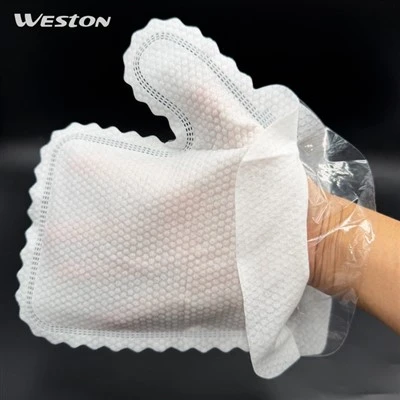
◆Anti-static Wipes For Electronics - Purpose-engineered for sensitive ESD environments. Our proprietary formula eliminates electrostatic discharge risks in electronics manufacturing, cleanroom operations, and precision assembly. Superior cleaning performance meets stringent anti-static specifications.
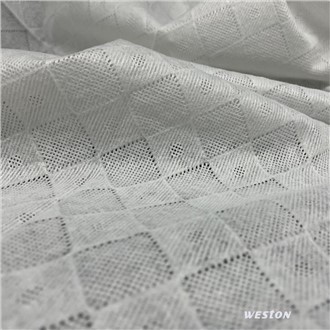
◆Anti-static Polyester Spunlace - Our flagship water-jet spunlace fabric engineered with advanced anti-static treatments. Delivers consistent charge dissipation across humidity variations, production speeds, and end-use conditions. The trusted standard for manufacturers demanding reliability.
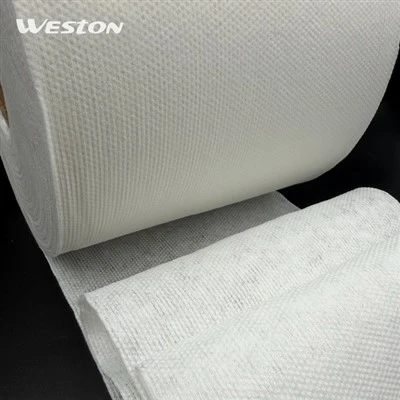
◆ Medical Pulp Polyester Spunlace - Premium formulation combining medical-grade wood pulp with polyester spunlace. Exceptional softness and absorbency with reliable anti-static performance. Ideal for medical wipes, facial products, and healthcare applications requiring both comfort and electrostatic control.
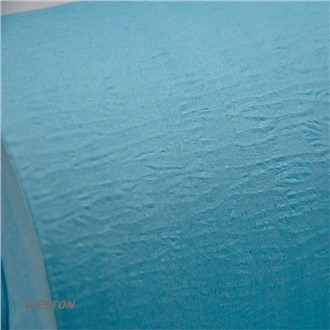
◆Creped Pulp Polyester Spunlace - Advanced creping technology integrated with anti-static polyester spunlace. Premium tactile experience, superior strength retention, and excellent charge dissipation for demanding consumer and professional markets.
Why Partner with Weston Nonwoven
Humidity-controlled manufacturing facilities optimizing anti-static performance
Proprietary blended formulations delivering 85% static reduction
Advanced spunlace water-jet technology ensuring consistent quality
Application-specific engineering rather than standard one-size-fits-all solutions
Continuous R&D investment including emerging CNT technology research
ISO-certified production and rigorous quality control protocols
Customization & Free Samples
We provide complete customization for your specific requirements:
①Free Samples - Evaluate full performance specifications in your actual production and application environments
②Basis Weight - Custom gsm ranging from ultra-light (30-40 gsm) to heavy-duty (150+ gsm) formulations
③Color Selection - White, natural, or custom-tinted finishes to match your brand identity
④Texture Profiles - Smooth, creped, embossed, or specialized finishes for premium tactile experience
⑤Treatment Levels - Standard anti-static, enhanced formulation, or premium CNT-enhanced options
⑥Shape Cutting - Pre-cut wipes, cloths, and custom formats ready for immediate packaging
⑦Roll or Sheet Format - Flexible delivery in rolls for converting or pre-cut sheets for direct distribution
Get Your Free Samples & Technical Consultation Today
Ready to upgrade your products with proven anti-static spunlace technology? Our technical team is prepared to evaluate your specific requirements and deliver customized solutions.
Email: info@westonmanufacturing.com
Contact our specialists for:
Custom basis weight and color specifications
Free performance evaluation samples
Technical consultation on optimal anti-static formulation
Production volume pricing and timeline
Complete product specifications and certifications
Weston Nonwoven: Where Science Meets Solution. Transform your polyester products with advanced anti-static spunlace technology engineered for real-world performance.