Why Your Wipes Deserve Better: The Wood Pulp PP Revolution Nobody's Talking About
Every year, billions of wet wipes end up in landfills and sewage systems. Here's what's frustrating: 90% of commercial wipes are made from polyester or polypropylene-materials that stick around for centuries while we throw them away after one use. It's a problem that's been quietly building, and the solution has been hiding in plain sight.
The answer isn't complicated. It's engineered at the fiber level, and it's changing how smart manufacturers think about wipes.
The Core Problem (And Why It Actually Matters)
Let's be real: we use wipes constantly. Baby wipes, cleaning wipes, face wipes, disinfectant wipes-they're everywhere. And most of them are basically plastic. When you flush a "flushable" synthetic wipe, it doesn't disappear; it clogs treatment systems and ends up in landfills anyway. The irony is brutal: a product designed to clean is becoming a pollution problem.
This has forced manufacturers to ask a harder question: Can we make wipes that actually perform and biodegrade?
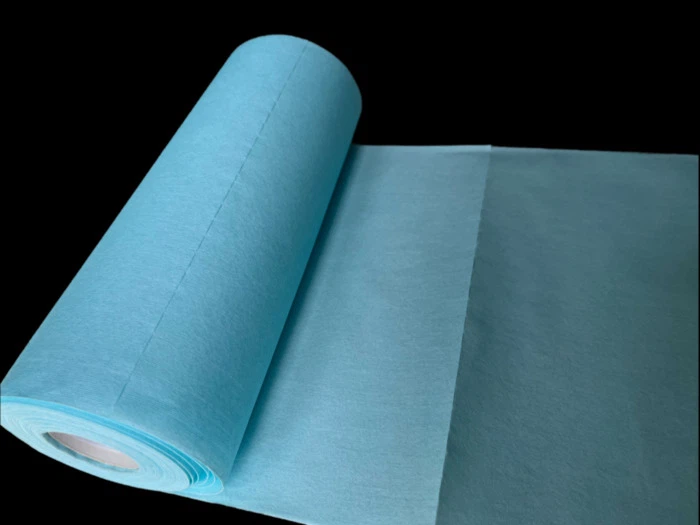
What Makes Wood Pulp PP Core Sheet for Disposable Hygiene Different?
Here's where materials science gets interesting. The standard approach takes two paths:
Pure polypropylene gives you strength. Your wipe won't tear. It resists liquids well. But it never biodegrades, and it's petroleum-based.
Pure cellulose gives you absorbency and renewability. It comes from trees, so it's sustainable. But it falls apart when wet-a soggy mess isn't useful for cleaning.
Enter the hybrid: wood pulp polypropylene spunlace. This is where the engineering gets clever.
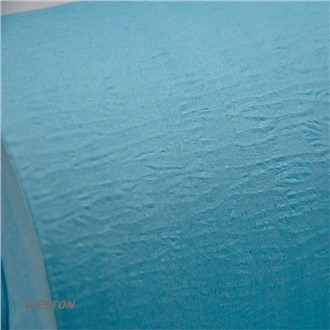
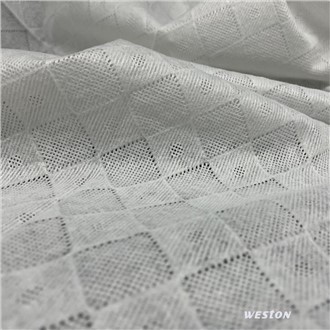
The material combines wood pulp fibers (cellulose from sustainably managed forests) with polypropylene fibers, then bonds them using pressurized water jets-no glue, no chemicals, just mechanical entanglement at the microscopic level. The result is a fabric that absorbs like cellulose and holds together like synthetic fiber.
Think of it like reinforced concrete: concrete provides bulk, steel provides strength. Neither works perfectly alone; together, they're unstoppable.
The Performance Numbers (They're Better Than You'd Expect)
Here's what the data shows:
Absorbency: Wood pulp PP spunlace achieves 400–480% absorbency-meaning one wipe absorbs 4–5 times its own weight in liquid. Pure PP manages only 200–300%. This translates to fewer wipes per use, which means less waste.
Wet Strength: This is where most pure cellulose fails. A saturated tissue falls apart. Wood pulp PP spunlace maintains 28–32 N/5cm tensile strength when soaked. That's industry standard, and it means your wipe actually works.
Biodegradation: Pure polypropylene? 400+ years in a landfill. Wood pulp PP? 45 days under composting conditions. It's not just compostable; it actually disperses in sewage systems without clogging them-which "flushable" synthetic wipes never do.
Cost: Here's the practical part. Wood pulp is cheaper than specialty fibers like viscose or bamboo. The spunlace process itself is efficient. So while wood pulp PP core sheets cost slightly more than pure PP (around 5–15% premium), you use fewer of them per task. The math actually works in your favor.
Environmental Impact: Across a full lifecycle-raw material extraction, manufacturing, transport, use, disposal-wood pulp-based wipes show 60% lower environmental impact than petroleum-only alternatives. That includes lower fossil fuel depletion, less ozone damage, reduced toxicity for production workers, and genuine biodegradability.
The Honest Pros and Cons
Advantages of the Wood Pulp PP Blend:
Dual performance: Combines absorbency with durability.
Renewable content: 60% wood pulp from managed forests.
True biodegradability: Decomposes in weeks, not centuries.
Effective flushing: Disperses in sewage without clogging.
Cost-competitive: Minimal price premium for better environmental profile.
Proven technology: Spunlace is well-established.
Market validation: Growing adoption across baby care and industrial cleaning.
Lifestyle flexibility: Works whether you compost or flush.
Limitations to Consider:
Not 100% renewable: Still contains polypropylene.
Infrastructure dependent: Biodegradation speed varies by conditions.
Price premium: 5–15% higher than pure synthetic.
Water sensitivity in storage: Humidity can affect fibers.
PP content variation: Consistency matters across manufacturers.
Limited brand availability: Not yet mainstream.
The Manufacturing Reality
From a production standpoint, this isn't fringe technology. Spunlace nonwoven lines run at 100–300 meters per minute, producing hundreds of tons annually.
The process is:
Mix wood pulp and polypropylene fibers.
Form them into a loose web.
Bombard with pressurized water jets (20–25 MPa).
Let the water entangle fibers mechanically.
Dry and roll.
No adhesives, no excessive heat, no chemical leftovers-it's actually simpler than thermal bonding, which is why major manufacturers are quietly adopting it.
Where You'll Actually See This Material
Baby wipes: Softness and absorbency are key.
Household cleaning: Handles bleach and water alike.
Industrial wipes: Perfect for machinery cleaning.
Medical and surgical applications: Offers sterility, absorbency, and biodegradability.
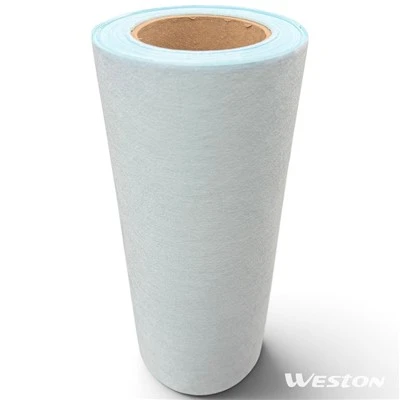
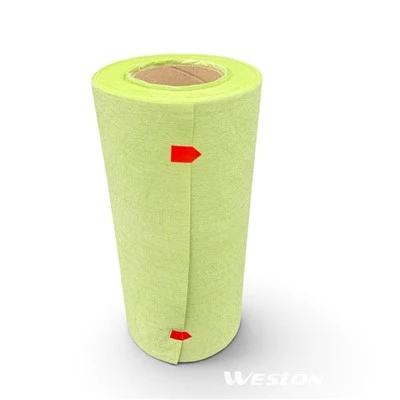
Leading nonwoven manufacturers like Weston Nonwoven, a major player in spunlace production, are already scaling wood pulp PP core sheets for global distribution. If you're sourcing premium wipes, there's a good chance this material is already in your supply chain.

The Market Reality
The global spunlace nonwoven wipes market was valued at 1.2billionin2024andisprojectedtoreach1.2 billion in 2024 and is projected to reach 1.2billionin2024andisprojectedtoreach2.5 billion by 2033-a compound annual growth rate of 9.5%. This isn't theoretical demand; it's real money following the material because it actually works.
Regulatory pressure is accelerating adoption. The EU has set stricter guidelines on single-use products, and 70% of European manufacturers have already made changes to comply. Asia-Pacific is following, and North America is catching up.
The switch isn't happening overnight because infrastructure inertia is real. But it's happening.
The Uncomfortable Truth
Here's what matters: no material is perfect. Even biodegradable wipes require proper disposal infrastructure-composting facilities that exist. Pure cellulose tears too easily, and pure synthetic persists forever. The hybrid isn't a miracle; it's a pragmatic engineering solution that handles 80–90% of the problem effectively.
The real breakthrough is that manufacturers finally have a material that allows them to do the right thing while keeping costs reasonable. That changes everything.
What to Do About It
If you care about the wipes you use:
For consumers: Check the label. Look for "wood pulp spunlace" or "cellulose-based nonwoven." If brands claim to be eco-friendly but don't use this, ask why. Demand matters.
For manufacturers: The window for adoption is now. Consumer expectations are shifting, and regulatory requirements are tightening. Materials like wood pulp PP core sheets are already proven at scale.
For producers and purchasers: If you're sourcing nonwoven wipe base materials, talk to Weston Nonwoven. They specialize in spunlace technology and have refined the wood pulp PP combination for mass production. Free samples are available-contact info@westonmanufacturing.com to evaluate the material firsthand.
The wipes you have at home probably aren't made from this material, but the next generation will be. The data is clear, the economics work, the technology is proven, and consumer demand is real.
Wood pulp polypropylene spunlace is quietly becoming the standard because it solves the equation that manufacturers have struggled with for years: how to make wipes that actually clean, cost less to use, and don't persist for centuries.
The revolution isn't dramatic; it's just better engineering.
Want to explore sustainable spunlace materials for your wipes production? Weston Nonwoven manufactures premium wood pulp PP core sheets engineered for performance and sustainability. Request samples and technical specifications: info@westonmanufacturing.com.